
When a blockchain makes a planned planned fork, a scheduled change to the underlying protocol that splits the network into two versions. Also known as protocol upgrade, it’s how blockchains evolve without breaking everything. Unlike random crashes or bugs, planned forks are intentional, often announced months in advance. They’re how networks improve speed, security, or features—like upgrading your phone’s operating system, but for money.
There are two main types: hard fork, a backward-incompatible change that creates a permanent split in the blockchain and soft fork, a backward-compatible update that keeps the chain unified. A hard fork means old nodes stop recognizing new blocks—think Bitcoin Cash splitting off from Bitcoin. A soft fork is like adding a new rule everyone still follows, like Ethereum’s transition to proof-of-stake. Both need coordination: miners, exchanges, wallets, and users all have to be on the same page, or things get messy.
Planned forks aren’t just tech talk—they affect your crypto. If you hold Bitcoin or Ethereum during a hard fork, you might get free tokens from the new chain. But if your exchange doesn’t support it, you could miss out. Some forks fix security flaws; others just add features nobody asked for. That’s why you see so many posts here warning about fake airdrops tied to forks—like the ones pretending to be from Upbit or PandaSwap. Real forks come with clear documentation, not hype. And if a project announces a fork with no technical details, it’s probably a scam.
What you’ll find in the posts below are real cases where forks mattered: how Upbit got hit by regulatory fallout after a failed upgrade, how exchanges like ADEN and ACX prepare for network changes, and why some tokens like RBT or PNDR turn into ghost projects after a fork promise. You’ll see how mining in Iceland got capped because of energy limits tied to blockchain growth, and how smart contracts for content creators rely on stable forks to keep paying out. This isn’t theory—it’s what’s happening right now. Whether you’re holding, trading, or just watching, knowing the difference between a real fork and a scam is the only thing that keeps your assets safe.
Posted by Minoru SUDA with 16 comment(s)
Oct
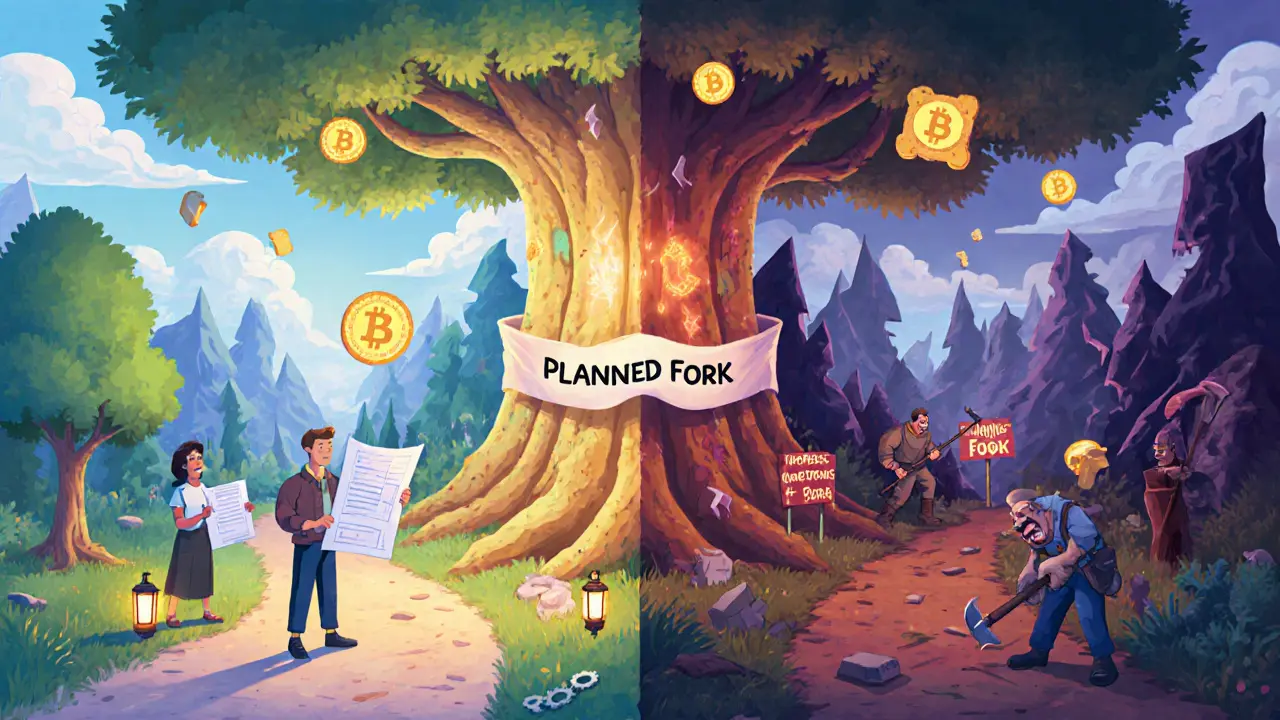
Learn the key differences between contentious and planned blockchain forks, their technical impacts, market effects, and how to navigate them safely.
view more