
When working with DeFi safety, the practice of protecting users and assets on decentralized finance platforms. Also known as Decentralized Finance security, it covers everything from token drops to smart contract code.
DeFi safety encompasses airdrop security, methods to verify and claim token giveaways without falling for scams. A clean airdrop process checks the source contract, uses official channels, and avoids phishing links. When you confirm the token contract on a block explorer and compare the announcement with the project's site, you cut the risk of losing funds. This practice directly supports the broader goal that DeFi safety requires thorough verification before any free token lands in your wallet.
Another pillar is smart contract audits, independent reviews of code to spot vulnerabilities before deployment. Audits look for re‑entrancy bugs, unchecked arithmetic, and permission loopholes. Projects that publish audit reports give users confidence, and many wallets now flag contracts without audits. Because DeFi safety demands trustworthy code, a clear audit trail often separates a reliable platform from a risky one.
Moving beyond contracts, DEX safety, the assessment of decentralized exchange security, liquidity depth, and fee structures plays a huge role. A DEX with shallow liquidity can cause huge slippage, while hidden admin keys may let operators drain funds. Checking if the exchange’s tokenomics are transparent, if it has been battle‑tested on mainnet, and if it uses proven AMM formulas helps you stay protected. In short, DEX safety influences overall DeFi safety by ensuring trades happen on solid ground.
Finally, wrapped assets, tokens that represent assets from other blockchains, enabling cross‑chain liquidity boost DeFi safety by expanding pool options without sacrificing security. When Bitcoin or Ether is wrapped, it can move into DeFi protocols that expect ERC‑20 tokens, increasing diversification. However, the wrapper contract itself must be audited, and the custodial model should be clear. Properly vetted wrapped assets reduce the need for risky bridges, adding another layer of protection to the DeFi ecosystem.
All these pieces—airdrop verification, audited contracts, secure DEXs, and reliable wrapped tokens—interlock to form a robust safety net. Below you’ll find practical guides, deep‑dive reviews, and real‑world examples that illustrate each area. Whether you’re hunting a free airdrop, deploying a smart contract, or swapping tokens on a DEX, the articles ahead give you the tools to stay safe in the fast‑moving world of decentralized finance.
Posted by Minoru SUDA with 4 comment(s)
Feb
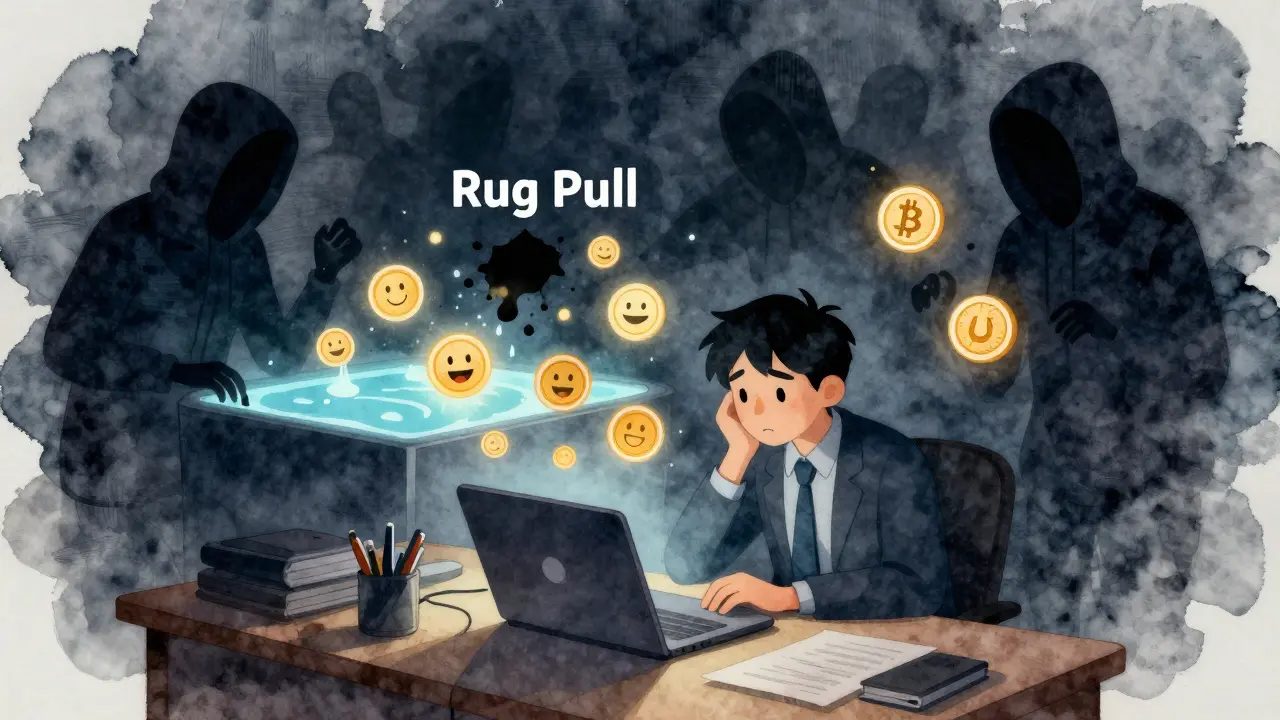
Learn how to spot and avoid rug pulls in crypto by checking team backgrounds, audits, liquidity locks, and tokenomics. Most scams are preventable with basic due diligence.
view morePosted by Minoru SUDA with 18 comment(s)
Jul

Explore why a high total value locked (TVL) doesn't guarantee DeFi protocol safety, learn its limits, and discover a practical checklist for evaluating security beyond TVL.
view more