
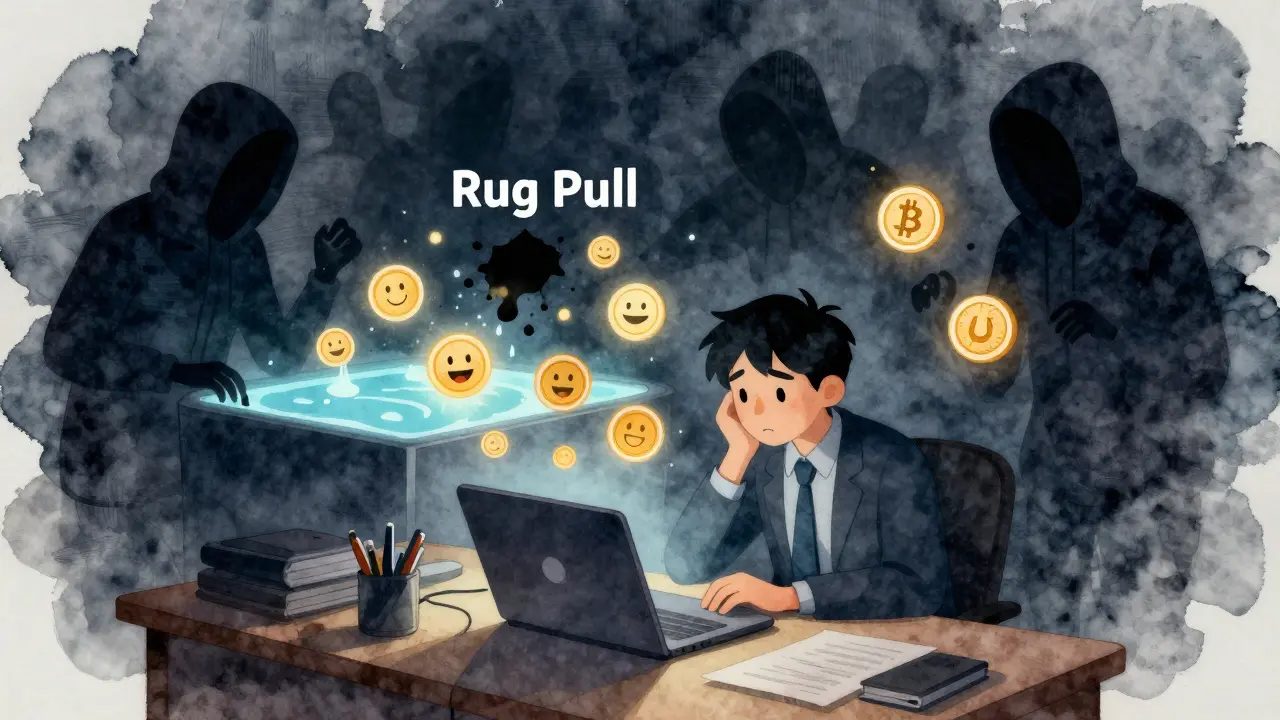
Imagine putting your life savings into a new cryptocurrency because everyone on Discord is hyping it. You buy in. The price spikes. You start dreaming about quitting your job. Then, one morning, the token crashes to zero. The website is gone. The Telegram group is silent. The devs vanished. That’s a rug pull-and it happens more often than you think.
Unlike traditional scams where you’re tricked into sending money, rug pulls are built into the project itself. Developers create a token, flood the market with hype, and when enough people invest, they drain the liquidity pool and disappear. No warning. No second chance. Just empty wallets.
How Rug Pulls Actually Work
There are three main ways rug pulls happen, and each one exploits a weakness most new investors don’t check.
- Liquidity theft: Developers create a token paired with ETH or BNB on a decentralized exchange. As you buy in, your money goes into a liquidity pool. That pool lets people trade the token. But if the devs control that pool and can withdraw it all? They do. One click. All your money gone.
- Sell restrictions: You can buy the token, but you can’t sell it. Either the contract blocks sells from the start, or devs disable them later. You’re locked in. No way out. This is common on new DEXs where code isn’t properly reviewed.
- Team exit: The team posts a polished whitepaper, a slick website, and even a YouTube video explaining the "revolutionary" tech. Then, after raising millions, they vanish. No updates. No answers. Just silence.
Some rug pulls are brutal-hard pulls where everything collapses overnight. Others are slow burns-soft pulls-where devs slowly sell their holdings, dragging the price down over weeks. Either way, you lose.
Red Flags You Can’t Ignore
You don’t need to be a coder to spot danger. Just look for these signs:
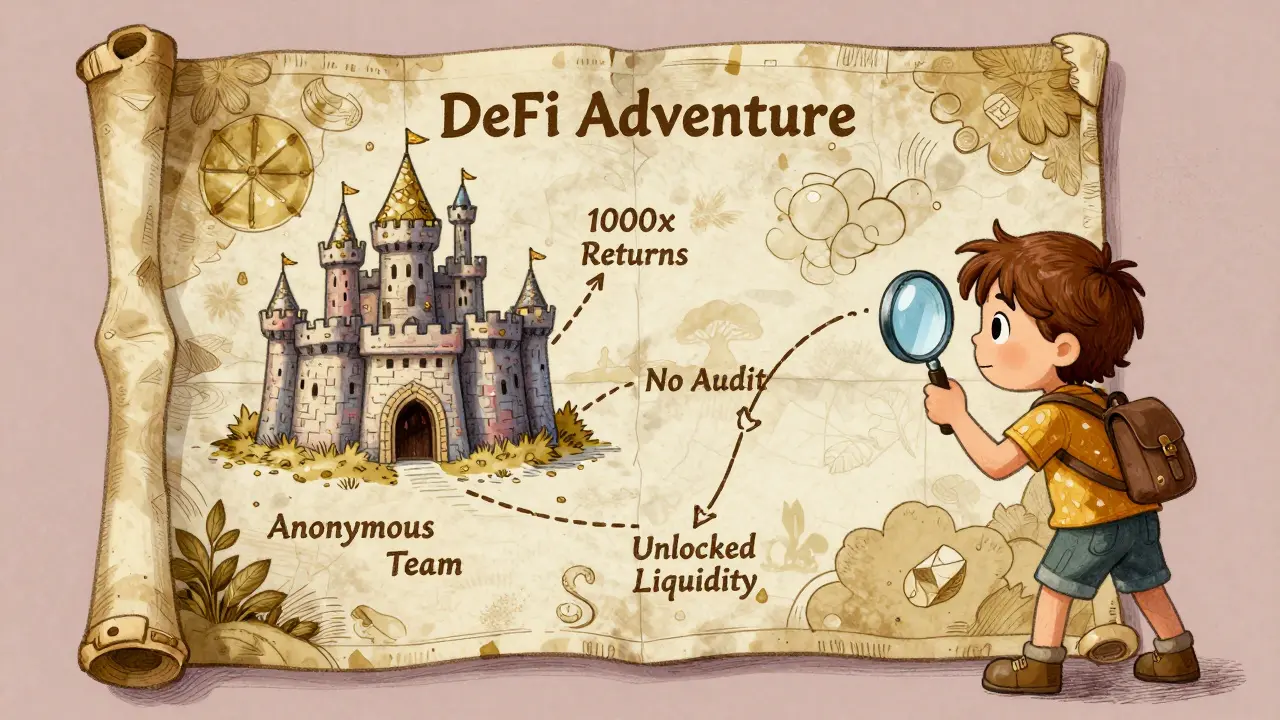
- Anonymous team: If the devs go by "CryptoGuru99" or "DeFiKing" with no LinkedIn, Twitter, or real-world history, walk away. Real teams have names, faces, and track records.
- No audit: A security audit by firms like CertiK, Trail of Bits, or PeckShield isn’t optional-it’s your first line of defense. If the project says "audit in progress" or won’t show the report, that’s a red flag. Audits cost money. If they won’t pay for one, they’re not serious.
- Unlocked liquidity: Liquidity should be locked for at least 12 months. If it’s not locked at all, or the lock is only 30 days? That’s a green light for a rug pull. Liquidity locks are like a contract saying, "We won’t steal this money." If they won’t lock it, they’re planning to steal it.
- Insider token dominance: If the team holds over 20% of the total supply, they can crash the price anytime. Fair distributions mean 5-10% for the team, with the rest going to community, liquidity, and early adopters. Anything else is a setup.
- FOMO pressure: "Last chance!" "1000x coming!" "Don’t miss out!" If the marketing sounds like a pyramid scheme, it probably is. Real projects don’t need hype-they need substance.
- Zero GitHub activity: Check the project’s GitHub. Are there commits every week? Are the code changes meaningful? Or is it just a placeholder repo with one commit from six months ago? No code updates = no real development.
What Due Diligence Actually Looks Like
Due diligence isn’t a checklist you skim while scrolling on your phone. It’s a process. Here’s how to do it right.
- Verify the team: Google each team member. Look for their LinkedIn. Check if they’ve worked at real companies. Search their Twitter history. If they’re new to crypto and have no prior work, be cautious.
- Read the whitepaper: Don’t trust summaries. Read the full document. Does it explain the tech? Or just promise riches? If it reads like a sales pitch with no technical depth, it’s likely fake.
- Check the audit report: Go to the auditor’s website. Look up the project name. Read the full report-not just the summary. Did they find any critical vulnerabilities? If yes, how were they fixed? If the team hid the report, don’t invest.
- Review tokenomics: How many tokens are there? Who holds them? Use a blockchain explorer like Etherscan or BscScan. Look at the top holders. If one wallet owns 30% of the supply? That’s a red flag.
- Check liquidity locks: Use a tool like Team Finance or Unicrypt to verify if liquidity is locked. Check the lock duration. If it’s less than 6 months, walk away. 12 months is the minimum.
- Study the community: Join the Discord and Telegram. Don’t just read-listen. Are people talking about the tech? Or just posting memes and "to the moon"? Look for questions like, "What’s the roadmap?" and "How does this solve X problem?" If the devs never answer, that’s telling.
- Look at trading volume: High volume on a new token? Could mean pump-and-dump. Low volume? Could mean no real interest. Check volume on DEXs like Uniswap or PancakeSwap. If volume is mostly from one wallet? That’s a sign of wash trading.
Where to Invest (and Where to Avoid)
Not all platforms are equal. Stick to exchanges that do basic vetting: Binance, Coinbase, Kraken. These platforms don’t list every new token. They filter out the worst scams. That doesn’t mean everything they list is safe-but it’s a better starting point than random DEXs.
On the flip side, avoid new tokens on lesser-known DEXs like Pump.fun or newly launched chains with no security history. These are rug pull hotspots. Even if the project looks legit, the infrastructure around it isn’t.
Sticking to established projects like Bitcoin, Ethereum, or tokens listed on major exchanges for over a year reduces your risk by 90%. Why? Because thousands of people have already dug into them. If there was a backdoor, someone would’ve found it by now.
Tools That Help You Stay Safe
There are free tools that can catch rug pulls before you invest:
- Forta Network: Monitors blockchain transactions in real time. If a contract tries to drain liquidity or mint new tokens illegally, it flags it. You can install the Forta app or use browser extensions that integrate it.
- Dune Analytics: Lets you build dashboards to track wallet activity. See if the dev wallet is dumping tokens. See if liquidity is being pulled.
- DeFiLlama: Shows TVL (total value locked) trends. A sudden drop in TVL can mean liquidity is being removed.
These tools won’t stop every scam-but they give you a fighting chance.
The Hard Truth
There’s no 100% safe crypto investment. Even big projects get hacked. But rug pulls? They’re avoidable. Most happen because people skip the basics. They trust influencers. They chase 1000x returns. They ignore audits. They don’t check liquidity locks.
Real investing isn’t about timing the market. It’s about timing your decisions. Take your time. Ask hard questions. Walk away from anything that feels too good to be true. If a project doesn’t want to prove it’s legit, it’s not worth your money.
Every dollar you lose to a rug pull is a dollar you can’t get back. But every hour you spend on due diligence? That’s an hour you save from losing thousands.
Can a rug pull happen on Ethereum or Binance Smart Chain?
Yes. Rug pulls happen on any blockchain where decentralized exchanges exist. Ethereum and BSC are the most common because they have the highest trading volume. Scammers target them because that’s where the money is. The blockchain itself isn’t the issue-it’s the lack of oversight on new projects.
Are all anonymous teams scams?
Not all, but the vast majority are. Some legitimate projects use pseudonyms for privacy, especially in regions with strict crypto regulations. But if there’s zero verifiable history, no LinkedIn, no past work, and no transparency about who’s behind it? That’s a red flag. Legitimate anonymity is rare. Suspicious anonymity is common.
What if a project says it’s audited but won’t show the report?
That’s a scam. Reputable auditors publish reports publicly. If the project says "we were audited by CertiK" but won’t link to the report on CertiK’s website, they’re lying. Go to CertiK’s site yourself, search for the project, and see if it’s listed. If not, walk away.
Is it safe to invest in a token with a locked liquidity pool?
It’s safer-but not safe. A locked liquidity pool stops the devs from pulling funds immediately. But they can still dump their tokens, manipulate the market, or abandon the project. Locks are a minimum requirement, not a guarantee. Always combine them with team verification, audits, and fair tokenomics.
Can I recover my money after a rug pull?
Almost never. Blockchain transactions are irreversible. Once liquidity is drained, the funds are gone. Law enforcement rarely steps in unless millions are involved-and even then, recovery is rare. Prevention is the only real solution.
Comments
Danny Kim
So I just lost my rent money to a token called "MoonBoiCoin" because the Discord mod said it was "100% audited." Turns out the audit was a fake PDF they slapped together in Canva. I’m not mad, I’m just disappointed. At least now I know why my dog looks at me like I’m a dumbass.
February 27, 2026 AT 05:45
Cathy Sunshine
How quaint. You treat blockchain like it’s a financial instrument rather than a metaphysical experiment in decentralized trust. The rug pull isn’t a flaw-it’s an evolutionary filter. Those who didn’t do their due diligence? They were never meant to hold sovereignty over capital. The market purges the weak. You’re not a victim. You’re a data point.
February 27, 2026 AT 13:20
Shannon Black
Thank you for this comprehensive breakdown. As someone who works in financial compliance, I appreciate the clarity with which you’ve outlined the structural vulnerabilities in DeFi onboarding. The emphasis on liquidity locks and audit transparency aligns with global best practices for asset verification. I hope regulators take note.
February 28, 2026 AT 07:38
Richard Cooper
Bro I bought a coin called DogeBlast and now my whole portfolio is ghosted. No more 1000x. Just 0x. And I’m still here. Still scrolling. Still hoping.
March 1, 2026 AT 15:50
Dee Resin
Oh sweet Jesus. Another person who thinks reading a whitepaper is enough. I once invested in a project where the devs said they were "building on the metaverse." Turns out their entire tech stack was a Figma mockup and a ChatGPT-generated roadmap. I cried into my ramen. Then I bought Bitcoin.
March 3, 2026 AT 00:44
Tanvi Atal
Audits are useless. Everyone knows that. Just don’t invest in anything new. Stick to BTC. Done.
March 3, 2026 AT 17:17
Sony Sebastian
Let’s be clear: liquidity locks are a placebo. The real issue is tokenomics asymmetry. When team allocations exceed 10% without vesting cliffs, you’re not investing-you’re funding a Ponzi with a smart contract. And if the GitHub hasn’t been updated in 72 hours? That’s not negligence. That’s premeditated exit liquidity. The audit? Just theater. A distraction from the core structural decay.
March 5, 2026 AT 10:37
Brian Lemke
This post is a godsend. Seriously. I used to think crypto was all about moon shots and hype. Then I lost $8k on a token that had a Discord channel full of bots and a website made in Wix. After reading this, I started doing real research-checking GitHub commits, verifying team LinkedIn profiles, even cross-referencing audit reports on the auditor’s own site. Took me three weeks. But now? I’ve got my first real position in a project that actually ships code. It’s not glamorous. But it’s mine. And it’s safe. You don’t need to be rich to invest. You just need to be careful.
March 6, 2026 AT 11:48
Megan Lavery
I just started dipping my toes into crypto and this literally saved me. I was about to invest in a coin with a "1200x potential" and a meme dog logo. Then I read this. I checked the liquidity lock. It was unlocked. I googled the team. Zero results. I walked away. Now I’m just holding ETH and feeling like a genius. Thanks for the clarity.
March 7, 2026 AT 06:51
Mae Young
Oh, so now we’re pretending that "due diligence" is a magic shield? Please. The entire system is rigged. Even Bitcoin had its rug-pull moments in 2011. The blockchain doesn’t protect you-it just makes the theft irreversible. And don’t get me started on "audits." They’re paid for by the same people who built the scam. It’s a circus. The only safe investment? Not participating. But hey, if you want to lose money… go ahead. I’ll be over here, sipping tea, watching you burn.
March 7, 2026 AT 16:00
Trenton White
The tools mentioned-Forta, Dune, DeFiLlama-are underutilized. I’ve set up alerts for all my holdings. If liquidity drops more than 15% in 24 hours, I sell immediately. It’s not perfect, but it’s better than hoping. Also, never trust a project that doesn’t have a public Discord with verified team members answering questions daily. Silence = exit.
March 9, 2026 AT 04:32
Cheryl Fenner Brown
OMG I DID THIS SOOOO BAD 😭 I bought a coin called "PuppyBucks" bc the influencer said "to the moon" and I was like YASSS 😍 then poof. Gone. No audit. No team. Just a Discord with 10k bots. I cried. Then I bought DOGE. Now I’m chill. But I still feel guilty. 🥺
March 10, 2026 AT 22:21
Michael Teague
Why do people keep doing this? You think a 1000x coin is gonna save you? Nah. Just stick to Bitcoin. It’s not sexy. But it doesn’t vanish overnight. I lost $12k last year. Won’t do it again.
March 11, 2026 AT 10:17
kati simpson
I read the whole thing. Took me two days. I’m not smart enough to understand all the technical stuff. But I got the gist. Don’t trust people who don’t show their face. Don’t trust projects that don’t show their code. Don’t trust hype. I’m not investing anymore. I’m just watching. And that’s okay.
March 11, 2026 AT 20:43
Cory Derby
Thank you for taking the time to lay this out with such care. This is the kind of guidance that transforms fear into informed action. Many newcomers enter crypto with curiosity but no framework. Your structure-verifying teams, reviewing audits, analyzing tokenomics-provides not just protection, but empowerment. This isn’t about avoiding risk. It’s about replacing speculation with stewardship. Keep sharing this. The future of finance depends on people like you.
March 12, 2026 AT 09:21