
When a contentious fork, a split in a blockchain caused by irreconcilable disagreements among developers and users. Also known as a hard fork, it’s not just a technical update—it’s a battle over direction, values, and control. Unlike smooth upgrades that everyone agrees on, contentious forks happen when part of the community refuses to accept changes. This isn’t rare—it’s happened dozens of times in crypto history, and each one reshapes who owns what, who controls the rules, and sometimes even the meaning of the coin itself.
These splits often start with a simple question: Should the blockchain change its rules? For example, when Bitcoin’s block size became a bottleneck, some wanted to increase it to handle more transactions. Others said no—any change threatens decentralization. That debate led to Bitcoin Cash, a new chain born from a contentious fork. The same thing happened with Ethereum and Ethereum Classic after the DAO hack. One group wanted to reverse the theft; the other said code is law. Both chains still exist. And it’s not just about big names. Smaller chains, like those behind meme coins or niche DeFi projects, face the same pressure. A single vote, a leaked Discord message, or a sudden change in tokenomics can trigger a split.
What makes a fork contentious is the human element. It’s not code—it’s trust, identity, and money. When a fork happens, holders of the original coin often get an equal amount on the new chain. But which one is worth more? Which one has the community? Which one has the exchanges? These aren’t technical questions—they’re social ones. That’s why you’ll see posts here about exchanges like Upbit facing penalties, or new platforms like ADEN and ACX trying to win trust. They’re all reacting to the fallout of past forks: regulatory uncertainty, broken user confidence, and the constant risk of another split.
You’ll also find guides on airdrops like PNDR, RBT, and PND—many of these are tied to forks. When a chain splits, new tokens are created, and communities rush to claim them. But not all forks are fair. Some are scams dressed up as upgrades. Others are honest attempts to fix broken systems. How do you tell the difference? That’s what these posts help you learn. From the energy debates in Iceland to the legal gray zones in India and Namibia, every fork carries consequences beyond the ledger. They affect who can mine, who can trade, and who gets left behind.
Contentious forks aren’t going away. They’re a natural part of a decentralized system where no single person or group holds all the power. But understanding them helps you avoid losing money on fake forks, recognize real opportunities, and know when a project is worth sticking with—or walking away from. Below, you’ll find real reviews, deep dives, and warnings from people who’ve been through it—all focused on helping you make smarter moves in a world where blockchains don’t just change… they divide.
Posted by Minoru SUDA with 16 comment(s)
Oct
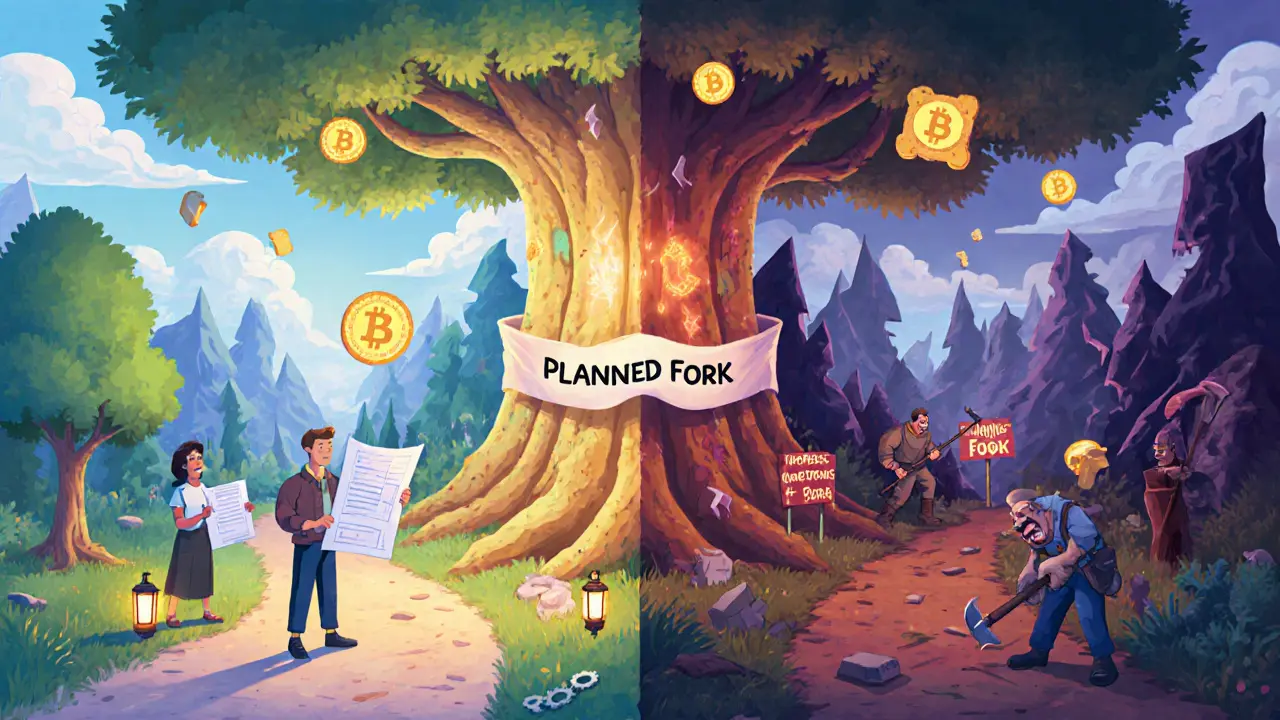
Learn the key differences between contentious and planned blockchain forks, their technical impacts, market effects, and how to navigate them safely.
view more