
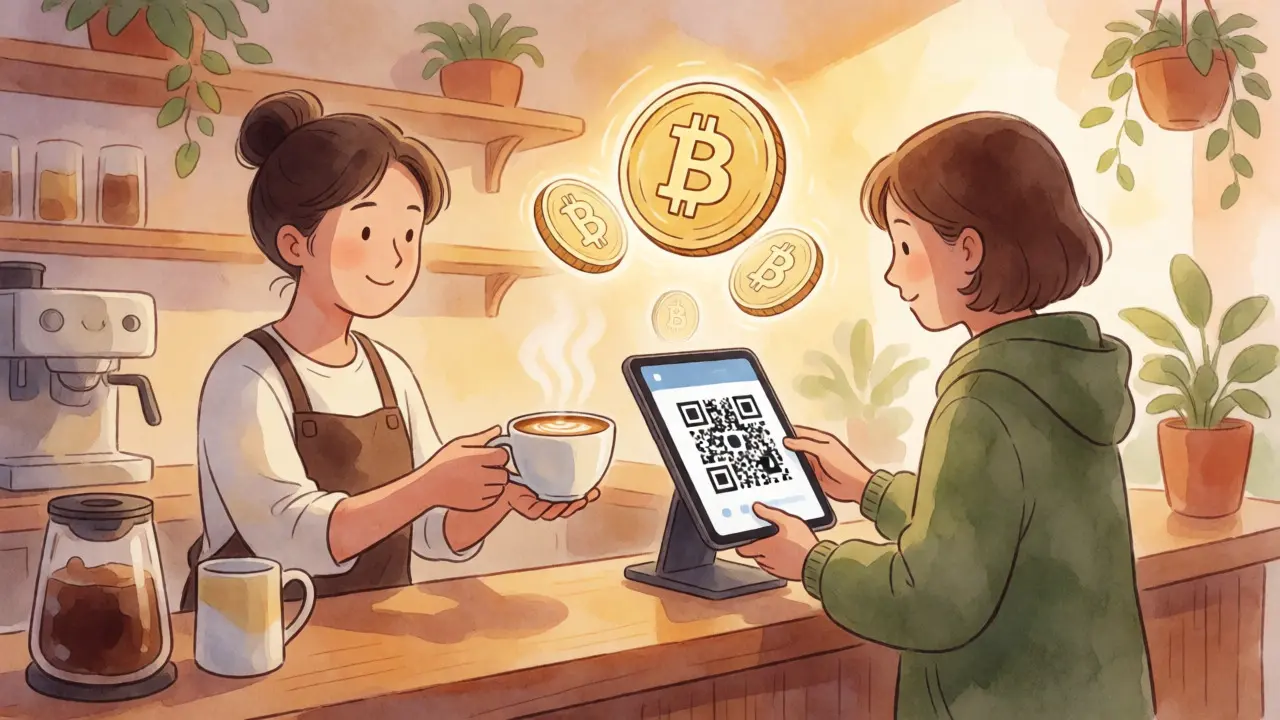
Imagine you’re running a coffee shop in Wellington. A customer walks up, scans your QR code, and sends you 0.01 BTC. You hand them the latte immediately because waiting ten minutes for Bitcoin to confirm would make the line stretch out the door. But what if that customer is playing a trick? What if they just sent you money that doesn’t actually exist anymore? This is the gamble of accepting zero-confirmation transactions, often called zero-conf.
Zero-conf allows merchants to accept payments instantly, before miners have validated the transaction and added it to a block. It’s fast, it’s convenient, but it comes with a specific set of risks that can wipe out your profits if you aren’t careful. Let’s break down exactly what goes wrong, why it happens, and how you can protect yourself without killing your checkout speed.
What Exactly Is a Zero-Conf Transaction?
To understand the risk, you need to understand the state of the transaction. When someone sends crypto, the transaction isn’t instantly written into stone on the blockchain. First, it gets broadcast to the network and sits in the mempool. Think of the mempool as a digital waiting room where unconfirmed transactions hang out until a miner picks them up.
A zero-conf transaction is one you accept while it’s still in this waiting room. You haven’t seen it included in a block yet. In traditional banking, when you swipe a card, the terminal waits for authorization. In crypto, zero-conf skips that wait. The sender broadcasts the transaction, your wallet sees it propagate through a few nodes, and you call it a day. The problem? Until it’s in a block, that transaction is mutable. It can be reversed, dropped, or replaced.
The Double-Spend Attack: Your Biggest Threat
The primary danger here is the double-spend attack. This is the crypto equivalent of writing two checks from the same bank account and hoping the first one clears before the second one bounces. Since the blockchain only records the final truth once a block is mined, an attacker can try to spend the same coins twice.
Here’s how a typical attack plays out in real time:
- The Setup: An attacker has 1 BTC. They send it to your merchant wallet (Transaction A) to buy a laptop. You see the transaction in the mempool and hand over the laptop.
- The Switch: Simultaneously, the attacker creates Transaction B, sending that same 1 BTC back to their own address (or another exchange). Crucially, they attach a much higher transaction fee to Transaction B.
- The Race: Miners are profit-driven. They will almost always pick the transaction with the higher fee because it pays them more. If Transaction B gets mined into the next block, it becomes the official record.
- The Loss: Transaction A is now invalid. It remains in the mempool forever as an orphaned transaction, or gets dropped entirely. You have the laptop gone, but no confirmed payment.
This isn’t just theoretical. While sophisticated attackers might use more complex methods like Eclipse attacks to isolate your node and hide the double-spend, the basic fee-race mechanism works surprisingly well against simple setups.
Why Do Transactions Get Dropped?
It’s not always malicious. Sometimes, a zero-conf transaction simply fails to confirm. This happens due to network congestion or underpaid fees. If the Bitcoin network is busy-say, during a market spike-miners fill blocks with high-fee transactions first. If your customer paid a standard fee, their transaction might sit in the mempool for hours or even days.
If a transaction stays unconfirmed too long, nodes may drop it from their memory pools to save space. The sender then effectively "cancels" the payment by spending those funds elsewhere. As a merchant, if you shipped goods based on a zero-conf signal that later vanished, you’re left holding the bag. This is particularly risky during periods of high volatility when everyone is trying to move funds quickly.

Risk Assessment: When Is Zero-Conf Safe?
You shouldn’t treat every zero-conf transaction equally. The risk profile changes dramatically based on the value of the sale and the trust level of the buyer. Here is a practical breakdown of when you should consider accepting instant payments versus waiting for confirmations.
| Scenario | Transaction Value | Risk Level | Recommended Action |
|---|---|---|---|
| Coffee Shop / Vending Machine | Low ($5 - $20) | Low | Accept Zero-Conf. Cost of attack exceeds profit margin. |
| Online Gaming Micro-transactions | Very Low (<$5) | Negligible | Accept Zero-Conf. High volume makes manual checks impractical. |
| Retail Clothing Store | Medium ($50 - $200) | Moderate | Wait for 1 confirmation OR use trusted vendor status. |
| Electronics / Jewelry | High ($500+) | High | Require 3-6 confirmations. Never rely on zero-conf alone. |
| Real Estate / Large Transfers | Very High ($10k+) | Critical | Wait for multiple confirmations. Use escrow services. |
The logic is simple economics. If you sell a $5 coffee, an attacker needs to spend significant effort and potentially lose fees to steal $5 worth of coffee. It’s rarely worth their time. However, if you’re selling a $2,000 GPU, the incentive to execute a double-spend is massive. The potential gain outweighs the cost of the attack, making zero-conf acceptance dangerous.
How to Mitigate the Risks
If you want to keep your checkout lines moving but don’t want to get burned, you need technical safeguards. You can’t eliminate the risk entirely, but you can reduce it significantly.
Broadcast Widely: Don’t just rely on one node seeing the transaction. Ensure your point-of-sale system connects to multiple independent nodes. If a transaction appears on several unrelated nodes across different geographic locations, it’s harder for an attacker to hide a double-spend attempt locally.
Monitor for Conflicts: Some advanced payment processors actively scan the mempool for conflicting transactions. If they see two transactions spending the same input, they flag it immediately. This requires more computational power than a basic wallet check, so many merchants use third-party payment gateways that handle this monitoring for them.
Use Layer-2 Solutions: This is perhaps the most effective modern solution. Networks like the Lightning Network allow for near-instant settlements that are cryptographically secured differently than base-layer Bitcoin transactions. While Lightning has its own channel management complexities, it removes the direct dependency on immediate block inclusion for small retail purchases, offering a better balance of speed and security.
Implement a Risk-Based Policy: Automate your acceptance criteria. Set your POS software to automatically accept zero-conf for amounts under $20, require 1 confirmation for $20-$100, and demand 3 confirmations for anything above $100. This hybrid approach captures the convenience benefits for small sales while protecting your bottom line on larger ones.

The Role of Trust and Reputation
Not all customers are strangers. If you run a subscription service or a local business with regulars, you can leverage reputation. Established relationships lower the probability of fraud. An attacker is less likely to target a known, recurring customer with a low-value purchase than an anonymous walk-in buying expensive electronics.
However, be wary of "first-time high-value buyers." That’s a classic red flag for double-spend attempts. If a new customer wants to buy your most expensive item using zero-conf, ask them to wait for one confirmation. Most honest users won’t mind a five-minute wait for peace of mind. Those who insist on immediate delivery of high-value goods without confirmation are statistically more likely to be testing the waters for fraud.
Looking Ahead: Will Zero-Conf Become Obsolete?
As blockchain technology matures, the strict definition of zero-conf might fade. With the rise of Layer-2 scaling solutions and faster consensus mechanisms in altcoins, the gap between "broadcast" and "finalized" is narrowing. For example, some newer chains aim for sub-second finality, reducing the window for double-spends to milliseconds.
But for Bitcoin, which powers the majority of retail crypto adoption, the 10-minute block time remains a structural reality. Until Layer-2 adoption becomes ubiquitous, zero-conf will remain a necessary compromise for physical retail. It’s not a bug; it’s a feature designed for specific economic conditions. Understanding the trade-off is key. You aren’t getting free money; you’re paying for speed with a calculated amount of risk.
So, next time you’re tempted to skip the confirmation wait, ask yourself: Is the speed worth the potential loss? For a cup of flat white, probably yes. For a designer watch, definitely not.
Is zero-conf safe for large purchases?
No, it is generally not recommended. The financial incentive for an attacker to perform a double-spend increases with the transaction value. For purchases over $100-$200, waiting for at least one or two confirmations is safer.
How long does it take for a zero-conf transaction to be confirmed?
On average, Bitcoin blocks are mined every 10 minutes. However, depending on network congestion and the fee paid, it could take anywhere from a few seconds to several hours. During congested periods, low-fee transactions may be delayed significantly.
Can I reverse a zero-conf transaction after handing over goods?
You cannot reverse it yourself. The sender or the network dynamics determine the outcome. If a double-spend occurs, the network rejects your transaction, effectively reversing the payment without your consent. Once a transaction is confirmed in a block, it becomes immutable and cannot be reversed.
Does the Lightning Network eliminate zero-conf risks?
It mitigates them significantly. Lightning uses off-chain channels where balances are updated instantly. While there are risks related to channel disputes, the immediate settlement feels similar to zero-conf but with stronger cryptographic guarantees against double-spends within the active channel.
What is the "Eclipse Attack" mentioned in relation to zero-conf?
An Eclipse Attack occurs when an attacker controls all connections to your node. They can feed you fake information about the network state, hiding the fact that a double-spend has occurred. This is why connecting to multiple diverse nodes is a crucial mitigation strategy.