
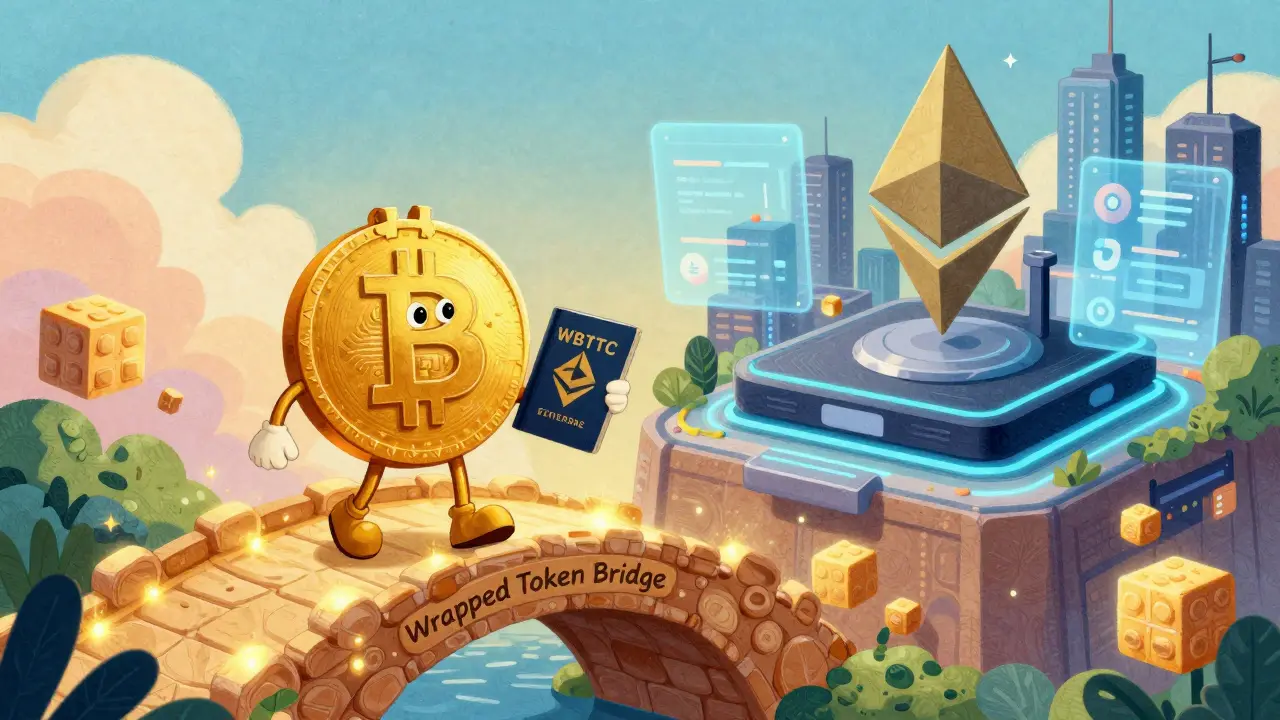
Imagine trying to spend your Bitcoin on an Ethereum-based lending platform. You can’t do it directly because Bitcoin lives on its own blockchain, isolated from Ethereum’s smart contracts. This is where wrapped tokens come in. They act as a bridge, allowing you to use Bitcoin’s value in the Ethereum ecosystem. But here is the big question that keeps investors up at night: Is there actually real Bitcoin backing those digital tokens?
The concept of wrapped token supply and reserves is the backbone of cross-chain interoperability. It promises a 1:1 peg between a native asset and its wrapped version. If the system works, every single wrapped token in circulation has a corresponding unit of the original asset locked away safely. If it fails, you are holding worthless IOUs. Understanding how this supply and reserve mechanism functions is not just for developers; it is essential for anyone participating in decentralized finance (DeFi).
The Lock-and-Mint Mechanism Explained
At its core, the wrapped token system relies on a simple but critical process called lock-and-mint. When you want to wrap an asset, such as converting Bitcoin into Wrapped Bitcoin (WBTC), you don’t just click a button and get a new token instantly. A custodian steps in.
Here is how the flow works:
- Deposit: You send your native Bitcoin to a secure, multi-signature wallet controlled by a custodian like BitGo.
- Verification: The custodian confirms receipt of the funds. This step ensures the reserves are actually increased before any new tokens are created.
- Minting: Once verified, a smart contract on the target blockchain (usually Ethereum) mints an equivalent amount of wrapped tokens and sends them to your address.
- Circulation: You now hold WBTC, which behaves like an ERC-20 token, allowing you to trade, lend, or stake it in DeFi protocols.
The reverse process, known as burning, happens when you want your original Bitcoin back. You send the WBTC to a burn address. The smart contract destroys the tokens, reducing the total supply. The custodian then releases the underlying Bitcoin from their cold storage and sends it to your Bitcoin wallet. This minting and burning cycle ensures that the total supply of wrapped tokens never exceeds the amount of assets held in reserve.
Who Holds the Keys? Custodians and DAOs
In the world of wrapped tokens, trust is centralized even if the blockchain itself is decentralized. For WBTC, the most prominent example, BitGo acts as the primary custodian. They hold the actual Bitcoin in cold storage. However, they don’t operate alone. The system is governed by a Decentralized Autonomous Organization (DAO) consisting of 15 entities, including Ledger, Kyber, and Ren.
This DAO structure is designed to prevent any single party from acting maliciously. To add a new merchant who can facilitate wrapping or to change security parameters, multiple signatures from different DAO members are required. While this adds a layer of security, it also introduces complexity. The reliance on a custodial model means you are trusting these entities to keep the reserves safe and accurate. This stands in contrast to fully decentralized bridges, which attempt to remove human intermediaries entirely, though often at the cost of speed and ease of use.
| Token | Custody Model | Transparency Level | Primary Use Case |
|---|---|---|---|
| WBTC | Centralized (BitGo) | High (Monthly Audits) | Ethereum DeFi Integration |
| renBTC | Decentralized (RenVM) | Medium (On-chain proofs) | Cross-chain Privacy & DeFi |
| BTCB | Centralized (Binance) | Low (Opaque) | Binance Smart Chain Trading |
| WETH | Non-Custodial (Self-wrapping) | High (Native Chain) | Ethereum DeFi Compatibility |

Proof of Reserves: Trust but Verify
After the collapse of major exchanges in 2022, the crypto industry learned a hard lesson: you cannot assume reserves exist just because a company says they do. For wrapped tokens, Proof of Reserves (PoR) has become non-negotiable. WBTC publishes monthly attestations from independent accounting firms like Armanino. These reports confirm that the number of WBTC tokens in circulation matches the amount of Bitcoin held in custody.
Users can verify this data themselves. Blockchain explorers allow anyone to check the balance of the custodian’s public wallet addresses. If the on-chain Bitcoin balance drops below the circulating WBTC supply, the peg breaks, and the value of the wrapped token plummets. This transparency is why WBTC holds approximately 90% of the wrapped Bitcoin market share. Investors prefer systems where they can independently audit the health of the reserves rather than relying on blind faith.
Why Do We Need Wrapped Tokens?
You might wonder why we need this complex infrastructure. Why not just use Bitcoin directly? The answer lies in functionality. Bitcoin’s scripting language is limited. It does not support smart contracts in the same way Ethereum does. You cannot easily lend Bitcoin, create complex derivatives, or participate in automated market makers on Bitcoin’s native chain.
By wrapping Bitcoin into WBTC, you bring its liquidity and store-of-value properties into the Ethereum ecosystem. As of late 2024, over $25 billion worth of wrapped assets circulate on Ethereum, representing nearly 60% of the entire DeFi market cap. Without wrapped tokens, the DeFi sector would be significantly smaller and less liquid. WETH serves a similar purpose for Ether itself, allowing ETH to be used in ERC-20 compatible contracts without needing cross-chain bridges.

Risks and Vulnerabilities in the System
Despite the safeguards, wrapped token supply mechanisms are not risk-free. The primary danger is custodial risk. If BitGo were to be hacked, go bankrupt, or freeze withdrawals, the WBTC holders would be left with tokens that cannot be unwrapped. This centralization point contradicts the ethos of decentralization.
Another risk is smart contract vulnerability. The code that manages the minting and burning must be flawless. A bug in the WBTC contract could theoretically allow unauthorized minting, diluting the value of existing tokens. Additionally, network congestion can cause delays. During periods of high Ethereum gas fees, the minting and burning processes can take hours instead of minutes, creating temporary friction for users trying to move assets across chains.
Regulatory scrutiny is also increasing. The European Union’s MiCA framework requires strict monthly third-party attestations for wrapped assets operating within its jurisdiction. In the US, the SEC views properly backed wrapped tokens as custodial representations, but the line remains thin. Any regulatory action against custodians could disrupt the supply chain, leading to depegging events similar to what happened with algorithmic stablecoins.
The Future: Moving Toward Trustless Bridges
The industry is actively working to eliminate the need for centralized custodians. Projects like RenVM offer a more decentralized alternative using virtual machines to manage custody without a single point of failure. Meanwhile, the Ethereum Foundation is funding research into account abstraction (EIP-4337) and trustless cross-chain bridges that aim to remove custodial requirements entirely by 2026.
Chainlink has already integrated with WBTC to provide real-time, on-chain verification of reserves, improving accuracy to 99.999%. This hybrid approach combines the reliability of current custodial models with the transparency of decentralized oracle networks. As these technologies mature, the gap between wrapped tokens and native assets will narrow, making cross-chain interactions seamless and secure.
For now, understanding wrapped token supply and reserves is crucial. Check the audit reports. Know who holds the keys. And remember that while wrapped tokens unlock incredible opportunities in DeFi, they introduce counterparty risks that native assets do not have.
What happens if wrapped token reserves are lost?
If the reserves backing a wrapped token are lost due to hacking or mismanagement, the 1:1 peg breaks. The wrapped tokens may lose significant value as they no longer represent redeemable assets. Holders would likely face a total loss unless insurance or compensation mechanisms are in place, which is rare in decentralized systems.
How can I verify WBTC reserves myself?
You can verify WBTC reserves by checking the monthly attestation reports published by auditing firms like Armanino on the WBTC website. Additionally, you can view the public Bitcoin wallet addresses controlled by the custodian on a blockchain explorer and compare the BTC balance to the circulating WBTC supply on Ethereum.
Is WETH different from other wrapped tokens?
Yes, WETH is unique because it wraps Ether on its native Ethereum blockchain. It does not involve cross-chain custody or external custodians. Users simply lock their ETH in a smart contract to receive WETH, making it a non-custodial, trustless process compared to WBTC or renBTC.
Why does WBTC take so long to mint?
WBTC minting takes 30-60 minutes under normal conditions because it involves a multi-step approval process. The Bitcoin must be received by the custodian, verified, and approved by the DAO before the ERC-20 tokens are minted on Ethereum. This deliberate slowness enhances security but reduces convenience.
Are wrapped tokens regulated?
Regulation varies by region. In the EU, the MiCA framework mandates monthly third-party audits for wrapped assets. In the US, the SEC generally treats properly backed wrapped tokens as custodial representations rather than securities, provided the 1:1 reserve ratio is maintained and transparently verified.