

Imagine launching a new crypto project only to have your developers vanish with all the funds overnight. In the crypto world, this nightmare is called a "rug pull," and it happens more often than you'd think. This is where UNCX Network is a multi-chain decentralized finance (DeFi) protocol designed to eliminate this risk by providing a suite of trust-building tools for token launches and liquidity management. Originally known as Unicrypt, this Singapore-based powerhouse has evolved into a comprehensive infrastructure layer that ensures developers play fair and investors can sleep better at night.
Quick Takeaways: The UNCX Essentials
- Core Purpose: Prevents rug pulls and fraudulent token launches through locked liquidity and vesting.
- Network Reach: Multi-chain support including Ethereum, Binance Smart Chain (BSC), Polygon, Avalanche, and Solana.
- Token Utility: UNCX is a deflationary governance token used for platform decision-making.
- Key Services: Liquidity locking, token vesting, permissionless launchpads, and yield farming.
- Market Status: Highly rated (9/10 professionally) as a leading security layer for new DeFi projects.
How UNCX Network Solves the Trust Problem in DeFi
Most people enter the DeFi space looking for the next big thing, but the fear of scams is a huge barrier. UNCX Network acts as a digital notary. Instead of asking you to "trust the team," they provide a system where trust is enforced by code. By using Smart Contracts, the platform ensures that certain conditions must be met before funds can be moved, making it nearly impossible for a project owner to steal liquidity unexpectedly.
The platform doesn't just stop at one blockchain. While many competitors lock you into a single ecosystem, UNCX operates across Ethereum, Binance Smart Chain, and others. This flexibility is crucial for modern projects that want to reach users on different networks without sacrificing security. To keep things fast and scalable, they've integrated Solana for high-performance processing and The Graph for efficient data indexing, meaning users can track their locked assets in real-time without lag.
The Five Pillars of the UNCX Ecosystem
To understand the value of the UNCX crypto coin, you have to look at the services it supports. The platform is essentially a "one-stop shop" for anyone starting a crypto venture.
1. Liquidity Locking
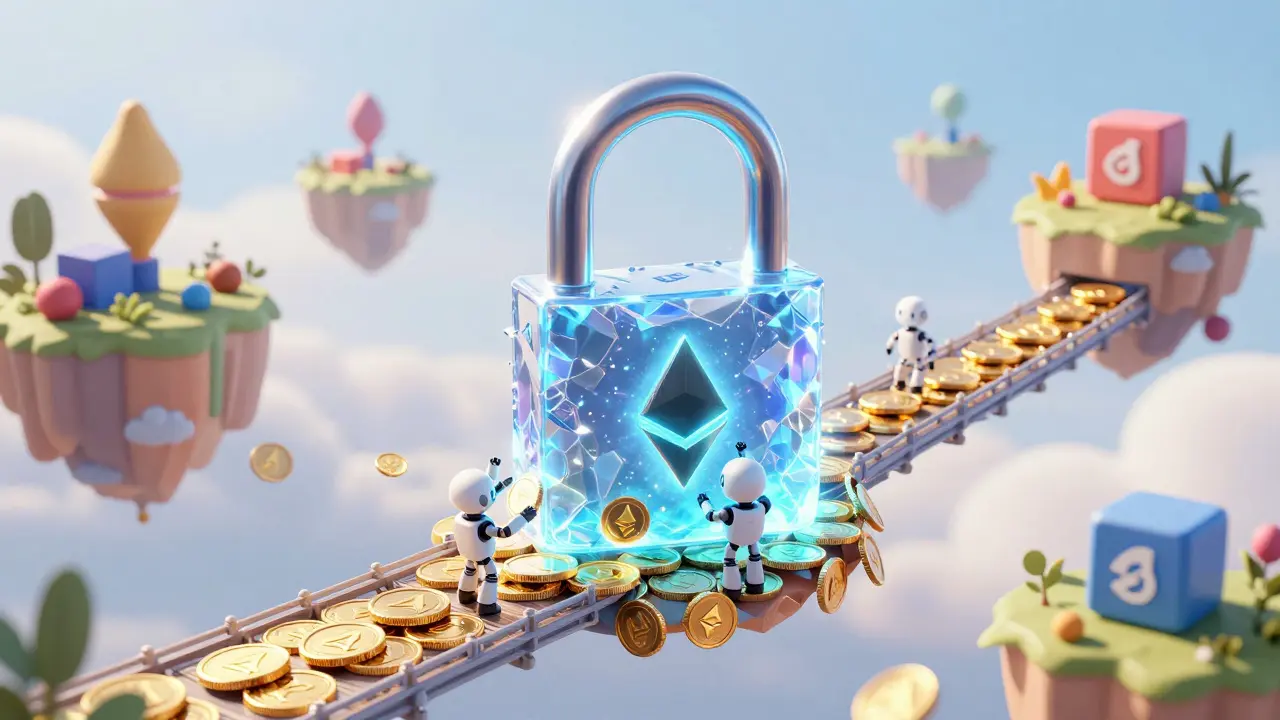
This is the most famous feature. When a project launches on a Decentralized Exchange (DEX), they must provide liquidity so people can trade. If the dev removes that liquidity, the token price crashes to zero. UNCX allows projects to lock these LP tokens for a set time (e.g., one year), proving to the community that the team is committed for the long haul.
2. Token Vesting
Ever wonder why some tokens crash right after launch? It's often because the team dumps their shares. Token vesting solves this by locking team tokens and releasing them gradually. This aligns the team's incentives with the long-term health of the project rather than a quick exit.
3. Permissionless Launchpads
UNCX provides a way to host Initial DEX Offerings (IDOs) without needing a middleman to approve the project. This democratizes access to funding while still providing the security tools needed to protect the buyers.
4. Yield Farming and Staking
Beyond security, UNCX helps projects create reward mechanisms. By setting up staking pools, projects can encourage users to hold their tokens, reducing selling pressure and growing the community.
5. Advanced Infrastructure
From custom tax implementation (deciding how much of a transaction goes back to the treasury) to token pausing functions, the platform gives developers a professional toolkit to manage their economy without writing complex code from scratch.
Breaking Down the UNCX Token: Value and Governance
The UNCX token isn't just a ticker on a chart; it's the engine of the ecosystem. Unlike tokens that just inflate over time, UNCX is designed to be deflationary. This means as the platform grows and more fees are processed, the supply of tokens tends to decrease, which historically creates scarcity and potential value growth.
Holders aren't just passive investors; they have governance rights. This means if the community wants the platform to support a new blockchain or change a fee structure, UNCX holders get to vote on it. It shifts the power from a centralized company to the actual users of the protocol.
| Feature | UNCX Network | PinkSale / DXSale | TrustSwap Team Finance |
|---|---|---|---|
| Blockchain Support | Very Broad (Multi-chain) | Broad | Moderate |
| Security Level | High (Audited Multi-sig) | Standard | High |
| Pricing/Fees | Competitive / Chain-based | Low / Flat | Premium / Higher Cost |
| Primary Use Case | Trust & Infrastructure | Quick Launches | Team Management |

The Cost of Security: Fees and Pricing
Running a secure network isn't free, and UNCX has a transparent fee structure that varies depending on which blockchain you use. For instance, if you're launching an Initial Liquidity Offering (ILO), the platform might take a small percentage of the raised funds (around 2.2% on Avalanche) and 1% of the locked LP.
Flat fees are also in place to prevent spam and cover operational costs. You'll see charges like 0.1 ETH on the Ethereum network or 0.2 BNB on Binance Smart Chain. While these costs exist, they are generally seen as a small insurance premium to pay for the trust and security that audited smart contracts provide.
Is UNCX Network Right for Your Project?
If you are a developer, the choice is simple: if you want your community to trust you, you need to prove it. Using UNCX for liquidity locking and vesting is the industry standard for doing so. It removes the "he said, she said" from the conversation and replaces it with a verifiable on-chain record.
For the average investor, seeing a project "Locked by UNCX" is a green flag. It doesn't guarantee the project will be a success, but it does guarantee that the developers can't simply flip a switch and steal the liquidity pool. It's a fundamental layer of risk management in a volatile market.
To further help new users, the UNCX Academy provides educational content. This isn't just marketing; it's a resource for learning how to spot red flags in DeFi and how to use secure infrastructure correctly.
What exactly is a rug pull and how does UNCX prevent it?
A rug pull happens when developers remove all the liquidity from a trading pool, leaving investors with tokens that cannot be sold. UNCX prevents this by "locking" the liquidity provider (LP) tokens in a smart contract for a specific period. The developers cannot withdraw these funds until the timer expires, ensuring the project's liquidity remains stable for the promised duration.
Is the UNCX token a good investment?
While we cannot provide financial advice, it is important to note that UNCX is a deflationary governance token. This means its supply decreases over time, and its value is tied to the adoption of the UNCX Network protocol. As more projects use the platform for locking and vesting, the utility and demand for the token typically increase.
Which blockchains does UNCX support?
UNCX Network is highly versatile and supports a wide range of chains, including Ethereum, Binance Smart Chain (BSC), Polygon, Avalanche, and Solana. This makes it a preferred choice for multi-chain projects that want to maintain a consistent security standard across different networks.
How does token vesting differ from liquidity locking?
Liquidity locking protects the trading pool (the funds used to buy/sell the coin). Token vesting protects the market price by locking the tokens held by the team and releasing them slowly over months or years. One prevents a total collapse (rug pull), while the other prevents massive price drops caused by team selling.
Where can I find technical documentation for UNCX?
Detailed technical guides, implementation steps, and API information are available at the official documentation site, docs.uncx.network, as well as through the UNCX Academy for those who prefer guided learning.