
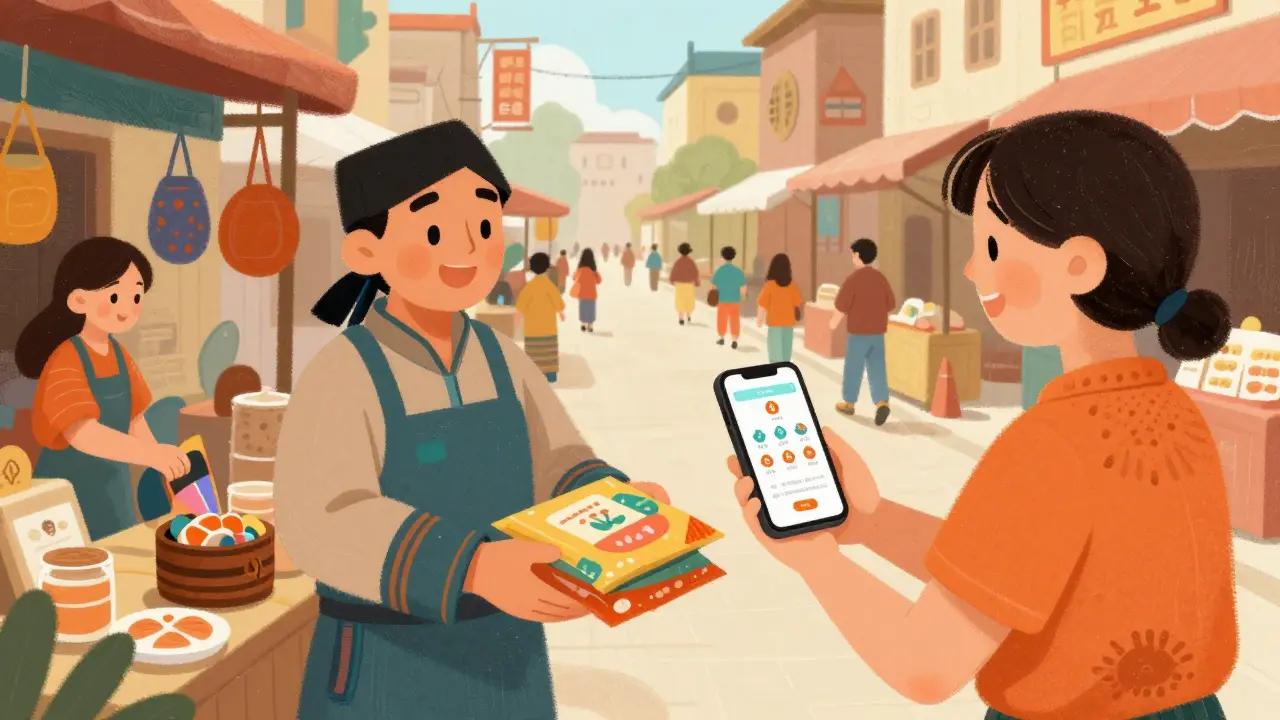
You see a coin called Storepay (SPC) on your screen. The price is tiny-fractions of a cent. The supply is massive. But what actually does it do? Is it just another speculative altcoin hoping for a viral pump, or is there a real business behind it?
Here is the short answer: Storepay Coin is a utility token built for a Buy Now, Pay Later (BNPL) fintech company operating in Mongolia and Indonesia. It sits on the Binance Smart Chain Smart Chain, not as a standalone investment vehicle, but as the fuel for a specific payment ecosystem. If you are looking to understand how SPC works, why its market cap looks weird, and whether it has actual use cases, this guide breaks it down without the fluff.
The Business Behind the Token
To get SPC, you first have to understand Storepay. This isn't a team of anonymous developers hiding behind pseudonyms. Storepay is a Singapore-headquartered fintech company. Their core product is an interest-free installment payment app. Think of services like Klarna or Afterpay, but focused on emerging markets in Asia, specifically Mongolia and Indonesia.
Their model is straightforward. You buy something at a partner store. Instead of paying the full amount upfront, you split the cost into installments. The key selling point? No interest. No hidden fees. Just pure credit access for people who might struggle with traditional bank loans.
At the time of their whitepaper launch, they claimed 140,000 registered users and partnerships with over 1,000 merchant stores. That is a real, functioning user base. SPC was introduced to layer blockchain technology onto this existing infrastructure. The goal is to create a "smart digital payment" system where the token handles rewards, payments, and even credit scoring.
How Does SPC Actually Work?
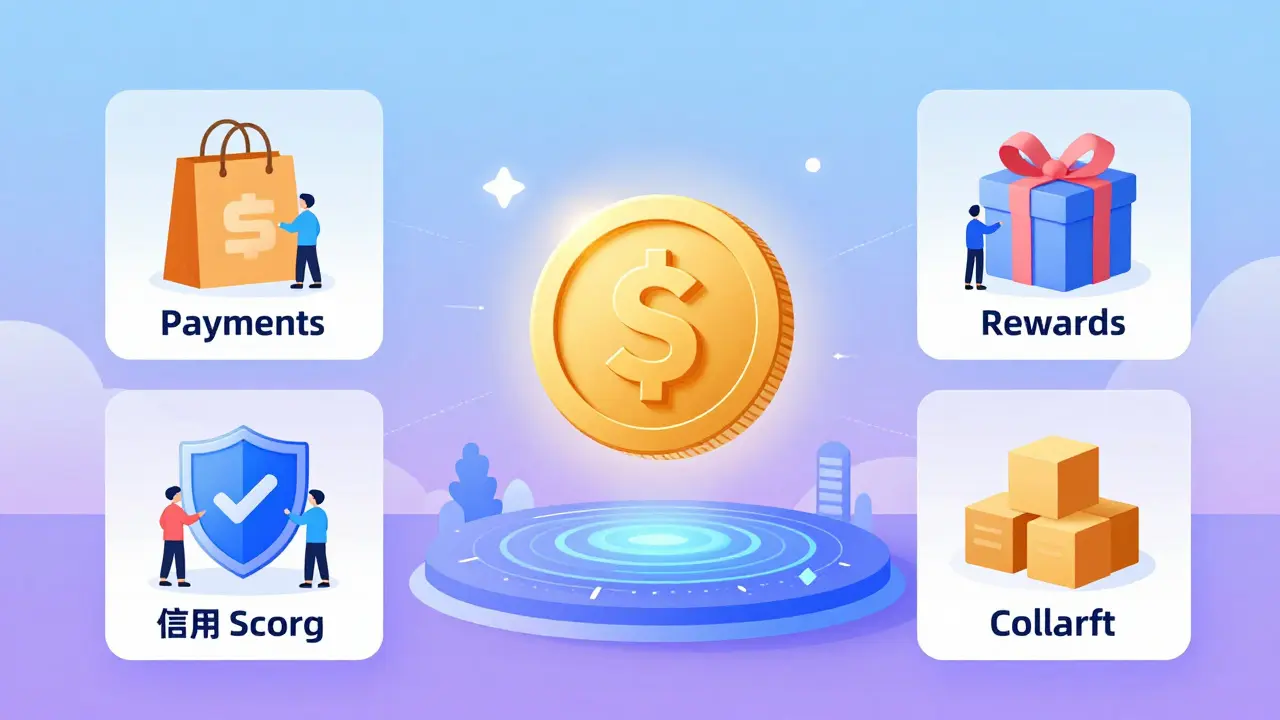
Most crypto tokens fall into two buckets: governance (voting rights) or speculation (hoping the price goes up). SPC tries to be a utility token. Here is how it functions inside the Storepay ecosystem:
- Payments: Users can settle their BNPL debts using SPC instead of fiat currency. This integrates crypto directly into daily retail spending.
- Rewards: When you shop through the Storepay app, you earn SPC as a bonus. It acts like cashback, but in token form.
- Credit Scoring: This is the interesting part. Your on-chain activity and SPC holdings could influence your credit score within the app. Good behavior means better credit limits.
- Collateral: In some scenarios, SPC might be used as collateral to secure larger BNPL limits, bridging DeFi concepts with traditional lending.
The idea is to make financial inclusion easier. By using a token, Storepay aims to lower transaction costs and automate processes that would otherwise require expensive banking infrastructure.
Tokenomics: Why the Supply is So High
If you look at the numbers, they look extreme. Let’s break them down.
| Metric | Value |
|---|---|
| Blockchain | Binance Smart Chain (BSC) |
| Token Standard | BEP-20 |
| Total Supply | ~160.13 Billion SPC |
| Circulating Supply | 0 (Reported by major trackers) |
| Fully Diluted Valuation (FDV) | ~$18.5 Million |
A supply of 160 billion sounds scary. But remember, Bitcoin has 21 million and trades for $60k+. SPC trades for fractions of a penny. The high supply is designed to allow micro-transactions. If you want to give someone a $0.01 reward, sending 0.0000001 BTC is annoying. Sending 100 SPC is easy.
The confusing part is the circulating supply of 0. Major platforms like CoinMarketCap and Coinbase report zero circulating tokens. This doesn’t mean the token doesn’t exist. It means that most of the supply is likely locked, held by the team, or distributed internally within the app rather than freely traded on public exchanges. This makes calculating a true "market cap" impossible. Instead, analysts look at the Fully Diluted Valuation (FDV), which assumes all 160 billion tokens are in circulation. At recent prices around $0.000116, that FDV sits near $18.5 million.
Buying and Holding SPC: The Technical Side
You won’t find SPC listed on the main order books of Binance or Coinbase. It is not a centralized exchange (CEX) staple. To hold or trade it, you need to go decentralized.
Since SPC is a BEP-20 token, it lives on the Binance Smart Chain. Here is the standard workflow to acquire it:
- Get a Wallet: Download a BSC-compatible wallet like Trust Wallet. Secure your recovery phrase. Do not share it.
- Buy BNB: Purchase Binance Coin (BNB) on any major exchange. BNB is the gas fee currency for BSC.
- Transfer BNB: Send your BNB from the exchange to your Trust Wallet address on the BSC network.
- Use a DEX: Open a decentralized exchange like PancakeSwap via your wallet browser.
- Add the Contract: Search for SPC. If it doesn’t appear, you must manually paste the official smart contract address. Warning: Always verify the contract address from the official Storepay website. Fake contracts are common.
- Swap: Trade your BNB for SPC. Set your slippage tolerance appropriately (often 5-10% for low-liquidity tokens).
This process requires a moderate level of technical comfort. If you are new to crypto, handling private keys and gas fees adds friction. There is no "buy now" button on a simple app for SPC yet.

Risks and Red Flags
Let’s be honest. SPC is not Bitcoin. It carries significant risks that you need to weigh before touching it.
Liquidity Issues: The trading volume is low. On some days, the 24-hour volume is under $70,000 across all venues. This means if you try to sell a large amount of SPC, you could crash the price yourself. There aren’t enough buyers to absorb big sells.
Data Inconsistency: Price data is messy. One tracker might show $0.000119, while another shows $0.000310. P2P.Army once showed a price of $0.002, which is wildly different from others. This fragmentation suggests thin liquidity and unreliable pricing feeds. You cannot rely on a single source for accurate valuation.
Geographic Limitation: The utility of SPC is tied to merchants in Mongolia and Indonesia. If you live in New Zealand, the US, or Europe, you have no practical way to spend SPC at a local store. Its value is purely speculative unless you are actively using the Storepay app in those regions.
Lack of Audits: Publicly available information lacks details on third-party smart contract audits. Without independent security reviews, you are trusting the Storepay team’s code integrity implicitly.
Is SPC Worth Your Attention?
It depends on what you want. If you are looking for a quick flip, the low liquidity and fragmented data make it a dangerous play. The price swings are driven by tiny volumes, meaning volatility is high and unpredictable.
If you believe in the mission of financial inclusion in Southeast Asia, SPC is an interesting experiment. It attempts to merge traditional BNPL models with blockchain efficiency. The fact that it has a real user base (140k+) gives it more legitimacy than 99% of meme coins. However, until the token sees broader adoption, clearer circulating supply data, and deeper liquidity, it remains a niche asset.
Keep an eye on their roadmap. Are they expanding to new countries? Are they adding more merchants? Those are the metrics that will drive real demand for the token, not just hype.
Can I buy Storepay (SPC) on Binance?
No, SPC is not listed on the Binance centralized exchange. You must use a decentralized exchange (DEX) like PancakeSwap on the Binance Smart Chain. You will need to transfer BNB to a wallet like Trust Wallet first to perform the swap.
Why is the circulating supply of SPC zero?
Major data aggregators report 0 circulating supply because the majority of the 160 billion tokens are likely held by the project team, locked in vesting schedules, or used internally within the Storepay app rather than being freely traded on public markets. This makes standard market cap calculations invalid.
What blockchain is Storepay built on?
Storepay Coin (SPC) is a BEP-20 token built on the Binance Smart Chain (BSC). This allows it to leverage BSC's fast transaction speeds and low fees, making it compatible with wallets like Trust Wallet and DEXs like PancakeSwap.
Where can I use SPC tokens?
Currently, SPC is primarily useful within the Storepay ecosystem in Mongolia and Indonesia. Users can pay for goods at partner merchants, receive rewards for purchases, and potentially use it for credit scoring within the app. Outside these regions, utility is limited.
Is Storepay a safe investment?
Like all crypto assets, SPC carries risk. It has low liquidity, inconsistent price data across platforms, and is tied to specific geographic markets. It is considered a high-risk, niche utility token. Always do your own research and never invest more than you can afford to lose.