

Buying a coin named "Power" sounds straightforward until you realize there are at least three different projects fighting for that name. If you are looking at Power Protocol right now, you likely see conflicting prices, confusing tickers like PWR and POWER, and vague promises about "governance" or "AI infrastructure." It is easy to feel lost in this noise. You might be wondering if you are holding a governance token from 2023 or the new AI-driven gaming engine launched in 2025. The short answer is that the market has shifted. The old governance-focused PWR is largely a relic, while the modern Power Protocol (POWER) is an active economic engine designed to fix broken digital advertising models using blockchain rewards.
Understanding which version you are dealing with is not just about picking a ticker symbol; it is about understanding the technology behind it. One project tries to replace government structures, another focuses on e-commerce payments, and the current dominant player uses artificial intelligence to reward users for engaging with apps. Let’s break down exactly what these tokens are, how they work, and why the distinction matters for your wallet.
The Naming Confusion: Three Projects, One Name
Before you buy anything, you need to know what you are buying. The term "Power Protocol" has been used by distinct entities, creating a semantic mess in the crypto space. This confusion often leads to investors accidentally buying the wrong asset or misinterpreting the utility of the token they hold.
| Project Name | Ticker | Primary Focus | Launch Year | Status |
|---|---|---|---|---|
| Power Protocol (Modern) | POWER | AI AdTech & Gaming Infrastructure | 2025 | Active / Growing |
| PowerDAO | PWR | Decentralized Governance | 2023 | Largely Inactive / Legacy |
| Powercoin | PWR | E-commerce Payments | Pre-2023 | Niche / Low Volume |
The original PowerDAO, launched on the Waves blockchain in January 2023, was an experiment in decentralized governance. It aimed to disintermediate traditional structures through consensus mechanisms. While innovative, it did not capture the mainstream market attention that later projects would. Then there is Powercoin, a hybrid Proof-of-Work/Proof-of-Stake coin focused on e-commerce transactions with ultra-low fees. It operates independently but shares the PWR ticker, adding to the clutter. The project that currently drives most interest is the 2025 launch of Power Protocol (POWER), which pivots entirely toward application growth and user rewards.
How Modern Power Protocol (POWER) Works
The modern Power Protocol is not just another meme coin or simple store of value. It positions itself as an economic engine for the digital advertising industry. Think of it like this: traditional advertising spends billions on ads that people ignore or block. Power Protocol flips this model. Instead of paying for impressions, developers pay for actual user engagement.
The protocol uses Artificial Intelligence to identify high-value user behaviors. When you share a game link, refer a friend, or simply play consistently, the AI recognizes this action as valuable growth. Instead of the developer keeping all the profit from your attention, the protocol routes a portion of that value back to you in POWER tokens. This creates a self-sustaining loop where apps grow faster because users are financially incentivized to promote them, and users earn rewards for their natural social behavior.
This system relies on three core technological pillars:
- AI-Driven Targeting: Algorithms analyze user data to determine which actions drive genuine retention versus vanity metrics.
- Socially Optimized Incentives: Rewards are structured to encourage community building rather than bot activity.
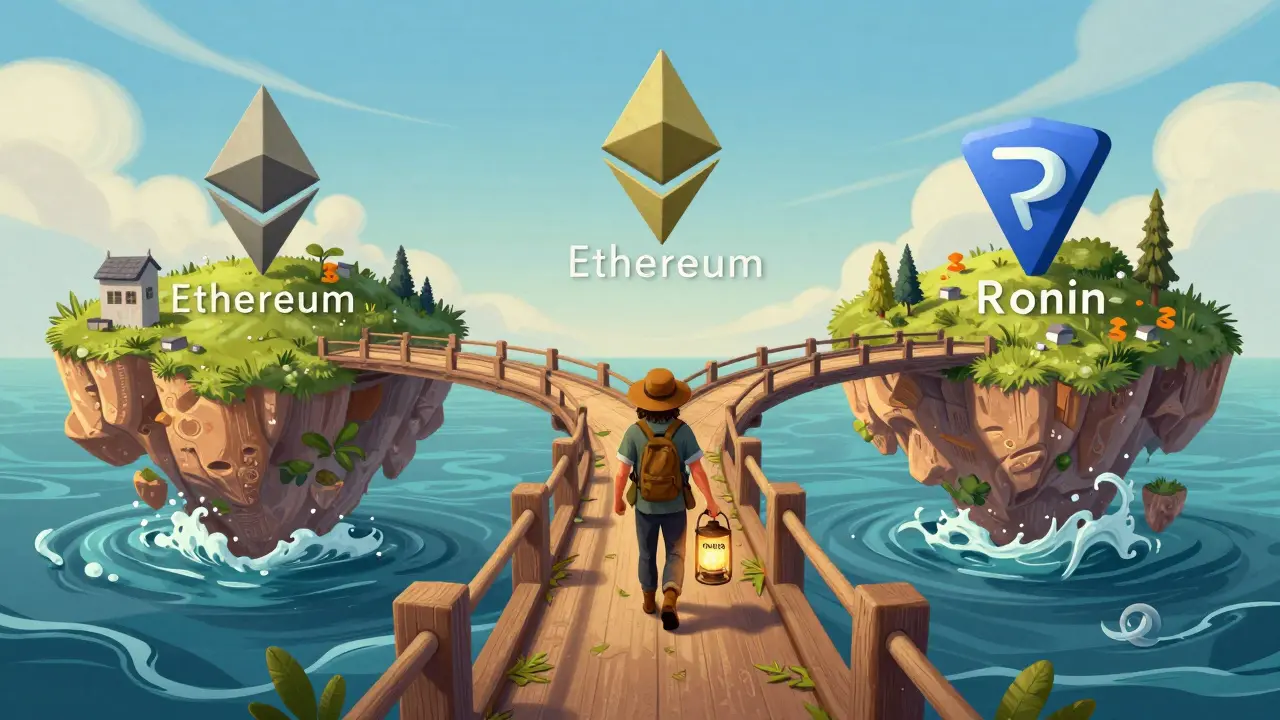
- Multi-Chain Infrastructure: The protocol operates across Ethereum, Binance Smart Chain (BSC), and Ronin, ensuring low fees and fast transactions regardless of which network the user prefers.
By acting as a middleware layer between app developers and users, Power Protocol solves a massive inefficiency in the $300 billion adtech market. It turns wasted ad spend into sustainable user-centric rewards.

Token Utility and Economics
A token is only as good as its use cases. The POWER token has a total supply of 1,000,000,000 units. Its value is derived from three distinct functions within the ecosystem. Understanding these helps you gauge demand drivers beyond speculative trading.
- Gaming Currency: POWER serves as the primary in-app currency for Fableborne, a high-retention mobile game. As more first-party and third-party games join the ecosystem, the demand for POWER to purchase in-game assets will increase.
- Infrastructure Fuel: Developers must stake or burn POWER tokens to access the protocol’s AI targeting services. This creates a constant sink for the token, reducing circulating supply over time as the platform scales.
- Incubation Vehicle: Through Power Labs, the protocol funds new projects. Holding POWER gives stakeholders exposure to early-stage innovations backed by the protocol’s treasury.
Token distribution follows strict vesting schedules to prevent sudden dumps. Team, advisor, and investor allocations have cliffs ranging from 4 to 12 months, followed by gradual releases over 6 to 36 months. This structure aligns long-term interests with community growth, ensuring that early insiders cannot liquidate their holdings immediately after launch.
Market Performance and Trading Availability
If you are ready to trade, you need to navigate a fragmented market. Price discrepancies exist because different exchanges may list different versions of the token or suffer from liquidity variations. As of May 2026, the modern Power Protocol (POWER) trades around $0.1185 USD on major platforms like Phemex and MEXC. However, some data sources show wildly different figures, such as $131.23, which often indicates either a different contract address, a scam token, or severe data feed errors. Always verify the contract address before connecting your wallet.
The official contract addresses for the modern POWER token are:
- Ethereum: 0x9dC44ae5BE187ECA9e2A67e33f27A4c91cEA1223
- Binance Smart Chain: 0x9dC44ae5BE187ECA9e2A67e33f27A4c91cEA1223
- Ronin: 0x394cEF8bDd737EE24DBc9f43d0d5D2ab83136054
Trading options include spot markets on MEXC and Phemex, allowing direct ownership. Futures trading is also available for those seeking leveraged positions, though this carries higher risk. Coinbase lists the token but notes that PWR is not yet tradable on its main centralized exchange, directing users to Web3 wallets instead. This distinction is crucial for beginners who might expect seamless fiat-to-token purchases on every platform.
Comparing Power Protocol to Competitors
To understand Power Protocol’s unique position, compare it to established players like Gods Unchained. Gods Unchained (GODS) is a native token for a single trading card game. Its utility is confined to that specific ecosystem-buying cards, entering tournaments, and earning rewards within that one title. If the game loses popularity, the token suffers.
Power Protocol operates differently. It is an infrastructure layer, similar to how Unity provides tools for many games rather than being a game itself. POWER supports multiple applications, including Fableborne and future third-party titles. This diversification reduces risk. Even if one game underperforms, the protocol can still generate revenue from others. Furthermore, while Gods Unchained focuses on play-to-earn mechanics, Power Protocol focuses on growth-to-earn, rewarding users for expanding the user base rather than just playing.
Risks and Considerations
No investment is without risk. Power Protocol faces several challenges typical of emerging crypto infrastructure projects. First, execution risk remains high. The promise of AI-driven ad efficiency is compelling, but delivering on this requires flawless integration with diverse app ecosystems. Second, regulatory uncertainty looms over all crypto assets, particularly those involving financial incentives for user behavior, which could be scrutinized under securities laws. Third, competition in the GameFi sector is fierce. Established giants like Axie Infinity and newer entrants constantly vie for user attention.
Additionally, the multi-chain strategy introduces complexity. Users must manage assets across Ethereum, BSC, and Ronin, requiring familiarity with bridges and gas fees on different networks. Missteps here can lead to lost funds. Always double-check network selections when sending transactions.
Is Power Protocol (PWR) the same as Power Protocol (POWER)?
No. PWR typically refers to the older PowerDAO governance token or Powercoin payment token. POWER is the modern 2025 launch focused on AI adtech and gaming. They have different contract addresses, utilities, and market values. Always check the ticker and contract address carefully.
Where can I buy POWER tokens?
You can buy POWER on exchanges like MEXC and Phemex via spot trading. For decentralized trading, you can use DEXs on Ethereum, BSC, or Ronin networks. Ensure you use the correct contract address for your chosen network to avoid scams.
What is the total supply of POWER?
The total supply of POWER tokens is fixed at 1,000,000,000. This capped supply helps manage inflation and supports long-term value accrual as demand increases through gaming and infrastructure usage.
How does Power Protocol make money?
Developers pay fees to access the protocol's AI targeting and user reward systems. These fees are paid in POWER tokens, creating a continuous demand sink. The protocol essentially monetizes efficient user acquisition better than traditional ad networks.
Is Power Protocol safe to invest in?
Like all crypto investments, it carries risk. Power Protocol has strong technical foundations and live validation through Fableborne, but market volatility and execution risks remain. Never invest more than you can afford to lose, and always do your own research.