
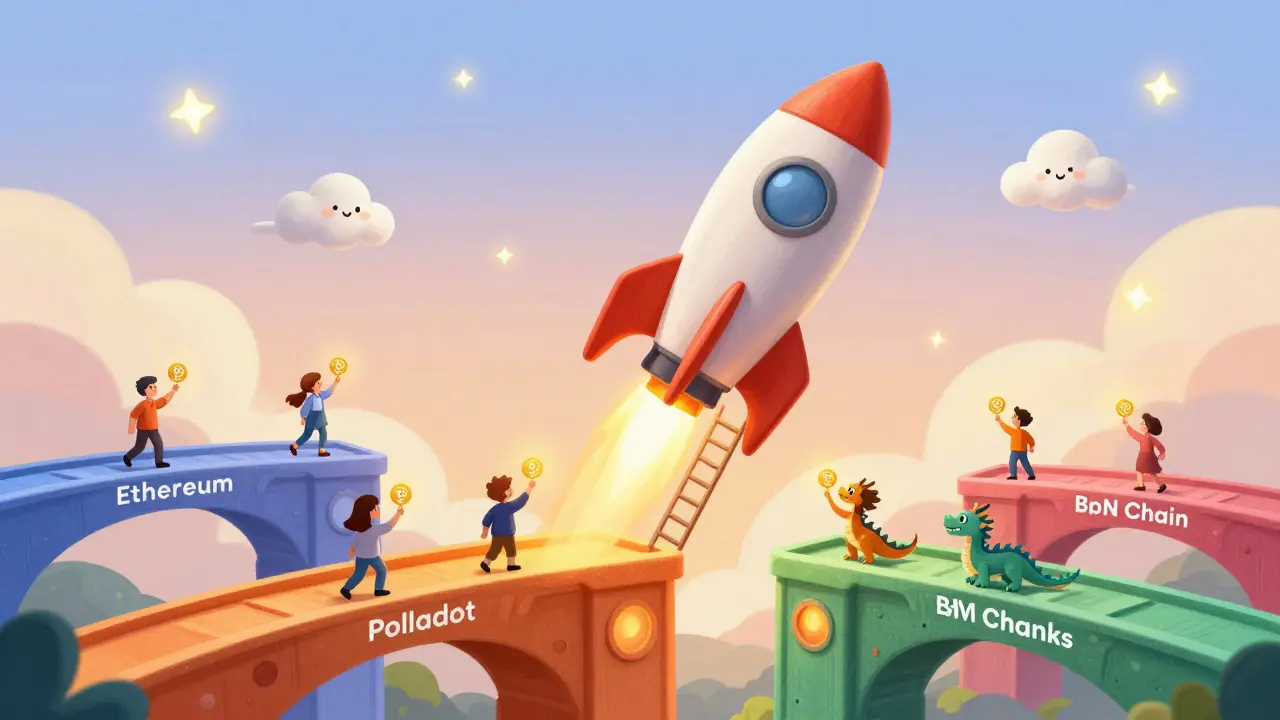
Polkastarter (POLS) isn’t just another crypto token. It’s the engine behind hundreds of early-stage blockchain projects that managed to raise funds and build communities without relying on big exchanges or venture capitalists. If you’ve ever tried to get into a new crypto project before it hit Coinbase or Binance, you’ve probably interacted with Polkastarter - even if you didn’t know it.
What Exactly Is Polkastarter?
Polkastarter is a decentralized launchpad that helps new blockchain projects raise money through something called an Initial Decentralized Exchange Offering (IDO). Think of it like a crowdfunding platform, but for crypto. Instead of going through a centralized exchange, projects set up automated pools on Polkastarter where users can buy tokens at a fixed price before they’re listed anywhere else.The platform launched in December 2020, starting on Ethereum, but quickly moved to Polkadot in early 2021 to take advantage of faster, cheaper transactions. That shift made a huge difference. While Ethereum-based launchpads often get clogged with high gas fees, Polkastarter’s cross-chain setup lets users participate without paying $50 just to buy $100 worth of tokens.
How Does It Work?
Polkastarter doesn’t use the usual Automated Market Maker (AMM) model you see on Uniswap or SushiSwap. Instead, it uses fixed-swap smart contracts. Here’s what that means in plain terms:- A project sets a fixed price for its token - say, $0.10 per token.
- Users deposit funds (like USDT, DOT, or ETH) into the pool.
- When the sale ends, the smart contract automatically gives everyone their tokens at that exact price.
- No price swings during the sale. No sniping bots. No chaos.
This system is way more predictable than traditional AMMs, where prices can spike or crash in seconds because of how the math works. With Polkastarter, you know exactly what you’re paying and what you’ll get. That’s why so many projects - over 100 so far - choose it for their launch.
Why Does POLS Even Exist?
The POLS token is the fuel that keeps Polkastarter running. It’s not just a speculative asset - it has real, daily uses:- Access to IDOs: You need to hold POLS to get into early token sales. The more you hold (and stake), the higher your chance of being allowlisted.
- Governance: POLS holders vote on which new projects get featured on the platform. No central team decides. The community does.
- Transaction fees: Every time someone swaps or participates in a sale, fees are paid in POLS. That creates constant demand.
- Staking rewards: If you lock up your POLS, you earn more POLS over time - plus bonus chances in future IDOs.
Back in late 2022, Polkastarter added something called POLS Power Boosters. These are temporary multipliers that increase your voting weight and IDO access based on how long you’ve staked your tokens. It’s not just about how much you own - it’s about how loyal you are.

Which Blockchains Does It Support?
One of Polkastarter’s biggest advantages is that it doesn’t lock you into one chain. It works across seven major networks:- Ethereum
- BNB Chain
- Polygon
- Celo
- Avalanche
- Solana
- Polkadot
That means if you’re using a wallet with ETH, DOT, or MATIC, you can still join IDOs on Polkastarter. No need to swap your whole portfolio. This cross-chain flexibility is rare. Most launchpads only support one or two chains, forcing users to jump through hoops just to participate.
How Does It Compare to Other Launchpads?
There are dozens of IDO platforms out there - like CoinList, DAO Maker, or TrustSwap. But here’s where Polkastarter stands out:| Feature | Polkastarter | Most Competitors |
|---|---|---|
| Price Mechanism | Fixed-swap smart contracts | AMM (price fluctuates during sale) |
| Multi-Chain Support | 7 blockchains | Usually 1-2 |
| Governance | Token holders vote on projects | Team decides |
| Transaction Costs | Low (thanks to Polkadot) | High on Ethereum |
| Project Support | Full marketing + design team | Just tech infrastructure |
That last point matters more than you think. Polkastarter doesn’t just give projects a smart contract. It gives them a full marketing team - video creators, designers, community managers. That’s why projects launched here often have stronger social media presence and better user onboarding from day one.
Who Backs Polkastarter?
The platform has serious backing. In December 2020, Digital Finance Group (DFG) - one of Asia’s biggest blockchain VC firms - invested in Polkastarter. They didn’t just buy tokens; they locked them up for years. That kind of confidence from a major player signals long-term trust in the project.DFG’s involvement also meant Polkastarter got access to a global network of startups, investors, and developers. That’s not something a small team could build on its own.
Market Performance: Is POLS Worth It?
As of February 2026, POLS has a market cap of around $16.8 million and sits at #982 on CoinMarketCap. It’s not a top-10 coin, but it’s steady. Its all-time high was $1.78 in early 2021 - a 500% jump from its launch price.Here’s the thing: POLS doesn’t need to be a moonshot to be valuable. Its price is tied to how many IDOs are running, how many people are staking, and how many projects are using the platform. As long as Polkastarter keeps launching new tokens - and it has done over 100 - demand for POLS stays steady.
Last 24 hours? POLS is up 0.47%. Not flashy. But that’s not the point. The point is that it’s still being used - constantly - in real transactions, not just speculation.
Who Uses Polkastarter?
Two main groups:- Project teams: Startups building DeFi apps, NFT games, or blockchain infrastructure. They need funding and visibility. Polkastarter gives them both.
- Early investors: People who want to get in on new projects before they’re listed on big exchanges. They’re not chasing pump-and-dumps - they’re looking for long-term value.
It’s not for casual traders. If you’re just buying Bitcoin and Ethereum every month, Polkastarter won’t matter to you. But if you’re serious about finding the next big Web3 project before it blows up - this is one of the best places to look.
What’s Next for Polkastarter?
The roadmap is simple: keep expanding, keep improving.- Add more blockchains (Solana was added in 2022; Cosmos and Arbitrum are likely next).
- Improve governance tools - maybe allow POLS holders to vote on fee structures or treasury spending.
- Integrate with NFT marketplaces and gaming platforms to let users use POLS for in-game purchases.
The bigger trend? Interoperability. No one wants to be stuck on one blockchain forever. Polkastarter was built for this moment - where projects and users move freely between chains. That’s why it’s still relevant in 2026, even as dozens of copycat platforms have come and gone.
Comments
Jeremy Lim
I read this whole thing... and honestly? Still don't get why I should care about POLS. I've seen 100 launchpads come and go. This one just looks like a fancy middleman with a token that doesn't do much. 😐
February 14, 2026 AT 02:51
kelvin joseph-kanyin
THIS IS THE FUTURE BROOOOO 🚀🔥 Polkastarter is the real deal - fixed prices? Cross-chain? No gas wars? SIGN ME UP!!! I got into 3 projects before they listed and made 5x already. This isn't speculation - it's strategy! 💪
February 15, 2026 AT 07:01
Elizabeth Choe
Okay but let’s be real - Polkastarter is like the cozy coffee shop of crypto launchpads. No hype, no chaos, just solid people doing solid work. I’ve watched projects go from zero to community with real support here. It’s not flashy, but it’s *reliable*. And honestly? That’s rarer than you think. 🫶
February 15, 2026 AT 23:13
Grace Mugambi
What’s interesting here isn’t the tech - it’s the philosophy. The idea that access to early-stage projects shouldn’t be gated by wealth or geography. Polkastarter doesn’t just enable transactions - it tries to distribute power. Not perfectly, but meaningfully. That’s worth preserving.
February 17, 2026 AT 22:25
Crystal McCoun
I’ve used Polkastarter for three IDOs now. The process? Clean. The fees? Barely noticeable. The team? Actually responsive. And yes - holding POLS *does* matter. I staked 5k for 6 months and got into a Solana project that’s now 12x. Not a moonshot, but a *steady* one. If you’re serious about Web3, this isn’t optional - it’s foundational.
February 18, 2026 AT 14:42
Elijah Young
The cross-chain architecture is technically impressive. However, the governance model remains centralized in practice. DFG’s locked tokens still wield disproportionate influence. Transparency in voting outcomes is lacking. This isn’t decentralized - it’s distributed with a velvet rope.
February 18, 2026 AT 20:16
Beth Trittschuh
I love how it’s not about ‘the next 100x coin’ - it’s about building something that *works* for years. Most platforms chase pumps. Polkastarter builds ecosystems. 🌱 And honestly? That’s the quiet revolution crypto needs. I’ve been in this space since 2017. This feels different.
February 19, 2026 AT 07:33
Benjamin Andrew
Let’s cut the PR fluff. POLS is a speculative token backed by a platform that survives because it’s the *least bad* option. The ‘fixed price’ model is just a way to avoid the volatility that makes AMMs transparent. It’s not innovation - it’s obfuscation. And don’t get me started on ‘marketing support’ - that’s just a paid PR package disguised as community building.
February 20, 2026 AT 11:54
Donna Patters
This is not innovation. It’s rebranding. You don’t solve crypto’s problems by adding more chains - you solve them by removing the need for launchpads entirely. Polkastarter is a glorified gatekeeper. And yet, people *worship* it? Pathetic.
February 20, 2026 AT 15:25
Michelle Cochran
You all act like this is some noble experiment. But let’s be honest - it’s just another way for insiders to profit while pretending to be egalitarian. The ‘community voting’? That’s a show. The real decisions are made by DFG and their cronies. And you’re all just happy to be invited to the party. Sad.
February 20, 2026 AT 22:08
monique mannino
I’m from the Philippines and I got into my first IDO here because I only had MATIC. No need to swap. No drama. Just worked. 💛 This platform didn’t just give me access - it gave me dignity. Thank you.
February 22, 2026 AT 05:55
Desiree Foo
I’ve been staking POLS since 2021. I’ve seen the platform evolve. I’ve seen the team listen. And I’ve seen real projects get real traction because of this. If you’re still stuck on ‘is it a pump?’ - you’re not ready for Web3. This is infrastructure. Build on it.
February 22, 2026 AT 21:57
Santosh kumar
I'm from India and we don't have access to most launchpads. Polkastarter? Worked for me. No KYC. No gatekeeping. Just put in USDT and got tokens. Simple. I'm still holding. No regrets.
February 23, 2026 AT 23:58
Claire Sannen
The fact that they support Celo and Polygon is huge for global access. Most platforms ignore emerging markets. This one doesn’t. Small thing - massive impact.
February 25, 2026 AT 19:43
Christopher Wardle
The real innovation isn’t the tech. It’s the *expectation* it sets. Projects here know they need to build communities, not just whitepapers. That cultural shift? Priceless.
February 25, 2026 AT 23:16
blake blackner
bro i staked my whole bag in 2022 and got into a gamefi project that turned into a 30x... i still cry happy tears when i check my wallet 😭🔥
February 27, 2026 AT 04:50
Andrea Atzori
I’m an academic in fintech. This is one of the few crypto platforms I’ve seen that actually aligns with decentralization principles - not just in code, but in structure. The multi-chain, fixed-swap, governance model is a textbook case of emergent system design. I’m teaching this in my next seminar.
March 1, 2026 AT 02:48
Joe Osowski
America built this. The rest of the world just gets to watch. DFG? Asian VC. But the real innovation? Made in Silicon Valley. Don’t pretend this is global. It’s just American tech with a global audience.
March 1, 2026 AT 10:27
Gaurav Mathur
POLS is a scam. All IDOs are pump and dumps. You think this is different? You’re fooling yourself. The blockchain is a lie. The government will shut it down. You’ll lose everything.
March 3, 2026 AT 04:23
John Doyle
I came here because I was tired of getting rug-pulled. Polkastarter didn’t promise me riches - it gave me trust. I’ve participated in 8 IDOs. Lost on two. Made on five. Broke even on one. That’s not gambling. That’s investing. And I’m still here.
March 4, 2026 AT 12:21