

Have you ever scrolled through your crypto feed and seen a ticker that looks like it belongs on a political rally banner rather than a blockchain explorer? That’s exactly what happens when you encounter MCGA. It stands for "Make CRO Great Again," and if the name sounds familiar, it’s because it borrows heavily from political slogans while aiming to rally the community around the Cronos ecosystem. But before you rush to buy, you need to understand what this token actually is, where it came from, and why its price swings so wildly.
This isn't just another random meme coin with no backstory. MCGA has a specific origin story tied to the ups and downs of the CRO token itself, a confusing link to a real-world NASDAQ listing, and a deflationary mechanism that burns tokens with every trade. Let's break down the reality behind the hype.
The Origin Story: Born from Bear Market Pain
To understand MCGA, you have to look at the history of Cronos Chain, which is the public blockchain network developed by Crypto.com that serves as the foundation for the MCGA token. Back in the previous bull market, the native token of this chain, CRO, hit a peak price of roughly $0.96 USD. For many holders, this was the glory days. Then came the bear market, and prices crashed hard.
The "CROFam"-the nickname for the loyal community of CRO holders-didn't just disappear. Instead, they created MCGA on June 14, 2024. This launch wasn't about building a new decentralized finance protocol or creating a complex gaming engine. It was an emotional rallying cry. The creators wanted to symbolize the resilience of the community that had survived the drawdown. Think of it as a digital flag planted in the ground, saying, "We are still here, and we want better days for Cronos."
The Confusing NASDAQ Connection
Here is where things get tricky, and why you need to pay close attention. In August 2025, a company called Yorkville Acquisition Corp. announced it would change its ticker symbol on the NASDAQ stock exchange to "MCGA." This move was part of a strategic partnership with Trump Media Group’s "CRO Strategy, Inc.," which planned a massive treasury initiative involving billions of dollars worth of CRO tokens.
Did this make the MCGA crypto coin an official part of that corporate deal? Absolutely not. This is a critical distinction. The MCGA token on the Cronos blockchain is a separate, independent entity. It shares the same ticker symbol and the same slogan, but there is no direct legal or technical integration between the meme coin and the NASDAQ-listed corporation. However, the narrative overlap provided a significant tailwind. When news broke about the institutional MCGA branding, attention spilled over to the crypto token, driving up visibility and trading volume among retail investors who saw the connection.

Tokenomics: How the Burn Mechanism Works
If MCGA doesn't have a complex utility protocol, what keeps people interested? The answer lies in its supply dynamics. MCGA operates on a fixed maximum supply of 1 billion tokens. Unlike some projects that print infinite tokens, this cap means scarcity can theoretically increase if tokens are removed from circulation.
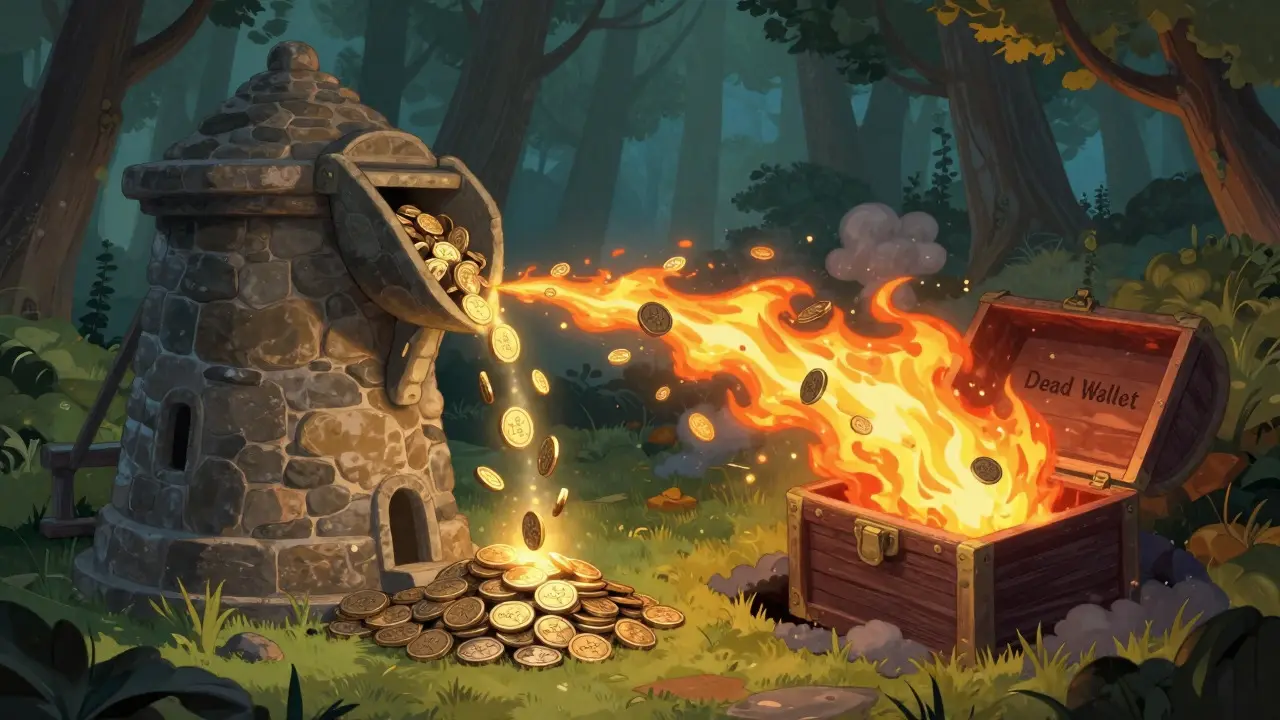
The project uses a deflationary model. Every time you buy, sell, or transfer MCGA on supported platforms, a portion of the transaction fee is used to buy back MCGA tokens from the open market and burn them. Burning means sending these tokens to a dead wallet address where they can never be accessed again. Over time, as trading volume increases, the circulating supply should decrease. If demand stays steady while supply drops, basic economics suggests the price could rise. However, this only works if there is consistent trading activity. If the market goes quiet, the burn mechanism slows down too.
| Attribute | Value |
|---|---|
| Blockchain | Cronos Chain (EVM-compatible) |
| Token Standard | CRC-20 |
| Max Supply | 1,000,000,000 (1 Billion) |
| Launch Date | June 14, 2024 |
| Primary Function | Meme / Community Speculation |
| Burn Mechanism | Yes (via transaction fees) |
Trading MCGA: Where and How
You won't find MCGA listed on major centralized exchanges like Coinbase or Binance in a prominent spot. As of mid-2026, it remains primarily a decentralized asset. To trade it, you need to navigate the Cronos DeFi ecosystem. The most popular venues for swapping MCGA are VVS Finance, which is a leading automated market maker (AMM) on the Cronos network where MCGA liquidity pools are hosted and WolfSwap.
Because liquidity is relatively thin compared to giants like Ethereum or Solana, slippage can be a real issue. If you try to buy a large amount of MCGA in one go, you might push the price up significantly against yourself, getting fewer tokens than expected. Most traders stick to smaller positions. You’ll also need a non-custodial wallet that supports the Cronos network, such as MetaMask configured for Cronos or Trust Wallet, to interact with these decentralized exchanges (DEXs).
Risk Assessment: Is It Worth It?
Let’s be blunt: MCGA is a high-risk speculative asset. Its market capitalization hovers in the micro-cap range, often fluctuating between $200,000 and $5 million depending on daily sentiment and broader crypto market trends. Prices have swung dramatically, with all-time highs around $0.0027 and lows dipping below $0.000005. That’s a difference of hundreds of times in value.
There is no formal whitepaper detailing long-term technological development. There are no governance rights attached to holding the token. You aren’t voting on protocol upgrades; you’re betting on community momentum. The primary drivers of value are:
- Narrative Strength: Does the "Make CRO Great Again" slogan continue to resonate?
- Cronos Ecosystem Health: If the broader Cronos chain sees more adoption, MCGA may benefit from spillover interest.
- Institutional Noise: Any news regarding the unrelated NASDAQ MCGA entity can cause temporary spikes in curiosity.
For conservative investors, this is likely not suitable. If you are looking for stable yields or established infrastructure, stick to blue-chip assets. But if you enjoy the culture of meme coins and believe in the resilience of the CROFam community, MCGA offers a low-barrier entry point into the Cronos ecosystem.
Conclusion: A Symbol of Community Resilience
MCGA is more than just code; it’s a symbol. It represents a group of investors who refused to give up on Cronos after a tough market cycle. While it lacks the utility of serious DeFi tokens, its deflationary mechanics and strong narrative identity give it a unique place in the crypto landscape. Just remember to do your own research, manage your position size carefully due to volatility, and never invest money you can’t afford to lose.
Is MCGA the same as the NASDAQ stock MCGA?
No. The MCGA crypto token on the Cronos blockchain is completely separate from the NASDAQ-listed Yorkville Acquisition Corp. (ticker: MCGA). They share a name and slogan but have no legal or technical connection.
Where can I buy MCGA?
You can trade MCGA on decentralized exchanges within the Cronos ecosystem, primarily VVS Finance and WolfSwap. You will need a compatible crypto wallet and CRO tokens to pay for gas fees.
Does MCGA have a limited supply?
Yes. The maximum supply is capped at 1 billion tokens. Additionally, a portion of transaction fees is used to buy back and burn tokens, making the supply deflationary over time.
What is the purpose of the MCGA token?
MCGA is a meme token designed to support and revitalize the Cronos ecosystem. It does not offer governance rights or yield farming utilities but serves as a community rallying symbol.
Is MCGA a safe investment?
Like all meme coins, MCGA is highly volatile and speculative. It is considered a high-risk asset due to its low market cap and dependence on community sentiment rather than fundamental utility.