

The Immutable (DARA) crypto coin isn’t another flashy meme token or a DeFi hype machine. It’s a quiet project built around one simple, real problem: how do you save your digital stuff - photos, writings, art - forever, without paying a fortune or needing a tech degree?
Most people think blockchain is about trading coins or buying NFTs. But Immutable, through its DARA token, is trying to do something quieter, and maybe more useful: make it free and easy for anyone to store data permanently on the internet - without relying on companies like Google or Dropbox that can delete or change things whenever they want.
What Is the Immutable Network?
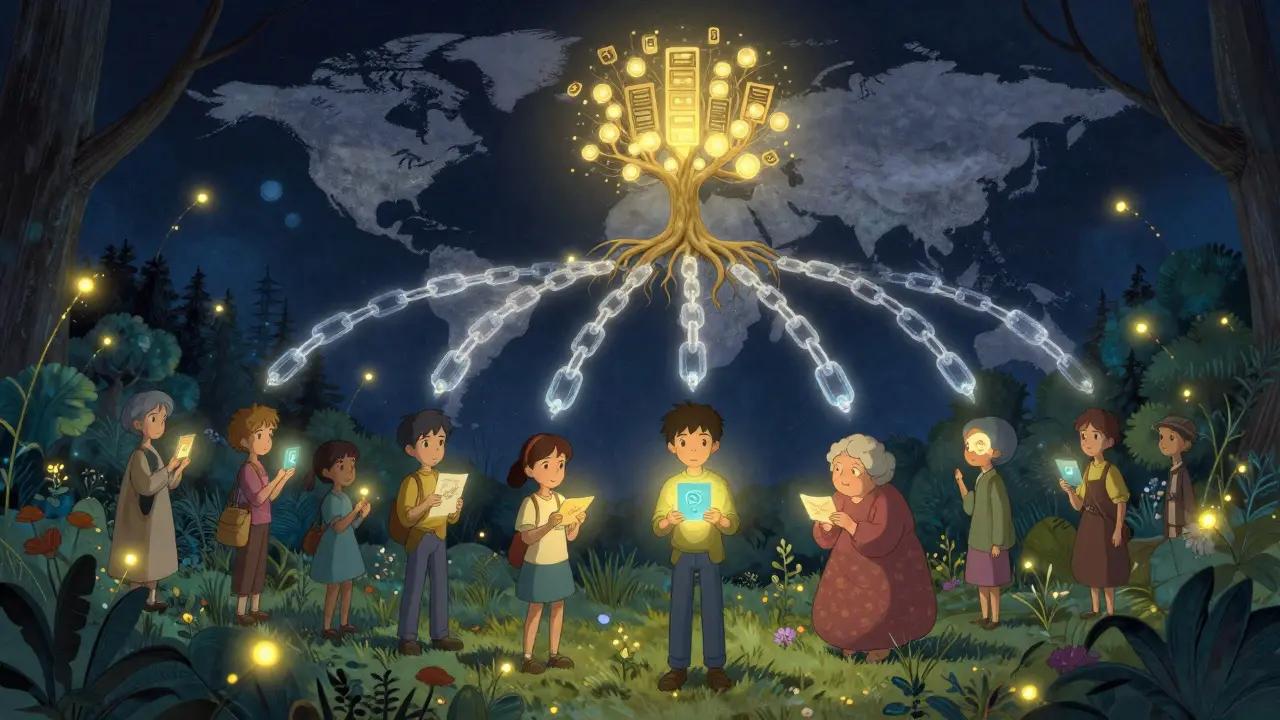
The Immutable Network is a system that uses IPFS - the InterPlanetary File System - to store digital files across a network of computers instead of on one company’s server. Think of it like saving a photo not just on your phone, but across hundreds of computers around the world. That way, even if one server goes down, the file stays alive.
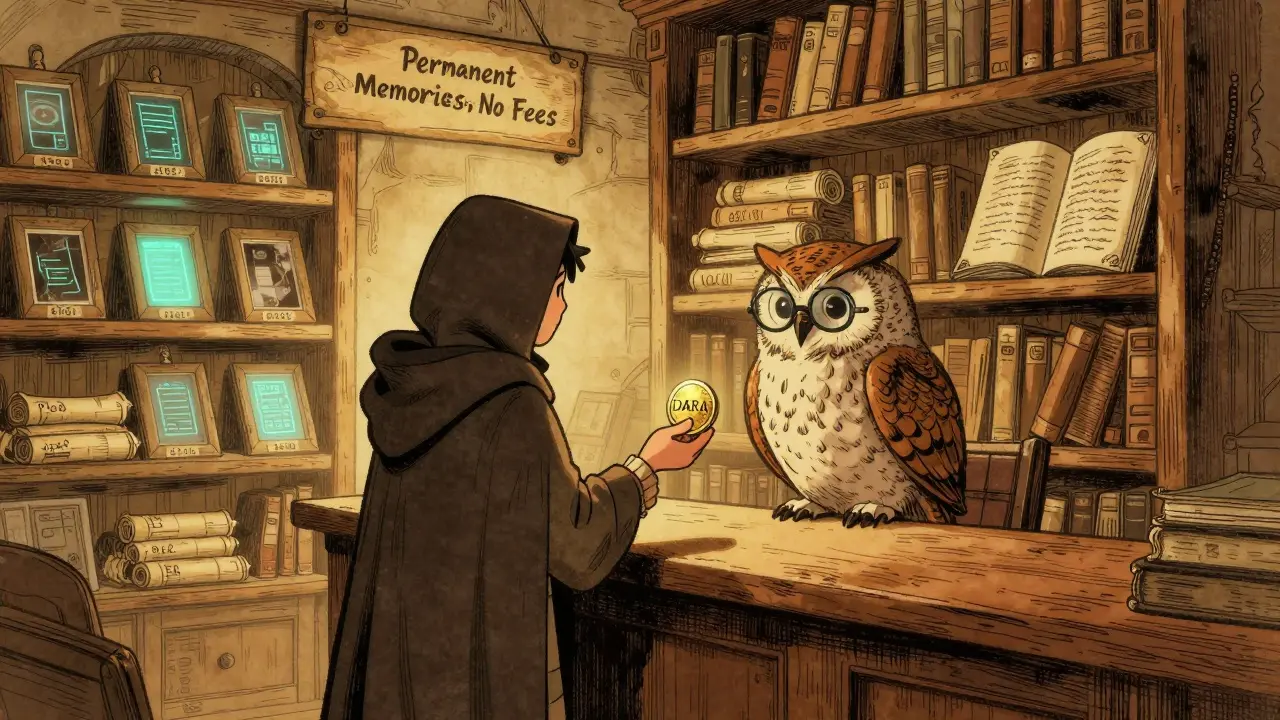
Here’s the twist: you can save your data to IPFS for free. No fees. No login. No credit card. That’s the core idea. But if you want to make that data truly permanent - meaning you can prove it existed on a specific date, and no one can alter it - you pay a tiny fee to record the file’s address (called a hash) onto a blockchain like Ethereum or Binance Smart Chain.
This is where DARA comes in. It’s the token you use to pay for that extra layer of permanence. You don’t need to buy a whole bunch of it. A few cents’ worth is enough to lock one photo or document into blockchain history.
How Does DARA Work?
DARA isn’t mined. It’s not used for staking or lending. It’s a utility token - pure and simple. You use it to:
- Pay to store IPFS hashes on blockchains (like BSC or Ethereum)
- Vote on new features in the Immutable Network’s DAO (Decentralized Autonomous Organization)
- Get a share of profits from premium services
The DAO is key. It’s not controlled by a CEO or a team in Silicon Valley. Instead, people who hold DARA can propose ideas - like adding support for a new file type or building a mobile app - and vote on them. If enough people agree, the project moves forward. The DAO even has a fund, seeded with 10% of all DARA tokens, to pay developers who build tools for the network.
This means DARA isn’t just money. It’s a vote. A stake. A way to help shape a tool that could one day let a student in Nairobi save their thesis permanently, or an artist in Manila lock their digital painting into history.
What’s the Price of DARA? (And Why It’s Confusing)
Right now, DARA’s price is all over the place. One site says it’s $0.0032. Another says $0.0016. Crypto.com doesn’t even list it. Why? Because it’s traded almost entirely on one place: PancakeSwap (v2).
That’s a decentralized exchange on Binance Smart Chain. It’s not a big, regulated platform like Binance or Coinbase. It’s a peer-to-peer trading pool. That means:
- Liquidity is low - so prices jump around easily
- Trading volume is tiny - sometimes less than $5 in 24 hours
- There’s no official listing on major exchanges
The token hit a peak of $0.246 in November 2021. That’s over 99% higher than today’s price. That drop isn’t because the tech failed - it’s because the crypto market crashed, and this project never got big marketing, big investors, or big media attention.
But here’s something odd: some sources say the total supply is 42 million tokens. Others say it’s 2 billion. That’s a red flag. Either the data is wrong, or the token supply changed without clear communication. Either way, it makes it hard to trust any market cap number.
Who Is Behind Immutable?
This is the biggest gap. There’s no public team. No LinkedIn profiles. No GitHub commits showing active development. No roadmap with dates. No security audit reports. You can’t find out who started it, who’s coding it, or when the next update is coming.
That’s unusual. Most serious blockchain projects - even small ones - at least show their faces. Immutable doesn’t. That doesn’t mean it’s a scam. But it does mean you’re trusting a black box. The code might be solid. The idea might be brilliant. But without transparency, it’s hard to know if anyone is still working on it.
Is DARA Worth Anything?
If you’re looking to get rich? Probably not. The trading volume is too low. The price is too volatile. There’s no clear path to adoption outside of niche users who care about data preservation.
But if you care about the idea - free, permanent storage for everyday digital content - then DARA might be worth watching. It’s one of the few projects trying to solve a real problem: digital decay. Your childhood photos, your blog posts, your music - they vanish when platforms shut down. Immutable says: “Let’s fix that.”
Right now, it’s a prototype. A quiet experiment. Not a stock. Not a currency. A tool. And tools don’t always make headlines. But sometimes, they change everything.
Where Can You Buy DARA?
You can’t buy DARA on Coinbase, Binance, or Crypto.com. It’s not listed there. The only place you can trade it is on PancakeSwap (v2) using Wrapped BNB (WBNB). That means:
- You need a crypto wallet like MetaMask
- You need BNB to pay for gas fees
- You have to swap WBNB for DARA manually
There’s no easy way. No app. No one-click buy. You have to go into DeFi, find the right pool, and trade. It’s not for beginners. It’s for people who already understand wallets, tokens, and decentralized exchanges.
Why This Matters
Most crypto projects chase hype. Immutable (DARA) tries to fix something broken: our digital memories. Imagine a world where your wedding photos, your child’s first drawing, or your grandmother’s letters can’t be deleted - not by a corporation, not by a government, not by time.
That’s not science fiction. IPFS already makes it possible. DARA just adds a blockchain timestamp to prove it happened.
The project isn’t big. It’s not popular. It’s not profitable. But it’s one of the few crypto projects that asks: What if blockchain wasn’t about making money - but about saving what matters?
Comments
ann neumann
I’ve been watching this for years and let me tell you something nobody else will admit - DARA isn’t a storage solution, it’s a honeypot. Someone’s quietly buying up every token they can find, then dumping it right before some fake ‘DAO vote’ to trigger panic. The supply numbers don’t match because the whitepaper was rewritten three times. I’ve seen this script before. It’s always the same: quiet project, no team, weird pricing, then BOOM - rug pulled while everyone’s still reading about ‘digital memories.’ Don’t be the sucker who thinks this is about your photos. It’s about someone’s offshore wallet.
March 11, 2026 AT 15:12
Mara Alves Mariano
Oh sweet mercy this is the dumbest thing I’ve seen since people thought Bitcoin was a currency and not a tax evasion scheme for bros in Florida. You’re telling me I should pay a few cents to ‘prove’ my cat’s selfie existed in 2024? What’s next? A blockchain notarized receipt for my expired coupon? This isn’t innovation - it’s digital hoarding with extra steps. And don’t even get me started on PancakeSwap. That’s where crypto goes to die in a ditch behind a gas station. Save your gas fees. Take a screenshot.
March 11, 2026 AT 19:34
William Montgomery
You’re all missing the point. This isn’t about storage. It’s about control. The fact that no one knows who runs this project? That’s the feature, not the bug. If there’s no CEO, no team, no LinkedIn profiles - then no one can be sued. No one can be pressured. No government can shut it down. That’s the real innovation. You want permanence? Then you need anonymity. You want trust? Then you need zero accountability. This is the future. You just don’t like it because it doesn’t have a logo.
March 12, 2026 AT 03:11
Adam Ashworth
I’ve used IPFS for personal backups for two years. It works. DARA’s just the gas token to pin the hash on-chain. Simple. No drama. No hype. If you can’t handle a wallet and BNB, then yeah, this isn’t for you. But don’t pretend you’re protecting your ‘digital memories’ by keeping them on Google Drive. That’s just outsourcing your responsibility to a corporation that sells your data. This is the opposite. It’s not glamorous. It’s not profitable. But it’s honest.
March 13, 2026 AT 12:23
Allison Davis
The supply discrepancy is concerning. 42 million vs 2 billion? That’s not a typo - that’s a red flag. Even if the contract was upgraded, there should be an on-chain event log. There isn’t. That’s a violation of basic blockchain transparency. Also, the DAO fund being seeded with 10%? That’s a massive centralization vector. If one wallet holds 5% of the supply, they control the entire roadmap. This isn’t decentralized. It’s a facade with a DAO sticker on it.
March 14, 2026 AT 03:08
Tom Jewell
There’s something beautiful about the silence of this project. No press releases. No YouTube videos. No influencers. Just code. Just hashes. Just a quiet promise: ‘Your data will outlive you.’ We live in a world where your childhood photos vanish when Facebook changes its API, where your blog disappears when WordPress shuts down a server. This doesn’t promise fame. It doesn’t promise profit. It just says: ‘I will remember.’ And maybe that’s enough. Maybe the most radical thing we can do now is to stop chasing attention - and start preserving what no one else wants to.
March 15, 2026 AT 13:57
karan narware
Oh wow. So now we’re using blockchain to save wedding photos? In India, we’ve been saving memories on USB drives, cloud backups, and handwritten letters for decades. This is like inventing a wheel… but making it out of gold and charging 50 rupees to roll it. Also, PancakeSwap? That’s where your auntie’s crypto savings go to die. If you’re serious about permanence, use a hard drive. Store it in a safe. Or better yet - print it. Paper doesn’t need gas fees.
March 16, 2026 AT 22:48
Michael Suttle
This is definitely a CIA project. 🤫👁️🗨️ They need a way to store all the surveillance data without it being traceable. DARA? More like DARPA. The ‘no team’ thing? That’s because the devs are all ex-military. The low volume? That’s because they’re quietly buying it up for black ops. The supply mismatch? That’s because they’re hiding 1.9B tokens in a quantum vault. You think this is about photos? Nah. It’s about storing classified footage of the moon landings. I’ve seen the leaks. This isn’t crypto. It’s espionage.
March 17, 2026 AT 11:44
Jenni James
I must say, I find this entire premise to be not merely underdeveloped, but fundamentally incoherent. To suggest that a utility token on an obscure decentralized exchange constitutes a viable solution to digital decay is to misunderstand both technology and human behavior. Furthermore, the absence of a public team is not a feature - it is a catastrophic governance failure. One cannot build a public infrastructure on anonymity. It is not a virtue. It is negligence. And if you are recommending this to anyone under the age of 60, you are doing them a disservice.
March 18, 2026 AT 18:46
Chelsea Boonstra
I just tried to swap DARA on PancakeSwap. I spent 45 minutes, two failed transactions, and $12 in gas fees just to get 0.0003 DARA. That’s $40,000 per token. I’m not even mad - I’m impressed. This is the most expensive way to store a photo I’ve ever seen. If this is the future of digital preservation, then we’re all doomed. Also, who designed the interface? A 12-year-old with a bad case of ADHD?
March 20, 2026 AT 11:24
Alex Thorn
I get it. We’re scared. We’re losing things. Our old emails. Our childhood videos. Our grandparent’s voice recordings. We want them to last. But we’re trying to fix it with blockchain because it’s shiny. What if we just… built better tools? A simple app that auto-backs up to your own hard drive. Encrypts it. Copies it to three locations. Sends you a reminder every year to check if it’s still there. No tokens. No wallets. No gas fees. Just you. And your memories. Maybe that’s the real revolution. Not crypto. Consistency.
March 21, 2026 AT 21:46
Howard Headlee
STOP HATING. This is the quiet revolution. While everyone’s chasing the next 100x meme coin, someone’s quietly building a digital tomb for your grandma’s letters. That’s not boring - that’s brave. The price is low because no one’s marketing it. The team is hidden because they don’t want fame. The supply is messy because they’re still testing. But guess what? It’s WORKING. People are using it. Real people. Not traders. Not speculators. Artists. Archivists. Grandparents. This isn’t a coin. It’s a legacy. And you’re too busy screaming about scams to see the quiet miracle happening right under your nose.
March 22, 2026 AT 06:24
Julie Tomek
While the technical architecture of Immutable (DARA) presents a theoretically sound model for immutable data anchoring via IPFS and blockchain timestamping, the operational and governance risks remain substantially unmitigated. The absence of a publicly verifiable development team, coupled with inconsistent token supply disclosures and negligible liquidity on PancakeSwap v2, introduces material counterparty risk. Furthermore, the reliance on a DAO structure without formal voting quorums or audit trails undermines the purported decentralization. For institutional or high-value data preservation, this system currently lacks the necessary compliance, auditability, and redundancy standards required for fiduciary-grade data integrity. Until these factors are addressed, DARA remains an experimental prototype - not a production-ready solution.
March 23, 2026 AT 06:25