
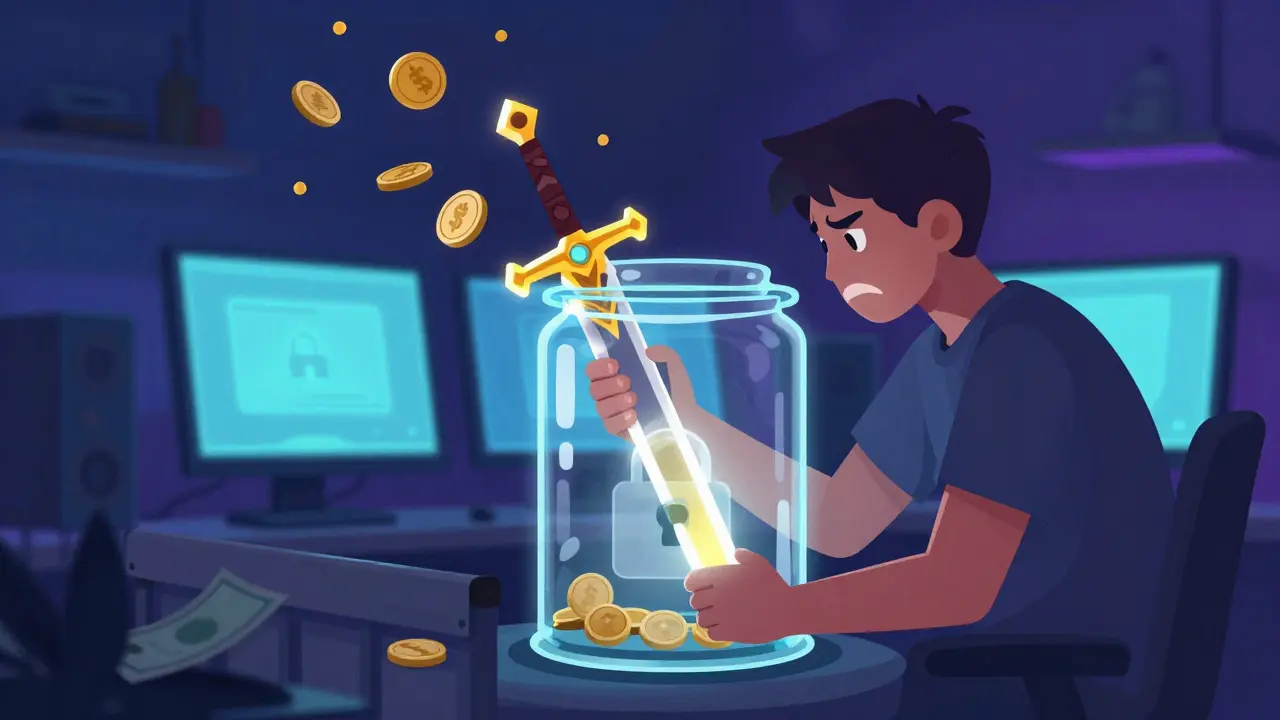
Imagine spending hundreds of hours grinding for a legendary sword in your favorite RPG. You finally get it. It’s unique. It’s powerful. But here’s the catch: you can’t sell it for real money. The game developer owns it, not you. That frustration is exactly what Gameswap (GSWAP) is a decentralized exchange platform designed to let gamers trade and cash out in-game assets using cryptocurrency. The pitch sounds perfect. Why do we still play games if we can’t truly own our digital loot?
In theory, GSWAP solves this by turning virtual items into tradable tokens on the blockchain. In practice, however, the reality of this specific project in 2026 is quite different from the hype. If you are looking at GSWAP right now, you need to know more than just the marketing slogan. You need to understand the numbers, the technology, and the stark contrast between its promise and its current market position.
The Core Concept: What Is Gameswap Actually Trying to Do?
At its heart, Gameswap is an attempt to bridge the gap between traditional gaming economies and decentralized finance (DeFi). Most video games operate on closed loops. You buy currency with real money, spend it on items, and those items stay inside the game server. If you stop playing, that value vanishes.
GSWAP aims to break that loop. By leveraging the Ethereum blockchain is a decentralized computing platform that hosts smart contracts and tokens like GSWAP., the platform intends to create a peer-to-peer marketplace. Here, players could theoretically list their in-game assets as non-fungible tokens (NFTs) or use fungible tokens to facilitate trades. The native GSWAP token acts as the fuel for these transactions, paying for fees and governance votes within the community-owned structure.
The idea isn’t new. We’ve seen similar attempts with Enjin Coin, Immutable X, and Gala. The difference GSWAP tried to make was positioning itself as a neutral, community-governed layer specifically for asset liquidity rather than building entire game studios. It promised a place where ownership was verifiable and transferable outside the game’s official servers.
Technical Specs: Under the Hood of the GSWAP Token
To understand the risk profile of GSWAP, we have to look at how it’s built. Technically, GSWAP is nothing exotic. It is a standard ERC-20 token is a technical standard for creating fungible tokens on the Ethereum blockchain.. This means it behaves like most other cryptocurrencies on Ethereum: it can be sent, received, and stored in any wallet that supports Ethereum, such as MetaMask or Ledger.
Here are the hard facts about the token’s structure:
- Total Supply: Fixed at 20,000,000 GSWAP. There will never be more.
- Decimals: 18, which is standard for Ethereum tokens, allowing for precise fractional trading.
- Contract Address: 0xaac41ec512808d64625576eddd580e7ea40ef8b2 (verified on Etherscan).
- Security Features: The contract uses SafeMath libraries to prevent basic arithmetic errors like overflow, which is a common vulnerability in poorly coded tokens.
While the code is functional, being a standard ERC-20 token doesn’t guarantee success. In fact, thousands of ERC-20 tokens exist with zero users. The technology is sound, but utility drives value, and that brings us to the biggest problem facing GSWAP today.
Market Reality in 2026: The Numbers Don’t Lie
If you clicked on this article because you saw a price chart spiking or heard a rumor about a moonshot, pause for a second. Let’s look at the actual data from early 2026. The metrics for GSWAP paint a picture of a project that has largely stalled.
| Metric | Value | Context/Risk |
|---|---|---|
| Price Range | $0.028 - $0.030 | Extremely volatile due to low volume |
| Market Cap | ~$213,000 | Ranks #2666+ out of 2,600+ coins |
| 24h Trading Volume | $0 - $35,000 | Severe liquidity crisis; hard to exit positions |
| Circulating Supply | ~8.7M - 11M | Discrepancies suggest dormant accounts or burns |
| Holders | 3,150 | Concentrated ownership; high manipulation risk |
A market cap under $250,000 places GSWAP in the "micro-cap" category. For context, established gaming tokens like Chiliz or Enjin have market caps in the billions. This isn’t just a small difference; it’s a chasm. With only 3,150 holders, a few large wallets controlling a significant percentage of the supply could easily manipulate the price up or down without anyone noticing until it’s too late.
The trading volume is perhaps the most concerning metric. On some days, the reported volume is literally zero. What does this mean for you? It means if you bought $1,000 worth of GSWAP, you might not be able to sell it quickly without crashing the price. Liquidity is the lifeblood of any cryptocurrency, and GSWAP is currently dehydrated.
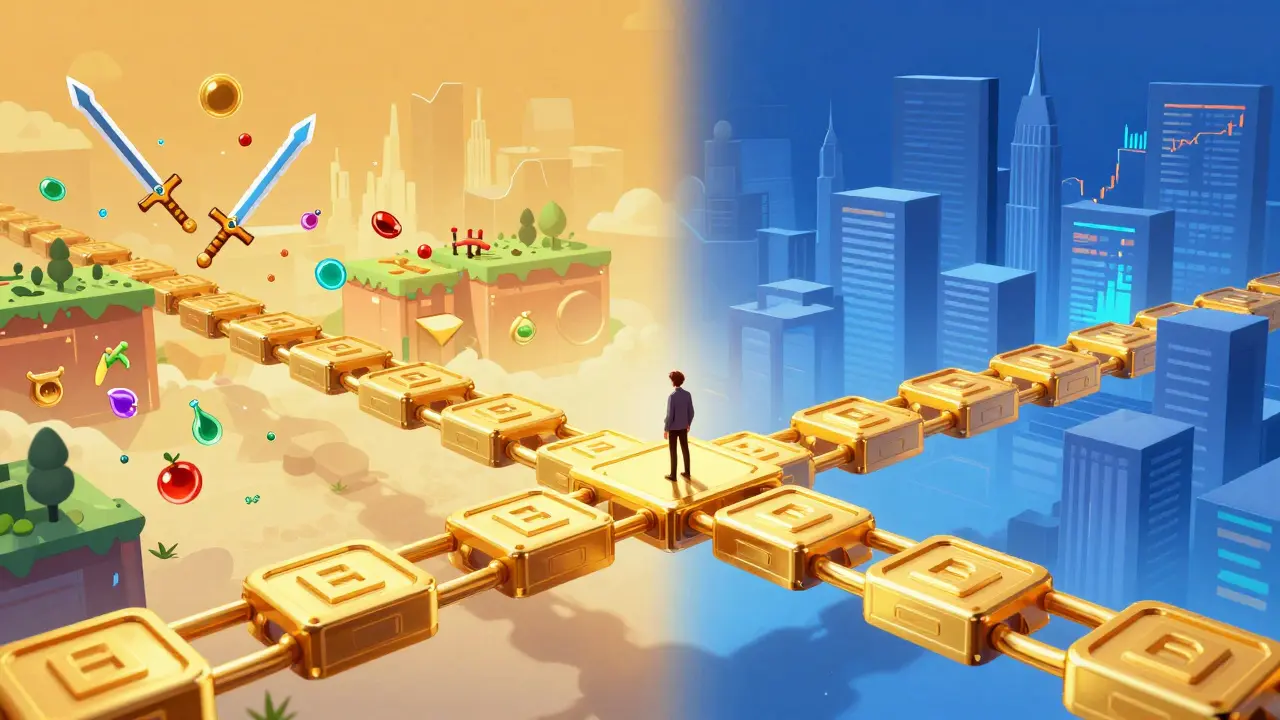
Why Has GSWAP Struggled? Comparing to Competitors
It’s easy to say "crypto is volatile," but why did GSWAP fail to gain traction while others succeeded? Let’s compare it to two major players in the gaming crypto space: Enjin Coin (ENJ) is a leading blockchain gaming token backed by major industry partnerships. and Immutable X (IMX) is a Layer-2 scaling solution for NFTs focused on gaming efficiency..
Enjin has partnered with Ubisoft, Starbucks, and various AAA game developers. They didn’t just build a token; they integrated into existing ecosystems. Immutable X solved the fee problem by offering gas-free minting on Ethereum, making it attractive for artists and gamers tired of high transaction costs.
GSWAP, by contrast, lacks documented strategic alliances. There is no evidence of integration with Steam, Epic Games Store, or major mobile gaming networks. Without game developers adopting the platform, there are no assets to trade. Without assets to trade, there is no reason to hold the token. It’s a chicken-and-egg problem that GSWAP hasn’t cracked.
Furthermore, the development activity appears minimal. While larger projects post weekly updates, release new features, and engage with communities on Discord and Twitter, GSWAP’s social footprint is nearly silent. Less than five original posts per day related to #GSWAP? That’s not a community; that’s a ghost town.
Is GSWAP a Scam or Just Dead?
This is the question everyone asks when they see a token with a great idea but terrible performance. Is it malicious, or just failed?
Based on available data, GSWAP doesn’t fit the classic "rug pull" profile where developers drain the liquidity pool and disappear overnight. The contract is verified, and the token still exists on exchanges like MEXC and Bybit. However, "not a scam" doesn’t mean "safe investment."
Industry analysts categorize tokens with market caps below $1 million and volumes under $50k as "high-risk speculative assets with questionable long-term viability." In February 2026, reports suggested that 92.7% of such micro-cap gaming tokens face delisting from major exchanges within 12 months. GSWAP fits this criteria perfectly.
The risk here isn’t necessarily theft; it’s obsolescence. The project may simply have run out of funding, interest, or momentum. When a project stalls, the remaining holders are left holding bags of tokens with nowhere to go. This is known as "zombie status"-technically alive, but functionally dead.

How to Buy GSWAP (If You Still Want To)
If you’ve read all the warnings above and still decide to take the plunge, you won’t find GSWAP on Coinbase or Kraken. You’ll need to use smaller, specialized exchanges. Here is the typical process as of 2026:
- Create an Account: Sign up on an exchange like MEXC or Bybit. Complete Identity Verification (KYC) Level 1, which usually requires a photo ID.
- Deposit Funds: Transfer fiat currency (USD, NZD, etc.) or another cryptocurrency (like USDT or ETH) to your exchange wallet.
- Locate the Pair: Search for "GSWAP" in the trading interface. Look for pairs like GSWAP/USDT.
- Execute the Trade: Place a limit order. Avoid market orders if possible, as the low liquidity can result in massive slippage (you getting a much worse price than expected).
- Withdraw (Optional): Send the tokens to a personal Ethereum-compatible wallet. Remember, you will need ETH in that wallet to pay for gas fees when moving them later.
Note that withdrawal fees and deposit requirements vary by platform. Always double-check the contract address before sending funds to avoid phishing scams.
The Verdict: Should You Invest in GSWAP?
Let’s be direct. From an investment standpoint, GSWAP offers very little upside and substantial downside risk. The concept of owning in-game assets is valid and likely the future of gaming. But GSWAP is not currently capturing that future.
With a market cap smaller than a mid-sized startup’s monthly revenue, virtually no trading volume, and no active development news, GSWAP is a speculative gamble, not an investment. If you are looking for exposure to the gaming crypto sector, established players with real partnerships and active user bases offer a safer path.
If you are a gamer interested in true asset ownership, keep an eye on platforms that integrate directly with the games you already play. Until GSWAP announces a major partnership or shows a sustained increase in daily active users, it remains a relic of the 2021-2022 NFT boom rather than a leader in the 2026 landscape.
Is Gameswap (GSWAP) listed on Coinbase?
No, Gameswap (GSWAP) is not listed on major centralized exchanges like Coinbase or Kraken. It is primarily available on smaller platforms such as MEXC and Bybit, which often carry higher counterparty risk.
What is the total supply of GSWAP tokens?
The maximum total supply of GSWAP is fixed at 20,000,000 tokens. This deflationary cap means no new tokens can be created, but it also limits the potential for dilution.
Why is the trading volume for GSWAP so low?
Low trading volume indicates a lack of buyer and seller interest. For GSWAP, this is likely due to limited adoption by game developers, absence of major partnerships, and competition from more established gaming tokens like Enjin and Immutable X.
Can I use GSWAP to buy in-game items directly?
Currently, there is no widespread integration allowing direct purchase of in-game items with GSWAP across major titles. The platform operates as a secondary marketplace, but without active developer support, actual asset listings are scarce.
Is GSWAP a safe investment in 2026?
GSWAP is considered a high-risk, speculative asset. With a micro-market cap, negligible liquidity, and minimal development activity, it carries a significant risk of further depreciation or delisting from exchanges.