
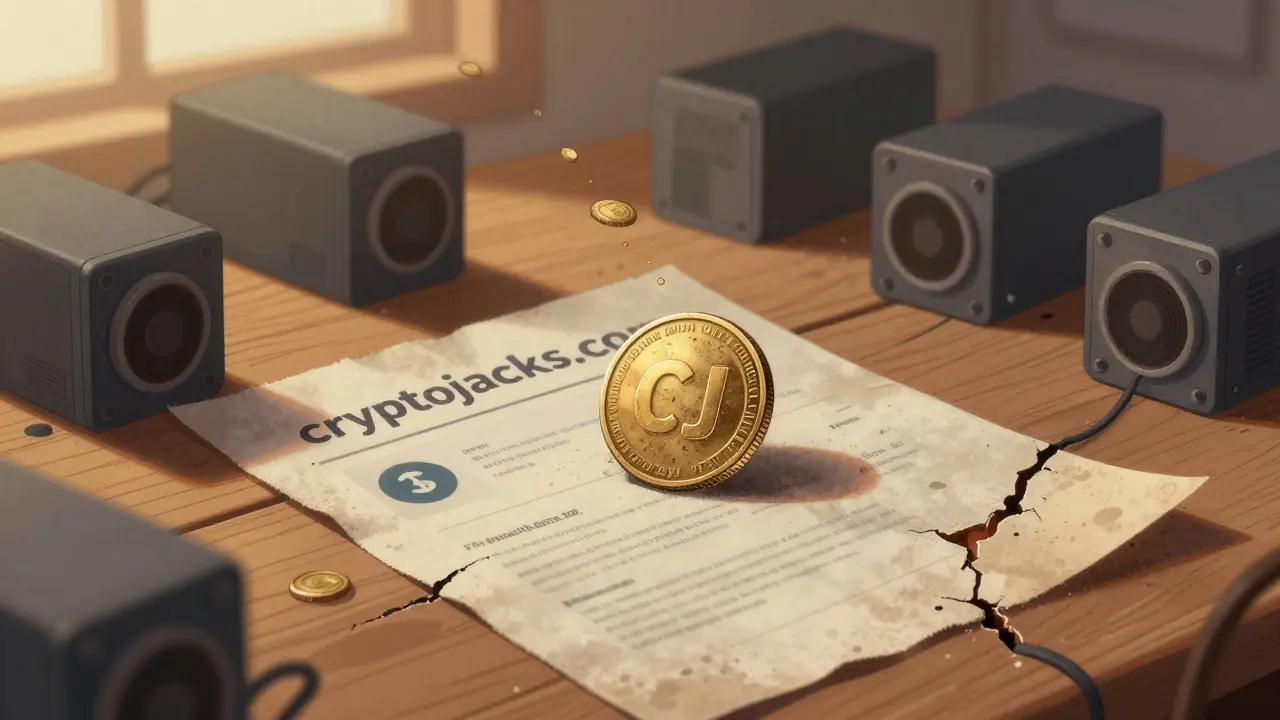
Cryptojacks (CJ) is a cryptocurrency that was launched in October 2016 with one goal: to power online gambling. It wasn’t meant to be the next Bitcoin. It wasn’t even trying to be the next Ethereum. It was built for casinos, poker rooms, and sports betting sites that wanted to accept digital cash without banks getting in the way. But today, Cryptojacks is dead. No one trades it. No one mines it. The website is gone. The developers vanished. And if you’re holding CJ coins right now, you’re holding digital dust.
How Cryptojacks Was Supposed to Work
Cryptojacks used the X13 hashing algorithm - the same one Dash used back then - to secure its blockchain. That meant it could be mined with regular computers, at least at first. The total supply was fixed at just over 406 million CJ coins. No more, no less. Unlike Bitcoin’s 21 million cap, this was a larger pool, but still small compared to most altcoins. The idea was simple: users would mine CJ, send it to gambling sites that accepted it, and play games with instant, anonymous payouts. The team behind it never revealed their names. No whitepaper. No roadmap. No social media accounts that still exist. Just a website - cryptojacks.com - that briefly hosted wallet downloads and mining guides. The site went offline in mid-2019. The GitHub repo stopped updating in October 2016. No one ever fixed bugs. No one ever added features. It was built, launched, and abandoned - all within months.Why It Never Took Off
Cryptojacks had one big problem: timing. In 2016, blockchain gambling was still new. But by 2017, Ethereum was already enabling smart contracts. Tokens like FunFair (FUN) and Edgeless (EDG) came out with provably fair games built directly into code. These weren’t just digital cash - they were self-executing betting systems. No trust needed. No middlemen. No way to cheat. Cryptojacks couldn’t compete. It was just a coin. No smart contracts. No game logic. No transparency. If you wanted to bet on a dice roll with CJ, you had to trust the casino. And if the casino disappeared? Your coins vanished with it. Meanwhile, exchanges like Binance and Coinbase never listed Cryptojacks. Not even as a joke. No liquidity. No volume. No market. By late 2019, every major crypto tracker showed $0 in 24-hour trading. That’s not low. That’s zero. Not a single trade in over four years.The Numbers Don’t Lie
As of early 2026, here’s what Cryptojacks looks like:- Price: Around $0.00008 to $0.00098 - depending on which site you check. The differences come from fake listings. No real market exists.
- Market Cap: Roughly $400,000 at best. That’s less than the cost of a small startup’s server bill.
- Trading Volume: $0 for over 2,000 days straight.
- Exchange Listings: None. Not on Binance. Not on Kraken. Not on Coinbase. Not even on obscure ones.
- Active Wallets: Fewer than 50. Most of those are likely abandoned or controlled by bots.
What Happened to the Community?
There was never much of one. The Bitcointalk thread where people first talked about CJ was archived in 2016. The Discord server died in 2018. Reddit had one post in 2018 asking, “Anyone still holding CJ? The site hasn’t loaded in months.” That was the last real signal. No one made memes about it. No one wrote tutorials. No one built tools. No one even complained about it after 2017. The silence was louder than any hype. A 2020 report from Bitcoin Magazine called Cryptojacks a “zombie cryptocurrency.” That’s not an insult - it’s a technical term. Zombie coins are tokens with no trading, no updates, and no community - but still technically alive on the blockchain. They’re digital ghosts.Can You Still Mine or Use Cryptojacks Today?
Technically, yes. But practically? No. You could still download the old wallet from a Wayback Machine snapshot. You could still mine CJ with an old GPU. But there’s no mining pool left. No one to send coins to. No exchange to cash out on. Even if you mined 10,000 CJ coins, you couldn’t spend them. You couldn’t sell them. You couldn’t even find someone who’d take them as payment. The blockchain still exists. The coins are still there. But the ecosystem? Gone.Why This Matters
Cryptojacks isn’t just a failed coin. It’s a warning. It shows how quickly niche crypto projects can die when they don’t adapt. When you build something for a single use case - like gambling - and that use case moves to better technology, you don’t just fall behind. You disappear. Compare Cryptojacks to FunFair. FUN is still trading. It’s on exchanges. It’s used by real casinos. Why? Because it runs on Ethereum. Because it uses smart contracts. Because it’s open source. Because people still care. Cryptojacks had none of that.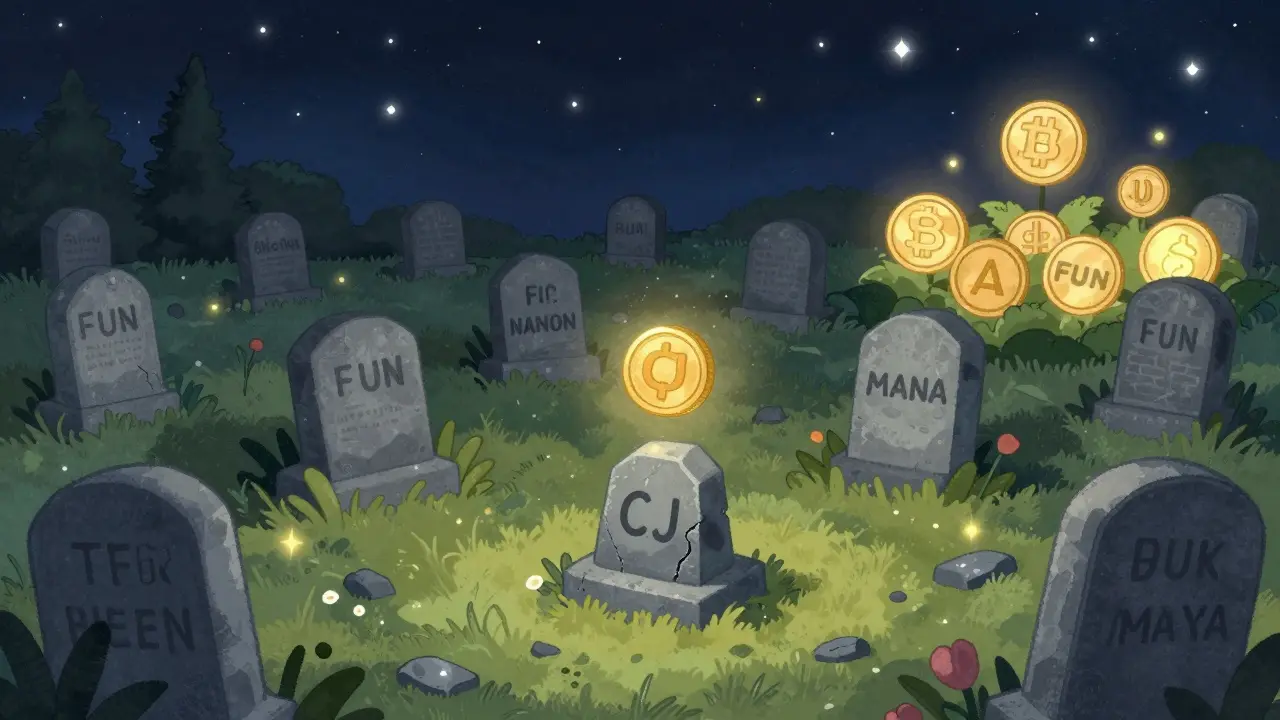
Is Cryptojacks Worth Anything?
If you’re asking because you found some CJ coins in an old wallet - stop. Don’t spend time on it. There’s no recovery plan. No revival team. No roadmap. No community rallying to bring it back. Even if the price suddenly jumped to $0.01, there’s no infrastructure to support it. No buyers. No sellers. No liquidity. It’s like finding a VHS tape of a movie that never got released. The only value Cryptojacks has now is as a case study. A lesson in what happens when you launch a crypto without a plan, without updates, and without a community.What You Should Do Instead
If you’re interested in gambling tokens, look at projects that are still alive:- FunFair (FUN) - Built on Ethereum, used by real casinos.
- Bitcasino.io (BTC-based) - Accepts Bitcoin directly with provably fair games.
- Decentraland (MANA) - Not gambling, but shows how blockchain gaming evolved beyond simple tokens.
Comments
Callan Burdett
Man, I remember mining CJ back in '17 on my old GTX 970. Thought I was onto something. Turned out I was just powering a ghost. The blockchain still exists, but it’s like finding a VHS of a movie that never got released. 😅
January 18, 2026 AT 18:33
Nishakar Rath
typical crypto scam bros build something with zero plan then vanish when the hype dies. CJ was never a coin it was a trap for dumb people who thought gambling on blockchain was cool. no whitepaper no team no future. just digital confetti.
January 20, 2026 AT 13:11
Tony Loneman
Wait wait wait. You're telling me this wasn't a government-backed decoy to distract people from real blockchain innovation? Of course they abandoned it. The same people who made Dogecoin also ran the NSA's crypto distraction program. CJ was never meant to succeed. It was meant to make us trust the wrong things.
January 21, 2026 AT 04:49
Ashlea Zirk
It’s fascinating how some projects die not from competition, but from silence. No drama. No lawsuit. No announcement. Just… nothing. That’s the quietest kind of death. The kind that doesn’t even warrant a eulogy.
January 23, 2026 AT 03:07
Hannah Campbell
so let me get this straight… someone built a gambling coin, didn’t even bother fixing bugs, then vanished? and you’re surprised people lost money? honey, i’ve seen toddlers with more responsibility. this isn’t crypto. this is a cartoon villain origin story.
January 23, 2026 AT 11:47
Patricia Chakeres
Don’t you find it odd that CoinMarketCap still lists it at #6336? That’s not data. That’s a digital tombstone with a blinking cursor. Someone’s still maintaining that entry. Why? To mock us? To remind us how fragile this whole ecosystem is?
January 23, 2026 AT 12:32
Josh V
Been holding CJ since 2017. Still got 12k coins. Worth less than a coffee. But hey at least I didn’t buy the NFT monkey.
January 23, 2026 AT 18:28
Vinod Dalavai
kinda beautiful in a sad way. the blockchain still runs. the coins are there. nobody cares. like a forest that grew after a fire but no one came back to see it. CJ’s just… quietly existing. no drama. no fanfare. just dust.
January 23, 2026 AT 19:56
Chidimma Okafor
This is why I always say: if a project doesn’t have a public roadmap, a team with LinkedIn profiles, and a Discord with more than 50 members, it’s not a cryptocurrency. It’s a thought experiment that got lost in the ether.
January 25, 2026 AT 08:50
Pramod Sharma
Every crypto has a lifecycle. Birth. Hype. Exhaustion. Death. CJ skipped the maturity phase. It was born, screamed, then collapsed. No legacy. No lesson. Just a blockchain with no audience.
January 27, 2026 AT 03:22
Katherine Melgarejo
FunFair’s still around? Of course it is. It didn’t just sell a coin. It sold a system. CJ sold a dream. And dreams don’t pay the bills. Or run smart contracts.
January 27, 2026 AT 15:08
kristina tina
I found my old CJ wallet last week. I cried. Not because I lost money. Because I realized how much I believed in it back then. We all did. That’s the real tragedy.
January 28, 2026 AT 23:37
ASHISH SINGH
They never abandoned it. They sold it to the CIA. CJ was a covert op to track gambling addicts through blockchain addresses. The wallet downloads? Surveillance tools. The silence? Cover-up. You think they’d let a crypto with zero oversight just… vanish? please. this is deep state level stuff.
January 29, 2026 AT 11:28
Anna Gringhuis
It’s not about the coin. It’s about the illusion of control. We thought we could gamble anonymously, without banks, without rules. CJ didn’t fail because it was bad. It failed because we were naive.
January 31, 2026 AT 02:13
Dustin Secrest
There’s a philosophical truth here: systems that rely on trust without transparency are destined to collapse. CJ didn’t die because of competition. It died because it asked for faith in a world that had already stopped believing in ghosts.
February 1, 2026 AT 00:20
Chris O'Carroll
Imagine if this was a movie. The devs walk away. The community fades. The blockchain keeps ticking. No one’s left to press stop. That’s CJ. The longest silent film ever made.
February 2, 2026 AT 10:15
Jason Zhang
Why do people still check CJ prices? It’s like checking the weather on Mars. There’s no atmosphere. No one’s there. You’re just staring at a screen hoping for a sign.
February 2, 2026 AT 13:16
myrna stovel
If you still have CJ coins, don’t delete them. Keep them as a reminder. Not of loss. But of how fast things change. And how easy it is to build something beautiful… and forget to maintain it.
February 4, 2026 AT 07:32
Christina Shrader
I used to run a small poker site that accepted CJ. We got maybe 3 players a week. One guy sent 500 CJ to win $1.50. We paid him in Bitcoin. He never came back. That was the whole story.
February 4, 2026 AT 20:56
Deb Svanefelt
What’s haunting about CJ isn’t its death-it’s that no one mourned it. No obituaries. No memorials. Not even a Reddit thread. Just silence. And in crypto, silence is the loudest form of rejection.
February 5, 2026 AT 01:10
Andre Suico
For anyone still considering investing in obscure gambling tokens: verify the existence of a public development team, active GitHub commits, and exchange listings. If any of these are absent, treat it as a non-asset. The market does not reward wishful thinking.
February 6, 2026 AT 04:55
Anthony Ventresque
I wonder if CJ’s blockchain will ever be repurposed. Like, what if someone just forks it, adds a new consensus, and turns it into a privacy coin? Could be an interesting NFT archive for failed crypto projects. Digital archaeology.
February 8, 2026 AT 04:19
Michael Jones
It’s not about the coin. It’s about the discipline. Cryptojacks didn’t fail because of tech. It failed because no one had the patience to build, test, and improve. We want revolutions. But real innovation is just consistent effort.
February 9, 2026 AT 06:18
Stephen Gaskell
USA invented the internet. We don’t need some ghost coin from 2016 to tell us how to gamble. Get a real casino. Or better yet-don’t gamble at all.
February 10, 2026 AT 06:06