

You’ve probably heard the pitch: Atem Network wants to fix the broken relationship between creators and platforms. But if you look at the charts, you might wonder why a project with over 200,000 users has seen its token price drop by nearly 99% since its launch. It’s a confusing picture. On one hand, you have a functioning platform with real people posting content. On the other, you have a token that seems to be losing value fast. So, what is actually going on here?
This article breaks down the tech, the team, and the harsh market reality of ATEM. We aren’t just listing features; we’re looking at whether this protocol can survive its own economics.
The Core Problem Atem Solves
Think about your favorite blog or social feed. You write the posts, build the audience, but the platform owns the data. If they change the algorithm, your reach drops. If they ban you, you lose everything. Atem Network is a decentralized content creation protocol designed to give creators true ownership of their digital assets through blockchain technology. It launched to tackle two big issues: content ownership and fair monetization.
Founded by Michael Zhang, who has ties to Zhihu (a major Chinese Q&A site similar to Quora), the network isn’t just another copy-paste blockchain. It uses a mix of storage solutions like Arweave and IPFS to make sure your content doesn’t disappear. Unlike traditional social media where your posts live on a central server, Atem stores content links permanently on the Ethereum blockchain. This means once you mint your content, it’s there forever, unless you specifically remove it.
How the Technology Actually Works
You don’t need to be a developer to understand the stack, but knowing the parts helps you judge the risk. The system relies on three main pillars:
- Storage: They use Arweave for permanent, immutable storage. Think of it as a hard drive that never gets wiped. They pair this with IPFS for faster distribution.
- Credentials: Creators get Soulbound Tokens (SBTs). These are non-transferable NFTs that act like a digital résumé. You can’t sell them, which proves you actually created the work.
- Community: They issue community tokens and standard NFTs. This lets fans collect pieces of a creator’s work or gain status in a group.
The technical backbone runs primarily on Ethereum, though some features, like their "Infinity Gems," operate on BNB Chain to save on gas fees. This multi-chain approach is smart because it keeps user costs low while maintaining the security of Ethereum for critical records.
The Two Main Apps: AtemReview and AtemChat
A protocol is useless without apps people actually use. Atem has built two products to prove its worth.
AtemReview is their flagship content-sharing platform. As of late 2023, it reported over 200,000 users and more than 400,000 pieces of content stored on Arweave. That’s a lot of data. It also claims around 10,000 daily active users. For a niche web3 app, those numbers are respectable. It shows people are willing to post when they feel they own their output.
AtemChat focuses on community building. It’s less about broadcasting and more about group interaction. It attracted over 30,000 users and facilitated the creation of 7,000+ NFT groups. These groups use tokens to manage access, so only holders can join certain discussions. It’s a way to keep communities tight-knit and engaged, rather than open to spam bots.

Tokenomics: The Elephant in the Room
Here is where things get tricky. The ATEM token has a total supply of 200 million. However, the circulating supply figures vary wildly depending on where you look. CoinMarketCap listed a circulating supply of roughly 34 million, while CryptoRank reported only 4.6 million. This discrepancy matters because it changes how you calculate market cap.
| Metric | Data Point | Source Context |
|---|---|---|
| Total Supply | 200,000,000 ATEM | Fixed cap defined in whitepaper |
| All-Time High Price | $0.2579 | Recorded peak value |
| Recent Price Range | $0.0003 - $0.0004 | Late 2023/Early 2024 estimates |
| Price Drop from ATH | ~99.8% | Indicates extreme volatility |
| Initial Sale Price | $0.15 | IDO/IEO pricing |
The price action tells a stark story. Early investors bought in at $0.15 during IDOs and IEOs in November 2023. The token briefly hit an all-time high of $0.2579. Since then, it has crashed to fractions of a cent. A 99.8% drop isn’t just a dip; it’s a collapse. This suggests either massive selling pressure from early insiders or a lack of sustained demand for the token itself.
Competitive Landscape
Atem isn’t alone in trying to decentralize social media. It competes with giants like Lens Protocol and Farcaster. How does it stack up?
- Lens Protocol: Has broader ecosystem integration and more developer mindshare. It’s backed by larger entities and has more third-party apps.
- Farcaster: Boasts a stronger developer community and viral growth via Warpcast. It feels more "web-native" to many crypto users.
- Atem Network: Differentiates itself with its dual-app strategy (Review + Chat) and specific focus on credentialing via SBTs. It won awards like the "Rising Stars" prize from BNB Chain and CyberConnect, which adds credibility.
Atem’s strength is its practical utility for creators who want proof-of-authorship. Its weakness is scale. While Lens and Farcaster are building general-purpose social graphs, Atem is carving out a niche for serious content creators and community managers.
Risks and Red Flags
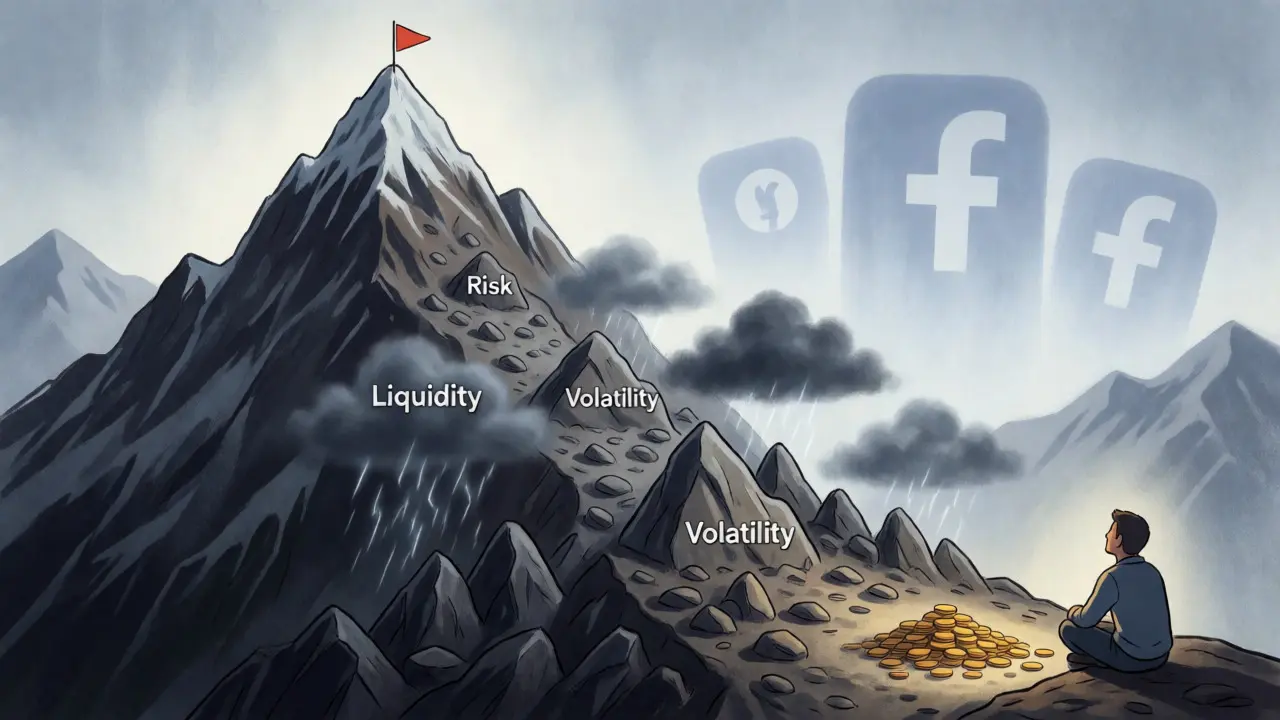
If you’re thinking about buying ATEM, you need to see the risks clearly. The biggest red flag is liquidity. With a market cap hovering under $50,000 in recent reports, this is a micro-cap asset. Low market caps mean easy manipulation. One whale selling can crash the price.
Another concern is the disconnect between user activity and token value. You can have 200,000 users on the platform, but if they don’t buy or hold the token, the price won’t reflect that success. Many users interact with the free aspects of the protocol without ever touching ATEM. This creates a scenario where the product works, but the investment fails.
Finally, check the exchange listings. Data shows limited trading venues. If you can only trade on one or two small exchanges, exiting your position could be difficult if volume dries up.
Final Verdict
Atem Network is a technically sound project with real users. The founders solved a real problem: giving creators ownership. The tech stack using Arweave and Ethereum is robust. However, the token performance has been brutal. The 99% drop from its high suggests the initial hype didn’t translate into long-term holding power.
Is it dead? Not necessarily. The user base is still active, and they have grants from Aptos Foundation backing their development. But for investors, this is a high-risk play. You’re betting that the token will eventually capture value from the growing user base. Until that utility loop closes-where users must pay or stake ATEM to access premium features-the price may remain depressed.
Is Atem Network a good investment right now?
It depends on your risk tolerance. The token has dropped over 99% from its all-time high, indicating high volatility and potential downside risk. However, the project has real users and active development. It is best viewed as a speculative micro-cap asset rather than a safe store of value.
What makes Atem different from other Web3 social platforms?
Atem focuses heavily on content credentialing using Soulbound Tokens (SBTs) and permanent storage via Arweave. It offers two distinct apps, AtemReview for content sharing and AtemChat for community management, providing a more structured environment for creators compared to general-purpose social protocols.
Where is Atem content stored?
Content is stored decentrally on Arweave for permanence and distributed via IPFS. The links to this content are indexed on the Ethereum blockchain, ensuring that the metadata and ownership records are immutable and transparent.
Who founded Atem Network?
The network was founded by Michael Zhang, who is associated with Zhihu, a popular Chinese question-and-answer platform. His background in centralized social media likely influenced the design choices aimed at solving creator ownership issues.
Why did the ATEM token price drop so much?
The price decline is attributed to several factors including low liquidity, high selling pressure from early investors after the Initial DEX Offering (IDO), and a lack of immediate strong utility for the token within the ecosystem. Market sentiment for small-cap altcoins also played a significant role.