

You hear the term "futures" thrown around in crypto Twitter and on trading forums, often mixed with talk of massive gains or sudden liquidations. But what are cryptocurrency futures actually? At their core, they are financial agreements to buy or sell a specific amount of cryptocurrency at a set price on a future date. Unlike buying Bitcoin today and holding it in your wallet, a futures contract is a bet on where the price will go, without necessarily owning the digital asset itself.
This distinction matters because it changes how you interact with the market. You aren't just storing value; you're leveraging capital to amplify potential returns-or losses. If you've ever wondered why traders can make money when prices drop, or why some lose everything overnight despite small price moves, understanding futures is the key. This guide breaks down the mechanics, risks, and real-world applications of crypto futures without drowning you in Wall Street jargon.
The Core Mechanics: How Crypto Futures Work
Imagine you believe Ethereum's price will hit $4,000 by next month. Instead of buying ETH now at $3,500, you enter a futures contract agreeing to buy it at $3,600 on the expiration date. If the price jumps to $4,000, you profit from the difference. If it drops to $3,000, you still owe $3,600, taking a loss. This agreement is standardized, meaning every trader uses the same rules for contract size, tick value (the minimum price movement), and settlement method.
Most major exchanges, like the Chicago Mercantile Exchange (CME), offer cash-settled contracts. This means you don't actually receive physical Bitcoin upon expiration. Instead, the exchange calculates the difference between your entry price and the final settlement price and credits or debits your account accordingly. This simplifies logistics but keeps the focus strictly on price action.
| Feature | Spot Trading | Crypto Futures |
|---|---|---|
| Ownership | You own the actual coin | You hold a contract, not the coin |
| Leverage | None (1x) | High (up to 100x+) |
| Short Selling | Difficult/Not possible | Easiest way to short |
| Expiration | N/A | Fixed date or Perpetual |
| Risk Profile | Lower (price goes to zero) | Higher (liquidation risk) |
Perpetual Contracts: The Crypto-Native Innovation
Traditional futures have an expiration date. When that date arrives, the contract closes, and you must roll it over if you want to stay in the trade. In crypto, this was cumbersome. Enter perpetual futures. These contracts have no expiration date. You can hold them indefinitely, provided you meet margin requirements.
To keep the perpetual price aligned with the spot price, exchanges use a mechanism called the funding rate. Every few hours, traders pay each other. If the perpetual price is higher than the spot price, longs pay shorts. If it's lower, shorts pay longs. This incentive structure nudges the prices together. For most retail traders on platforms like Binance or Bybit, perpetuals are the default choice because they eliminate the hassle of managing expiration dates.
The Double-Edged Sword of Leverage
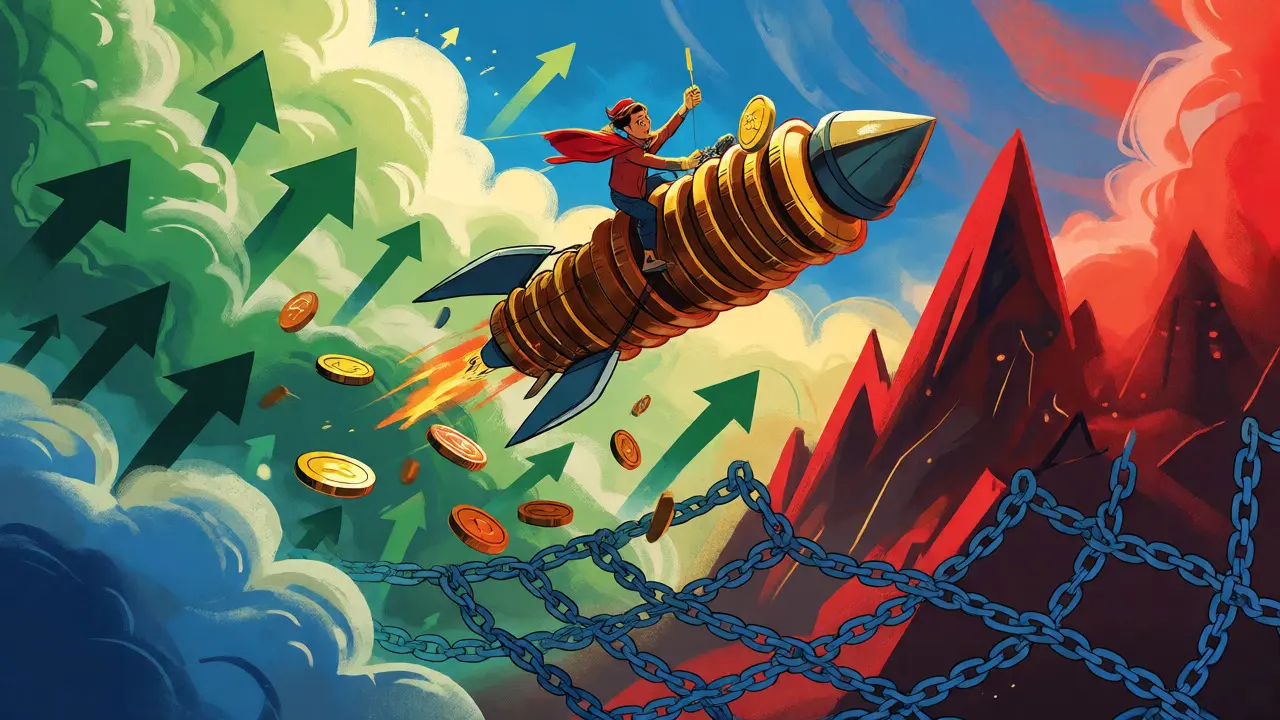
Leverage is the primary reason people flock to futures. With 10x leverage, a $1,000 deposit controls a $10,000 position. If Bitcoin rises 5%, you gain 50% on your initial capital. Sounds great, right? Now flip it. If Bitcoin drops 5%, you lose 50%. Drop 10%, and you lose 100%-your entire position is wiped out. This is called liquidation.
Crypto markets are notoriously volatile. While stocks might move 1-2% in a day, Bitcoin can swing 10-20%. High leverage combined with high volatility creates a dangerous environment for inexperienced traders. Many retail investors underestimate this risk, treating futures like a lottery ticket rather than a precision tool. Professional traders use leverage sparingly, often keeping positions small relative to their total portfolio to survive these swings.
Why Trade Futures? Hedging and Speculation
It’s not all about gambling. Miners and businesses holding large amounts of Bitcoin use futures to hedge. If a miner expects to sell 100 BTC in three months, they can short futures now to lock in the current price. If the price crashes, their profit from the short offsets the loss on their held coins. This stability allows them to plan operations without worrying about market chaos.
For speculators, futures offer two-way trading. In spot markets, you only profit if prices rise. In futures, you can go long (buy) expecting a rise, or short (sell) expecting a fall. This flexibility is crucial during bear markets, where spot traders sit idle while futures traders actively generate income from declining prices.
Risks and Regulatory Landscape
The biggest risk isn't just losing money; it's losing more than you deposited. With cross-margin accounts, a bad trade on one pair can drain funds from others. Isolated margin helps contain this risk by limiting losses to the specific position's collateral.
Regulation varies wildly. In the US, the Commodity Futures Trading Commission (CFTC) oversees regulated futures exchanges like CME and Coinbase Derivatives. These platforms offer investor protections, such as segregation of client funds. Offshore exchanges often provide higher leverage but fewer protections. As of 2026, regulatory scrutiny has tightened globally, pushing many exchanges toward clearer compliance frameworks. Always check if your platform is licensed in your jurisdiction before committing significant capital.
Getting Started: Practical Steps
If you're ready to try futures, start small. Open a demo account first. Most reputable exchanges offer paper trading environments where you can practice with fake money. Learn how to read the order book, understand funding rates, and calculate your liquidation price before risking real dollars.
- Choose a Regulated Platform: Stick to exchanges with strong track records and regulatory oversight.
- Start with Low Leverage: Begin with 2x or 3x leverage. Master the mechanics before increasing exposure.
- Use Stop-Losses: Never trade without a predefined exit strategy. Automated stop-loss orders save you from emotional decision-making.
- Monitor Funding Rates: On perpetuals, negative funding rates can eat into profits if you're holding a long position during a downtrend.
Do I need to own Bitcoin to trade Bitcoin futures?
No. You do not need to own any Bitcoin to open a futures position. You simply need collateral (usually USDT or USD) to cover the margin requirement. The contract settles in cash based on the price difference, so physical ownership of the underlying asset is not required for standard cash-settled contracts.
What happens if I get liquidated?
Liquidation occurs when your margin balance falls below the maintenance margin requirement due to adverse price movements. The exchange automatically closes your position at the current market price to prevent further losses. You lose your initial margin, and potentially part of your remaining balance depending on slippage. It does not mean you owe money beyond your deposit unless you used cross-margin and had other assets exposed.
Are crypto futures safer than spot trading?
Generally, no. Spot trading carries the risk of the asset going to zero, but you cannot lose more than you invested. Futures introduce leverage, which amplifies both gains and losses. Without proper risk management, futures are significantly riskier than spot trading due to the possibility of rapid liquidation during volatile market conditions.
How do funding rates affect my profits?
Funding rates are periodic payments exchanged between long and short traders to align perpetual futures prices with spot prices. If you hold a long position and the funding rate is positive, you pay the shorts, reducing your net profit. If the rate is negative, you receive payments, boosting your profit. These rates change dynamically based on market sentiment and can significantly impact long-term holds.
Can I trade crypto futures 24/7?
Yes, unlike traditional stock or commodity futures markets that close on weekends and holidays, most crypto futures exchanges operate 24 hours a day, seven days a week. This reflects the nature of the underlying cryptocurrency markets, which never sleep. However, liquidity may vary during off-peak hours, leading to wider spreads.