

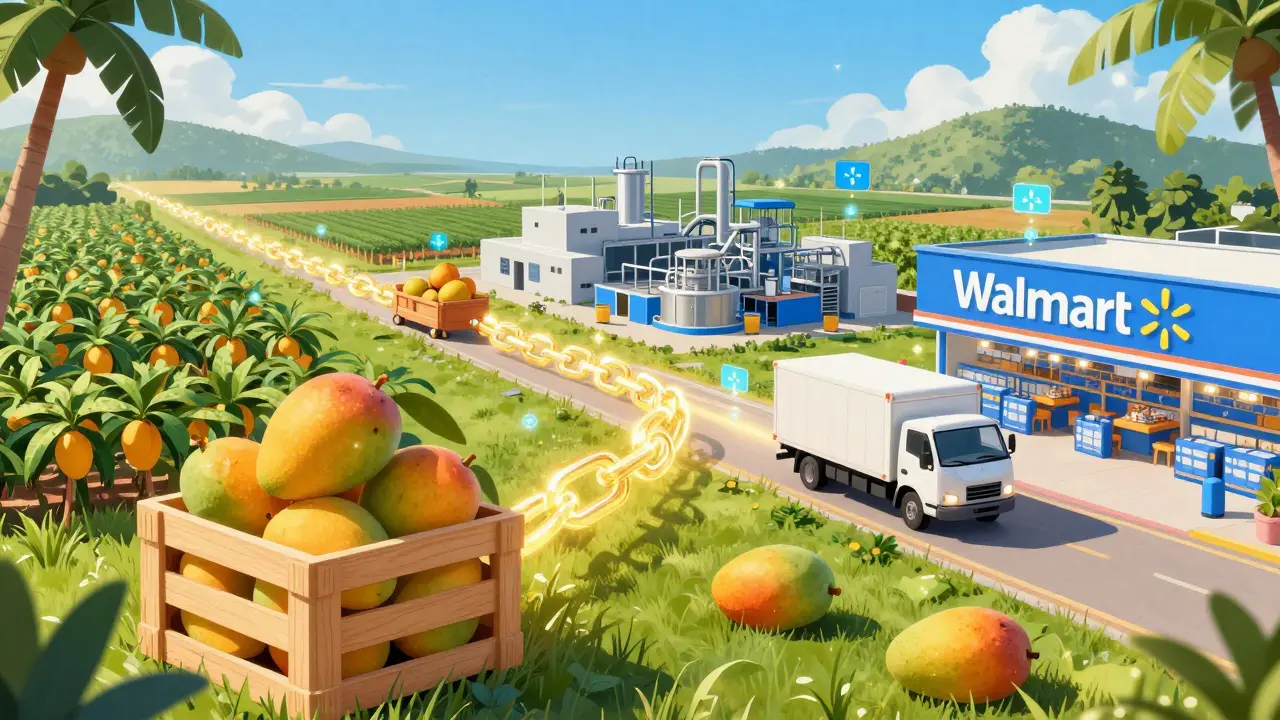
Imagine you're a food safety executive and you realize a batch of sliced mangoes in your stores might be contaminated. In the old days, finding the exact farm where those mangoes grew took nearly seven days of frantic phone calls and digging through paper trails. By the time you found the source, the contaminated fruit could have been eaten by thousands of people. This was the exact nightmare scenario that pushed Walmart is a global retail giant and the world's largest company by revenue, operating a massive network of hypermarkets and warehouses to stop relying on spreadsheets and start using a decentralized ledger.
The Two-Second Revolution in Food Safety
The shift happened when Walmart partnered with IBM to build a system that treats data like a digital passport. Instead of a linear chain of emails, they implemented Hyperledger Fabric, an enterprise-grade permissioned blockchain framework that allows private organizations to create secure networks. By using the IBM Food Trust network, Walmart turned a week-long investigation into a two-second search.
How does this actually work in a warehouse? Every shipment is assigned a unique digital tag. As the product moves from the farm to the processor, then to the distributor and finally to the store, each handoff is signed and timestamped on the blockchain. If a problem arises, an employee simply enters a six-digit lot number into a web portal. Immediately, the system reveals the farm of origin, batch numbers, and even the storage temperatures during transit. This level of Walmart blockchain supply chain integration means they can perform "surgical recalls," pulling only the specific contaminated batches instead of clearing out every mango in every store across the country.
Scaling Across Products and Borders
Walmart didn't just stop at mangoes. They've scaled this technology to cover over 25 different products. If you've bought strawberries, leafy greens, chicken, pork, or even baby food from a Walmart store, there's a high chance that item is being tracked. The complexity varies by product; for instance, multi-ingredient packaged salads require tracking several different suppliers for a single bag of food.
Interestingly, Walmart uses different tools for different regions. While the U.S. operations rely heavily on Hyperledger, their pork tracing in China utilizes VeChain, a blockchain platform designed specifically for supply chain management and product authenticity, in collaboration with PwC. This shows that the company is flexible with its tech stack, choosing the tool that best fits the local regulatory and logistical environment.
| Region/Use Case | Technology Used | Primary Goal | Impact |
|---|---|---|---|
| USA (Fresh Produce) | Hyperledger Fabric / IBM Food Trust | Rapid Food Traceability | 7 days → 2.2 seconds |
| China (Pork Products) | VeChain Thor | Authenticity & Origin | Tamper-proof sourcing |
| Canada (Logistics) | Distributed Ledger Technology | Payment Dispute Resolution | Automated carrier invoicing |
Beyond the Grocery Aisle: Fixing the Money Trail
While food safety gets all the headlines, blockchain is also solving the "boring" but expensive problems of corporate finance. In Canada, Walmart faced a massive headache: payment disputes with 70 different third-party freight carriers. When you're moving millions of tons of freight, a few missing invoices or disputed fees can lead to administrative chaos.
By implementing a distributed ledger for payment management, Walmart Canada automated the reconciliation process. Instead of humans arguing over PDFs and spreadsheets, the system uses an immutable record of the delivery and the agreed-upon price. When the delivery is confirmed on the ledger, the payment process is triggered. This removes the friction from the relationship between the retailer and the truckers, ensuring carriers get paid faster and with fewer errors.
The Power Couple: Blockchain and Artificial Intelligence
The real magic happens when you combine the "truth" of blockchain with the "prediction" of AI. A blockchain is essentially a perfect historical record-it tells you exactly what happened. But it doesn't tell you what will happen. That's where Artificial Intelligence comes in.
Walmart uses machine learning algorithms to scan the historical data stored on their blockchain. By analyzing past patterns of delivery delays or supplier non-compliance, the AI can flag a potential risk before it becomes a crisis. For example, if the AI notices that a specific supplier's temperature logs often dip slightly below the required threshold during July, it can alert logistics managers to proactively change shipping routes or providers for the next summer season. It transforms the supply chain from a reactive system (fixing problems) to a proactive system (preventing them).
Setting the Global Standard with GS1
One of the biggest hurdles in blockchain is the "garbage in, garbage out" problem. If every supplier uses a different name for a mango or a different date format, the blockchain is useless. To fix this, Walmart worked with GS1, the global organization that develops and maintains standards for business communication, including barcodes.
By adhering to GS1 standards, Walmart ensures that every participant in the network-from a small farm in Mexico to a distribution center in Arkansas-speaks the same digital language. This interoperability is what allows the system to scale. It means that as more suppliers join the network, they don't have to rebuild their data structures; they just plug into the existing standard.
What's Next? CBDCs and Ethical Sourcing
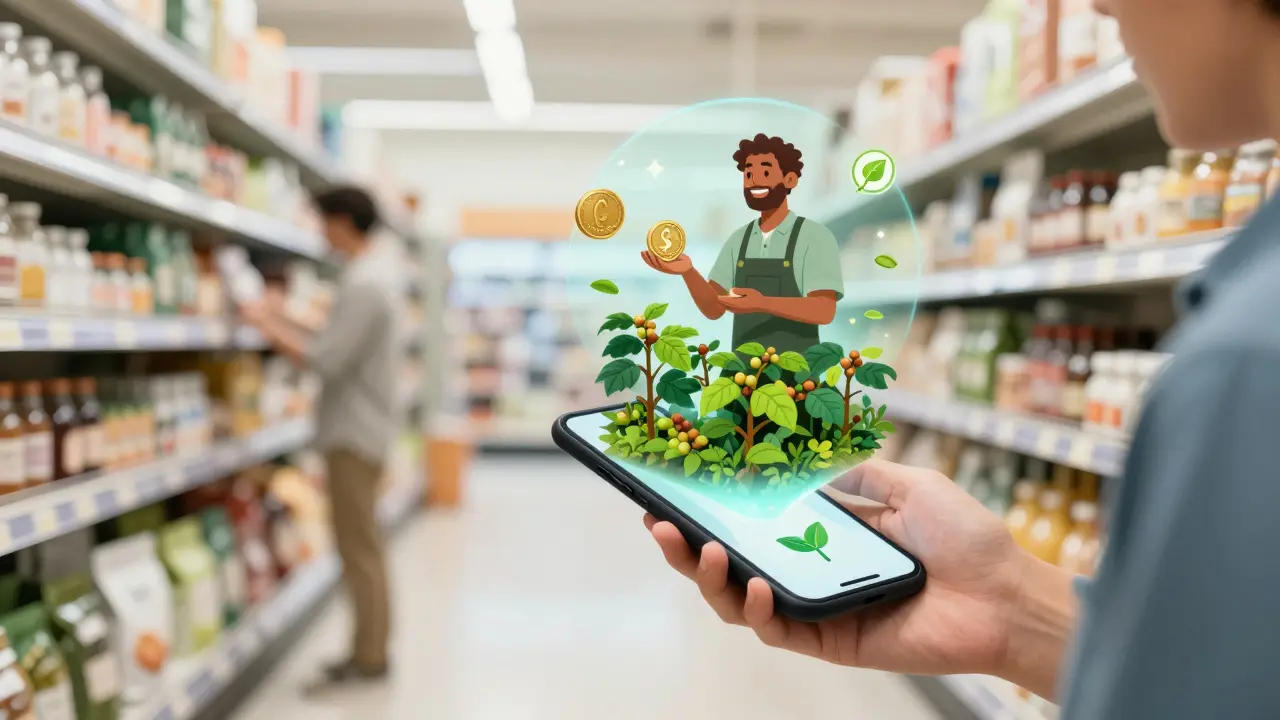
Looking forward, the evolution of this system is moving toward even deeper transparency. Walmart is exploring ways to track sustainability metrics. Imagine scanning a QR code on a package of coffee and seeing a verified record of the fair-trade wages paid to the farmer and the carbon footprint of the shipping vessel. Because the data is on a blockchain, you can trust it's not just "greenwashing" by a marketing department.
There is also the potential for integration with Central Bank Digital Currencies (CBDCs). If a central bank issues a digital currency, Walmart could use "smart contracts" to trigger instant payments to suppliers the moment a shipment is verified as received and quality-checked. No more 30-day or 60-day payment terms; just instant, automated financial flows that match the speed of the physical goods.
Does Walmart use a public blockchain like Bitcoin?
No. Walmart uses a "permissioned" or private blockchain, specifically Hyperledger Fabric. Unlike Bitcoin, where anyone can join and see all transactions, a permissioned blockchain allows Walmart to control who has access to sensitive commercial data while still maintaining a tamper-proof record.
How does blockchain actually reduce food waste?
By enabling "surgical recalls." In a traditional system, if one batch of spinach is contaminated, a retailer might throw away all spinach from an entire region to be safe. With blockchain, they can identify the exact farm and batch affected, discarding only the dangerous produce and saving thousands of tons of perfectly good food from the landfill.
Can consumers see this blockchain data?
Currently, most of the system is used internally by Walmart and its suppliers for safety and logistics. However, the company is moving toward providing more consumer-facing transparency, such as QR codes that prove the authenticity and ethical sourcing of high-value products.
What is the role of IBM in Walmart's system?
IBM provided the technical infrastructure via the IBM Food Trust network and the Hyperledger Fabric framework. They acted as the technology partner that helped Walmart translate a business need (faster tracing) into a functioning software architecture.
Why is GS1 important for this implementation?
GS1 provides the universal standards for barcodes and product identification. Without these standards, the blockchain would be a mess of conflicting data formats. GS1 ensures that a product ID in one country is recognized and understood by a system in another country.
Comments
Jan Conrad
The integration of GS1 standards is really the unsung hero here. Most people focus on the ledger, but without a unified data language, you just have a faster way to store inconsistent data.
April 30, 2026 AT 08:24
Bevon Findley
Obviously superior implementation. :)
May 1, 2026 AT 23:15
VIVEK SINGH
Oh sure, because nothing says "decentralization" like a giant corporation using a permissioned ledger to control every single piece of data while pretending it's a revolution. It's basically just a fancy database with a marketing budget, but hey, if it makes the mangoes safer for the masses, who cares about the philosophy of the tech right?
May 3, 2026 AT 20:33
April D Thompson
This is absolutely wild! Imagine the sheer terror of a food safety exec in the old days just praying the paper trail wasn't lost in a warehouse somewhere. It's like we've stepped out of the dark ages and into a futuristic utopia where a six-digit code saves thousands of lives! My mind is actually blown by the scale of this shift!
May 4, 2026 AT 08:07
Emily A
It is imperative to note that a "permissioned" blockchain is fundamentally different from the public ledgers most laypeople associate with the term. The efficiency gains are undeniable, but the centralization of authority remains the primary bottleneck in such corporate ecosystems.
May 6, 2026 AT 06:40
Brendan Thraxton
love seeing tech used for actual real world problems like this it just shows that when we stop hyping coins and start focusing on logistics we can actually make things better for everyone
May 8, 2026 AT 05:29
edie rosa
Great, so now Walmart has a high-tech way to track exactly which farm is being squeezed for every penny. This isn't about safety, it's about corporate surveillance of the supply chain to maximize their own profit margins while the actual farmers probably still can't afford new equipment.
May 8, 2026 AT 22:20
Kristi Swartz
this is just basic data management rebranded as blockchain for investors it is not a revolution it is a database with a different name
May 9, 2026 AT 12:56
Elle Kharitou
I find it so deeply inspiring how we can weave together these digital threads to protect the well-being of our global community, because when we think about the interconnectedness of our food systems, it's not just about the logistics, but about the love and care we put into ensuring our neighbors are safe and healthy 🌟🌿. It really makes me ponder the ethical dimensions of our consumption and how transparency can lead to a more compassionate world where the farmer in Mexico and the consumer in Arkansas are linked by a bond of trust and verification 🌏✨💖!
May 9, 2026 AT 14:18
Kathleen Warren
This sounds like a great way to help small farmers get their products into bigger stores since they can prove their quality and safety more easily now.
May 10, 2026 AT 03:12
Gabby Puche
Surgical recalls are such a win for the planet 🌎 reducing waste like this is a huge deal! 👏
May 10, 2026 AT 20:04
Barbara Jones
hope they dont glitch and start recallin things that are actually fine lol but yeah pretty cool stuff
May 12, 2026 AT 00:31
Lynne Teperman
cutting through the red tape of freight disputes with a ledger is a savvy move for the road warriors hauling the goods
May 12, 2026 AT 15:47
Janis Naglis
The synergistic integration of predictive analytics and immutable data structures is truly a paradigm shift!!! By mitigating the risk of thermal excursions during the transit phase, they are optimizing the entire value chain for maximum sustainability!!!
May 13, 2026 AT 16:24
Amanda Macy
The transition from reactive to proactive systems is where the true value lies. We are seeing the death of the "wait and see" approach in corporate risk management.
May 14, 2026 AT 10:46