

When South Korea’s Financial Services Commission (FSC) announced it had found over 500,000 KYC violations at Upbit, the country’s largest crypto exchange, it wasn’t just another regulatory notice. It was a wake-up call that shook the entire Asian crypto market. Upbit, which handles about 80% of all cryptocurrency trading in South Korea, had been running on autopilot for years-ignoring basic identity checks, accepting blurry ID photos, and letting users sign up without ever verifying who they were. The scale of the failure? Unheard of. No exchange in history had ever been caught with this many compliance breaches in a single audit.
How Did Upbit Fail So Badly?
The Financial Intelligence Unit (FIU) didn’t just look at a few random accounts. They dug into every user registration from the past three years. What they found was a pattern of negligence, not accidents. In nearly 190,000 cases, Upbit accepted South Korean driving licenses without checking the encrypted serial numbers-something every police station and government office uses to verify authenticity. That’s like accepting a driver’s license that’s been photocopied five times and then scanned on a phone. In over 9 million cases, no official ID was collected at all. Users could sign up using a screenshot of a passport, a selfie with a handwritten note, or even a friend’s ID. The system didn’t flag any of it. For a platform that processes over $8 billion in trades every day, this wasn’t just sloppy-it was dangerous. It opened the door for money laundering, fake accounts, and untraceable transfers to offshore exchanges. Worse, Upbit allowed roughly 45,000 transactions to go through with unregistered foreign exchanges. South Korean law bans this. It’s not a gray area. If you’re trading crypto with an exchange that doesn’t have a license in Korea, you’re breaking the law. Upbit didn’t just ignore this rule-they didn’t even try to block it.Why This Case Is Different from Binance or Other Exchanges
You might remember Binance’s $4.3 billion settlement with U.S. regulators in 2023. That was huge. But the number of violations? Around 12,000 confirmed cases. Upbit had over 500,000. That’s more than 40 times larger. Why? Because South Korea doesn’t just fine you for bad behavior-they audit everything. Every transaction. Every ID. Every login. And they don’t stop at the surface. Other countries often rely on self-reporting or third-party audits. South Korea sends inspectors into the exchange’s backend. They pull logs from 2020. They compare user addresses with bank records. They cross-check IP addresses with government databases. Upbit’s system didn’t just lack checks-it lacked any system to track them. The FSC didn’t just slap a fine and move on. They proposed a six-month freeze on new user registrations. That’s rare. Most regulators would shut down the exchange entirely. But because Upbit is so central to Korea’s crypto market-handling over half the country’s total trading volume-they chose a middle path. Existing users could still trade. But no new accounts. That’s a financial chokehold. It forces the company to fix its systems without collapsing the market.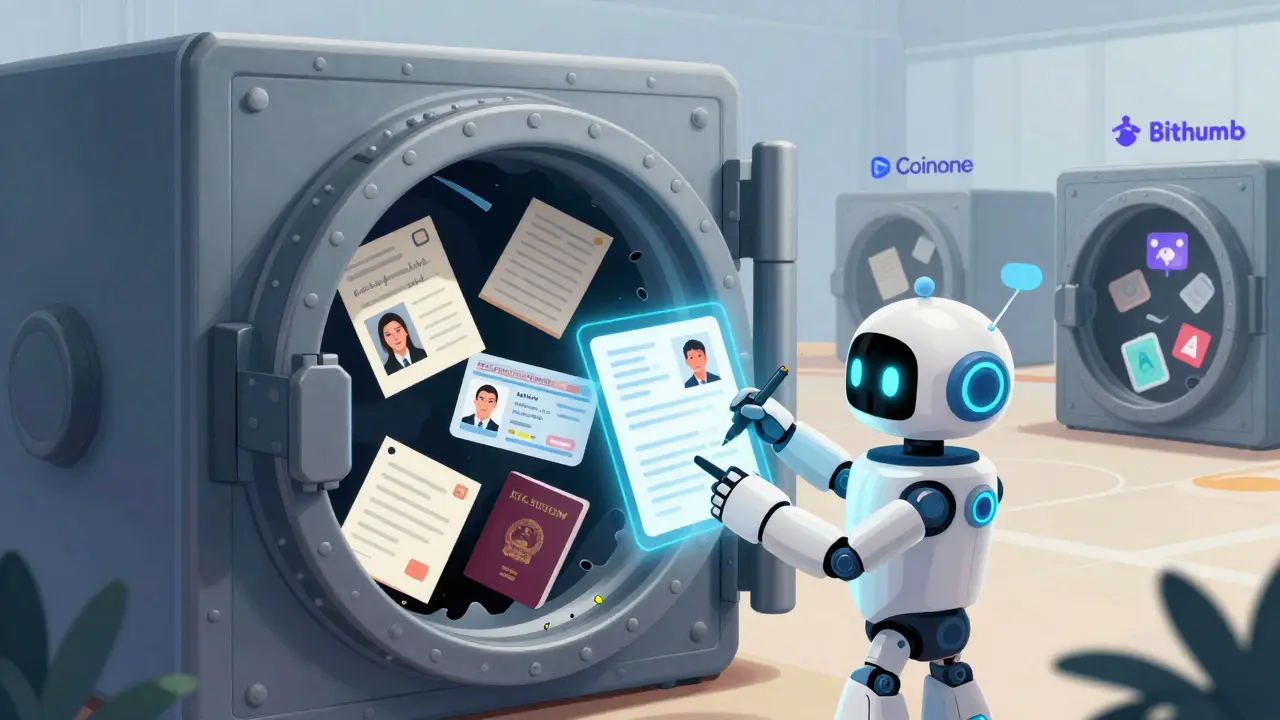
What Happened After the Findings?
Upbit’s parent company, Dunamu, didn’t admit guilt. Instead, they filed a lawsuit. They claimed the FSC’s audit methods were “unfair” and that some violations were “technical errors.” But the evidence was overwhelming. The FIU didn’t just have data-they had screenshots, timestamps, and internal emails showing compliance staff were told to “prioritize user growth over verification.” The proposed fine? Up to 100 million Korean won ($68,600) per violation. That’s $34 billion if applied fully. No regulator would ever do that. But the threat alone forced Dunamu to the negotiating table. By January 2025, they agreed to overhaul their entire KYC system. They hired 200 new compliance officers. They installed AI-powered document verification tools that check for forgery, blurring, and mismatched data in real time. They now require two-factor identity verification for every new user-face scan, government ID, and a live video call with a Korean-speaking agent.How This Changed Crypto Rules in Asia
Before Upbit, most Asian exchanges treated KYC as a box to check. Now, every exchange in Japan, Singapore, and Hong Kong is being audited the same way. The FSC’s method became the new standard: look at every user from the last three years. No exceptions. Bithumb, Korea’s second-largest exchange, immediately upgraded its system. They now use blockchain-based identity verification tied to national ID databases. Coinone followed. Even international platforms like OKX and Bybit now require Korean users to submit government-issued documents with holograms and machine-readable zones-something they never did before. The lesson? If you’re operating in a country with strict financial laws, KYC isn’t optional. It’s your license to operate. And if you cut corners, regulators won’t just fine you-they’ll freeze your growth until you fix it.
What Traders Should Do Now
If you’re a Korean crypto user, you’ve probably noticed changes. New sign-ups take longer. Withdrawals require extra steps. Some users got locked out of their accounts during the audit. That’s not a glitch-it’s the system working. Here’s what you should do:- Make sure your Upbit account has a clear, unobscured government ID uploaded. No selfies with papers.
- Verify your phone number with a Korean SIM. Foreign numbers are flagged.
- Check your transaction history. If you’ve traded with unregistered foreign exchanges, you may be flagged.
- Don’t assume other exchanges are safer. Ask them: “Do you use real-time document authentication with national ID databases?” If they say no, consider moving your funds.
The Bigger Picture: Regulation Isn’t the Enemy
Some traders hate this. They say, “Why can’t I trade freely?” But freedom without accountability is chaos. Upbit’s failures didn’t just risk money-they risked trust. If users can’t trust that an exchange knows who its users are, then the whole system collapses. South Korea didn’t try to kill crypto. They tried to clean it up. And in doing so, they set a global example. Other countries are watching. The U.S. SEC is now auditing U.S.-based exchanges for similar gaps. The EU is tightening its MiCA rules. Even Dubai is requiring real-time ID verification for all licensed exchanges. This isn’t about control. It’s about survival. Crypto can’t grow if it’s used for crime. Upbit’s 500,000 violations were a symptom of a larger problem: exchanges that grew too fast and forgot their responsibilities. The fix? Slower growth. Better systems. Real verification. Not just a checkbox.What exactly were the 500,000 KYC violations at Upbit?
The violations included accepting photocopied or blurred ID documents, failing to verify South Korean driving licenses (which require encrypted serial number checks), not collecting any ID in over 9 million cases, and allowing transactions with unregistered foreign exchanges. Each case represents a single user registration or transaction where identity verification rules were ignored.
Why did the FSC only suspend new registrations instead of shutting down Upbit?
Upbit controls 80% of South Korea’s crypto trading volume. Shutting it down completely would have caused massive market instability, frozen billions in user funds, and triggered panic across the country’s 30% crypto-adoption rate. The FSC chose a targeted penalty-blocking new users-to force compliance without collapsing the system.
Could Upbit have avoided this crackdown?
Yes. South Korea’s Special Financial Transactions Act requires exchanges to renew their licenses every three years with full compliance documentation. Upbit submitted paperwork but didn’t implement the actual verification systems. If they had invested in AI-based document authentication, live video checks, and real-time ID database matching, they would have passed the audit.
Are other Korean exchanges also at risk?
Yes. After Upbit’s case, Bithumb, Coinone, and Gopax all underwent emergency audits. Bithumb fixed over 120,000 compliance gaps. Coinone upgraded its entire KYC system. The FSC now requires all exchanges to submit monthly compliance reports. No one is immune.
What should international users do if they trade on Upbit?
If you’re not a Korean resident, your account may be flagged for cross-border trading. Upbit now blocks non-Korean IPs from depositing fiat. If you’re using a Korean bank account or SIM card to trade, ensure your ID is fully verified. Otherwise, consider moving funds to an exchange that explicitly supports your country’s regulations.
Comments
Joshua T Berglan
This is why I love crypto when it's done right. 🚀 Upbit’s failure was wild, but the way Korea handled it? Pure genius. No more playing games. Real verification = real trust. We need this everywhere. 🙌
March 23, 2026 AT 01:59
Kevin Da silva
80% market share and they didn't even check IDs properly? That's not negligence that's a business model
March 24, 2026 AT 21:15
Mike Yobra
So let me get this straight. The regulator didn’t shut them down because they’re too big to fail... but they’re also too big to be trusted? That’s not a policy. That’s a paradox wrapped in a spreadsheet.
March 25, 2026 AT 09:05
Mansoor ahamed
India should take notes. We let exchanges run wild. No audits. No accountability. Just memes and FOMO. This is what happens when you skip the basics.
March 26, 2026 AT 14:21
Jeannie LaCroix
I cried when I read this. Not because I lost money - because I believed in crypto. This isn't about regulation. It's about dignity. People deserve to know who they're trading with. 💔
March 26, 2026 AT 21:50
Pradip Solanki
KYC is a regulatory tax on innovation. They didn't fix the problem they just added layers. AI verification? That's just another API waiting to be exploited. The real issue is centralized control
March 28, 2026 AT 04:39
Brad Zenner
I used to trade on Upbit. The verification was a joke. I submitted a blurry photo of my license and it went through in 30 seconds. I didn't think it was illegal - I thought it was normal. This audit exposed how broken the whole system was.
March 29, 2026 AT 06:39
Tony Phillips
Honestly this gives me hope. Crypto doesn't need to be wild west. It can be responsible. Upbit messed up bad but the response? Clean. Thoughtful. Real. Maybe we're finally growing up as an industry.
March 29, 2026 AT 14:34
Abhishek Thakur
500k violations means 500k people got away with it. That's not a failure. That's a feature. The system was built to let people in. Now they're locking doors. Too late for some.
March 30, 2026 AT 15:28
Jackie Crusenberry
Why are we even talking about this? Crypto is just gambling with more steps. They should've just shut it all down and called it a day.
April 1, 2026 AT 15:17
YANG YUE
The real tragedy isn't the 500k violations. It's that 499,999 of those users never even knew they were breaking the law. We built a system where ignorance was the default. That's not freedom. That's abandonment.
April 3, 2026 AT 10:09
Anna Lee
Yessss! Finally someone did it right!! I'm so proud of Korea 🥹👏 Upbit had to grow up and they did it! New signups take longer? Good! I'd rather wait 10 mins than lose my money to a fake account 💪
April 3, 2026 AT 10:23
Shana Brown
I'm a trader from Texas. I never used Upbit but I'm watching this like it's a Netflix doc. This is the blueprint. If the U.S. does half of what Korea did, we'd be in a better place. 🇰🇷✨
April 4, 2026 AT 10:03
Marie Mapilar
I work in fintech and this is textbook. The FSC didn't just punish - they designed a path forward. That's leadership. Most regulators just scream and fine. Korea said: fix it. We'll hold your hand. And they did. Honestly? I'm impressed.
April 5, 2026 AT 03:19
vu phung
The AI verification tools they installed? That's the future. Real-time ID matching with national databases. It's not sci-fi anymore. It's just good business. And honestly? It makes trading feel safer.
April 6, 2026 AT 05:27
Lorna Gornik
I love how Korea didn't panic. They didn't overreact. They looked at the data and said: okay, we need to fix this without breaking the whole market. That’s maturity. 🇰🇷❤️
April 7, 2026 AT 00:20
Andrew Midwood
My cousin works at Bithumb. They had to reverify 120k users after Upbit. Said it took 3 months. People were mad. But now? No more chargebacks. No more fake accounts. Worth it.
April 8, 2026 AT 18:04
Kayla Thompson
Oh please. This is just the state getting more control. They didn't care about safety they just wanted to own your money. Wake up people. This is the beginning of the end.
April 10, 2026 AT 07:19
Brijendra Kumar
Upbit didn't fail they just prioritized growth over compliance. That's capitalism. The FSC is just jealous they didn't think of it first. Now they're punishing innovation because they can't compete.
April 12, 2026 AT 00:24
Ananya Sharma
I'm from Delhi. We have zero KYC enforcement here. I've traded on 5 different Indian exchanges. None asked for ID. Not one. This Korean case makes me wonder if we're even part of the same industry.
April 12, 2026 AT 08:22
Florence Pardo
I spent hours reading through the FIU report. The emails alone. The ones where compliance staff were told to 'prioritize user growth over verification'. It broke my heart. This wasn't incompetence. It was a choice. A conscious, repeated choice. And now thousands of people are paying for it. I just hope they learn. Not just Upbit. Everyone.
April 12, 2026 AT 14:53
Alicia Speas
While I appreciate the regulatory rigor, I must note that the long-term implications of such aggressive compliance may inadvertently marginalize informal traders and small-scale participants. A balance must be struck between security and accessibility.
April 13, 2026 AT 12:47