

Buying Bitcoin in Skopje isn't like buying it in Berlin or London. There are no sleek apps connecting directly to your local bank account without a second thought. Instead, you're navigating a maze of restrictions, peer-to-peer workarounds, and a legal system that says "no" while the market screams "yes." This is the reality of underground crypto trading in North Macedonia, a landscape defined by contradiction.
On paper, cryptocurrency trading has been prohibited since 2017. In practice, thousands of citizens trade daily using decentralized platforms and cash-based methods. Why does this gap exist? And more importantly, how do you stay safe when the rules keep changing? Let's break down the mechanics of this gray market, the tools people use, and the risks you face if you decide to jump in.
The Regulatory Paradox: Illegal on Paper, Alive in Practice
To understand the underground nature of this market, you have to look at where the prohibition came from. In 2017, the National Bank of the Republic of Macedonia (NBRM) issued a strict ban on cryptocurrency trading. They classified digital assets alongside securities and derivative financial instruments traded on foreign markets. At the time, investing in foreign securities was restricted under the first phase of the Stabilisation and Association Agreement with the European Union. So, crypto got lumped in with those banned activities.
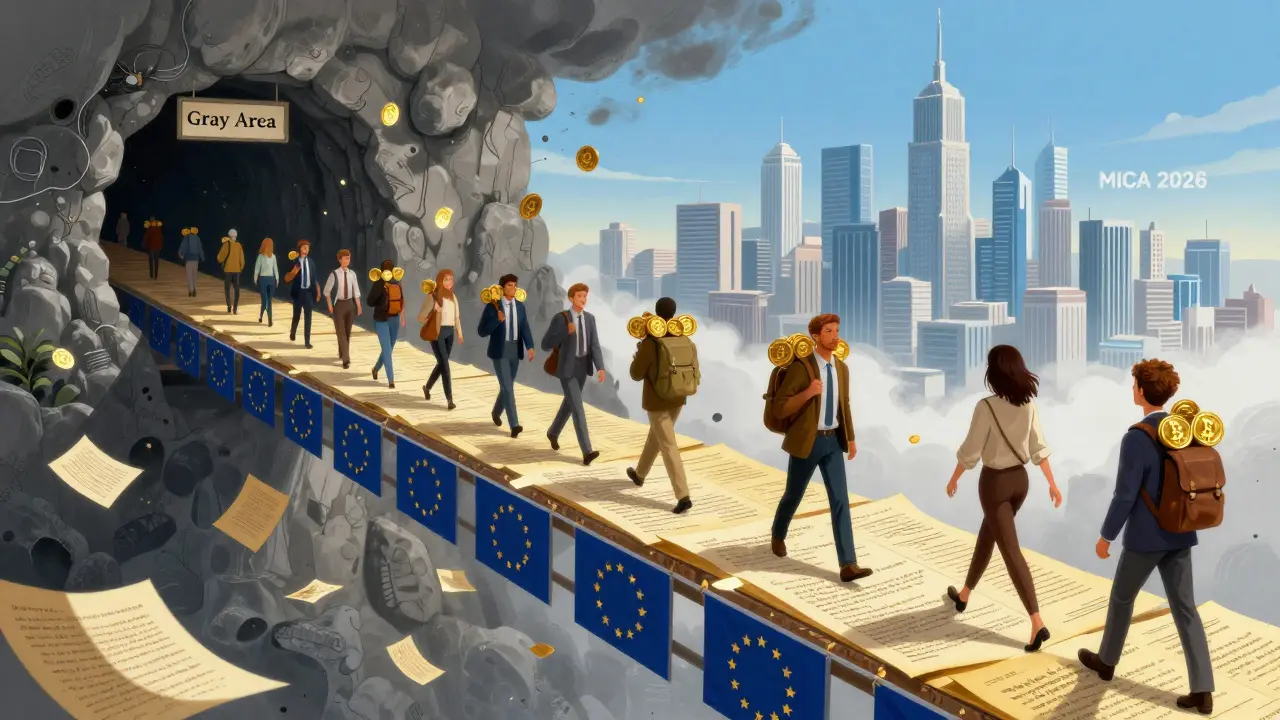
But laws don't always match reality. By 2023, the NBRM softened its stance significantly. They clarified that just because cryptocurrencies aren't regulated, it doesn't mean they are illegal. This created a massive gray area. The ban technically exists, but enforcement is practically non-existent for small-scale retail traders. This ambiguity is what fuels the "underground" label. You aren't breaking into a vault; you're operating in a space where the government hasn't decided whether to shut the door or open a window.
Then came February 1, 2022. The Macedonian government adopted amendments to the Anti-Money Laundering and Countering the Financing of Terrorism (AML/CTF) Draft-Law. These changes introduced legal definitions for "virtual assets," "virtual asset service providers," and "cryptocurrencies" as property. This wasn't full legalization, but it was a signal. It showed authorities were moving from outright prohibition toward regulation. For traders, this meant the risk of sudden crackdowns decreased, even though the formal framework was still missing.
| Year | Event | Impact on Traders |
|---|---|---|
| 2017 | NBRM Prohibition | Crypto classified as banned foreign securities; banks block transactions. |
| 2022 | AML/CTF Amendments | Crypto defined as "property"; legal groundwork laid for future regulation. |
| 2023 | NBRM Clarification | Bank acknowledges unregulated != illegal; reduces fear of prosecution. |
| 2025-2026 | MiCA Alignment Expected | Full regulatory clarity anticipated; shift from underground to licensed brokers. |
How the Underground Market Actually Works
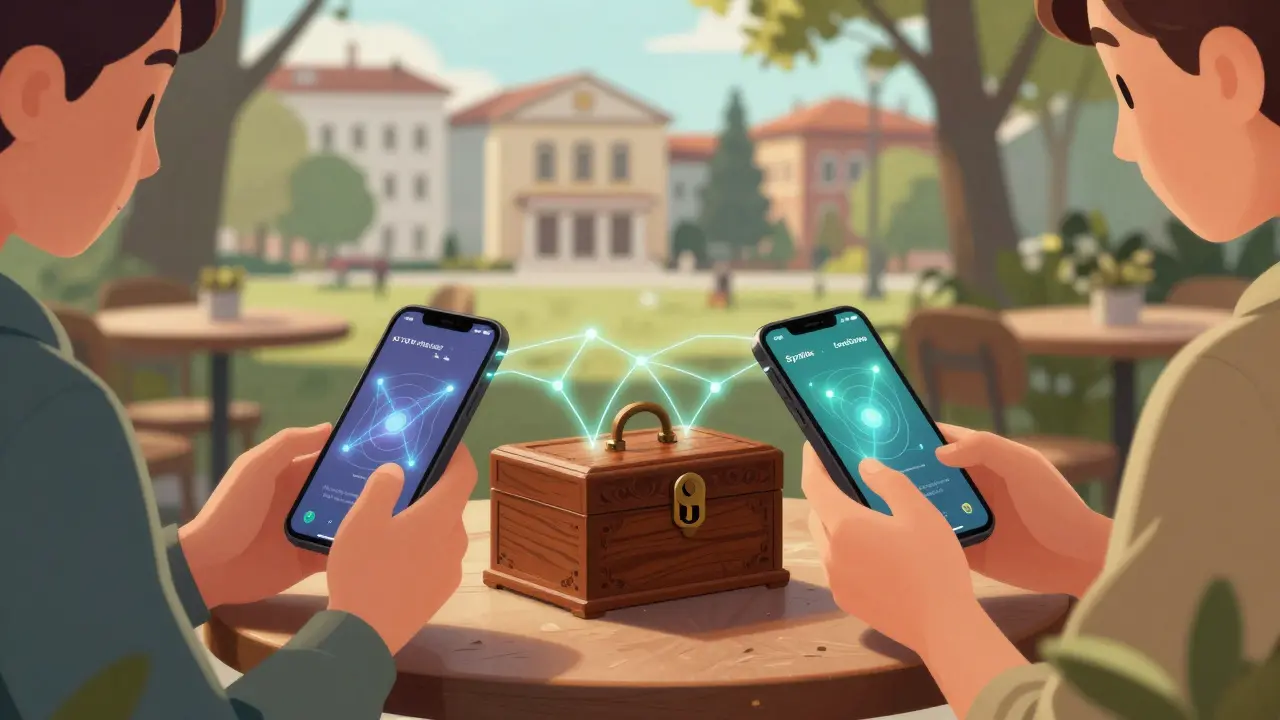
If banks won't help you buy Bitcoin, how do people do it? The answer is Peer-to-Peer (P2P) platforms. These sites act as middlemen between buyers and sellers, allowing direct transactions without touching traditional banking rails for the crypto transfer itself. Two platforms dominate this space in North Macedonia: Symlix and LocalCoinSwap.
Symlix operates as a marketplace where users can filter offers by payment type, currency, and location. When you sign up, the platform generates an automatic crypto wallet. The key feature here is the escrow system. When you agree to buy Bitcoin from a seller, your fiat money (usually Euros or Denars via bank transfer or cash) goes into a secure holding account. The seller sees the funds are locked, then releases the Bitcoin. Only after you confirm receipt does the platform release the money to the seller. This protects both parties from scams, which is crucial in an unregulated environment.
LocalCoinSwap works similarly but emphasizes flexibility. It supports over 300 payment methods, including cash deposits, mobile payments, and even gift cards. The process is simple: Register, search for offers in Macedonia, and start a trade. Users often prefer these platforms because they bypass the need for KYC (Know Your Customer) verification that international exchanges require. However, this anonymity comes with higher risks. If a dispute arises, you rely entirely on the platform's resolution center rather than consumer protection laws.
Another route involves international brokers like Swissquote or Interactive Brokers. While not "underground" in the same sense, they operate in a gray zone. BrokerChooser ranked Swissquote as the best crypto broker in Macedonia in 2025, citing solid service despite high fees. These brokers allow Macedonian residents to trade crypto derivatives or tokens, but they don't offer direct custody of coins in many cases. You're betting on price movements rather than owning the asset. This appeals to some who want to avoid the hassle of P2P trades, but it limits your control.
The Real Risks: Scams, Frozen Funds, and Volatility
Trading in a gray market means you lose the safety net of consumer protection. Here’s what can go wrong:
- Payment Reversals: If you send money via bank transfer to a P2P seller, there's a small chance the transaction could be flagged or reversed if the seller's bank questions the activity. Always use irreversible payment methods or meet in person for cash deals.
- Platform Shutdowns: Since these platforms operate in a legal void, they could theoretically be blocked by local ISPs at any time. While rare so far, it's a constant background risk.
- Counterparty Fraud: Even with escrow, scammers exist. A common trick is sending a fake screenshot of a completed bank transfer. Always log into your own banking app to verify funds before releasing crypto.
- Tax Uncertainty: With no clear tax guidelines for crypto gains, you're flying blind. Are profits taxable? How do you report them? Currently, most traders ignore this, hoping regulations will clarify things later. But ignorance isn't a defense if audits become common.
A real-world example from late 2024 involved a user whose €1,200 was frozen for two weeks after a P2P trade dispute. The seller claimed they never received the bank transfer, despite proof to the contrary. The platform eventually resolved it, but the stress and lost time highlight why trust scores matter. On forums like Reddit’s r/NorthMacedonia, users consistently warn: "Always check the trader's history. Never rush. Use video calls to verify identity."
Who Is Trading and Why?
Despite the risks, adoption is growing. Estimates suggest around 42,000 active crypto users in North Macedonia, roughly 2.3% of the population. This is lower than the EU average of 5.1%, but it's rising fast. LocalCoinSwap reported a 300% year-over-year increase in Macedonian user activity from 2022 to 2024.
Who are these traders? Mostly young adults and tech-savvy individuals looking for alternative investments. The primary driver isn't ideological support for decentralization; it's the promise of returns. As TRT World noted in June 2025, "the chance to make fast money continues to draw many into the market." Many users admit they don't fully understand blockchain technology, which makes them vulnerable to hype and scams.
Enterprise adoption is nearly non-existent. Only three registered businesses accept cryptocurrency payments, compared to over 1,200 in neighboring Serbia. Companies wait for legal clarity before integrating crypto into their operations. Until then, the market remains dominated by retail speculation.
Looking Ahead: From Underground to Regulated
The days of pure underground trading may be numbered. Experts predict North Macedonia will align with the EU's MiCA (Markets in Crypto-Assets) framework by 2026-2027. This would bring licensing requirements for virtual asset service providers, clearer tax rules, and stronger consumer protections.
For now, the transition is messy. You might see increased scrutiny from banks, new reporting requirements, or even temporary bans on certain P2P activities. But the trend is toward integration, not suppression. The NBRM's shift in language from "prohibited" to "unregulated" signals that authorities recognize crypto's permanence.
If you're trading today, prepare for change. Keep records of all transactions. Use reputable platforms with strong escrow systems. Avoid large cash meets in unsafe locations. And stay informed about legislative updates. The gray area is shrinking, and those who adapt will survive the transition to a regulated market.
Is cryptocurrency illegal in North Macedonia?
Technically, yes, based on a 2017 NBRM decision. However, the National Bank clarified in 2023 that lack of regulation does not equal illegality. Enforcement against individual retail traders is currently minimal, creating a de facto legal gray area.
What are the safest ways to buy Bitcoin in North Macedonia?
Peer-to-Peer (P2P) platforms like Symlix and LocalCoinSwap are the most popular options. They use escrow systems to protect funds. Always trade with verified users who have high feedback scores and consider using cash or irreversible payment methods to reduce fraud risk.
Can I use my local bank account to buy crypto?
Directly linking a local bank account to major international exchanges is difficult due to past restrictions. Most users rely on P2P platforms where they manually transfer funds to a seller's bank account or use cash deposits. Some international brokers like Swissquote accept Macedonian clients but may charge higher fees.
When will crypto regulation be fully implemented?
Experts expect North Macedonia to align with the EU's MiCA framework by 2026-2027. The 2022 AML/CTF amendments were the first step, defining crypto as property. Full licensing regimes for exchanges and clearer tax laws are anticipated in the coming years.
Are there any local crypto exchanges in North Macedonia?
There are no major domestically developed crypto exchanges due to regulatory uncertainty. Most users rely on international P2P platforms like Symlix, LocalCoinSwap, and Paxful, or global brokers like Interactive Brokers and Swissquote.
Comments
Nick Wengel
It is fascinating to see how different regions adapt to global financial trends. The situation in North Macedonia shows that people will always find a way to participate in the digital economy, even when laws are unclear. It reminds me of early internet days where rules were still being written.
July 5, 2026 AT 09:46
Alicia Hull
I must point out that relying on P2P platforms without proper regulatory oversight is incredibly reckless. You are essentially gambling with your life savings because the legal framework is nonexistent. Why would anyone trust an escrow system that has no legal backing? It is absurd to think this is safe.
July 6, 2026 AT 08:38
Johan Otto
Boring stuff. Everyone says crypto is risky but they buy it anyway. Drama much? I just want to know if I can get paid in Bitcoin for my job lol. Too complicated for me honestly.
July 7, 2026 AT 00:45
Anuj Kashyap
The irony here is palpable 🤷♂️. The government bans something, and suddenly everyone wants it more. It is like prohibition in the 1920s but with code instead of whiskey. People crave freedom, even if it comes with scams. We are all just dancing on the edge of a volcano 🔥.
July 8, 2026 AT 18:31
Tracy Marshall
this is exactly what i feared would happen when governments try to control money (y) the nbrm knows full well that banning crypto only pushes it underground where criminals thrive but they keep doing it because they hate losing control over the narrative and the people who fall for it deserve every penny they lose since they should have listened to the warnings about decentralized finance being a tool for anarchists
July 10, 2026 AT 10:29
Guy Davis
its bad that people dont follow the law. if its illegal then stop doing it. simple as that. why do we need so many articles about breaking rules? just obey the authorities and stay safe.
July 11, 2026 AT 18:52
Antony Lopez
Let me tell you something, folks. In the US, we have regulations that actually work. We don't need some gray market nonsense like this. American banks are secure, reliable, and protected by the strongest financial systems in the world. This Macedonian situation is a mess because they lack the discipline to enforce proper banking standards. Stick to regulated markets or you're asking for trouble.
July 11, 2026 AT 19:44
Erika Pozzetto
It is important to consider the broader implications of such regulatory ambiguity on the socio-economic fabric of the region. When citizens are forced into informal economies due to restrictive policies, it undermines the very foundations of institutional trust and creates a parallel system that operates outside the purview of state protection, thereby exposing individuals to significant vulnerabilities while simultaneously highlighting the urgent need for comprehensive legislative reform that balances innovation with security.
July 12, 2026 AT 00:16
Tuan Nguyen
The sheer incompetence of these local regulators is astounding. They ban technology they do not understand, creating a black market that benefits only the scammers and the elite insiders who already hold bags. It is pathetic to watch them pretend they have control while the actual value migrates offshore. Typical developing nation behavior.
July 12, 2026 AT 20:00
Hazel Fruitman
i feel like people are really taking risks here and its sad because families could lose everything. we need to protect our communities from these shady deals. its not worth it to gamble with hard earned money just because someone online told you to.
July 14, 2026 AT 09:39
Autumn Story
Hey there!! I hope everyone stays safe out there!!! It is super important to be careful but also open minded!!! Just make sure you double check everything before you send any money!!! Good luck to everyone trying to navigate this tricky space!!! 😊😊
July 14, 2026 AT 19:55
Mark Tuason
While the risks are evident, it is crucial to acknowledge the ingenuity of those navigating these constraints. Perhaps a collaborative approach between regulators and the community could yield safer frameworks rather than outright prohibition. Dialogue often leads to better solutions than silence.
July 15, 2026 AT 05:45
Ella Collinson
The structural inefficiencies inherent in non-compliant P2P ecosystems create systemic fragility. Without robust KYC/AML protocols integrated at the node level, the entire network becomes susceptible to adversarial attacks and liquidity traps. The reliance on manual verification processes introduces human error vectors that compromise transactional integrity.
July 15, 2026 AT 07:48
Ray Arney
I guess it makes sense that people use Symlix if banks won't help. It's a bit sketchy but hey, gotta do what you gotta do. I've heard good things about their escrow though.
July 15, 2026 AT 08:17
Andrew Schneider
Oh please, everyone loves a good conspiracy! 🎭 The government isn't banning crypto because it's bad; they're banning it because they can't tax it properly yet! It's all about control, baby! And let's not forget the drama of getting scammed-it's like a reality TV show but with real money lost! 💸🔥
July 15, 2026 AT 18:46
Eric Braddock
Wake up sheeple! The NBRM is working with shadow brokers to siphon wealth through these 'gray' channels. The AML amendments are just a smokescreen to track your movements before the big crash. They want you to think you're free while they tighten the noose. Trust nothing, verify everything, and expect betrayal from the institutions you rely on.
July 17, 2026 AT 09:26