
When exploring peer-to-peer energy market, a system where producers and consumers trade electricity directly without a central utility. Also known as P2P energy trading, it relies heavily on blockchain, a distributed ledger that records each transaction transparently and smart contracts, self‑executing code that enforces trade rules automatically to enable secure, near‑real‑time settlements. The market also intertwines with renewable energy, solar, wind or hydro power generated at the local level, creating new revenue streams for prosumers. In short, the peer-to-peer energy market encompasses direct trading, requires blockchain for transparency, and uses smart contracts for trust‑less automation.
The first building block is decentralized platforms, software layers that match buyers and sellers while handling grid constraints. These platforms act as marketplaces, similar to online classifieds, but they embed technical rules that keep the grid stable. Second, tokenized energy assets, digital representations of kilowatt‑hours that can be bought, sold, or bundled turn physical power into tradable units, opening doors to new financing models. Third, grid‑level IoT sensors, devices that report real‑time production and consumption data feed the blockchain, ensuring that every token reflects actual energy flow. Together, these entities form a loop: sensors feed data, blockchain records it, smart contracts settle trades, and tokens represent the outcome.
Regulatory frameworks also play a role. Many jurisdictions are creating sandbox programs that let innovators test P2P models without full licensing. These sandboxes influence market design by allowing rapid iteration on pricing algorithms and settlement periods. Meanwhile, prosumers—people who both produce and consume energy—benefit from lower transaction costs and the ability to earn from excess generation. The result is a virtuous cycle: more renewable installations feed the market, which in turn attracts more participants.
Looking ahead, integration with traditional utilities is becoming a hot topic. Hybrid models where utilities provide backup services while P2P platforms handle local trades are emerging. This hybrid approach leverages the reliability of large‑scale grids and the efficiency of decentralized trading. As the technology matures, expect to see more cross‑border tokenized energy markets, where surplus solar power from one country can be bought by another through a blockchain bridge.
Below you’ll find a curated collection of articles that dive deeper into each of these pieces—airdrop guides for energy‑related tokens, analyses of decentralized exchanges that support energy assets, and regulatory updates that shape the space. Whether you’re a prosumer curious about earning extra income, a developer building a new platform, or an investor spotting the next wave, the posts ahead give you concrete steps and real‑world examples to navigate the fast‑evolving peer‑to‑peer energy market.
Posted by Minoru SUDA with 17 comment(s)
Oct
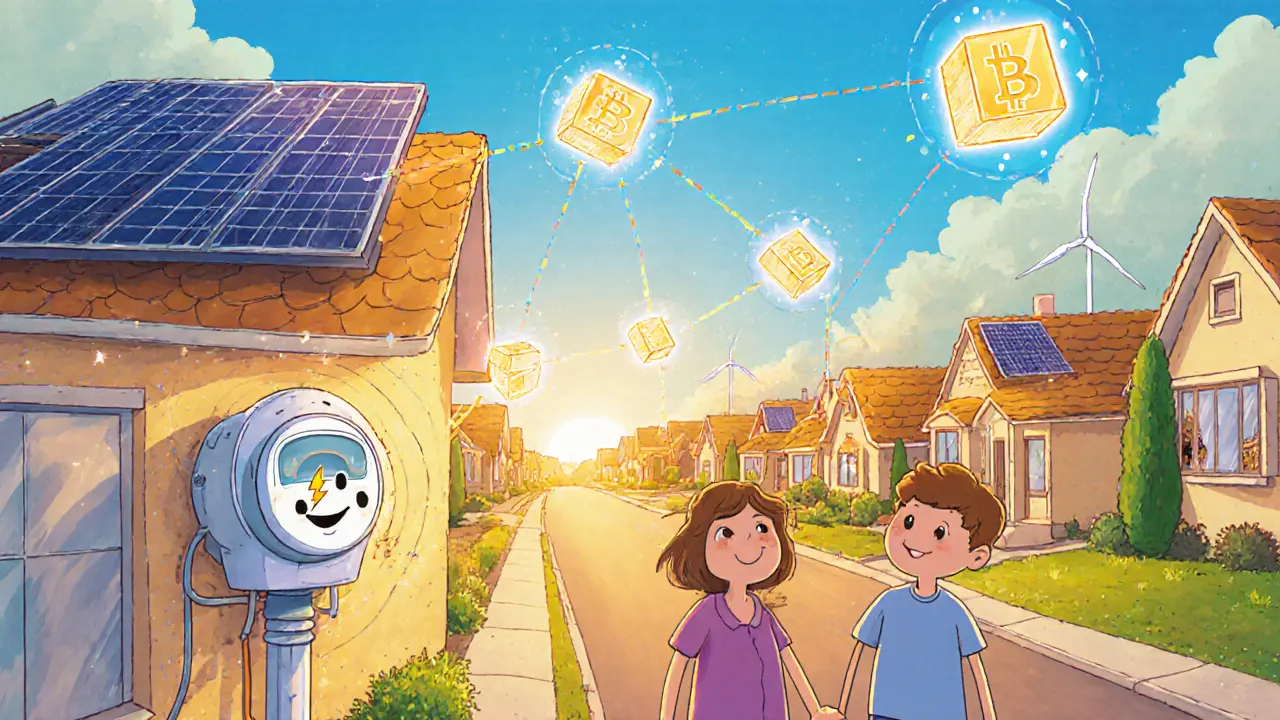
Explore how blockchain energy trading cuts costs, boosts transparency, empowers homeowners, and strengthens grid resilience while promoting renewable adoption.
view more