
When you hear on-chain analysis, the practice of examining real-time data from a blockchain to understand market behavior. Also known as blockchain analytics, it's the difference between guessing where price is headed and seeing exactly what’s happening on the network. Most people watch price charts. Smart traders look at what’s happening under the hood—how many coins are moving, who’s selling, when miners are accumulating, and whether exchanges are filling up with coins. That’s on-chain analysis, and it doesn’t lie.
It’s not magic. It’s numbers. Take the MVRV ratio, a metric comparing Bitcoin’s market value to its realized value, showing if the asset is overbought or undervalued. When MVRV hits 3.7, history shows Bitcoin often tops out. Or look at SOPR, the metric that tracks whether coins are being sold at a profit or loss. If SOPR drops below 1, it means people are selling at a loss—often a sign of panic or a bottom forming. Then there’s exchange flows, the movement of crypto into or out of exchanges, revealing whether holders are preparing to sell or holding tight. When large amounts flood exchanges, it’s usually a red flag. When they drain out, it’s often a sign of accumulation.
These aren’t theories. They’re patterns backed by years of data. Bitcoin’s 2017 and 2021 bull runs both ended after MVRV spiked and SOPR collapsed. Miners selling off their holdings? That’s another signal. When miner reserves drop sharply, it often means they’re cashing out before a downturn. And when retail traders start dumping coins onto exchanges while whales move them to cold wallets? That’s the exact opposite of what you’d expect—and it’s exactly what happened before the 2022 crash.
You don’t need a PhD to use this. You just need to know what to look for. The posts below break down real metrics, show you how they’ve worked in the past, and explain how to spot the next move before it hits your feed. No fluff. No hype. Just the numbers that matter.
Posted by Minoru SUDA with 0 comment(s)
Nov
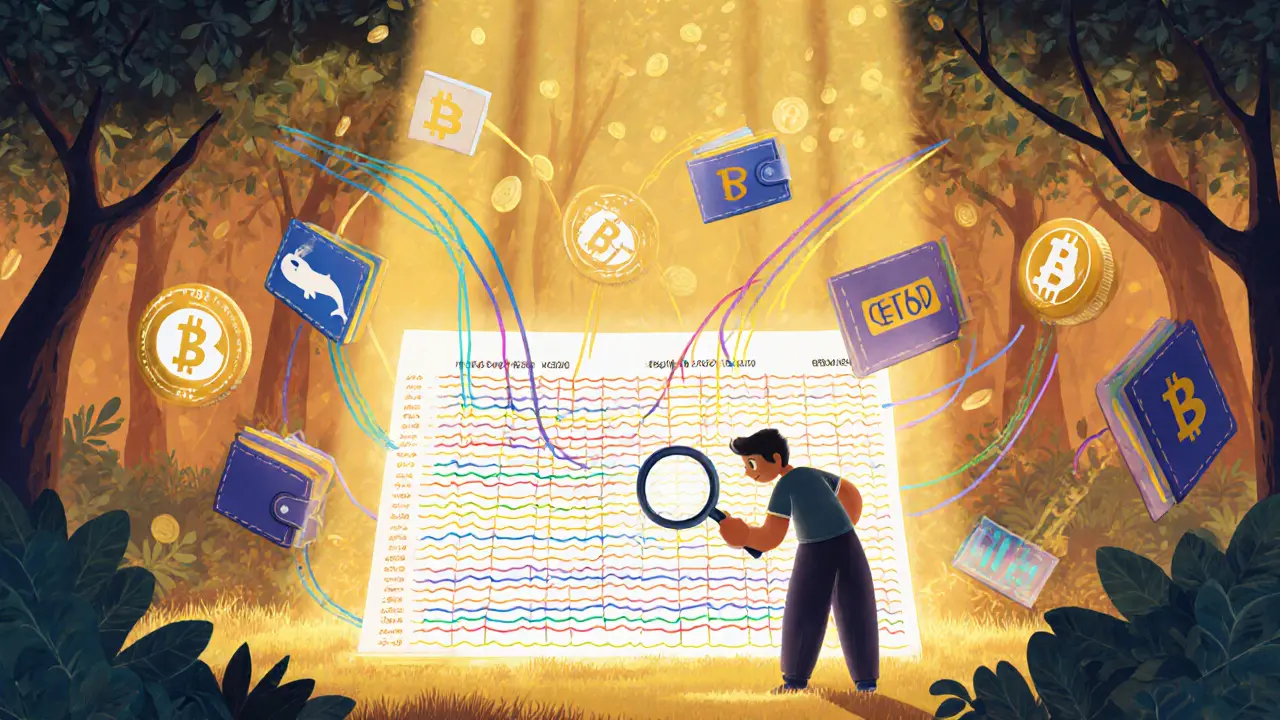
Learn how to mine on-chain data to track real crypto activity, spot whale movements, and avoid fake signals. Practical guide for investors using Glassnode, Nansen, and free tools.
view more