
Less Network token, a low-visibility blockchain token tied to an obscure network with no public roadmap or active development. Also known as LESS, it’s one of hundreds of tokens that launch with hype but fade without real use cases. Unlike major cryptocurrencies like Bitcoin or Ethereum, Less Network token doesn’t power a widely used app, exchange, or DeFi protocol. It’s not listed on top platforms. There’s no team bio, no GitHub activity, and no community-driven updates. If you found it on a small exchange or a Telegram group, that’s normal—for tokens like this, obscurity is the norm.
Most tokens like Less Network token fall into the same trap: they’re built to attract speculative buyers, not long-term users. Compare it to MantaDAO (MNTA), which at least had a clear DeFi purpose—even though it crashed 91%. Or Lobster (LOBSTER), which had a quadrillion supply and zero liquidity. Less Network token doesn’t even have that much personality. No memes. No viral story. Just a name, a contract address, and a price chart that moves with tiny, random trades.
What you’ll find in the posts below isn’t a guide to buying or holding Less Network token. It’s a collection of real stories about tokens that looked similar—promising, then vanished. You’ll read about fake airdrops, ghost exchanges, and projects that disappeared after their launch. You’ll learn how to spot the red flags: no team, no audits, no volume, no reason to exist. These aren’t warnings about big coins. They’re about the quiet ones—like Less Network token—that slip under the radar until they’re gone.
Posted by Minoru SUDA with 22 comment(s)
Dec
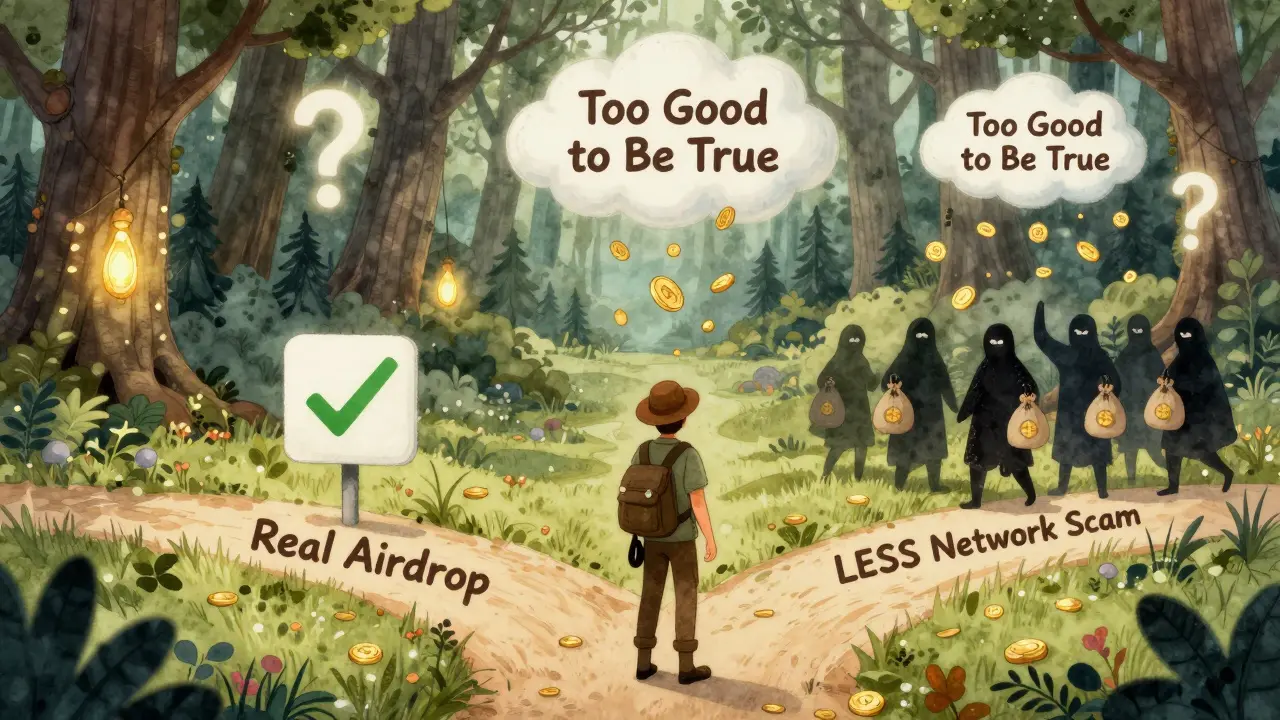
No official LESS Network airdrop exists as of December 2025. Learn how to spot fake airdrops, what real projects look like, and how to protect your funds from scams pretending to offer free LESS tokens.
view more