
When you hear fake crypto exchange, a platform that pretends to let you trade crypto but is designed to steal your money. Also known as rogue exchange, it often looks professional, uses fake reviews, and promises zero fees or crazy returns—until your funds vanish. These aren’t just shady websites. They’re carefully built traps that target people new to crypto, using logos that mimic Coinbase or Binance, fake customer support, and even cloned domain names. If a site feels too good to be true, it almost always is.
Real exchanges like Coinmate or Bit2C have clear licensing info, public team members, and user reviews spread across multiple trusted sites. A fake crypto exchange, a platform that pretends to let you trade crypto but is designed to steal your money. Also known as rogue exchange, it often looks professional, uses fake reviews, and promises zero fees or crazy returns—until your funds vanish. has none of that. It might claim to be "EU-regulated" but can’t show a license number. It might say it has "millions in liquidity" but has zero trading volume. And it will always push you to deposit fast—because once you do, they disappear. Look at Qmall Exchange or RDAX.io: both claimed low fees and regulation, but users found hidden costs, no audits, and no way to withdraw. These aren’t anomalies—they’re patterns.
Scammers don’t just create fake exchanges. They also fake airdrops, fake token launches, and fake NFT giveaways to lure you into connecting your wallet. Sites like YourToken or ExtStock don’t even try to hide their links to gambling or zero-supply tokens. They rely on one thing: your urgency. You see "limited time offer," "free tokens," or "exclusive access," and you click. But real projects don’t beg you to join. They publish whitepapers, list on CoinMarketCap properly, and let time prove their value. If a platform can’t answer basic questions about its team, tech, or regulation in under a minute, walk away.
What you’ll find below isn’t a list of every bad site ever made. It’s a collection of real cases—exchanges that claimed to be safe, tokens that had no supply, and airdrops that never existed. Each post breaks down exactly what went wrong, who got burned, and how you can check for the same red flags before you invest. No fluff. No hype. Just facts you can use to protect your crypto.
Posted by Minoru SUDA with 24 comment(s)
Nov
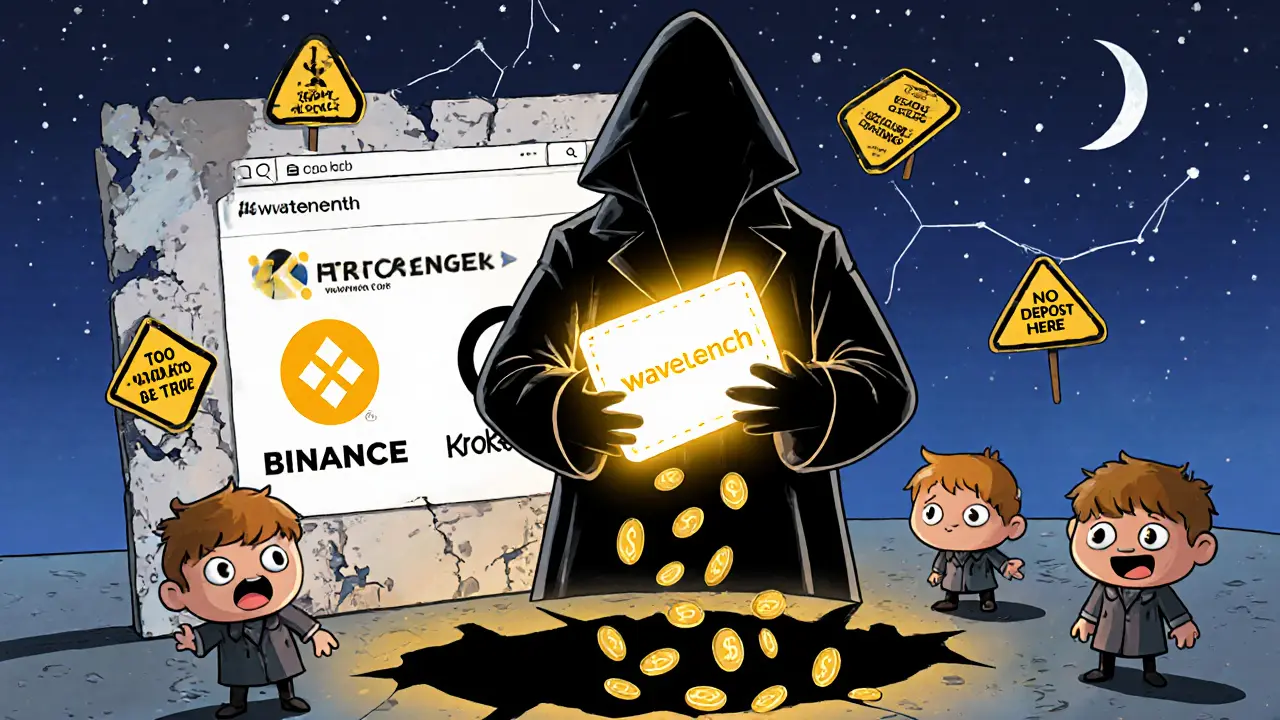
Wavelength crypto exchange is not real - it's a scam. No official platform exists under this name. Learn the red flags, how these scams work, and how to protect your crypto from fake exchanges in 2025.
view more