
When working with Exchange Security, the set of practices and technologies that keep crypto platforms safe from hacks, fraud and operational failures. Also known as crypto exchange safety, it is the backbone of any trustworthy trading experience.
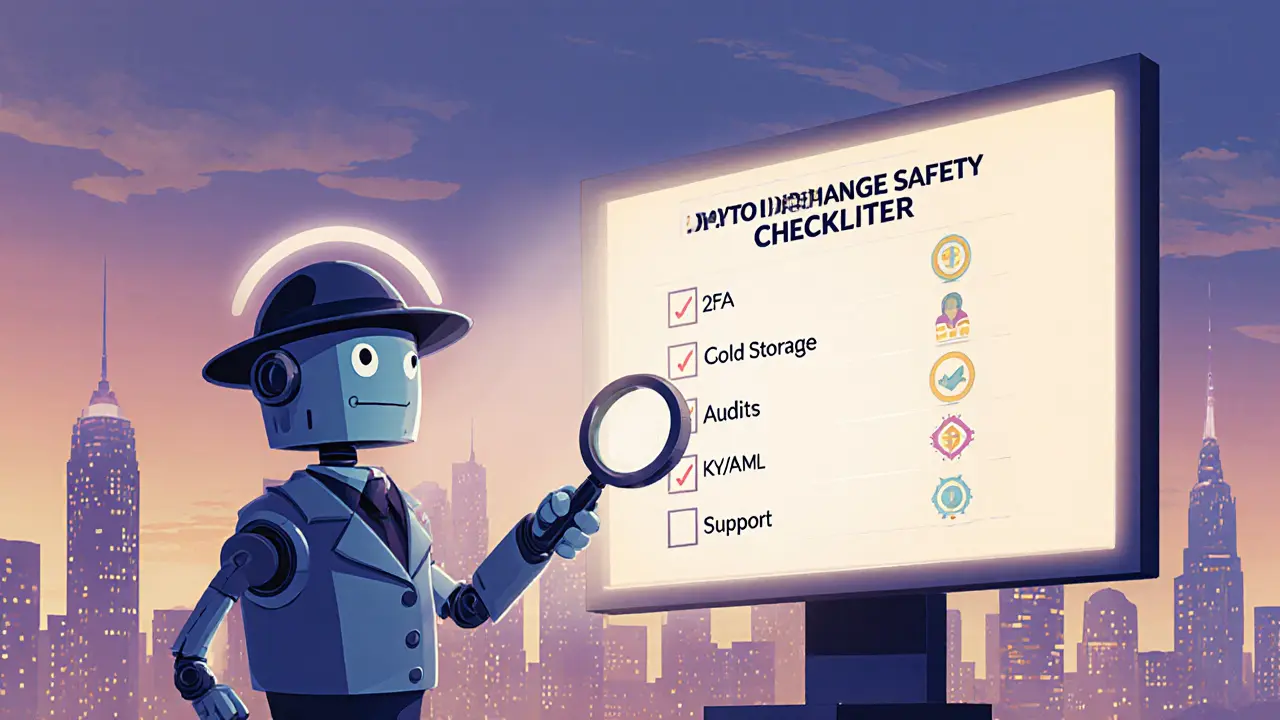
One of the most critical pieces is a Security Audit, an independent review of code, infrastructure and processes that identifies vulnerabilities before attackers can exploit them. A thorough audit reduces the risk of smart‑contract bugs and helps exchanges meet Regulatory Compliance, the legal standards set by financial watchdogs that enforce transparency and consumer protection. When audits are combined with robust Cold Storage, offline wallets that keep the majority of assets away from internet threats, the overall safety posture improves dramatically.
Exchange security requires strong user authentication. Two‑factor authentication (2FA) is the most common layer, forcing a second secret—usually a time‑based code or hardware key—on top of the password. This simple step blocks many credential‑theft attacks. Beyond 2FA, many platforms deploy hardware security modules (HSMs) to protect private keys during transaction signing. Together, these tools enforce "what you know" and "what you have" principles.
Risk assessment is another pillar. Exchanges continuously monitor transaction patterns for anomalies, using machine‑learning models to flag wash‑trading, spoofing or sudden spikes that could indicate an emerging threat. When a suspicious activity is detected, automated cooldowns and manual reviews kick in, limiting potential loss.
Finally, user education ties everything together. Even the best technical safeguards fail if users fall for phishing emails or fake login pages. Exchanges that provide clear security guides, real‑time alerts and easy steps to enable 2FA see dramatically fewer compromised accounts.
In short, exchange security is a layered approach: audits uncover code flaws, cold storage shields the bulk of funds, 2FA and HSMs lock down access, and continuous monitoring spots illicit behavior. This combination not only protects individual traders but also boosts confidence across the whole crypto ecosystem.
Below you’ll find a curated selection of articles that dive deeper into each of these topics—from detailed audit reports and cold‑storage best practices to step‑by‑step guides on setting up two‑factor authentication and staying compliant with global regulations. Explore the list to arm yourself with the knowledge you need to trade safely.
Posted by Minoru SUDA with 16 comment(s)
Oct

A detailed review of Zapple crypto exchange, highlighting missing information, risk factors, and a comparison with major platforms to help traders decide safely.
view morePosted by Minoru SUDA with 15 comment(s)
Oct
A detailed 2025 review of the obscure ko.one crypto exchange, covering security, fees, compliance, user experience, and safer alternatives for traders.
view more