
When talking about Decentralized Storage, a method of spreading data across many independent nodes instead of a single server. It’s also called distributed storage. IPFS, the InterPlanetary File System that uses content‑addressable hashing to locate files and Filecoin, the incentive layer that lets miners earn tokens for storing data are the two most talked‑about projects in this space. Together they form the backbone of many modern dApps.
At its core, decentralized storage relies on three technical pillars: content‑addressable networks, cryptographic proofs, and smart‑contract orchestration. Content‑addressable networks like IPFS ensure that a file’s address is derived from its hash, so any change creates a new address—a principle that guarantees data integrity. Cryptographic proofs, such as Filecoin’s Proof‑of‑Replication, let the network verify that storage providers actually keep a copy of the data. Smart contracts then automate payments and enforce service‑level agreements without a middle‑man. Another important player, Arweave, a permanent storage layer that uses a novel “proof‑of‑access” mechanism to keep data forever, demonstrates how immutable archives complement mutable storage solutions.
These building blocks enable real‑world use cases. dApps that need to store NFT metadata, for example, often pin files to IPFS and pay Filecoin miners for long‑term availability. Decentralized finance platforms use Arweave to keep audit trails tamper‑proof, while developers building web‑3 games rely on Storj (Storj, a cloud‑like service that encrypts and shreds files across a global network) for fast, low‑cost asset delivery. The semantic triple “Decentralized storage enables censorship‑resistant content delivery” captures this relationship clearly.
Compared with traditional cloud buckets, decentralized storage offers redundancy without a single point of failure, lower bandwidth costs through peer‑to‑peer sharing, and built‑in privacy because files are encrypted before they leave the user’s device. However, trade‑offs exist: retrieval latency can be higher than centralized services, and users must manage token balances to pay for storage or retrieval. Projects like Sia (Sia, a platform that lets users lease hard‑drive space in exchange for Siacoin) address cost concerns by offering pay‑as‑you‑go pricing, while still maintaining the same security guarantees.
All these nuances—different incentive models, varying durability guarantees, and diverse tooling—shape the ecosystem you’ll see in the articles below. Whether you’re a developer hunting for the right storage layer, an investor comparing token economics, or just curious about how your data can stay safe off‑chain, the list ahead covers a wide range of practical insights, tutorials, and reviews that will help you navigate the decentralized storage landscape with confidence.
Posted by Minoru SUDA with 23 comment(s)
Sep
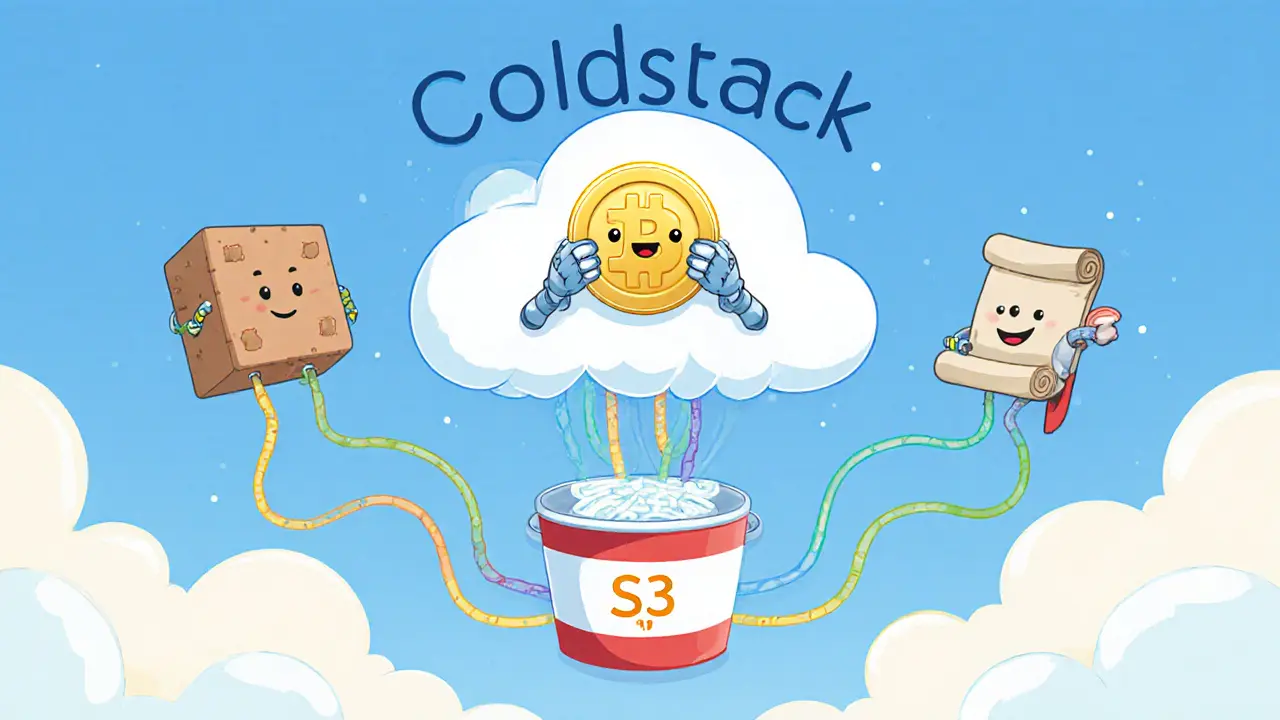
Coldstack (CLS) is a decentralized storage aggregator that uses an ERC‑20 token to simplify file uploads across Filecoin, Storj and Arweave via an Amazon S3‑compatible API. Learn how it works, tokenomics, price trends and key risks.
view more