
When you hear crypto gambling site, an online platform that lets you bet using cryptocurrencies like Bitcoin or Ethereum instead of traditional money. Also known as blockchain casino, it operates without banks, often with no KYC, and promises faster payouts—but that freedom comes with serious risks. Unlike regulated online casinos, most crypto gambling sites aren’t licensed by any government, meaning there’s no safety net if things go wrong.
These sites rely on blockchain gambling, a system where game outcomes are verified on public ledgers to prove fairness. You might see terms like "provably fair"—that means the results are generated using cryptographic hashes so you can check if the house cheated. But here’s the catch: just because the math is transparent doesn’t mean the operator is honest. Many of these platforms vanish overnight after collecting deposits. And while some users swear by sites like Bitcasino or Stake, others lost everything after a sudden shutdown with no warning.
The cryptocurrency betting, the act of placing wagers using digital assets on sports, poker, dice, or other games is legally gray everywhere. In the U.S., it’s banned in most states unless tied to a licensed operator. The UK requires a gambling license, even for crypto. Meanwhile, countries like Curacao and Costa Rica issue licenses to these sites—but those licenses mean little if the operator has no real assets or accountability. If you’re using crypto to gamble, you’re not just risking your money—you’re risking your personal data, your funds, and possibly your legal standing.
There’s also the issue of addiction. Without traditional banking limits, it’s easy to lose track of how much you’ve spent. One user on a forum said they lost $12,000 in three weeks betting on crypto dice games—no bank declined the transaction, no spending alert popped up. That’s the silent danger: crypto removes friction, and friction is what sometimes keeps people from going too far.
What you’ll find below are real reviews, breakdowns of platforms that actually deliver, and guides on how to spot a scam before you deposit. Some posts cover how to verify if a site is truly provably fair. Others warn about fake airdrops tied to gambling sites—like the ones pretending to give free tokens just for signing up. There’s also a look at how regulation is catching up, with South Korea and India cracking down hard. This isn’t about hype. It’s about survival in a space where the house doesn’t just have an edge—it has no rules at all.
Posted by Minoru SUDA with 16 comment(s)
Oct
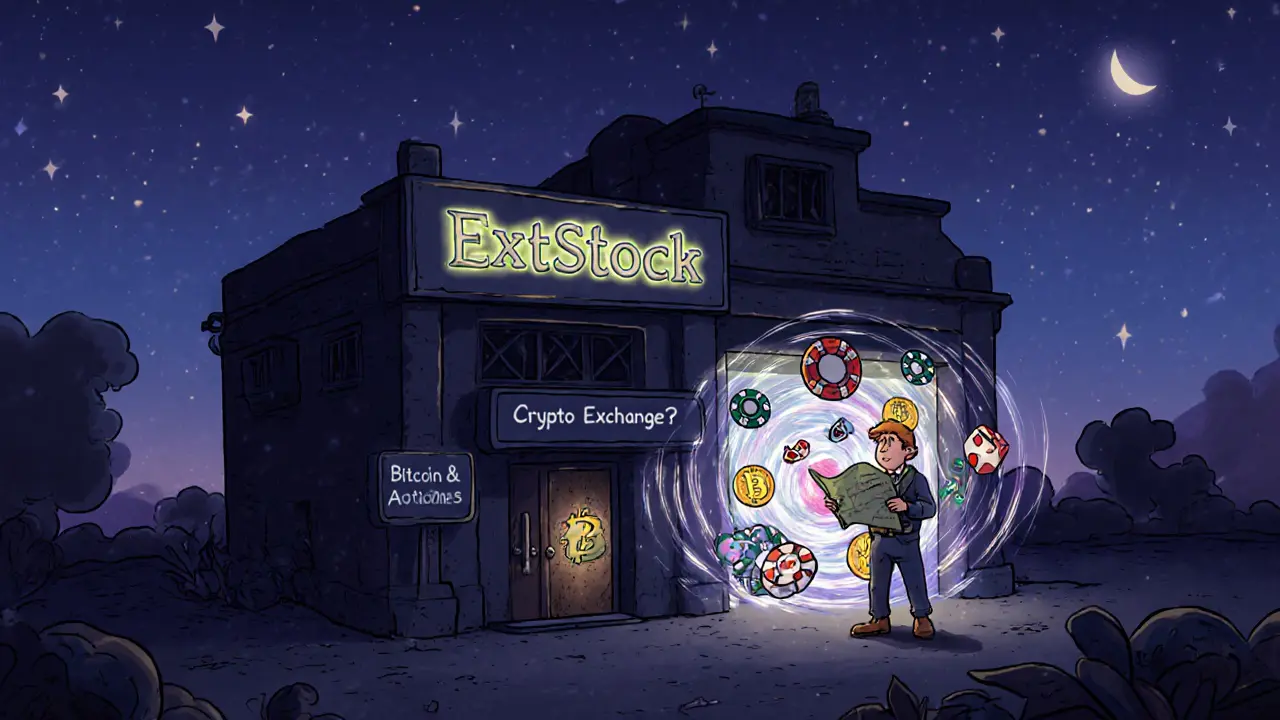
ExtStock is not a crypto exchange - it's a misleading brand tied to a gambling site and a low-liquidity token. Avoid it. Stick to trusted platforms like Coinbase, Kraken, or Gate.io for safe trading.
view more