
When people talk about blockchain data mining, the process of analyzing public blockchain records to extract meaningful patterns, not just creating new coins through computational work. Also known as on-chain analysis, it's what lets traders see if big players are buying or dumping Bitcoin—long before price charts move. This isn’t science fiction. It’s happening right now on every Bitcoin and Ethereum transaction.
Think of blockchain data mining, the process of analyzing public blockchain records to extract meaningful patterns, not just creating new coins through computational work. Also known as on-chain analysis, it's what lets traders see if big players are buying or dumping Bitcoin—long before price charts move. This isn’t science fiction. It’s happening right now on every Bitcoin and Ethereum transaction.
Most people think mining means running rigs to earn Bitcoin. But there’s another kind of mining—data mining—that doesn’t use electricity, it uses logic. Analysts track on-chain metrics, quantifiable data points like MVRV, SOPR, and exchange flows that reveal trader behavior on the blockchain. These numbers tell you if miners are selling their coins, if whales are moving Bitcoin off exchanges, or if people are holding through dips. That’s how you spot real market shifts—not rumors or TikTok hype.
And it’s not just for pros. In 2023, New Brunswick banned new crypto mining operations because the grid couldn’t handle the power draw. But while physical mining slowed down, data mining exploded. Traders started using the same blockchain data to guess where the next price spike might come from—using tools built on the same public ledgers miners rely on. You don’t need a GPU farm to do this. You just need to know what to look for.
Some of the most valuable insights come from tracking Bitcoin mining, the process of validating transactions and securing the network through computational proof-of-work, which also generates new Bitcoin activity. When miner revenue drops, they often sell coins to cover costs. When it spikes, they’re holding. That pattern has predicted every major Bitcoin bottom since 2020. You don’t need to be a coder. You just need to connect the dots between what miners do and what price does next.
What you’ll find below isn’t a list of vague theories. It’s real examples: how a dead meme coin like BALLTZE vanished from trading volume, how Mexico’s FinTech Law changed how crypto businesses operate, and why a ban in New Brunswick forced miners to move—but didn’t stop the flow of data. You’ll see how airdrops like SupremeX or BonusCake are tied to wallet activity, how scams like Wavelength or YourToken hide behind fake platforms, and how even abandoned tokens like Real Realm leave behind traces in the blockchain that tell their whole story.
This isn’t about guessing. It’s about reading the public record. Blockchain data mining gives you the tools to see what’s really happening—before the noise hits your feed. And in a market full of hype, that’s the only edge that lasts.
Posted by Minoru SUDA with 0 comment(s)
Nov
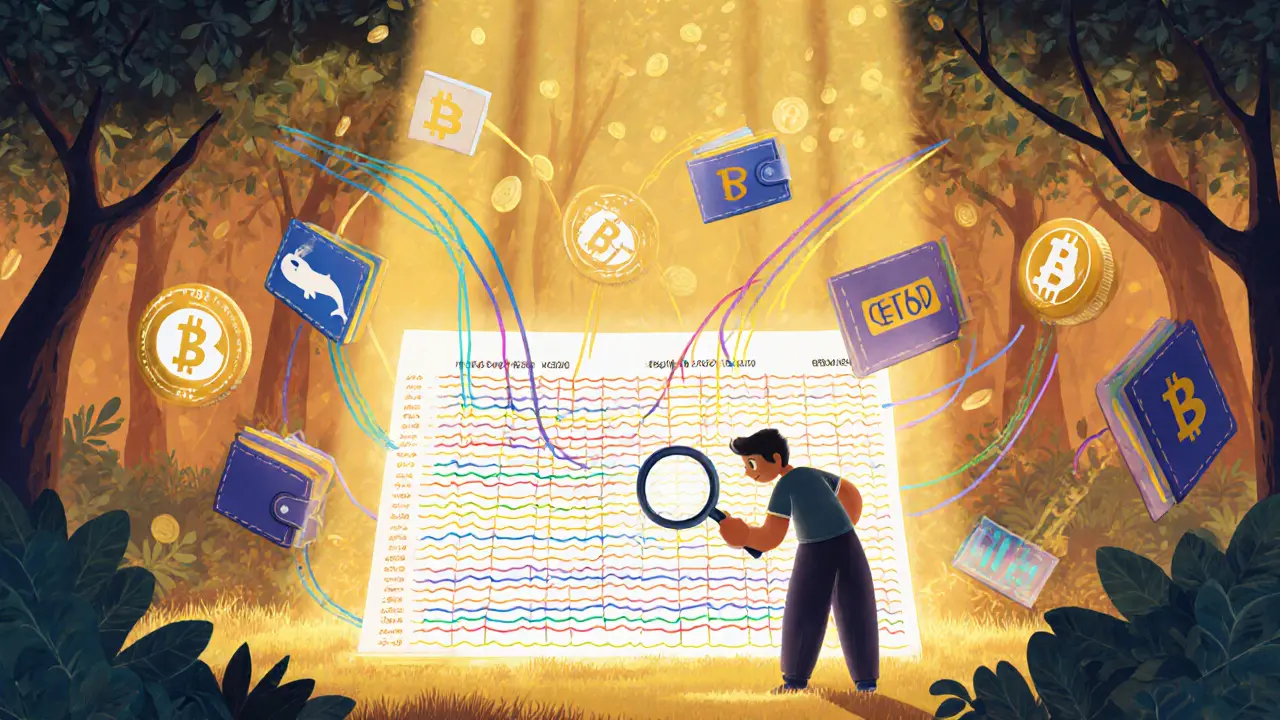
Learn how to mine on-chain data to track real crypto activity, spot whale movements, and avoid fake signals. Practical guide for investors using Glassnode, Nansen, and free tools.
view more