

You want cheap trades on Ethereum without the $50 gas fees. That is why you are looking at SyncSwap on the Scroll network. But before you bridge your ETH and start swapping, you need to know if this specific deployment actually works. Spoiler alert: it is a mixed bag of low costs and high frustration.
As of late 2025, SyncSwap on Scroll is one of the newer players in the zkRollup ecosystem. While its sibling on zkSync Era dominates with billions in volume, the Scroll version is still finding its feet. If you are here for a quick answer: yes, it offers massive savings, but no, it is not always reliable for buying native tokens like SCR. Let’s break down exactly what you are getting into.
What Exactly Is SyncSwap on Scroll?
SyncSwap is an automated market maker (AMM) decentralized exchange (DEX). Think of it as a liquidity pool where you trade tokens directly from your wallet, no middleman required. The "Scroll" part means it lives on the Scroll Layer 2 network, which uses zero-knowledge proofs to bundle transactions off-chain while keeping Ethereum-level security.
The team behind SyncSwap started on zkSync Era. They expanded to Scroll, Linea, Taiko, and Sophon to catch the wave of new Layer 2s. On Scroll specifically, they launched in 2023. It is not the biggest player there-Skydrome holds that title-but it leverages the brand recognition built over years on other networks.
| Feature | SyncSwap (Scroll) | Skydrome (Scroll) |
|---|---|---|
| Trading Pairs | ~10 pairs | ~45 pairs |
| Avg Pool Liquidity | $150k - $300k | $500k - $1.2M |
| Market Share (Volume) | Low (<5%) | Dominant (~45%) |
| Token Selection | 8 coins | 28+ coins |
The Good: Why You Might Use It
Let’s talk about the money. Trading on Ethereum mainnet can cost you $2 to $5 per swap during congestion. On Scroll via SyncSwap, that drops to roughly $0.02 to $0.05. That is a 98% reduction. For frequent traders or those moving smaller amounts, this is non-negotiable.
Speed is another win. Transactions finalize in 1-3 minutes. Compare that to the 12+ minute wait times on mainnet during busy periods, and you see why people migrate. The user interface mirrors the familiar Uniswap-style design, so if you have used any AMM before, you won’t feel lost. Connecting MetaMask or Rabby is straightforward.
There is also the potential upside of the upcoming SYNC token airdrop. Reports suggest active users across all SyncSwap deployments might qualify. If you are already using the platform for cheap swaps, you could be farming rewards just by existing. It is speculative, but it adds a layer of incentive.
The Bad: Friction and Failures
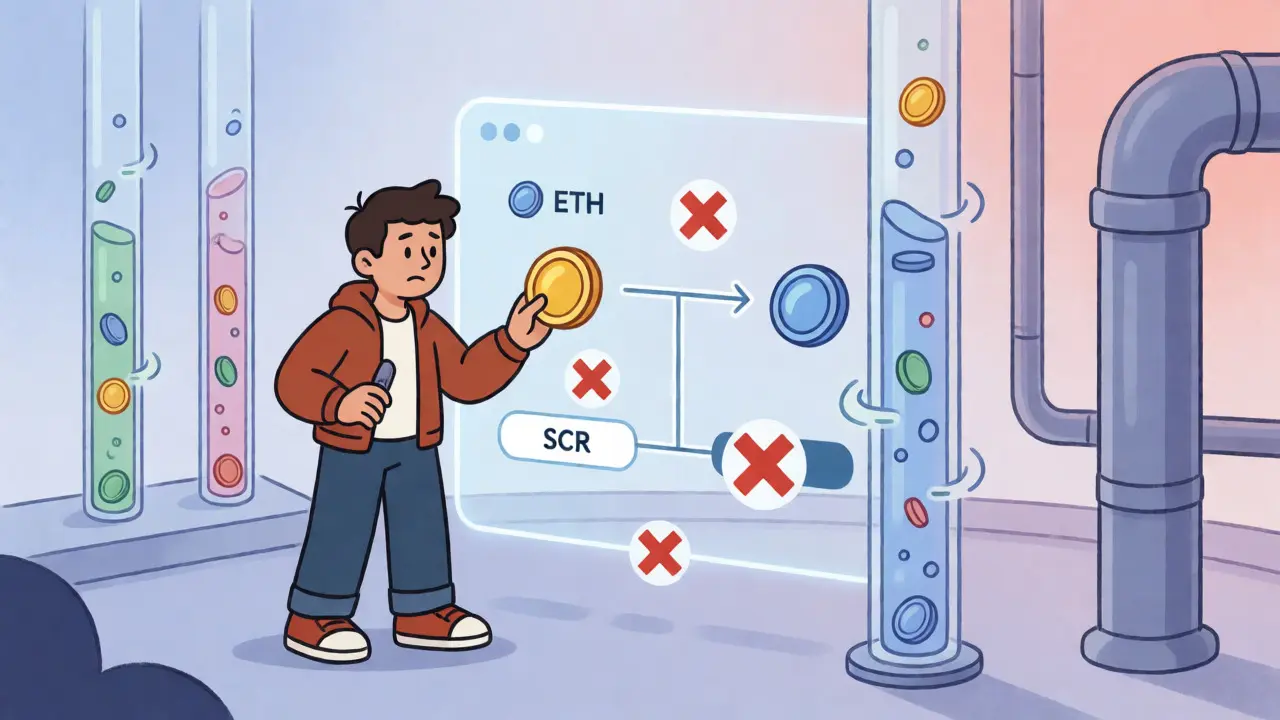
Here is where the shine wears off. The most common complaint? Buying SCR (Scroll’s native token). Users on the Scroll Governance Forum have reported repeated transaction failures when trying to swap ETH for SCR on SyncSwap. One user noted that even setting gas limits to double the recommendation didn’t fix it. Success rates for these specific swaps hover around 40%, which is abysmal for a core function.
Liquidity depth is thin. With only 8 coins and 10 pairs listed, slippage is a real issue. DeFiLlama data suggests slippage can be 30-40% higher than on competitors like Skydrome for less liquid assets. If you are trading large volumes, you will eat into your profits through price impact.
Support is virtually non-existent. There are no official response channels for individual issues. If your transaction hangs or fails, you are on your own. Community Discord activity referencing SyncSwap is minimal, suggesting few people are actively troubleshooting together.
How to Trade on SyncSwap (Scroll): A Quick Guide
If you decide to try it, here is how to minimize headaches:
- Bridge First: Use the official Scroll bridge to move funds from Ethereum. Wait for confirmation; do not rush this step.
- Connect Wallet: Ensure your MetaMask or Rabby is set to the Scroll network. Check the RPC URL if it doesn’t auto-detect.
- Select Pair Carefully: Stick to major pairs like ETH/USDC. Avoid obscure tokens unless you check the pool depth first.
- Adjust Gas Manually: Don’t trust the default estimate. Bump your gas limit by 20-50% if you encounter errors, especially for SCR purchases.
- Verify Before Confirming: Always check the output amount. Thin liquidity means prices can shift rapidly between quote and execution.

Is It Safe? Security Considerations
Security follows standard DeFi practices. Smart contracts are audited, though independent reports specific to the Scroll deployment are scarce compared to the zkSync version. The underlying technology relies on Scroll’s zkRollup architecture, which inherits Ethereum’s security guarantees. However, multi-chain deployments spread resources thin. Experts warn that auditing quality on secondary networks like Scroll may lag behind flagship implementations.
Always verify the contract address. Scammers often clone popular DEX interfaces. Bookmark the official site. Never enter your seed phrase into a pop-up window claiming to "verify" your wallet.
Verdict: Who Should Use SyncSwap on Scroll?
Use SyncSwap (Scroll) if:
- You are already in the SyncSwap ecosystem and want to farm potential SYNC airdrops.
- You are trading highly liquid pairs (ETH, USDC) and prioritize lowest possible fees.
- You are comfortable troubleshooting failed transactions manually.
Avoid it if:
- You need reliable access to a wide variety of tokens.
- You are a beginner who gets frustrated by technical errors.
- You are making large trades where slippage matters more than gas fees.
In short, SyncSwap on Scroll is a functional tool with rough edges. It saves you money but costs you time. As the Scroll ecosystem matures, we expect liquidity to improve. Until then, keep a backup DEX handy.
Why do my transactions fail on SyncSwap Scroll?
Transactions often fail due to insufficient gas limits or low liquidity in specific pools. Try increasing your gas limit by 20-50% above the recommended value. Also, ensure you are not trying to swap into a pair with extremely low TVL, as this causes high slippage and reverts.
Is SyncSwap on Scroll safe to use?
Yes, it utilizes the same smart contract architecture as the well-established zkSync version and runs on Scroll's secure zkRollup infrastructure. However, always verify the correct contract addresses and be aware that audit coverage for secondary network deployments may be less extensive than for primary ones.
Can I buy SCR tokens on SyncSwap?
You can attempt to buy SCR, but user reports indicate inconsistent success rates. Many users experience failed transactions. If you struggle, consider using Skydrome, which has deeper liquidity for SCR, or checking other aggregators on Scroll.
What are the fees on SyncSwap Scroll?
Trading fees typically follow standard AMM tiers of 0.01%, 0.05%, or 0.30% depending on the pool. Network gas fees are very low, averaging $0.02-$0.05 per transaction, which is significantly cheaper than Ethereum mainnet.
Will there be a SyncSwap airdrop for Scroll users?
It is anticipated that active users across all SyncSwap networks, including Scroll, may qualify for the upcoming SYNC token distribution. However, exact criteria and timing remain subject to change, so stay updated via official SyncSwap announcements.