
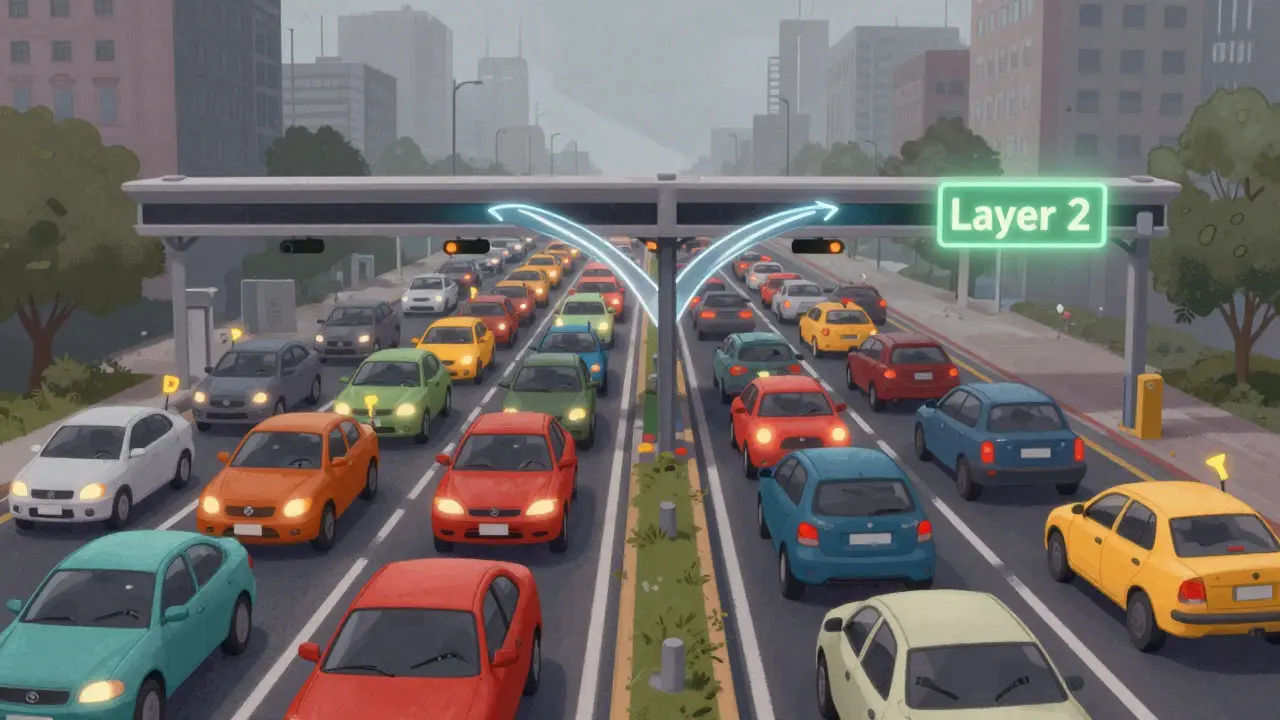
Imagine trying to drive through a city where every single car must stop at one central toll booth before moving forward. That is essentially what happens on many major blockchains today. The network gets clogged, fees spike, and transactions crawl. This bottleneck is the primary reason developers are fighting over two specific solutions: Layer 2 solutions and sharding. Both promise to fix the congestion, but they do it in completely different ways. One builds extra lanes on top of the existing road, while the other splits the road itself into multiple parallel tracks.
If you are building an application, investing in a protocol, or just trying to understand why your gas fees are so high, knowing the difference between these two technologies is crucial. They represent the two dominant paths toward solving the blockchain trilemma-the challenge of balancing security, decentralization, and scalability. Let’s break down how each works, where they fail, and which one actually fits your needs.
The Core Difference: Building Up vs. Splitting Out
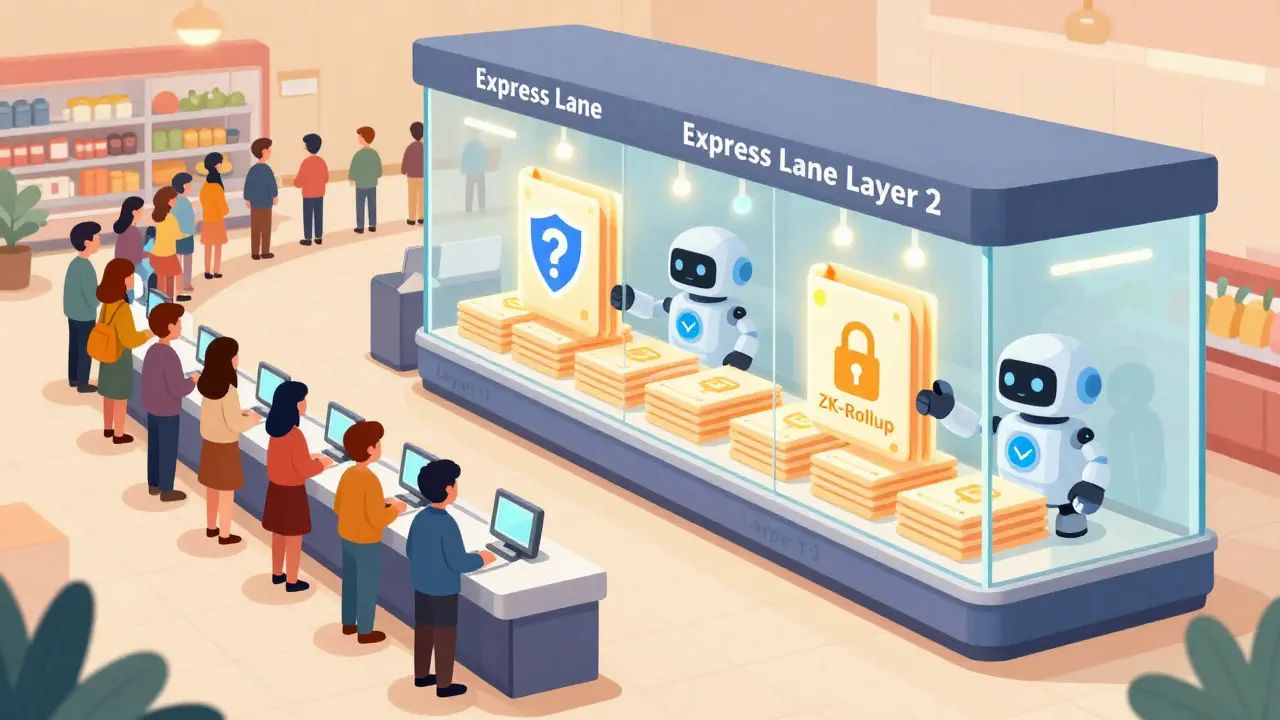
To understand the debate, we first need to look at the architecture. Layer 2 (L2) solutions act as an overlay. They process transactions off the main chain (Layer 1) and then bundle them together to settle on the main chain later. Think of L2s like express checkout lanes in a supermarket. You still pay at the same store, but you bypass the long line by using a secondary system that reports back to the main register.
In contrast, Sharding divides the blockchain itself. Instead of one giant ledger that every node must verify, the data is split into smaller pieces called shards. Each shard processes its own transactions independently and in parallel. It is like taking that single-lane highway and turning it into a multi-lane interstate. Traffic flows simultaneously across all lanes rather than waiting for one lane to clear.
This fundamental architectural difference dictates everything else about performance, security, and user experience. Layer 2 relies on the base layer for finality and security, whereas sharding distributes the workload natively within the protocol.
How Layer 2 Solutions Work in Practice
Layer 2 solutions have become the go-to method for immediate scalability, particularly on networks like Ethereum. Because Ethereum prioritizes security and decentralization, its base layer is slow and expensive. L2s solve this by moving computation off-chain. There are two main types you will encounter: optimistic rollups and ZK-rollups.
Optimistic rollups, such as Arbitrum and Optimism, assume transactions are valid unless someone proves otherwise. If a bad actor tries to cheat, anyone can submit a "fraud proof" to reverse the transaction. This model is easier to build but requires a waiting period (often seven days) for withdrawals to ensure no fraud occurs.
ZK-rollups, like zkSync and Polygon zkEVM, use zero-knowledge cryptography to mathematically prove that a batch of transactions is valid before posting it to Layer 1. This offers faster finality and stronger security guarantees but is computationally heavier and harder to develop for.
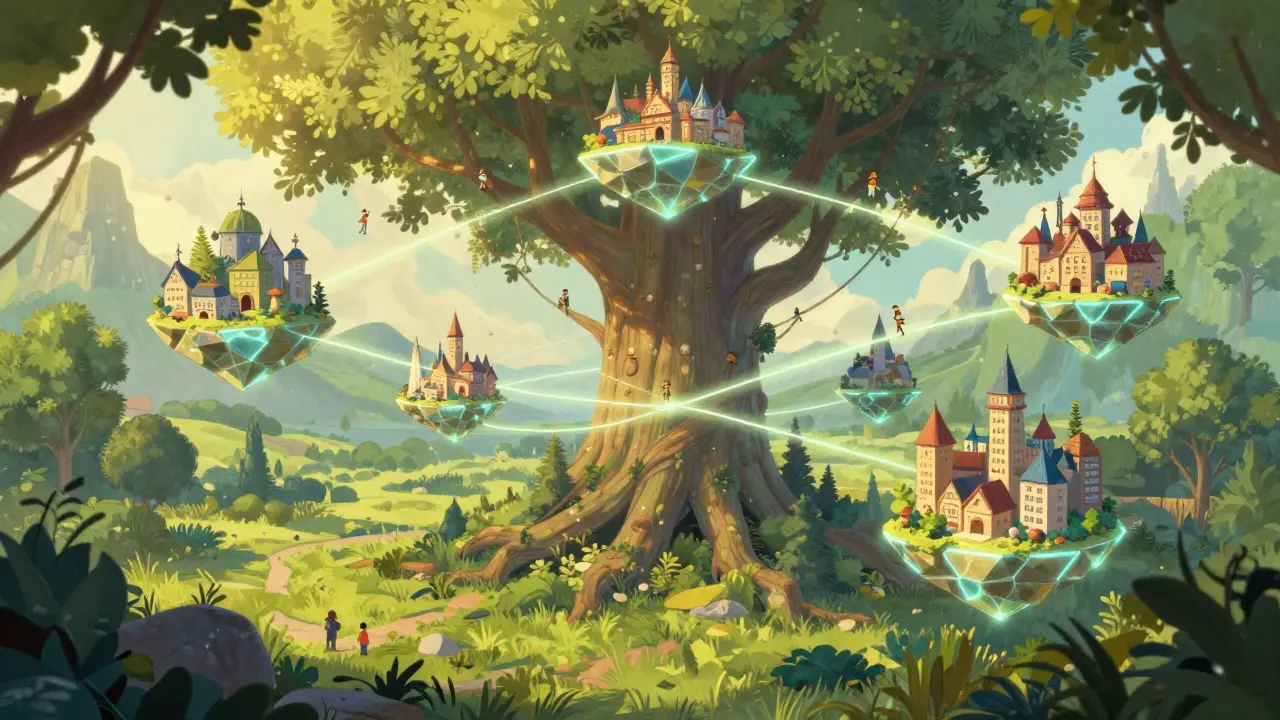
The benefit here is speed and cost. By bundling hundreds of transactions into one calldata submission to Ethereum, L2s can reduce fees by up to 90% and increase throughput significantly. However, this comes with a catch: interoperability. Moving assets between different L2s often requires bridges, which have historically been security risks. You are effectively jumping between separate islands, hoping the bridge doesn’t collapse.
How Sharding Transforms the Network
Sharding takes a more radical approach. Instead of adding layers, it changes the core structure of the blockchain. In a sharded network, nodes only need to store and validate data for their assigned shard, not the entire history of the network. This drastically reduces hardware requirements and allows the network to scale horizontally.
NEAR Protocol is a prime example of a blockchain built around sharding from the ground up. By implementing state sharding, NEAR distributes storage responsibilities across shards. This means that as the network grows, the burden on individual nodes does not explode. According to technical analyses, this approach can reduce storage costs by nearly 40% compared to non-sharded alternatives.
Ethereum has also explored sharding through its roadmap, initially planning to introduce beacon chains and data shards to handle thousands of transactions per second (TPS). While the roadmap has evolved toward a rollup-centric future, the concept remains vital for understanding long-term scalability. In a theoretical 64-shard setup, each node manages only a fraction of the data, allowing transactions to occur in seconds rather than minutes.
The key advantage of sharding is native cross-shard communication. Because all shards are part of the same protocol, applications on Shard A can interact seamlessly with applications on Shard B without needing external bridges. This creates a unified ecosystem rather than a fragmented collection of side-chains.
Performance and Scalability Comparison
When comparing raw numbers, both solutions offer massive improvements over traditional Layer 1 blockchains, but they excel in different areas. Layer 2 solutions provide immediate relief. If you need to launch a DeFi wallet or a gaming app today, an L2 gives you instant access to higher throughput and lower fees. Some L2s claim to reach up to 4,000 TPS by optimizing batching and reducing consensus overhead.
Sharding, however, offers superior long-term scalability. Because it increases the base capacity of the network, it can handle sustained high loads without relying on off-chain aggregation. For large-scale ecosystems like metaverse projects or global payment systems, sharding provides a more sustainable foundation. It spreads the work evenly, meaning if one shard experiences a traffic spike of 10,000 transactions per minute, other shards continue functioning normally without being bottlenecked.
| Feature | Layer 2 Solutions | Sharding |
|---|---|---|
| Implementation | Off-chain processing, settled on L1 | Native protocol-level splitting |
| Scalability Limit | Limited by L1 data availability | Linearly scales with number of shards |
| Interoperability | Requires bridges (complex/risky) | Native cross-shard communication |
| Security Model | Relies on L1 settlement + fraud/ZK proofs | Distributed security across shards |
| Development Complexity | Lower barrier to entry (build on top) | High complexity (protocol integration) |
| Best For | DeFi, NFTs, quick deployment | Large ecosystems, long-term growth |
Security Trade-offs and Risks
Security is where the philosophical differences between these two approaches become most apparent. Layer 2 solutions inherit the security of the underlying Layer 1 blockchain for settlement. However, the execution happens off-chain. This introduces new attack vectors. If the smart contracts managing the L2 are flawed, or if the bridge connecting it to L1 is compromised, users can lose funds. We have seen billions lost to bridge hacks precisely because L2s operate as separate entities connected by fragile links.
Sharding offers strong on-chain security because every shard is secured by the main protocol. However, it introduces complexity in cross-shard communication. Ensuring that a transaction on Shard A correctly updates the state on Shard B without double-spending or race conditions is technically challenging. If the protocol logic fails, the entire network could face inconsistencies. Unlike L2s, where a failure might isolate one chain, a sharding bug could affect the whole ecosystem.
Vitalik Buterin, co-founder of Ethereum, has noted that while the underlying tech (like ZK-SNARKs) is similar, the responsibility differs. In L2s, developers build and update the scaling components. In sharding, the core protocol handles it. This means sharding requires rigorous, centralized coordination during upgrades, whereas L2s allow for independent innovation-but also independent risk.
Which Should You Choose?
The choice depends entirely on your goals. Are you a developer looking to launch a product quickly? Or are you building a foundational infrastructure for a massive enterprise?
Choose Layer 2 Solutions if:
- You need immediate scalability and low fees today.
- You are building DeFi applications, NFT marketplaces, or social apps on Ethereum.
- You want to leverage existing tooling and developer communities (like Hardhat or Foundry).
- You can tolerate the complexity of bridging assets between chains.
Choose Sharding if:
- You are designing a blockchain for long-term, massive scale.
- You need seamless interaction between different parts of your application without bridges.
- You want to reduce node storage requirements to encourage decentralization.
- You are building a comprehensive ecosystem like a metaverse or global payment rail.
In practice, the industry is moving toward a hybrid model. Ethereum uses L2s for now, while protocols like NEAR use sharding. As technology matures, we may see L2s themselves become sharded, or sharded chains host L2-like rollups. For now, understand that L2s are the shortcut, and sharding is the rebuild. Both are essential tools in the modern blockchain toolkit.
Is sharding better than Layer 2?
It depends on your timeline and needs. Layer 2 is better for immediate deployment and ease of use, especially on Ethereum. Sharding is better for long-term scalability and native interoperability within a single protocol. Neither is universally "better"; they solve different aspects of the scaling problem.
What is the main security risk of Layer 2?
The primary security risk lies in the bridges and smart contracts that connect the Layer 2 to the Layer 1. Since transactions are processed off-chain, vulnerabilities in the code or the withdrawal mechanisms can lead to fund loss. Bridge hacks have been among the largest losses in crypto history.
Does Ethereum use sharding?
Ethereum’s roadmap has shifted. Originally, it planned extensive sharding (Beacon Chain and Data Shards). However, it has moved toward a "rollup-centric" future, relying on Layer 2 solutions for scaling while simplifying the base layer. Some elements of sharding concepts remain in its data availability design.
Which blockchain uses sharding?
NEAR Protocol is the most prominent example of a blockchain built with native sharding. Other networks like Elrond (now MultiversX) and Harmony also utilize sharding architectures to achieve high throughput and low latency.
Can Layer 2 and sharding work together?
Yes. In fact, many experts believe this is the future. A sharded blockchain can host multiple Layer 2 rollups, combining the horizontal scaling of sharding with the flexibility of L2s. This hybrid approach maximizes throughput while maintaining security.