
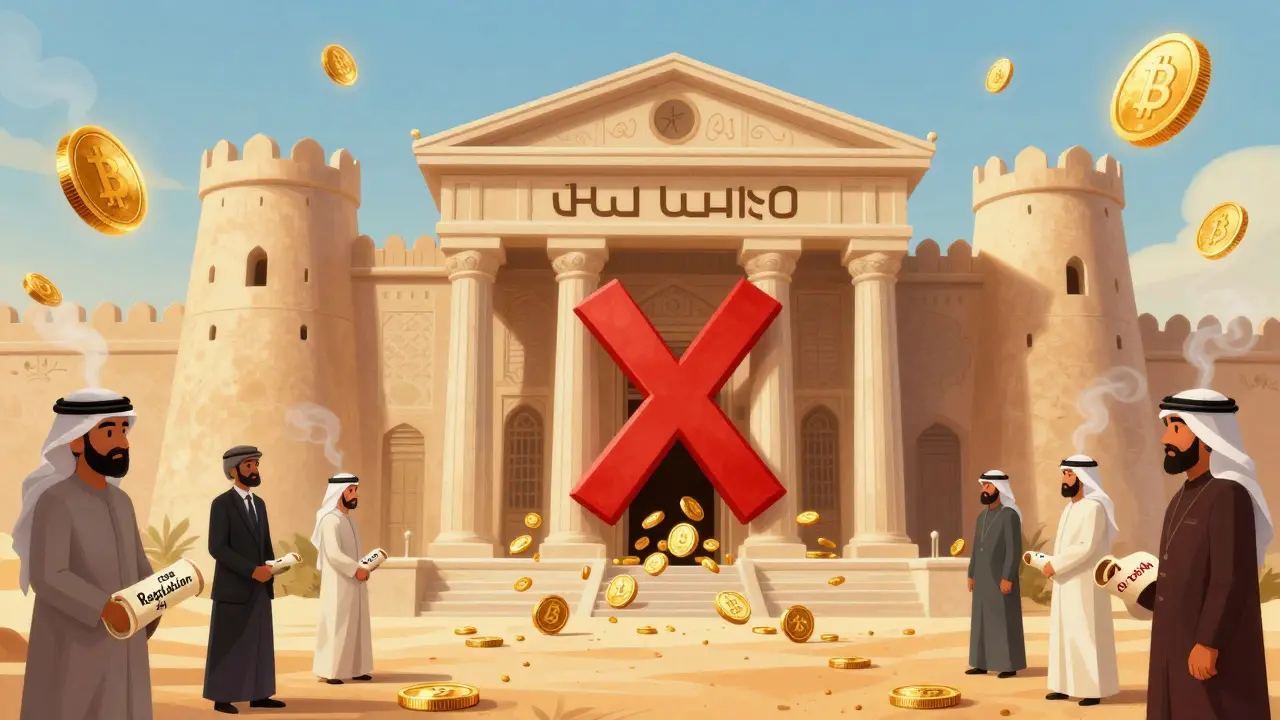
Qatar doesn’t just discourage cryptocurrency-it legally blocks it from touching its financial system. While countries like the UAE and Bahrain welcome crypto exchanges and institutional crypto funds, Qatar has built a wall. Not a high one. Not a thick one. A complete institutional ban that stops banks, investment firms, and financial intermediaries from even touching Bitcoin, Ethereum, or stablecoins. This isn’t a temporary pause. It’s a permanent rule, updated and reinforced as recently as 2024.
What the Ban Actually Blocks
The Qatar Central Bank (QCB) laid the first stone in February 2018 with Circular No. (6). It said: no financial institution under its supervision can handle Bitcoin or any other cryptocurrency. That meant no trading, no custody, no exchanges, no wallets, no lending, no derivatives. Nothing. Then, in December 2019, the Qatar Financial Centre Regulatory Authority (QFCRA) added teeth. It banned all virtual asset services within the Qatar Financial Centre-the country’s main international business hub. The definition was clear: virtual assets are digital substitutes for money. That includes Bitcoin, Ethereum, Tether, USD Coin, and even central bank digital currencies if they’re meant to replace cash. The ban covers five key activities:- Exchanging virtual assets for Qatari riyals or any other fiat currency
- Transferring virtual assets between parties
- Safeguarding or holding virtual assets for clients
- Offering financial services tied to the issuance of virtual assets
- Acting as an intermediary in any crypto-related transaction
Why Qatar Took This Path
Qatar’s approach isn’t random. It’s tied to its national strategy. The country’s Qatar National Vision 2030 wants to build a modern, diversified economy-but one that stays under tight state control. Financial stability is non-negotiable. Crypto’s volatility, anonymity, and lack of central oversight clash with that. The QCB doesn’t want retail investors losing money on wild swings. It doesn’t want money laundering flowing through decentralized networks. It doesn’t want private digital currencies challenging the riyal’s role as legal tender. Unlike Saudi Arabia, which is building a wholesale CBDC for bank-to-bank settlements, or the UAE, which lets crypto firms apply for licenses, Qatar drew a hard line: no digital currency can act like money. Even stablecoins-designed to be pegged to the dollar-are banned because they’re seen as currency substitutes. That’s why Qatar’s regulators call them “Excluded Tokens.” This stance puts Qatar in a small group. Only Kuwait matches it with a total ban on crypto payments, mining, and trading. Most other GCC countries are either open or experimenting. Qatar chose control over participation.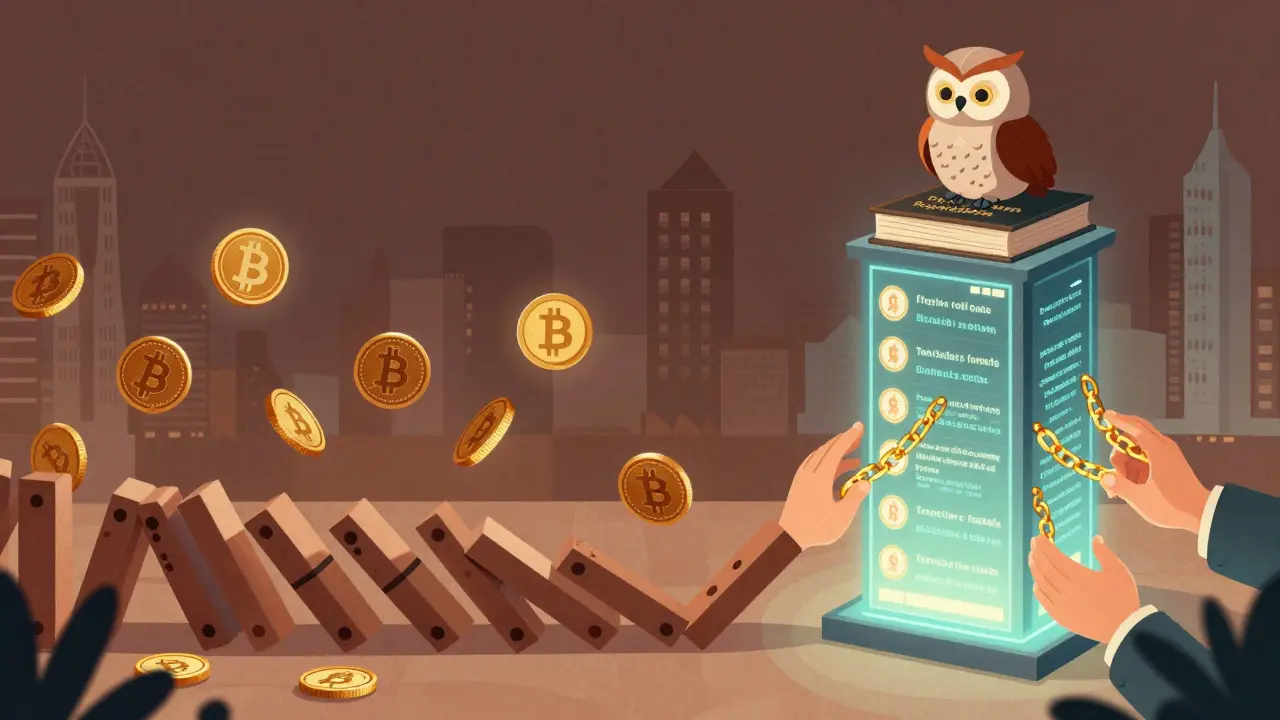
The Exception: Tokenized Assets
Here’s where it gets interesting. In September 2024, Qatar didn’t relax its crypto ban-it created a parallel track. The QFC launched the Digital Assets Regulations. This isn’t about Bitcoin. It’s about turning real-world assets into digital tokens on a blockchain. Under this new framework, financial firms can legally tokenize:- Shares in Qatari companies
- Sukuk (Islamic bonds)
- Real estate holdings
- Commodities like oil or gas contracts
How This Affects Global Firms
For international banks and asset managers with offices in both Qatar and the UAE, this creates operational headaches. A firm like JPMorgan or BlackRock can offer crypto ETFs in Dubai. But in Doha? They have to build two separate systems. One for the UAE market. One for Qatar-with crypto services completely blocked. Compliance teams must ensure no crypto-related product, email, or website page touches Qatari clients. Even accidental exposure can trigger regulatory scrutiny. Many firms hire specialized legal counsel just to navigate this split. It’s expensive. It’s complex. But it’s necessary. Some firms have tried to skirt the rules by offering crypto exposure through offshore funds. But QCB monitors cross-border flows closely. If a Qatari bank client invests in a crypto fund based in London, and the bank facilitated the transaction, that’s still a violation.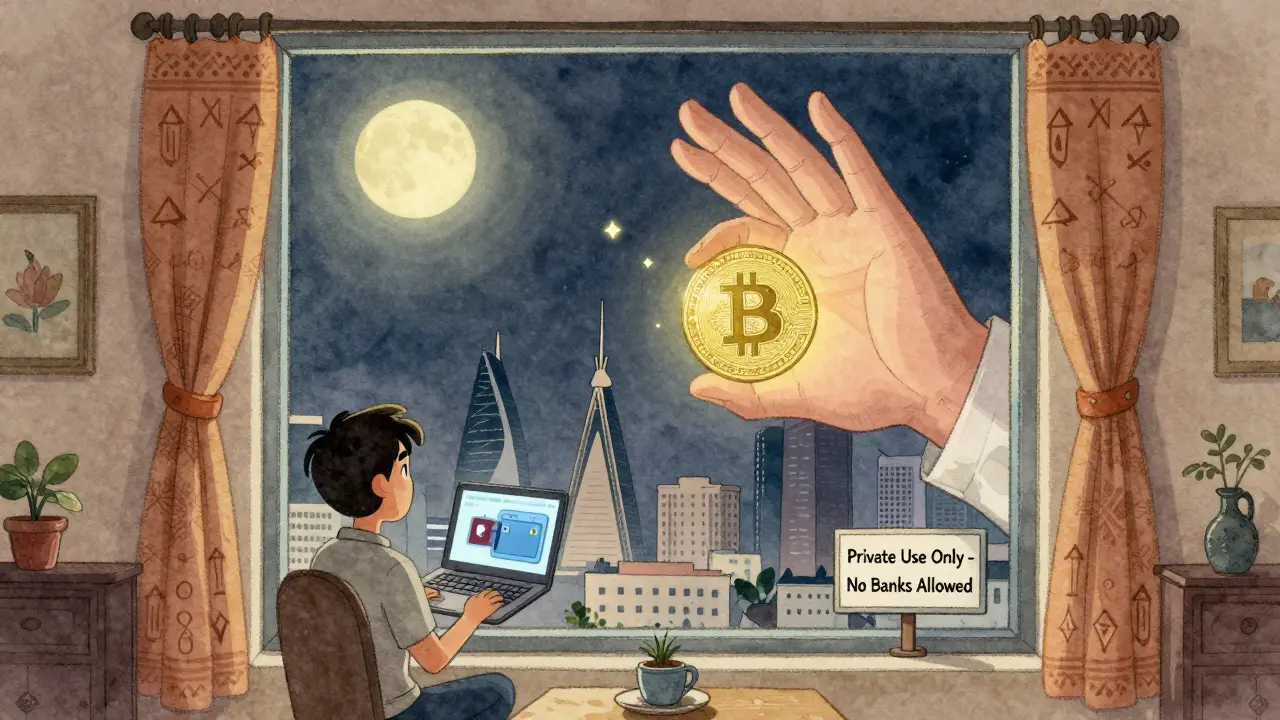
What’s Next for Qatar?
Don’t expect the ban to lift. Experts agree: cryptocurrencies, stablecoins, and currency-substitute tokens will remain excluded. The QFC’s digital assets framework is expected to expand in 2025-possibly adding more asset classes like intellectual property or carbon credits. But the core rule won’t change. Qatar’s regulators see no benefit in opening the door to decentralized finance. They’ve watched what happened in other markets: price crashes, exchange collapses, investor losses. They’ve chosen to avoid those risks entirely. Their focus is on building a stable, sovereign financial system-not a speculative crypto hub. That said, pressure is building. As neighboring countries attract billions in crypto investment, Qatar’s financial sector risks falling behind in innovation. But the government’s priority isn’t market share-it’s control. And right now, control means keeping crypto out.What This Means for Investors
If you’re an individual investor in Qatar, you can still buy crypto privately. The ban targets institutions, not individuals. But you can’t use local banks to buy it. You can’t use local exchanges. You can’t cash out through Qatari ATMs. You’re on your own-using offshore platforms, peer-to-peer trades, or foreign wallets. That means higher risk, no legal recourse, and no protection from regulators. If you’re an institutional investor, your options are limited. You can’t touch Bitcoin. But you can invest in tokenized real estate or sukuk issued on the QFC’s digital platform. These offer blockchain benefits-faster settlement, fractional ownership, transparency-without the volatility of crypto. Qatar’s message is clear: if you want to play in digital finance, play by our rules. Use blockchain to improve traditional assets. Don’t try to replace them.Can Qatari banks offer cryptocurrency services?
No. All banks, investment firms, and financial institutions regulated by the Qatar Central Bank or the Qatar Financial Centre Regulatory Authority are legally prohibited from offering any cryptocurrency services-including trading, custody, exchange, or investment products tied to Bitcoin, Ethereum, or stablecoins.
Is Bitcoin illegal in Qatar?
Bitcoin isn’t illegal for individuals to hold privately, but it’s not legal tender. Financial institutions cannot touch it. You can’t use it to pay for goods in Qatar, and you can’t cash it out through local banks. The ban targets institutional use, not personal ownership.
Can I invest in tokenized assets in Qatar?
Yes. Since September 2024, the Qatar Financial Centre allows licensed firms to tokenize traditional assets like real estate, shares, sukuk, and commodities. These are regulated digital securities-not cryptocurrencies-and are available to institutional and accredited investors under strict oversight.
How does Qatar’s crypto ban compare to the UAE or Saudi Arabia?
The UAE and Bahrain have full regulatory frameworks for crypto exchanges and services. Saudi Arabia restricts retail crypto but is developing a wholesale CBDC. Qatar is the strictest in the GCC-it bans all institutional crypto activity and only allows tokenized versions of traditional assets, not native digital currencies.
What happens if a Qatari bank violates the crypto ban?
Violations can lead to heavy fines, suspension of operating licenses, or complete revocation by the Qatar Central Bank. The QCB actively monitors compliance through reporting requirements and audits. Firms found facilitating crypto transactions face severe penalties.
Comments
Madhavi Shyam
QCB’s framework is a textbook example of regulatory arbitrage avoidance. Institutional crypto exposure introduces non-linear risk profiles incompatible with sovereign wealth fund collateralization protocols. The exclusion of stablecoins as currency substitutes is mathematically sound-velocity metrics collapse without central clearinghouses.
December 18, 2025 AT 01:21
Jack Daniels
I just don’t get why anyone would risk their money on something no one can control...
December 19, 2025 AT 13:49
Donna Goines
Let me tell you something they don’t want you to know-this isn’t about stability, it’s about control. The QCB is just scared of decentralized tech because it can’t surveil it. Same thing happened in China. They banned crypto, then turned around and launched their own digital currency that tracks every transaction. This is the first step toward a financial panopticon. They’re laying the groundwork for mandatory digital ID-linked wallets. You think your riyal is safe? Wait till they tie your bank account to your biometrics. Next thing you know, you can’t buy coffee if the state decides you’re ‘unreliable.’
December 21, 2025 AT 07:38
Cheyenne Cotter
It’s fascinating how Qatar manages to be both ultra-conservative and technologically progressive at the same time. On one hand, they’re banning Bitcoin like it’s a plague, but on the other, they’re building a fully regulated, state-monitored tokenization infrastructure that’s actually more sophisticated than what’s being done in Singapore or Luxembourg. The key distinction they’re making-between speculative digital assets and tokenized real-world assets-isn’t just legal semantics, it’s a philosophical stance. They’re not rejecting blockchain; they’re rejecting anonymity. They want the efficiency of distributed ledgers without the chaos of permissionless networks. It’s like they’re saying, ‘We’ll use the tech, but only if we’re the ones holding the keys.’ And honestly? For a sovereign wealth fund that manages trillions, that makes sense. You don’t want some random guy in Lagos trading ETH on a DEX and accidentally triggering a liquidity crisis in your portfolio. The QFC’s approach is basically ‘blockchain, but make it boring.’ And sometimes, boring is the most innovative thing you can do.
December 22, 2025 AT 16:04
Heather Turnbow
Thank you for this thorough breakdown. It’s rare to see such a nuanced perspective on regulatory policy in the GCC. The distinction between institutional bans and individual freedom is both legally sound and ethically balanced. Many overlook the fact that protecting retail investors from unregulated volatility isn’t censorship-it’s stewardship. Qatar’s model, while rigid, prioritizes long-term financial integrity over short-term speculative gains. This is the kind of leadership that builds trust.
December 24, 2025 AT 10:32
Kelsey Stephens
I really appreciate how clear this is. A lot of people think banning crypto is anti-innovation, but this shows it’s more about choosing the right kind of innovation. Tokenized sukuk and real estate? That’s actually really smart. It’s like they’re saying, ‘We love the tech, we just don’t love the gambling.’
December 25, 2025 AT 09:11
Tom Joyner
Qatar’s regulatory discipline is the only reason their sovereign wealth fund hasn’t imploded yet. The UAE’s crypto free-for-all is a liability waiting to happen. Anyone who thinks this is ‘backward’ hasn’t run a balance sheet under stress.
December 26, 2025 AT 04:07
Patricia Amarante
so like… you can’t use crypto at banks but you can own it? that’s wild. kinda like having a gun in your house but no one can sell you bullets.
December 26, 2025 AT 11:16
Bradley Cassidy
man i used to think qatar was just rich and fancy but now i see they’re like the strict dad of the gulf-no weed, no crypto, just bonds and oil and a really nice yacht. tokenized real estate? that’s just blockchain with a suit and tie. i’m here for it. also, why is everyone so scared of stablecoins? they’re just digital dollars. unless… wait. are they trying to kill the dollar? 😳
December 26, 2025 AT 14:01
Dionne Wilkinson
It’s interesting how some cultures fear chaos and others chase it. Qatar seems to believe that true progress doesn’t need to be loud. Quiet systems, well-managed, can outlast the hype. Maybe the real innovation isn’t in the tech-but in the patience.
December 26, 2025 AT 21:53
SeTSUnA Kevin
Qatar’s policy is the only rational one in the region. The UAE is a casino. Saudi is a confused toddler with a CBDC. Qatar? Sovereign, systematic, and secure. End of story.
December 28, 2025 AT 19:58
Timothy Slazyk
Let’s be real-this isn’t about stability. It’s about power. The QCB doesn’t want crypto because it removes their monopoly on money. They’ve got a $300B sovereign fund to protect, and decentralized systems don’t answer to them. Tokenized assets? That’s not innovation-it’s control with a blockchain veneer. You’re not building a financial future, you’re building a digital feudal system. And let’s not pretend this doesn’t have geopolitical teeth: Qatar’s blocking crypto to keep Western capital dependent on their regulated corridors. It’s not a ban on innovation-it’s a ban on competition. If you think this is ‘prudent,’ you’re not seeing the bigger picture. They’re not keeping the system safe-they’re keeping it theirs.
December 30, 2025 AT 04:45
Sue Bumgarner
Of course Qatar’s banning crypto-because they know the U.S. and Europe are already falling apart from this stuff. They’re the only country smart enough to protect their people from Wall Street’s next scam. You think Bitcoin is freedom? It’s a Trojan horse for foreign influence. Keep your riyal, keep your dignity.
December 31, 2025 AT 22:14
Florence Maail
They’re lying. They’re totally using crypto behind the scenes. This whole ‘ban’ is just a cover so they can quietly mine Bitcoin with their oil money. And don’t even get me started on the QFC’s ‘tokenized assets’-that’s just the government minting fake ownership. They’re gonna track your every move through those tokens. I’ve seen the documents. They’re already linking them to your visa status. 😈 #QatarIsWatching
January 2, 2026 AT 05:42
Chevy Guy
so qatar bans crypto but lets you tokenize your house? so if i own a villa and turn it into a token i can sell it to a foreigner but if i buy bitcoin i go to jail? sounds like a tax loophole with a side of drama
January 4, 2026 AT 03:28
Amy Copeland
How adorable. They think they’re being ‘principled’ by banning crypto. Meanwhile, every hedge fund in London is quietly routing Qatari capital through shell companies in the Caymans. This isn’t policy-it’s theater. And the audience? Poor expats who still think Doha is ‘safe.’
January 4, 2026 AT 03:39
Sean Kerr
man this is actually kinda beautiful?? like they’re not saying ‘no tech’ they’re saying ‘no chaos.’ tokenized sukuk? yes please. crypto gambling? nah. i get it. they want growth without the panic. 🤝❤️
January 5, 2026 AT 05:13
Rebecca Kotnik
The strategic divergence between Qatar and its GCC neighbors reflects a deeper philosophical divergence in statecraft. While the UAE prioritizes market liberalization as a mechanism for global integration, Qatar employs regulatory exclusion as a mechanism for institutional sovereignty. The digital assets framework is not an exception to the crypto ban-it is its logical culmination. By permitting tokenization only under centralized, licensed, and auditable conditions, Qatar has engineered a system that preserves the efficiency of blockchain technology while eliminating its systemic vulnerabilities. This is not conservatism. It is institutional maturity. The world will look to Doha not as a laggard, but as a model for how sovereign wealth can harness innovation without surrendering control.
January 5, 2026 AT 06:20
Sally Valdez
Oh please. Qatar’s just jealous because Dubai stole all the crypto cool kids. ‘Tokenized assets’? That’s just Wall Street with a new name. You think people don’t see through this? You ban Bitcoin but let them tokenize oil contracts? That’s not innovation-that’s hypocrisy with a fancy website. The real story? Qatar’s scared their petrodollars are about to get replaced by something better. And they’re trying to bury it under legal jargon.
January 6, 2026 AT 08:36