

Pakistani Crypto Exchange Eligibility Calculator
Eligibility Assessment
Calculate your eligibility for Pakistan's PVARA crypto exchange license based on key requirements.
Your Eligibility Assessment
Before July 2025, owning or trading cryptocurrency in Pakistan was a legal gray zone-neither fully banned nor officially allowed. Banks blocked transactions, users relied on peer-to-peer platforms, and exchanges operated in the shadows. That changed when the Pakistan Virtual Asset Regulatory Authority (PVARA) was established as Pakistan’s first federal regulator for virtual assets under the Virtual Assets Ordinance 2025. Now, if you want to run a crypto exchange in Pakistan, you don’t just need a business plan-you need a license. And the rules are strict, clear, and designed to keep out the untrustworthy.
Who Can Apply for a Crypto Exchange License in Pakistan?
You can’t just walk in off the street and ask for a license. PVARA only accepts applications from companies already licensed by top-tier global regulators. That means if your exchange is registered with the U.S. SEC, the UK FCA, Singapore’s MAS, the UAE’s VARA, or the EU’s VASP framework, you’re eligible. No exceptions. No local startups with no track record. No offshore shell companies. This isn’t about opening the door-it’s about letting in only the cleanest, most compliant players.
Why this rule? Pakistan has a history of being flagged by the Financial Action Task Force (FATF) for weak anti-money laundering controls. PVARA’s move is a signal: we’re serious about compliance. The goal isn’t to attract every crypto firm-it’s to attract the ones that already passed the world’s toughest tests.
What Documents Do You Need to Submit?
Applying isn’t a form you fill out in 10 minutes. It’s a dossier. PVARA requires a full package, including:
- Complete corporate structure and ownership details
- Proof of existing licenses from recognized regulators (with jurisdiction and issuing authority)
- Detailed description of services: trading, custody, staking, payment processing, tokenization
- Technical security protocols: encryption, cold storage, penetration testing reports
- Assets under management (AUM) and revenue figures for the last three fiscal years
- History of regulatory violations or investigations in other jurisdictions
- A Pakistan-specific business model: how you’ll handle local users, KYC, and compliance
All documents must be in PDF format and emailed to PVARA’s official address with the subject line: ‘EoI VASP Licensing [Your Company Name]’. Missing one document? Your application gets rejected. No warnings. No second chances.
Compliance Is Non-Negotiable
AML, CFT, and KYC aren’t buzzwords here-they’re mandatory systems. Every user must be verified with government-issued ID, address proof, and source-of-funds documentation. Suspicious transactions must be reported within 24 hours. Customer funds must be held in segregated accounts. You need a dedicated compliance officer based in Pakistan or with direct oversight of local operations.
PVARA doesn’t just check your paperwork-they’ll test your systems. Expect audits, simulated transaction monitoring, and reviews of your customer support logs. If your platform has ever been hacked or fined elsewhere, you’re likely disqualified. Transparency isn’t optional; it’s the price of entry.
The Licensing Timeline: At Least Three Months
PVARA isn’t rushing. Applications are reviewed on a rolling basis, meaning there’s no deadline or batch processing. But don’t expect a quick approval. The minimum time from submission to license issuance is three months. Some may take longer, especially if there are gaps in documentation or questions about your compliance history.
This slow pace is intentional. It’s a signal to the market-and to the IMF-that Pakistan is prioritizing safety over speed. The goal is to build credibility with international partners. Rushing could mean letting bad actors slip through, and Pakistan can’t afford that risk again.
The Paradox: PVARA vs. the State Bank of Pakistan
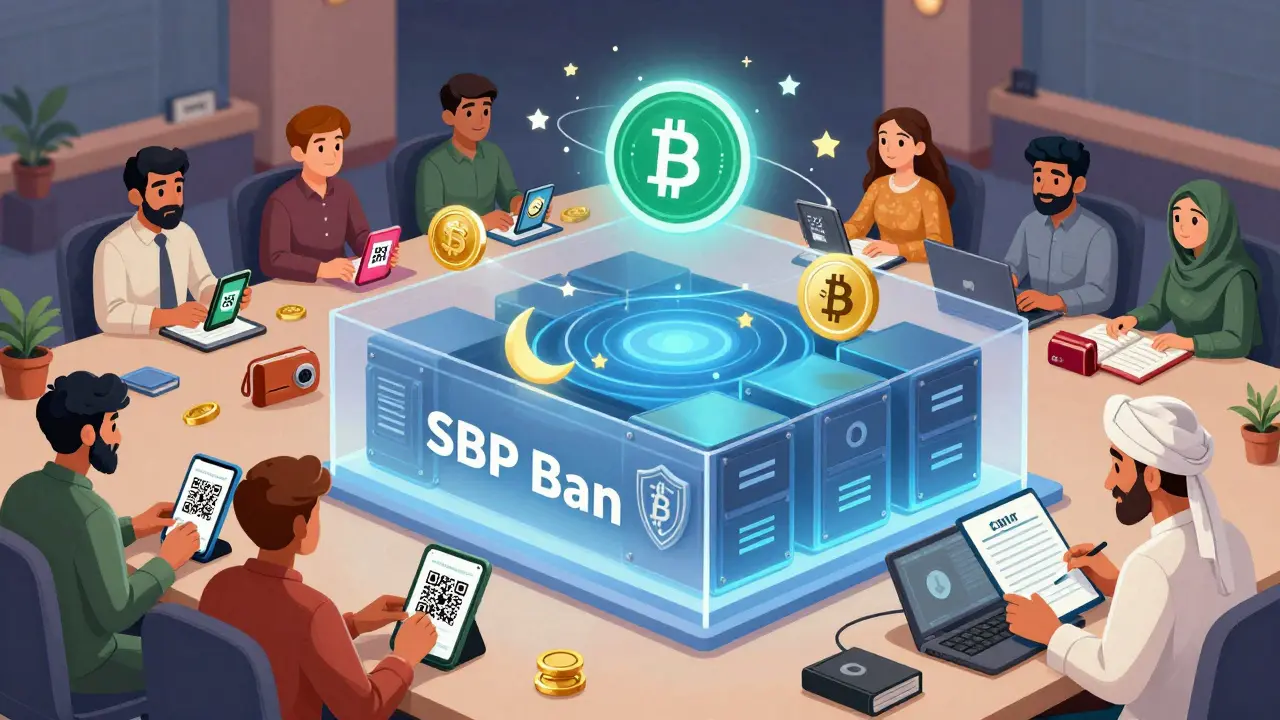
Here’s the catch: while PVARA is welcoming crypto exchanges, the State Bank of Pakistan (SBP) still says cryptocurrency is illegal under banking law. Banks are still prohibited from processing crypto-related transactions. This contradiction isn’t a glitch-it’s the current reality.
That means even if you get your PVARA license, you can’t open a bank account in Pakistan to hold your company’s funds. You can’t use local payment gateways. You can’t pay employees in PKR through standard payroll systems. You’ll need to rely on foreign bank accounts, crypto-to-crypto settlements, or third-party payment processors outside Pakistan.
Analysts call this a paradox. The government wants crypto innovation, but its central bank refuses to recognize it as part of the financial system. Until this is resolved, operators will operate in a legal limbo-licensed by one agency, blocked by another.
Shariah-Compliant Crypto Is a Big Deal
PVARA isn’t just copying Western models. It’s building something new: a regulatory sandbox for Shariah-compliant crypto products. That means tokenized assets that avoid interest (riba), gambling (gharar), and uncertainty. Think halal staking, asset-backed tokens, and blockchain-based zakat distribution platforms.
This isn’t just symbolic. Pakistan has over 220 million Muslims. If you can offer crypto services that align with Islamic finance principles, you’re tapping into a massive, underserved market. PVARA has signaled it will fast-track applications from firms with proven Shariah compliance frameworks.
What’s Next? Mining, CBDCs, and Political Shifts
In early 2025, Pakistan announced plans to create a Strategic Bitcoin Reserve and allocate 2,000 MW of electricity for Bitcoin mining and AI data centers. The idea was bold: turn Pakistan into a crypto hub by using cheap, subsidized power.
The IMF immediately pushed back. They warned that subsidized energy for mining could strain the national grid, increase fiscal deficits, and set a dangerous precedent. The plan is still under review, and as of December 2025, it remains frozen.
Meanwhile, the Senate recommended moving the Pakistan Crypto Council from the Ministry of Finance to the Ministry of Information Technology-arguing that digital assets belong under tech policy, not fiscal policy. A bill amendment is expected in early 2026 to resolve the legal contradictions between PVARA and SBP.
And in the background, the State Bank is quietly testing a Central Bank Digital Currency (CBDC). That’s a government-backed digital rupee-separate from Bitcoin or Ethereum. It’s not crypto. But it shows the government isn’t against digital money. It just wants to control it.
Is It Worth It?
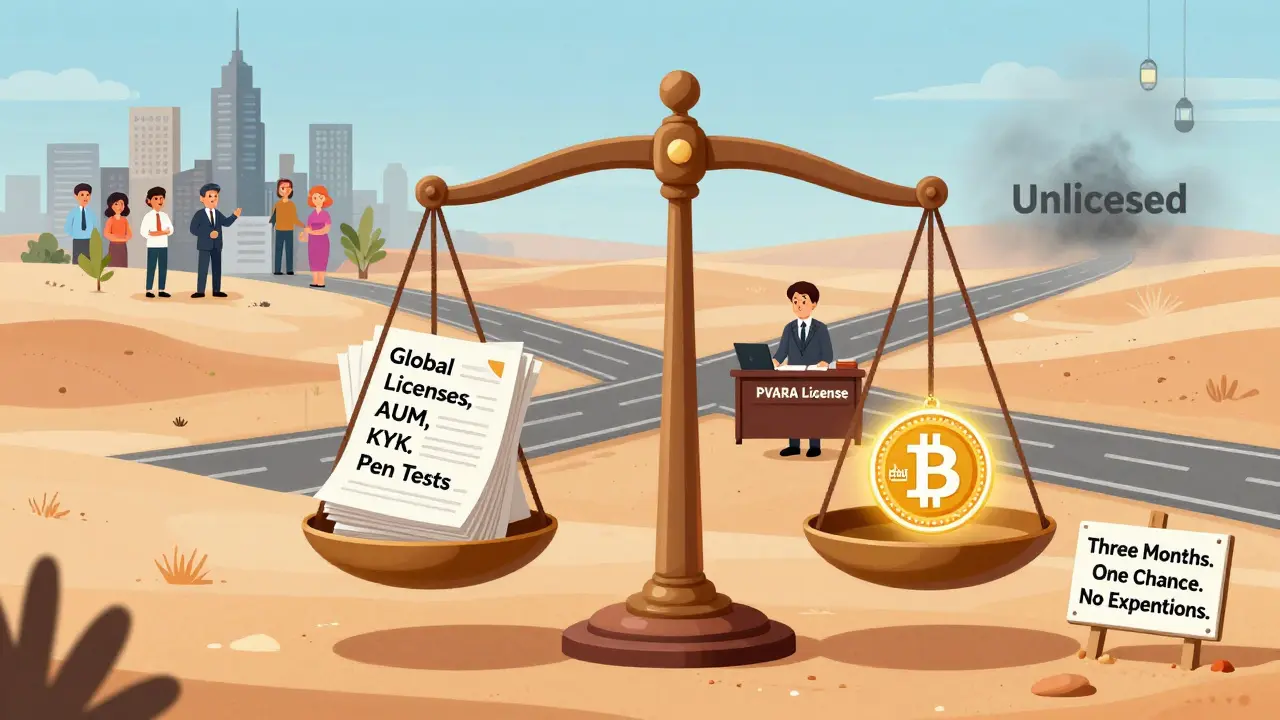
For a global exchange, Pakistan’s market is tempting. It has a young, tech-savvy population, high remittance inflows, and limited access to traditional banking. But the risks are real: legal ambiguity, banking restrictions, political uncertainty.
If you’re a well-established VASP with strong compliance, a clean record, and the patience to navigate bureaucracy, Pakistan could be your next market. You’ll face hurdles, but you’ll also be one of the first to operate legally in a country of 220 million people.
If you’re a small operator with no international license, no compliance team, or no foreign banking access? You’re not ready. And PVARA won’t make you ready. The door is open-but only for those who’ve already passed the world’s toughest tests.
What Happens After You Get Licensed?
Getting the license isn’t the end-it’s the start. PVARA will monitor your operations continuously. You’ll need to submit quarterly compliance reports. You’ll be subject to random audits. If you violate any rules, your license can be suspended or revoked immediately.
You’ll also need to adapt to local expectations. Users in Pakistan want fast, low-cost trading. They want to deposit via mobile wallets. They want clear, Urdu-language support. The global exchange model won’t work here unless you localize.
And you’ll need to stay ahead of the law. The regulatory landscape is still shifting. The next six months could bring major changes: a resolution with the SBP, new tax rules, or even a CBDC rollout that changes how crypto interacts with the financial system.
Can I start a crypto exchange in Pakistan without an international license?
No. PVARA only accepts applications from companies already licensed by recognized regulators like the SEC, FCA, MAS, or VARA. Local startups or unregulated platforms are not eligible.
How long does the PVARA licensing process take?
The minimum processing time is three months from the date of complete application submission. Some cases may take longer depending on documentation quality and compliance review depth.
Can I use Pakistani banks to process crypto transactions?
No. The State Bank of Pakistan still prohibits banks from handling cryptocurrency transactions. Licensed exchanges must use foreign bank accounts or crypto-only payment channels.
Are Bitcoin mining operations allowed in Pakistan?
There is no official license for mining yet. A government proposal to allocate 2,000 MW of power for mining was rejected by the IMF and remains under review as of December 2025.
Does PVARA support Shariah-compliant crypto products?
Yes. PVARA has created a regulatory sandbox specifically for Islamic finance-compliant virtual asset services, including halal staking, asset-backed tokens, and blockchain-based zakat systems.
What happens if my exchange violates PVARA rules?
Violations can lead to fines, suspension of operations, or immediate license revocation. PVARA conducts ongoing monitoring and random audits, and non-compliance is treated seriously.
Is there a fee to apply for a PVARA license?
PVARA has not publicly disclosed application fees. However, the cost of compliance-legal counsel, audits, technology upgrades, and staffing-is substantial and must be factored in before applying.
Can foreign users trade on a PVARA-licensed exchange?
Yes. While the license targets local operations, foreign users can trade on PVARA-approved exchanges. However, all users-local or international-must complete full KYC verification.
Final Thoughts
Pakistan’s crypto licensing system is unlike any other in the region. It’s not about opening the floodgates-it’s about building a high wall with one carefully controlled gate. The country isn’t trying to become the next crypto hotspot. It’s trying to become the most compliant one.
If you’re a global exchange with the resources, the track record, and the patience, this could be your next frontier. But if you’re hoping for a quick win, a loophole, or a free pass-you won’t find it here. The rules are clear. The bar is high. And PVARA isn’t bending.
Comments
Joe West
Man, this is actually one of the clearest crypto regulatory frameworks I’ve seen in a while. No fluff, no loopholes-just straight-up compliance. If you’re serious about crypto in emerging markets, this is the blueprint.
December 6, 2025 AT 19:17
rita linda
Let me get this straight-you’re telling me a Pakistani regulator is out here playing hardball with global compliance while the US is still arguing over whether Bitcoin is a commodity or a security? Honestly, I’m impressed. The US needs to take notes.
December 8, 2025 AT 14:41
Scott Sơn
This isn’t regulation-it’s a Hollywood blockbuster. PVARA’s the hero in the tailored suit, SBP’s the grumpy dad in the backseat yelling ‘NO!’ while the whole country’s dancing to blockchain beats. And now they’re throwing in Shariah-compliant staking like it’s a halal Marvel movie. I’m here for it.
December 9, 2025 AT 04:52
Nicole Parker
I think what’s beautiful here is how they’re not trying to copy the West. They’re building something that fits their culture-Shariah-compliant tokens, local UX in Urdu, using crypto for zakat. That’s not just innovation, that’s cultural intelligence. Most regulators treat crypto like a virus to be eradicated. PVARA treats it like a plant that needs the right soil to grow. And honestly? That’s smarter.
It’s easy to laugh at the banking contradiction, but maybe that’s intentional. Let the old guard hold on while the new system grows roots. Evolution doesn’t always happen all at once.
Also, the fact that they’re not rushing? That’s rare. Most countries panic and open the floodgates, then spend years cleaning up scams. Pakistan’s saying: ‘We’d rather wait than regret.’ Respect.
December 9, 2025 AT 16:22
Vincent Cameron
The paradox between PVARA and SBP isn’t a flaw-it’s a dialectic. One says ‘yes’ to digital assets as a financial tool, the other says ‘no’ because it threatens control. But maybe that tension is where real progress lives. Regulation isn’t about harmony-it’s about friction that forces adaptation. The system that survives this contradiction will be stronger than any top-down mandate.
And let’s not forget: the CBDC is the real endgame. They’re not embracing crypto-they’re using it as a training ground to build something they can own. The blockchain is the lab. The digital rupee is the product.
December 9, 2025 AT 21:29
Krista Hewes
ok so i just read this whole thing and i think its kinda wild that theyre doing this but also like… what if someone just uses a vpn and trades anyway? like the banks are blocked but people still use p2p, right? so is this just for big players who wanna play nice?
December 10, 2025 AT 07:24
Noriko Robinson
This is one of the most thoughtful crypto regulations I’ve seen in years. Not because it’s easy, but because it’s honest. They’re not pretending to be Silicon Valley. They’re not pretending to be Dubai. They’re saying: ‘We’re Pakistan. We care about stability, faith, and safety. If you want in, you play by our rules.’ And honestly? That’s more inspiring than any ‘crypto-friendly’ slogan.
Also, the Shariah sandbox? That’s genius. It’s not just about compliance-it’s about inclusion. Millions of people were left out of crypto because they couldn’t reconcile it with their beliefs. Now they have a path. That’s not policy. That’s compassion with code.
December 10, 2025 AT 14:06
Mairead Stiùbhart
So let me get this straight-you’re telling me Pakistan’s crypto regulator is stricter than the SEC and the FCA combined? And you’re surprised? Honey, if you’re going to regulate in a country where the central bank still thinks Bitcoin is a cult, you don’t get to be chill. You gotta be a drill sergeant with a Quran in one hand and a KYC form in the other.
December 10, 2025 AT 20:07
ronald dayrit
There’s a deeper philosophical layer here that most people miss. The West treats crypto as a financial instrument. Pakistan treats it as a social contract. The license isn’t just a permit-it’s a covenant. You don’t just meet compliance standards; you prove you understand the weight of trust in a society that’s been burned before. That’s why they demand global licenses. They’re not vetting companies-they’re vetting values.
Their goal isn’t market share. It’s moral authority. And if that’s not the most radical crypto idea of the decade, I don’t know what is.
December 11, 2025 AT 09:22
Doreen Ochodo
Shariah crypto is the future. Simple. Clean. Real. No interest. No gambling. Just value. Pakistan gets it.
December 12, 2025 AT 18:10
Yzak victor
Big respect to PVARA. Most countries either ban crypto or let it run wild. This is the third path-structured, slow, intentional. And yeah, the banking thing is a mess, but that’s not PVARA’s fault. That’s SBP being stuck in 2015. The fact they’re even trying? That’s leadership.
I’ve seen so many ‘crypto hubs’ turn into scams. This feels like the opposite. Like they’re building a fortress, not a casino.
December 13, 2025 AT 11:42
Holly Cute
Oh wow, another ‘compliance-first’ crypto paradise. Let me guess-next they’ll be requiring every trader to recite the 10 Commandments before buying BTC? 🙄
Let’s be real. This isn’t regulation. It’s gatekeeping dressed up as virtue. Only the big boys with SEC licenses get in? That’s not innovation-that’s a cartel. And the ‘Shariah-compliant’ angle? Cute marketing for a market that’s 99% non-religious traders anyway. This isn’t a revolution. It’s a PR stunt with a 3-month waitlist.
Meanwhile, actual users are still trading on Binance P2P with their uncle’s SIM card. PVARA is just trying to make the underground look official.
December 15, 2025 AT 07:11
Josh Rivera
Let me be the first to say this: PVARA is the only regulatory body in the world that actually has balls. While the US is still arguing about whether a dog coin is a security, Pakistan is saying: ‘You want in? Prove you’ve passed every test on Earth first.’ No hand-holding. No shortcuts. No ‘let’s just let the market decide.’
And yes, the SBP is still stuck in the Stone Age-but that’s not PVARA’s problem. They’re not here to fix the central bank. They’re here to build something better. And if you can’t handle that? Stay out. Simple.
December 16, 2025 AT 00:53
Neal Schechter
For anyone thinking about entering this market-don’t just read the rules. Read the silence. The fact that they didn’t mention fees? That’s intentional. They’re filtering out the speculators. If you have to ask about costs, you’re not ready. The real players already know the price isn’t money-it’s time, patience, and integrity.
And the Shariah sandbox? That’s not a niche. That’s the future of global crypto adoption. When you design for faith, you design for trust. And trust is the only currency that lasts.
December 16, 2025 AT 03:27
Tisha Berg
It’s not about Bitcoin. It’s about people. Pakistan’s trying to build a system that works for its citizens-not just investors. That’s rare.
December 18, 2025 AT 01:10
Isha Kaur
I’m from India and I’ve been watching this closely. The fact that Pakistan is using Shariah principles to create a crypto framework is brilliant. It’s not just about religion-it’s about creating a financial identity that’s rooted in local values. In India, we have a similar tension between modern finance and traditional beliefs. This could be a model for us too.
Also, the emphasis on localization-Urdu support, mobile wallet deposits-is something most global exchanges ignore. They think ‘global’ means ‘copy-paste from the US.’ But Pakistan’s showing that global means ‘respect local.’ That’s the real innovation.
And yes, the SBP conflict is messy, but I think that’s temporary. Governments don’t change overnight. But once the younger generation starts demanding digital access, the central bank will have no choice but to adapt.
December 19, 2025 AT 21:05
Glenn Jones
Okay so PVARA is basically saying ‘you need to be licensed by the SEC, FCA, MAS, OR VARA’-which means only 12 companies in the world qualify? That’s not regulation. That’s a monopoly disguised as compliance. And now they’re throwing in ‘Shariah-compliant’ like it’s a magic spell to make this look ethical? Please. This isn’t innovation. It’s a cartel with a prayer mat.
And let’s not forget-this is the same country that’s freezing 2000MW of power for mining because the IMF said no. So now they’re letting in ‘global’ exchanges but blocking local miners? That’s not fairness. That’s colonial economics dressed in blockchain.
Also, ‘no fees disclosed’? Classic. They’re letting the big players bribe their way in. Meanwhile, the average Pakistani can’t even open a bank account. This isn’t progress. It’s exclusion with a fancy name.
December 21, 2025 AT 16:50
jonathan dunlow
Most people are focused on the banking conflict, but the real story is the timeline. Three months minimum? That’s not bureaucracy-that’s patience. In a world where startups raise $100M in 48 hours and crash by week three, Pakistan is saying: ‘Let’s make sure this lasts.’ That’s not slow. That’s wise.
And the fact they’re not rushing to ‘launch’? That’s leadership. Most countries want to be first. Pakistan wants to be right.
December 23, 2025 AT 08:01
Mariam Almatrook
One must observe with the utmost gravity the structural dissonance inherent in this regulatory architecture. The State Bank of Pakistan, as the custodian of monetary sovereignty, remains constitutionally bound to uphold the sanctity of the national currency, while PVARA, a newly minted administrative entity, seeks to graft a decentralized, non-sovereign asset class onto the nation’s financial infrastructure. This is not merely a policy gap-it is an ontological rupture.
Furthermore, the invocation of Shariah-compliant tokenization, while rhetorically compelling, risks commodifying religious doctrine under the auspices of financial engineering. One must question whether the sanctity of zakat, gharar, and riba can be algorithmically encoded without dilution.
One cannot help but note the irony: a nation historically flagged by FATF now seeks global legitimacy through hyper-compliance, while simultaneously excluding its own citizens from the very financial tools they already use. This is not regulation. It is spectacle.
December 24, 2025 AT 06:15
Chris Mitchell
They’re not building a crypto hub. They’re building a trust engine. That’s the difference.
December 24, 2025 AT 08:48
Stanley Wong
I’ve lived in three countries and seen five crypto regulatory models. This one? It’s the most honest. No hype. No ‘disrupt the system’ nonsense. Just: here’s what you need to prove you’re not a scammer. And if you can’t? That’s fine. The market’s big enough for the ones who can.
The SBP thing is annoying, sure, but honestly? That’s just how change happens. The old guard holds on until the new one’s too strong to ignore. PVARA isn’t fighting them. They’re outlasting them.
And the Shariah sandbox? That’s not a gimmick. That’s the future of finance in the Global South. You don’t force Western models on cultures that don’t fit them. You build something that fits. And that’s exactly what they’re doing.
December 26, 2025 AT 04:46
Holly Cute
Wow, someone actually said the truth about the Shariah angle. I thought I was the only one who saw through it. 🙄
They’re not making crypto halal-they’re making halal crypto a marketing tool. And guess who’s gonna get the license? The ones who can afford to hire 10 Shariah scholars and a PR team. Not the small guys. Not the real users. Just the ones with deep pockets and a good lawyer.
Meanwhile, the average Pakistani is still using P2P apps with a VPN and a prayer. This whole thing is just a fancy wall around the same old club.
December 27, 2025 AT 00:34
Noriko Robinson
It’s not about who can afford the lawyers-it’s about who’s willing to build for the long term. The fact that PVARA requires global licenses means they’re not letting in fly-by-night operators who’ll vanish after a year. That protects users, even if it feels exclusionary.
And yes, the Shariah sandbox isn’t just PR. It’s a real market. Over 220 million Muslims in Pakistan. Many of them avoid crypto because they believe it’s haram. If you can build a product that respects that, you’re not just making money-you’re building trust. That’s more valuable than any VC funding.
It’s not a club. It’s a covenant.
December 27, 2025 AT 03:48