
P2P Trade Safety Calculator
Assess Your Trade Safety
LocalBitcoins wasn’t just another crypto exchange. For over a decade, it was the go-to platform for people who wanted to buy or sell Bitcoin directly from other individuals-no bank account needed, no corporate middleman. It worked like Craigslist for Bitcoin: you picked a seller, agreed on a payment method, and the platform held the Bitcoin in escrow until you sent the cash or completed the transfer. It was simple, flexible, and surprisingly safe-if you knew how to use it.
But here’s the truth: LocalBitcoins no longer exists as a trading platform. On February 9, 2023, it stopped letting new users sign up. By July 1, 2025, it will only allow withdrawals. The company shut down because of Europe’s new MiCA regulations, which forced P2P platforms to comply with strict identity checks and financial oversight. LocalBitcoins couldn’t adapt without losing what made it unique.
How LocalBitcoins Worked (Before It Shut Down)
Unlike Coinbase or Binance, LocalBitcoins didn’t hold your Bitcoin or set the price. It was a marketplace. Sellers listed their offers: “I’ll sell 0.1 BTC for $2,000 via bank transfer.” Buyers browsed those offers, picked one, and started the trade. The platform held the Bitcoin in escrow until the buyer confirmed payment. Only then did the Bitcoin get released.
This model gave users control. You could pay with PayPal, cash deposit, Western Union, even gift cards. In countries where banks blocked crypto purchases, LocalBitcoins was often the only option. A user in Nigeria could buy Bitcoin using mobile money. Someone in Argentina could trade using local pesos. In the U.S., people used Zelle or Cash App.
The platform supported BTC, ETH, LTC, and XRP, but Bitcoin was the main coin. Most trades were small-under $500. That’s because LocalBitcoins was built for individuals, not institutions. It didn’t have deep order books or high-frequency trading. It had real people trading real money, one deal at a time.
Why People Loved It
Four things made LocalBitcoins stand out:
- Payment flexibility - Over 120 fiat currencies and 50+ payment methods. You weren’t stuck with bank wires or credit cards.
- Escrow protection - The platform held the Bitcoin until payment cleared. If a seller tried to scam you, you could open a dispute. The platform usually sided with the buyer.
- Global access - Available in 248 countries. Even in places where crypto exchanges were banned, LocalBitcoins often slipped through.
- Privacy (at first) - Early users could trade with just an email and SMS verification. No government ID needed. That changed in 2019, but the platform still felt less corporate than others.
On G2, users gave it a 4.2/5 rating. Reviews praised the escrow system and low fees. One Reddit user said: “I bought $2,000 worth of Bitcoin using a cash deposit. The escrow saved me twice when sellers tried to disappear after I paid.”
The Dark Side: Risks and Problems
But LocalBitcoins wasn’t perfect. Here’s what went wrong:
- Scams happened - Even with escrow, bad actors found ways. Some buyers claimed they never paid after the seller released Bitcoin. Others used fake payment screenshots. Dispute resolution could take 7-14 days.
- In-person trades were dangerous - Before June 2019, users could meet in person to exchange cash. That led to robberies, kidnappings, and even deaths. The platform banned it after pressure from law enforcement.
- Slow support - Customer service took 36 hours on average. If you had a problem on a weekend, you were stuck until Monday.
- Complex for beginners - The interface was cluttered. New users got lost in payment options, trade limits, and verification tiers.
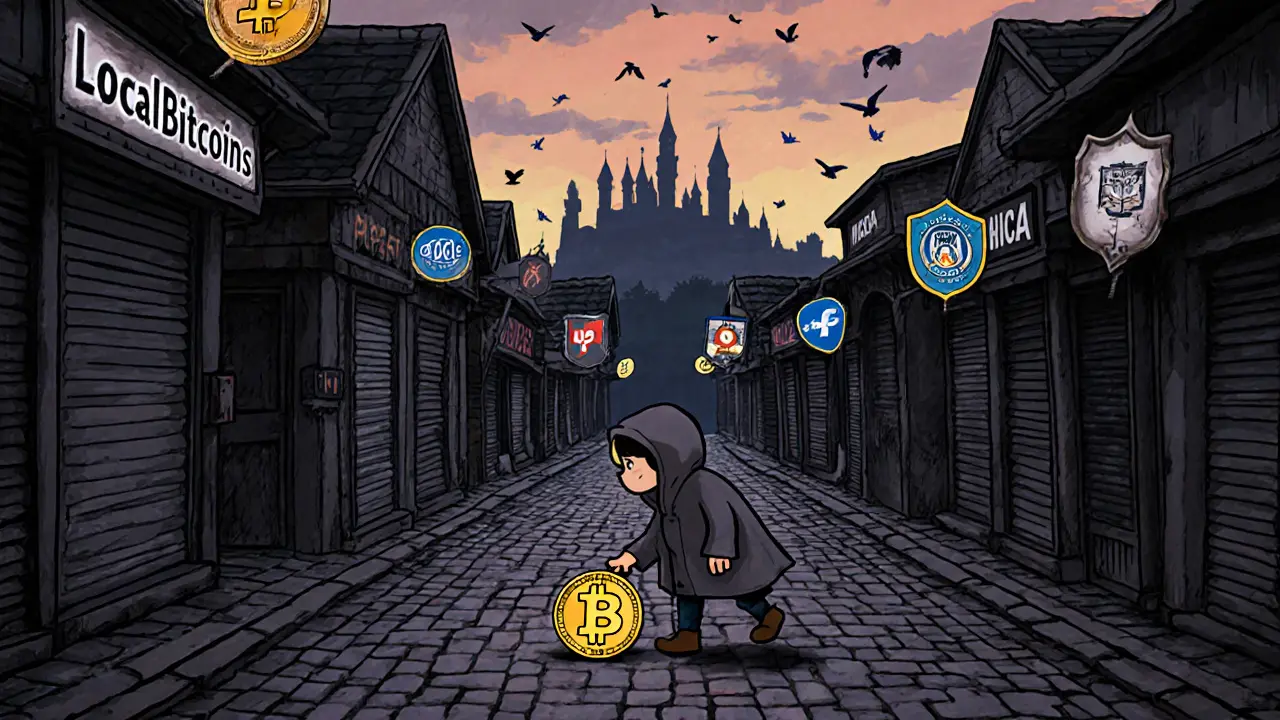
- Regional bans - New York blocked LocalBitcoins in 2018 because of BitLicense rules. Other countries followed.
One Trustpilot review from 2022 said: “I lost $300. I sent the money, released the escrow, and the buyer claimed he never got the Bitcoin. Support took 14 days to say ‘we can’t help.’”
Verification Tiers and Trading Limits
As regulations tightened, LocalBitcoins forced users to verify their identity. There were three tiers:
| Verification Level | Requirements | Max Trading Limit |
|---|---|---|
| Tier 1 | SMS confirmation | 1,000 EUR |
| Tier 2 | Government ID + selfie | 20,000 EUR |
| Tier 3 | Proof of address + additional documents | Unlimited |
Most casual users stayed at Tier 1. Only serious traders went for Tier 3. But even Tier 1 required personal data-something the platform avoided in its early days. That shift alienated privacy-focused users.
Why It Shut Down (The Real Reason)
LocalBitcoins didn’t fail because of bad management. It failed because the world changed.
In 2019, it added KYC. In 2020, it stopped supporting cash-in-person trades. In 2022, it blocked users from certain regions. Each step made it safer-but also less unique.
The final blow came with MiCA (Markets in Crypto-Assets), the EU’s new crypto law. It required all exchanges to:
- Verify every user’s identity
- Report all transactions to regulators
- Hold client funds in segregated accounts
- Pay for compliance audits
LocalBitcoins couldn’t afford that. It was a small company. It didn’t have the resources of Binance or Coinbase. So in February 2023, it announced: “We’re shutting down trading.”
They kept withdrawals open until July 1, 2025, so users could pull out their Bitcoin. No maintenance fees. Just standard withdrawal fees. That’s it.
What Replaced LocalBitcoins?
After LocalBitcoins shut down, users didn’t vanish. They moved. Here’s what took its place:
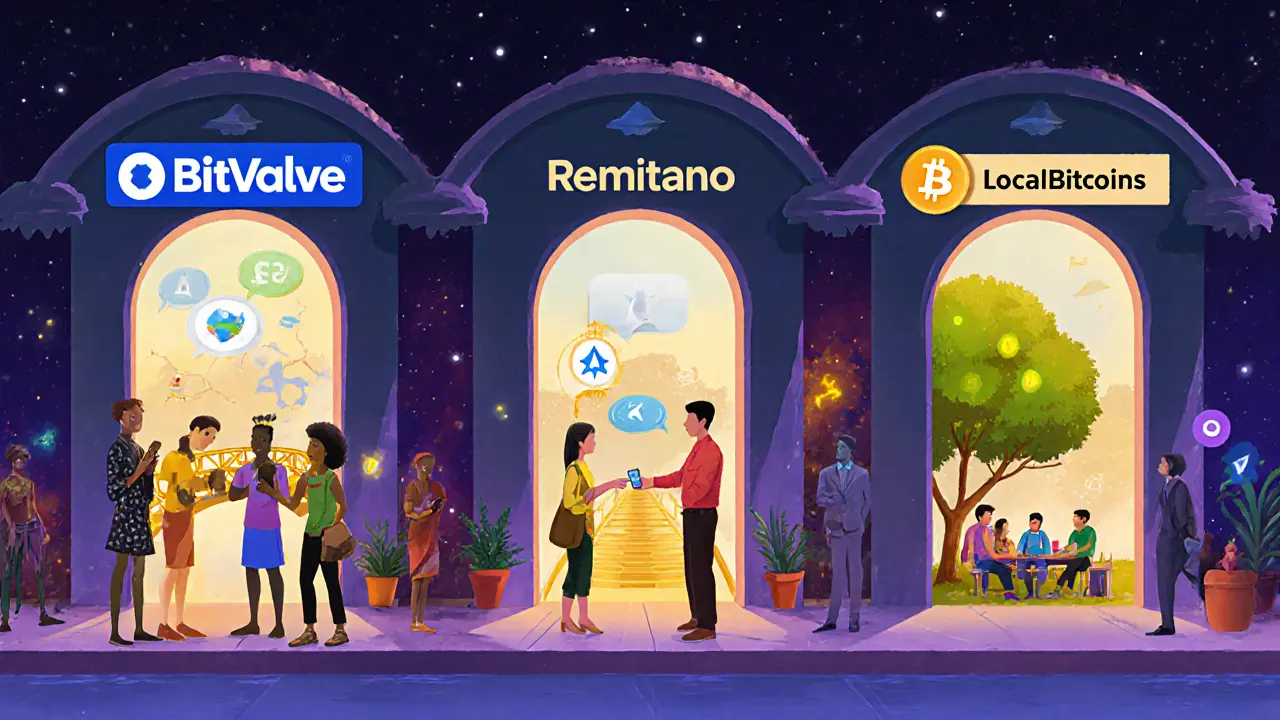
- BitValve - A newer P2P platform that grew fast after LocalBitcoins’ exit. Now handles 28% of former users.
- Remitano - Popular in Asia and Africa. Supports more payment methods than most. 19% of users switched here.
- Paxful alternatives - Paxful shut down in 2022, but its users migrated to similar platforms like BitClave and Bitso.
- Telegram groups - In Nigeria, Venezuela, and Argentina, people now trade directly through encrypted groups. No platform. Just trust.
But none of these match LocalBitcoins’ scale. None had 1.7 million active users. None had 13,774 cities covered. None had the same level of trust built over 10 years.
Is There Still a Place for P2P Trading?
Yes-but it’s harder now.
According to the World Bank, 68% of crypto users in emerging markets still prefer peer-to-peer trading. Why? Because banks won’t let them buy Bitcoin. Because governments block exchanges. Because they need cash alternatives.
But regulation is catching up. Chainalysis found that 73% of countries now require full KYC on P2P platforms. That means the days of anonymous, cash-based trades are over.
LocalBitcoins was the last of its kind. It was the bridge between the wild west of crypto and today’s regulated world. It gave people freedom. It also gave them risk. And in the end, the rules won.
What You Should Do Now
If you still have Bitcoin on LocalBitcoins:
- Log in before July 1, 2025.
- Withdraw your Bitcoin to your own wallet.
- Don’t wait. After July 1, the platform may freeze everything.
If you’re looking for a new P2P platform:
- Try BitValve or Remitano.
- Check seller ratings. Look for 95%+ positive feedback.
- Use only escrowed trades. Never send money before Bitcoin is locked in escrow.
- Avoid offers that seem too good to be true. Low price + fast payment = scam.
And if you’re new to crypto? Start with Coinbase or Kraken. They’re easier. They’re safer. They won’t disappear next year.
Final Thoughts
LocalBitcoins wasn’t perfect. But it was important. It let people buy Bitcoin without a bank. It gave power back to users. It proved that decentralized trading could work-at least for a while.
Now it’s gone. And the world is a little less free because of it.
Comments
Puspendu Roy Karmakar
Man, I remember using LocalBitcoins back in 2017 when my bank in India blocked crypto. I bought my first 0.5 BTC with UPI-no ID, no hassle. That platform was magic. Now? Everything’s locked down. I get the regulations, but damn, we lost something real.
November 28, 2025 AT 01:51
Evelyn Gu
I used to love how you could just... trade. Like, you’d find someone in Nebraska selling BTC for cash app, and you’d send them $200, and boom-Bitcoin in your wallet. No forms, no waiting. Now every platform wants your birth certificate, your tax ID, your pet’s name, and your mother’s maiden name. It’s not freedom anymore-it’s a corporate checkout line with blockchain glitter.
November 28, 2025 AT 18:51
Michael Fitzgibbon
It’s sad when the most decentralized thing in crypto gets crushed by bureaucracy. LocalBitcoins wasn’t perfect-but it was human. People trusted each other, and the escrow was just a safety net, not a prison. Now we’ve traded autonomy for ‘security,’ and I’m not sure we’re better off.
November 30, 2025 AT 05:05
Tina Detelj
Let’s be honest: this wasn’t about regulation-it was about control. The same institutions that spent decades ignoring crypto suddenly woke up and said, ‘Wait, people are trading without us? That’s unacceptable.’ So they wrote laws that made anonymity impossible-and then watched as the real users fled. LocalBitcoins didn’t die from incompetence. It was assassinated by compliance.
November 30, 2025 AT 11:29
Wilma Inmenzo
MiCA? More like MIA-Missing In Action… from the people’s hands. Did you know the EU regulators who wrote this law? None of them ever bought Bitcoin with cash from a stranger. They live in marble buildings. We lived in apartments with a phone and a wallet. This shutdown? It’s a power grab. And they’re calling it ‘consumer protection.’ LOL.
December 2, 2025 AT 02:49
priyanka subbaraj
I lost $800 on LocalBitcoins once. Seller vanished. Support took 11 days. I cried. But I still miss it. Because now? Every platform is a bank in disguise.
December 2, 2025 AT 22:27
George Kakosouris
Let’s deconstruct this: LocalBitcoins operated in a regulatory gray zone that was unsustainable. MiCA didn’t kill it-it exposed its structural fragility. The platform’s lack of AML infrastructure, inconsistent KYC tiers, and reliance on unverified third-party payment rails made it a compliance liability. The shutdown was inevitable. The only surprise is it lasted this long.
December 3, 2025 AT 11:37
Tony spart
Y’all crying because some foreign site shut down? Get over it. We got Coinbase, Kraken, Gemini-big companies with real lawyers. LocalBitcoins was a sketchy flea market. You got scammed half the time. I’m glad it’s gone. America doesn’t need some guy in Nigeria selling BTC for mobile airtime.
December 3, 2025 AT 18:53
Ben Costlee
I’ve been on both sides-buyer and seller-on LocalBitcoins. I met people from all over the world. One guy in Nigeria sent me money via MTN Mobile Money. I sent him Bitcoin. We didn’t speak the same language, but we trusted the system. That’s the beauty of crypto. It’s not about banks. It’s about people. And now? We’re losing that.
December 5, 2025 AT 09:32
Mark Adelmann
My cousin in Lagos still uses Remitano. She pays with airtime credits. I used to laugh, but now I get it. When your bank won’t touch crypto, you adapt. LocalBitcoins gave people tools. The new platforms? They give you options-but with more paperwork. I wish we could keep the freedom without the risk.
December 6, 2025 AT 03:36
ola frank
The fundamental tension here is between decentralization and institutional compliance. LocalBitcoins represented a proto-decentralized financial layer that operated outside the traditional banking infrastructure. MiCA, as a regulatory framework, enforces a centralized governance model over peer-to-peer networks. The result is not innovation-it’s assimilation. The crypto ecosystem is being folded into the fiat paradigm, not expanding beyond it.
December 6, 2025 AT 15:50
imoleayo adebiyi
Back home in Nigeria, we still trade Bitcoin through Telegram. No platform. Just a group of 200 people. We use bank transfers, cash deposits, even PayPal (risky, but we do it). We don’t need a website. We need trust. LocalBitcoins gave us a bridge. Now we’re building our own bridges-with no safety rails.
December 8, 2025 AT 04:26
Angel RYAN
For me, the real loss isn’t the platform. It’s the culture. People used to leave notes after trades-‘Thanks for the fair deal!’ or ‘Be careful with this seller, they’re slow but honest.’ That human layer is gone. Now it’s all ratings and automated warnings. We’re losing the soul of crypto.
December 8, 2025 AT 07:45
stephen bullard
I know it’s easy to romanticize LocalBitcoins, but let’s not pretend it was all sunshine. I had a buyer claim he never paid after I released Bitcoin. Took two weeks to get my money back. And yes, people got robbed meeting in person. But still-I’d rather have that messy freedom than a sterile, regulated exchange that treats me like a liability.
December 9, 2025 AT 21:57
SHASHI SHEKHAR
Bro, I still remember the first time I bought BTC on LocalBitcoins-I was 19, didn’t have a bank account, and used Paytm. The seller was a guy from Kerala who taught me how to check escrow status. I still use Remitano now, but I miss the vibe. Also, check out BitValve-it’s got a better UI than LocalBitcoins ever did, and they’re adding UPI support soon. 🙌
December 10, 2025 AT 13:06
Vaibhav Jaiswal
LocalBitcoins was like that one friend who always had your back, even if they were a little messy. Now we got the corporate cousin who’s clean, organized, and never lets you borrow money. I’ll take the messy friend any day.
December 11, 2025 AT 10:48
Shelley Fischer
It’s ironic that the platform built on peer-to-peer trust was ultimately undone by the very institutions that failed to protect consumers in the first place. Regulation didn’t fix the system-it eliminated the only system that worked for the unbanked. This isn’t progress. It’s exclusion dressed in compliance.
December 12, 2025 AT 12:11
Mark Adelmann
That’s the thing-I never thought I’d miss a website, but I miss the people. The Nigerian guy who sent me airtime credits. The college student in Argentina who paid with gift cards. They weren’t investors. They were survivors. And now? They’re invisible to the new platforms.
December 12, 2025 AT 19:55