

If you've come across Linkswap while digging through old DeFi forums or looking for ways to trade YF Link tokens, you're probably wondering if the platform is still a viable option. Let's get the most important fact out of the way immediately: Linkswap review data from 2025 and 2026 confirms that the exchange is no longer operational. It has essentially vanished from the active trading landscape, leaving behind a cautionary tale about the volatility of the "DeFi Summer" era.
| Feature | Status / Detail |
|---|---|
| Operational Status | Defunct / No longer operational |
| Exchange Type | Decentralized Exchange (DEX) |
| Primary Network | Ethereum |
| Key Token | YFL (YF Link) |
| Current Trading Pairs | 0 |
What exactly was Linkswap?
Launched in early 2021, Linkswap is a defunct decentralized exchange (DEX) that operated as an automated market maker (AMM) protocol. It was developed by YF Link, a project that tried to blend the fundamentals of ChainLink and Yearn Finance. Unlike a centralized exchange where a company holds your money, Linkswap was non-custodial. This meant users connected their own wallets, like MetaMask or Trust Wallet, and traded directly from the blockchain.
The platform relied on the standard AMM constant product formula (x*y=k). If you've ever used Uniswap, the mechanics were almost identical. You didn't have an order book with buyers and sellers meeting at a specific price; instead, you traded against a liquidity pool. If you wanted to swap an ERC-20 token for Ethereum (ETH), the price was determined by the ratio of assets in that pool.
The YFL Tokenomics: A Strategy for Scarcity
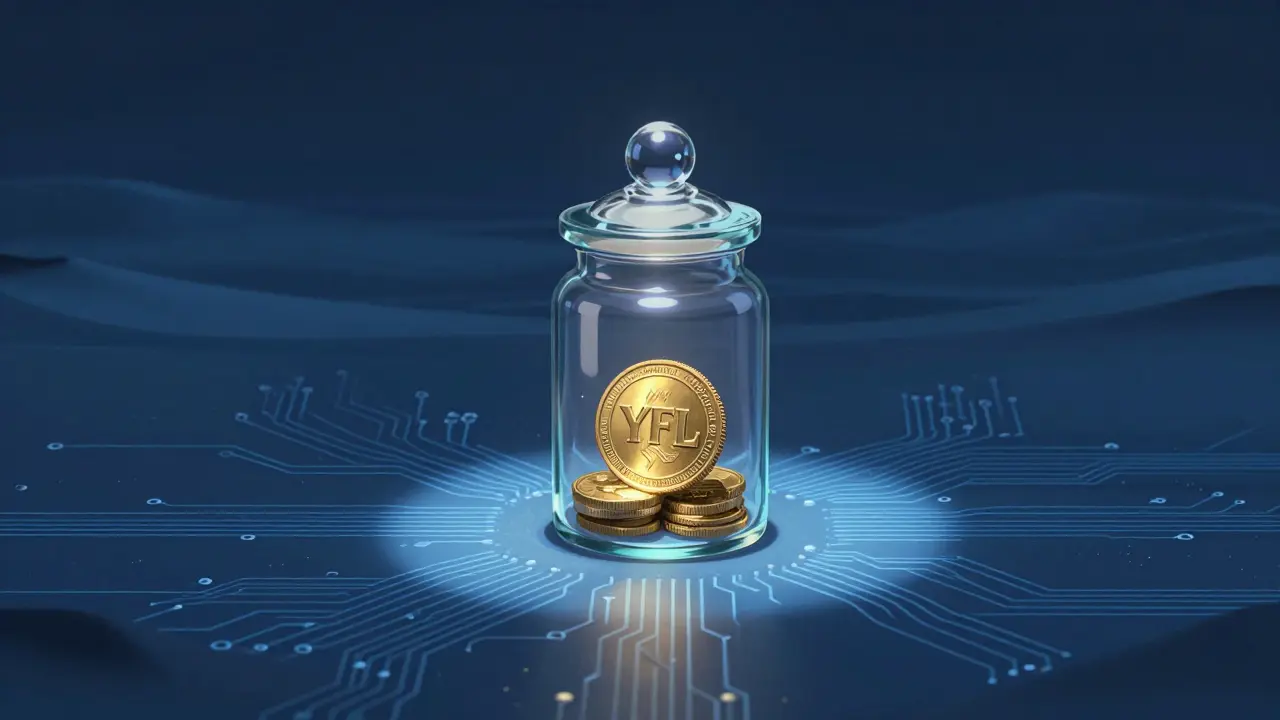
Linkswap wasn't just about trading; it was a vehicle for the YFL governance token. The project attempted to create a strong "buy-side" pressure through a very aggressive scarcity model. They capped the total circulation at only 50,000 YFL tokens. To put that in perspective, most successful DeFi tokens have billions of units in circulation to ensure a healthy, liquid market.
The fee structure was straightforward. Every trade carried a 0.30% fee. While this matched the standard rate of Uniswap at the time, the distribution was unique. About 83% of those fees went back to the liquidity providers, while the remaining 17% was funneled into staking rewards for YFL holders. The idea was that by limiting the supply and rewarding holders, the token value would skyrocket. In reality, artificial scarcity without genuine utility often leads to a liquidity trap.
Why Linkswap Failed to Survive
Looking back from 2026, it's clear why Linkswap didn't make the cut while others did. The DEX market in 2021 was a battlefield. At its peak, Uniswap v2 held over 60% of the market volume. For a new player to survive, it needed a "killer feature"-something that made it faster, cheaper, or more efficient. Linkswap had none of these. It offered the same basic AMM functions as a dozen other clones.
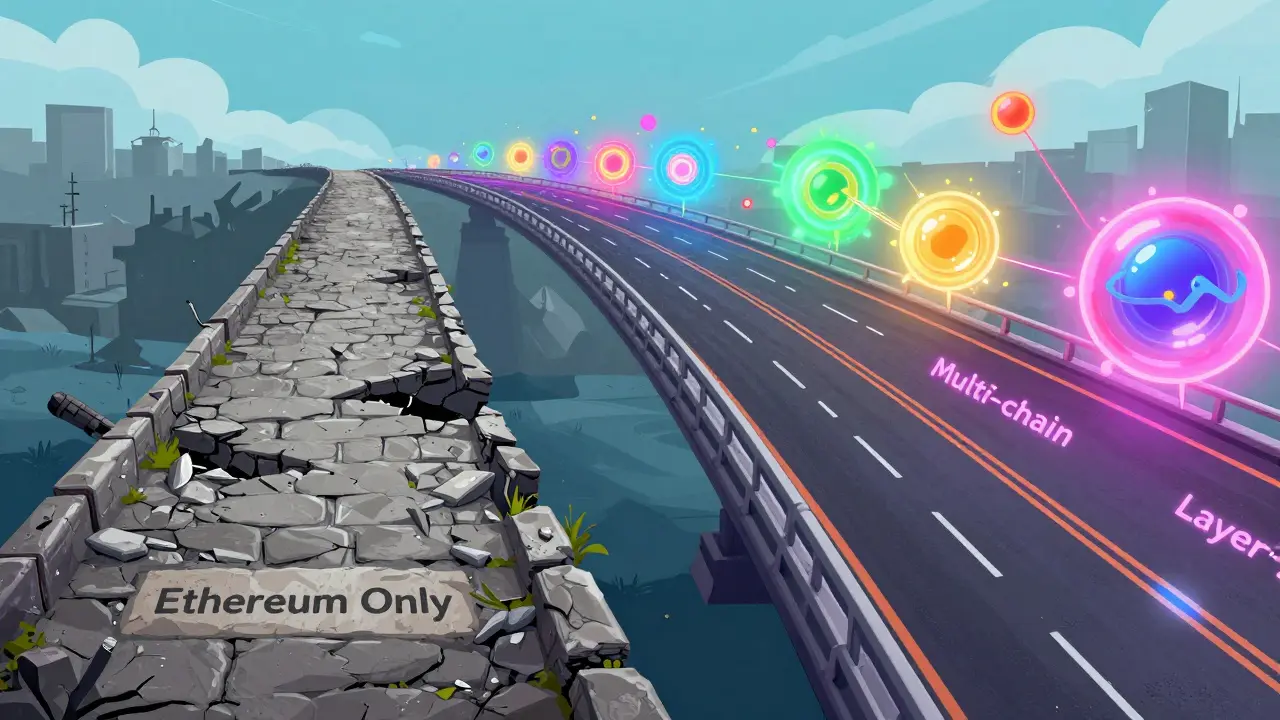
Then there was the liquidity problem. In the world of DEXs, liquidity is everything. If a pool is small, a single large trade can cause massive "slippage," meaning you get a much worse price than expected. Linkswap struggled to attract enough deep liquidity to compete. While competitors like THORSwap or Symbiosis.finance pivoted toward cross-chain functionality (allowing trades across 30+ different blockchains), Linkswap remained tethered exclusively to the Ethereum network.
The combination of high Ethereum gas fees-which often spiked to $50 per transaction during the 2021 boom-and a lack of technical innovation made the platform unattractive to both whales and retail traders. Once the initial hype of the YF Link ecosystem faded, the volume dropped, the liquidity dried up, and the project eventually went dark.
Comparison: Linkswap vs. Modern DEX Standards
To understand how far the industry has moved, it's helpful to compare Linkswap's 2021 model with what we expect from a professional exchange today.
| Feature | Linkswap (2021) | Modern Top-Tier DEXs (2026) |
|---|---|---|
| Network Support | Ethereum Only | Multi-chain / Layer 2 / Cross-chain |
| Liquidity Model | Simple AMM (x*y=k) | Concentrated Liquidity / Hybrid Order Books |
| Onboarding | Wallet connection only | Social login / Smart Accounts (Account Abstraction) |
| Token Supply | Extremely low (50k YFL) | Balanced, sustainable emissions |
| Fee Structure | Flat 0.30% | Dynamic / Tiered / Zero-fee options |
Risks and Lessons for DeFi Users
The story of Linkswap provides a few critical lessons for anyone venturing into decentralized finance. First, beware of "artificial scarcity." A low token supply is often marketed as a benefit, but if there is no real demand or utility, it just leads to high volatility and an eventual crash. If a project claims its token will go up simply because there aren't many of them, be skeptical.
Second, verify the liquidity. Before swapping a large sum on any DEX, check the pool depth. If the pool is shallow, you'll lose a significant percentage of your investment to slippage before the trade even completes. Centralized exchanges like Kraken solved this with deep order books, while modern DEXs use concentrated liquidity to mimic that efficiency.
Finally, remember that non-custodial doesn't mean "risk-free." While you aren't trusting a company with your keys, you are trusting the smart contract code. When a project is abandoned by its developers, any funds left in staking contracts or liquidity pools can become effectively trapped or vulnerable to exploits that are never patched.
Can I still trade on Linkswap?
No. All reliable data sources, including CoinCodex and Holder.io, confirm that Linkswap is no longer operational. There are currently zero active trading pairs on the platform.
What happened to the YFL tokens?
YFL was the governance token for the YF Link ecosystem. Because Linkswap was a derivative project that failed to gain traction, the token's value plummeted as the platform ceased operations and liquidity disappeared.
Was Linkswap a scam?
There is no documented evidence that Linkswap was a deliberate scam or a "rug pull." Instead, it appears to have been a poorly differentiated project that failed to survive a highly competitive market and a massive consolidation phase in the DeFi sector.
Which wallets were compatible with Linkswap?
When it was active, Linkswap supported any Web3-compatible wallet, most notably MetaMask and Trust Wallet, as it operated exclusively on the Ethereum blockchain.
What are the best alternatives to Linkswap today?
Depending on your needs, Uniswap remains the gold standard for Ethereum-based swaps. For cross-chain trading, platforms like Symbiosis.finance and THORSwap offer much more flexibility and support for dozens of different blockchains.
Next Steps: Moving Forward with DeFi
If you are looking for a safe way to trade today, avoid defunct protocols and stick to platforms with high trading volumes and audited smart contracts. If you have assets trapped in an old, defunct DEX contract, your best bet is to check the original project's documentation or community archives (like old Discord or Telegram groups) to see if there is a way to manually withdraw your funds via the blockchain explorer.
For beginners, I suggest starting with a well-known wallet and exploring a Layer 2 network (like Arbitrum or Optimism) to avoid the crippling gas fees that killed projects like Linkswap. The DeFi landscape is much more mature now than it was in 2021; focus on utility and actual volume rather than promises of "extreme scarcity."
Comments
Alex Long
Typical DeFi trash. Another clone that did nothing and died.
April 17, 2026 AT 09:17
Ian Chait
Obvious play by the whales to dump on retail. These AMM protocols are just frontz for liquidity siphoning and the devs probably vanished with the keys while the masses were chasing that fake scarcity nonsense. Total circus.
April 18, 2026 AT 08:45
Prachi Bhadarge
Imagine actually thinking a 50k token cap was a genius move for a DEX. Truly a masterclass in how to kill your own liquidity before you even start.
April 19, 2026 AT 02:49
Robert Preston
The slippage on those early pools was absolutely brutal. I remember trying to move a decent amount and getting slaughtered because the pool depth was basically a puddle. It is a great reminder to always check the TVL and depth before hitting swap on any platform you don't trust implicitly. Most people just look at the APY and ignore the fact that they can't actually exit their position without losing 20% of their value instantly. DeFi is a wild west and if you don't know how to read the liquidity curves, you are basically just donating money to the arbitrageurs. Stay safe and always use a test trade first.
April 20, 2026 AT 16:59
Andrew Southgate
It is actually quite a fascinating case study in the evolution of the space. When we look back at 2021, the sheer number of Uniswap forks was staggering, and it really highlights how the industry shifted from simple cloning to actual architectural innovation. The move toward concentrated liquidity, like we see in Uniswap v3 and beyond, completely changed the game by allowing providers to be much more efficient with their capital. Linkswap was just a relic of a time when people thought a fancy name and a limited token supply were enough to attract users. If you are new to this, just remember that sustainability comes from utility and volume, not from artificial constraints on the token supply. It is a long road, but the lessons from these failures are what make the current ecosystem so much more robust and professional for everyone involved.
April 22, 2026 AT 05:55
Trudy Morse
Basic economics. Scarcity without demand is just a fancy word for useless.
April 23, 2026 AT 12:51
Tracy Sperandio
This is a spectacular autopsy of a DeFi disaster! The sheer audacity of thinking a capped supply would magically create value is just breathtaking. It is a vivid reminder that in the crypto jungle, if you aren't evolving, you're just dinosaur bait. Let this be a neon sign for everyone to stop chasing these ghost-town protocols and start looking for actual tech that brings something fresh to the table! We need more grit and less greed in this space.
April 24, 2026 AT 13:37
Sean Douglas
I am actually shaking thinking about the people who held YFL thinking they were early geniuses while the ship was literally sinking in slow motion. The tragedy of it all is just so poignant. Imagine the heartbreak of checking your wallet and seeing a void where your hopes and dreams used to be. It is an absolute cinematic disaster of financial proportions!
April 25, 2026 AT 04:05
Nishant Goyal
Simple and clear. Good to know.
April 25, 2026 AT 18:19
Ankit Sindhu
It is a tough lesson for many, but these failures help the whole community grow stronger by identifying what doesn't work. We can all learn from the liquidity traps of the past to build a more inclusive and stable future for decentralized finance.
April 27, 2026 AT 11:38
Gaurav Undirwade
It is utterly lamentable that individuals are surprised by such an outcome. The lack of fundamental utility was apparent from the inception of the YFL token. One must possess a modicum of intellectual rigor to avoid such transparent traps.
April 28, 2026 AT 02:22
Vicky Duffala
Everything in this universe is a cycle of growth and decay, and Linkswap is just a digital leaf falling in autumn :) It's kind of poetic that a project trying to blend the best of others ended up as a ghost. Keep hunting for the real gems out there everyone!
April 29, 2026 AT 20:41
Adam Mann
I remember when these things first popped up and it felt like the whole world was changing overnight, which was really exciting for all of us. Even though this one didn't make it, it's just part of the journey of discovering how decentralized tech works and how we can make it better for the next person who joins. It is really wonderful to see how far we've come from those early days of simple swaps to the complex multi-chain systems we use now. Just keep exploring and stay curious because that's where the real magic happens in this community.
April 30, 2026 AT 19:41
nathan jones
meh, just another dead coin.
May 2, 2026 AT 01:59
Evan Iacoboni
The claim that it wasn't a scam is debatable. If the devs just walked away while users had funds trapped in staking contracts, that's a soft rug in my book. Negligence is just as bad as malice when your money is on the line.
May 2, 2026 AT 09:17
Kevin Lư
Who cares about the 50k cap? People are just obsessed with numbers. The real joke is that anyone thought an Ethereum-only DEX could survive the gas wars of 2021 without some seriously unique tech.
May 2, 2026 AT 19:07
Chintu Parikh
I believe we should maintain a positive outlook on the remnants of these projects as they serve as the foundation for our current knowledge. It is truly commendable to see a detailed breakdown of why such a project failed, as it allows us to collaborate better on future endeavors.
May 3, 2026 AT 17:50
Mike Kempenich
Fair enough. Just a ghost town now.
May 4, 2026 AT 03:16