

The landscape of cryptocurrency in Japan is not just strict; it is arguably the most structured in the world. If you are an exchange operator or a serious investor looking at the Japanese market, you need to understand that the Financial Services Agency (FSA) operates as the central authority overseeing all digital asset activities. This isn't about vague guidelines or waiting for laws to catch up. It is a rigorous, dual-framework system designed to protect investors after the catastrophic collapse of Mt. Gox in 2014. As we move through 2026, the rules have tightened further, bringing tokens under securities law and demanding unprecedented levels of transparency and security.
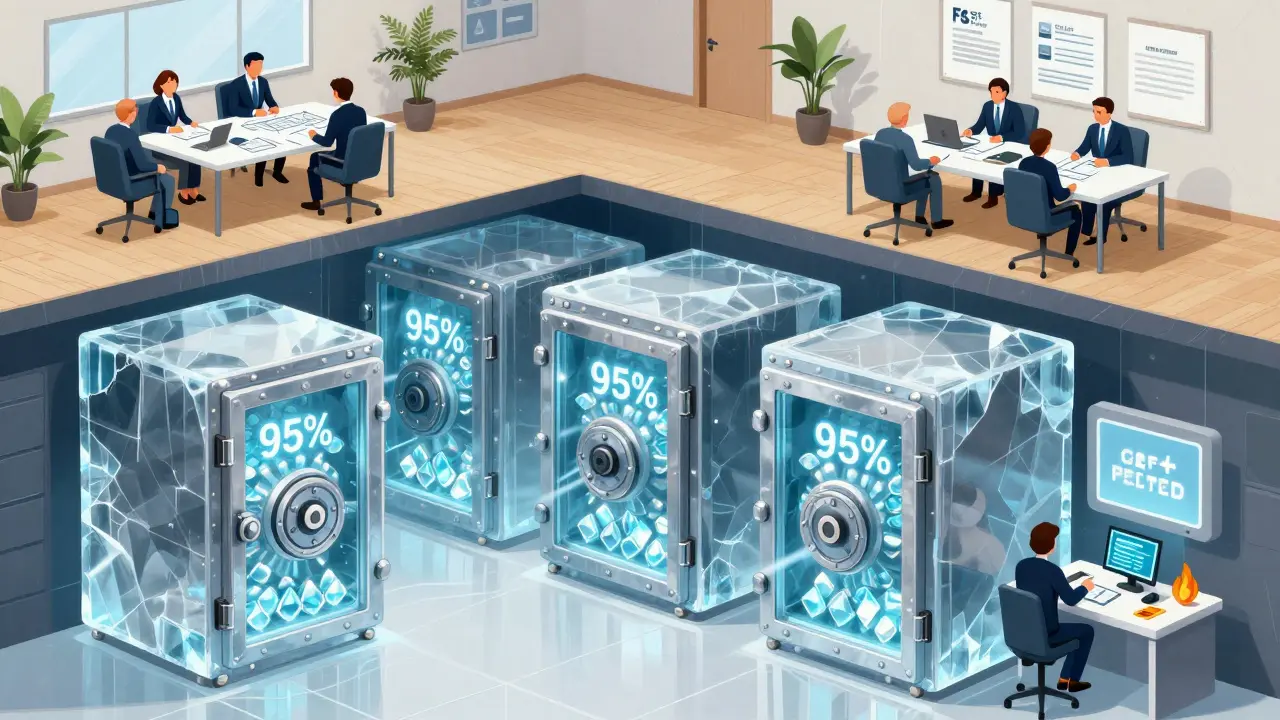
You might wonder why this matters if you aren't based in Tokyo. The answer lies in global standards. Japan’s approach has become a benchmark for other nations. When the FSA mandates that exchanges keep 95% of user assets in offline cold storage, it sets a safety bar that influences how platforms operate worldwide. Understanding these regulations helps you identify which platforms are legitimate and which ones are cutting corners.
The Dual Legal Framework: PSA and FIEA
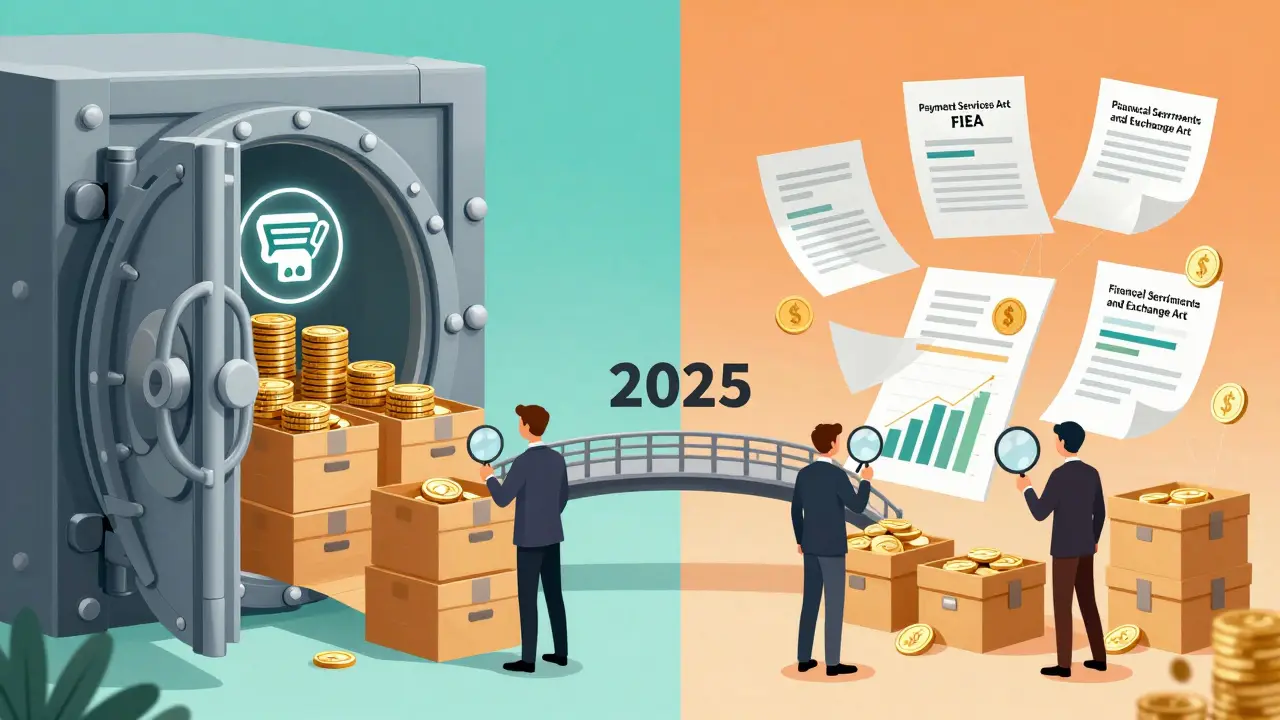
To navigate Japanese crypto regulations, you must first grasp the two pillars of its legal structure. For years, the primary rulebook was the Payment Services Act (PSA), revised initially in 2017 and updated in 2020 and 2023. The PSA defines what constitutes a 'crypto-asset'-distinguishing it from fiat currency-and mandates that any business dealing with these assets must register with the FSA.
Under the PSA, compliance is non-negotiable. Exchanges must maintain physical operations within Japan. They cannot be shell companies registered offshore. You also see strict requirements for Anti-Money Laundering (AML) and Know Your Customer (KYC) procedures. But the real kicker is fund segregation. The FSA requires that customer funds be completely separated from the exchange's operational capital. This means if an exchange goes bankrupt, your Bitcoin doesn't get seized to pay off their debts. That protection is direct result of these specific rules.
However, the game changed significantly in late 2025. On September 2, 2025, the FSA announced a landmark shift. Digital assets are now moving under the jurisdiction of the Financial Instruments and Exchange Act (FIEA). This is the same law that governs stocks and bonds. Why does this matter? Because it reclassifies certain tokens as securities. If a token offers governance rights or investment-like features, it is no longer just a payment method; it is a financial instrument subject to insider trading laws and mandatory disclosure requirements.
Strict Operational Requirements for Exchanges
If you are running a platform in Japan, the barrier to entry is high by design. The FSA registration process is not a simple form submission. Industry sources indicate that full preparation takes between six and twelve months. During this time, you undergo comprehensive security audits and submit extensive documentation proving your technical and operational capabilities.
Consider the cold wallet mandate. The FSA requires exchanges to store at least 95% of user assets in offline cold wallets. Only 5% can remain in hot wallets for immediate trading liquidity. This drastically reduces the risk of hacking. While this creates operational complexity and higher costs for exchanges, it provides unparalleled security for users. You pay slightly higher fees on Japanese exchanges compared to unregulated offshore platforms, but you are paying for that insurance policy against theft.
Another critical requirement is the presence of a representative office in Japan. Remote management is not an option. The FSA wants to ensure they can physically inspect records and hold executives accountable. This eliminates the 'ghost exchanges' that plague less regulated markets. You know exactly who is responsible for your funds.
The Shift to Securities Law: What Changes in 2026?
The reclassification of tokens under the FIEA is the biggest development for 2026. This move targets tokens with financial characteristics. Previously, many utility tokens existed in a gray area. Now, the line is drawn clearly. If a token functions like a security, it follows security rules.
This brings several immediate changes:
- Mandatory Disclosures: Token issuers must provide detailed information about their projects, similar to how public companies file reports.
- Market Conduct Regulations: Insider trading and market manipulation are explicitly prohibited and heavily penalized.
- Crypto ETFs: Clearer legal paths exist for regulated crypto ETFs, including spot Bitcoin products. This opens the door for institutional money that previously stayed away due to regulatory uncertainty.
Legal experts at Gamma Law describe this as potentially transformative. It reframes the global conversation around how digital assets are classified. By aligning crypto oversight with established financial principles, Japan is signaling that it is ready for mature, long-term investment, not just speculative trading.
Taxation Reforms and Market Growth
Regulation isn't just about restrictions; it's also about creating a sustainable ecosystem. In August 2025, the FSA proposed significant tax reforms. Previously, crypto gains were taxed at high rates, often exceeding 50% when combined with income tax brackets. The new proposal brings crypto under a flat 20% tax bracket.
This change, combined with the ability to carry forward losses for three years, makes investing in Japan much more attractive. It acknowledges that crypto is a volatile asset class and adjusts the tax code accordingly. These reforms demonstrate that the FSA is not just policing bad actors but actively supporting market development. The result? Japan’s crypto market has grown to become one of the largest globally, with consistent increases in registered users and trading volumes.
Comparison: Japan vs. Global Standards
| Feature | Japan (FSA) | Unregulated Jurisdictions |
|---|---|---|
| Fund Segregation | Mandatory (Customer funds separate) | Optional or None |
| Cold Storage Requirement | Minimum 95% | No standard |
| Physical Presence | Required in Japan | Offshore allowed |
| Token Classification | Securities (FIEA) or Payment (PSA) | Unclear/Grey Area |
| Tax Rate on Gains | Flat 20% (Proposed 2025) | Varies wildly |
Looking at this table, the trade-off becomes clear. You lose some anonymity and flexibility in Japan, but you gain security and legal recourse. In unregulated jurisdictions, you might find lower fees, but you bear all the risk if something goes wrong. For most serious investors, the FSA framework offers peace of mind that outweighs the cost.
The Role of Self-Regulatory Organizations
The FSA doesn't work alone. It collaborates closely with self-regulatory organizations (SROs) like the Japan Virtual Currency Exchange Association (JVCEA) and the Japan Security Token Offering Association (JSTOA). These groups set industry standards that often exceed baseline regulatory requirements.
For example, while the FSA mandates basic AML checks, JVCEA members often implement more advanced screening tools. They also provide guidance on best practices for cybersecurity and customer support. This collaborative model ensures that regulations remain practical and adaptable. It allows the industry to innovate within a safe boundary, rather than being stifled by rigid top-down rules.
Future Outlook: DeFi and Emerging Tech
As we look ahead, the FSA is already addressing the next frontier: Decentralized Finance (DeFi). The agency has established a formal DeFi Study Group that meets every two to three months. This group includes representatives from the FSA, industry leaders, and academia. Their goal is to explore how to regulate decentralized platforms and smart-contract-based services without killing innovation.
This proactive stance is crucial. Many regulators are still trying to figure out how to apply traditional laws to DeFi. Japan is asking the right questions early. Expect further refinements in stablecoin regulations and tokenized securities in the coming years. The FSA’s model suggests a future where crypto is fully integrated into the traditional financial system, with clear rules for everyone involved.
Practical Tips for Investors and Operators
If you are an investor, check if your exchange is registered with the FSA. Look for the official list on the FSA website. Do not trust claims of 'global compliance' if they lack specific Japanese registration. If you are an operator, start preparing for the FIEA transition now. Audit your tokenomics. If your token has governance features, treat it as a security. Engage with legal experts who specialize in Japanese financial law. The cost of non-compliance is far higher than the cost of proper setup.
Remember, the FSA’s strictness is not arbitrary. It is built on lessons learned from past failures. By adhering to these standards, you contribute to a healthier, more trustworthy crypto ecosystem. Whether you are buying Bitcoin or launching a new token, understanding these rules is your first step toward success in the Japanese market.
What is the main role of the FSA in Japan's crypto market?
The Financial Services Agency (FSA) is the primary regulator overseeing all cryptocurrency activities in Japan. It licenses exchanges, enforces compliance with anti-money laundering laws, and protects investors by mandating strict security measures like cold storage and fund segregation.
How does the Payment Services Act differ from the Financial Instruments and Exchange Act?
The Payment Services Act (PSA) regulates crypto-assets primarily as payment methods, focusing on exchange licensing and security. The Financial Instruments and Exchange Act (FIEA) treats certain tokens as securities, imposing stricter disclosure and market conduct rules similar to those for stocks and bonds.
Why do Japanese exchanges require users to complete KYC?
Know Your Customer (KYC) procedures are mandatory under FSA regulations to prevent money laundering and terrorist financing. This ensures that all transactions are traceable and that only verified individuals can access trading services, enhancing overall market integrity.
What percentage of crypto assets must be stored in cold wallets?
The FSA requires exchanges to store at least 95% of user crypto assets in offline cold wallets. This minimizes the risk of hacking and ensures that the majority of funds are secure even if the exchange's online systems are compromised.
How will the 2025 tax reform affect crypto investors in Japan?
The proposed tax reform introduces a flat 20% tax rate on crypto gains and allows investors to carry forward losses for three years. This makes investing more predictable and financially viable compared to the previous high-income tax brackets.