

When you look at a price chart for Bitcoin or Ethereum, you're only seeing what already happened. But what if you could see what’s about to happen? That’s where order book data comes in. It’s not just another indicator - it’s the live heartbeat of the market, showing every buy and sell order waiting to be filled. For crypto traders, this isn’t optional. It’s the difference between guessing and knowing.
What Is an Order Book, Really?
An order book is a real-time list of all open buy and sell orders for a trading pair - say, BTC/USDT. It’s split into two sides: bids and asks.Bids are what buyers are willing to pay. They’re listed from highest to lowest. If someone’s offering $65,000 for one Bitcoin, that’s the top bid. Below that might be $64,980, then $64,950 - each with how many BTC they want to buy.
Asks are what sellers are asking for. They’re listed from lowest to highest. If someone’s selling BTC at $65,010, that’s the lowest ask. Then $65,020, then $65,050 - again, with quantities attached.
The gap between the highest bid and the lowest ask is called the bid-ask spread. A tight spread - like 10 cents - means the market is liquid and efficient. A wide spread - say $50 - means there’s little agreement on price, and big moves can happen fast. In crypto, where liquidity varies wildly between exchanges, this spread tells you whether you’re trading on a deep market or a shallow one.
Why Order Book Data Beats Price Charts Alone
Most beginners watch candlesticks and moving averages. But those are backward-looking. They show what price did, not what it might do next.Order book data shows you the unfilled orders - the hidden pressure points. If you see a wall of buy orders at $64,800, that’s a support level built by real buyers, not just past price action. If there’s a huge pile of sell orders at $65,200, that’s resistance you can see before it hits.
Compare that to a traditional chart. A candle might close at $65,000, but if the order book shows 10,000 BTC sitting at $65,100 waiting to sell, you know that level isn’t just a number - it’s a barrier. That’s why pros don’t trade off price alone. They trade off order flow.
Reading Market Depth: More Than Just Top Bids and Asks
The top bid and ask are just the surface. The real power comes from market depth - seeing how much volume exists at each price level below and above the current spread.Imagine you want to buy 50 BTC. If the top ask is for 5 BTC at $65,010, and the next is 3 BTC at $65,020, and the next is 2 BTC at $65,030 - you’ll have to eat through dozens of small orders. That’s going to push the price up fast. But if you see a single 50 BTC order at $65,010, you know you can fill it cleanly - or you can adjust your strategy.
This is why crypto traders on Coinbase or Binance check the depth chart before placing large orders. Low liquidity markets (like new altcoins) can have order books that look empty - just a few scattered orders. That’s a red flag. Big moves can happen with tiny trades. High liquidity markets (like BTC or ETH) have thick order books - hundreds or thousands of orders stacked up. That’s where you want to trade.
Spotting Manipulation: Spoofing and Fake Liquidity
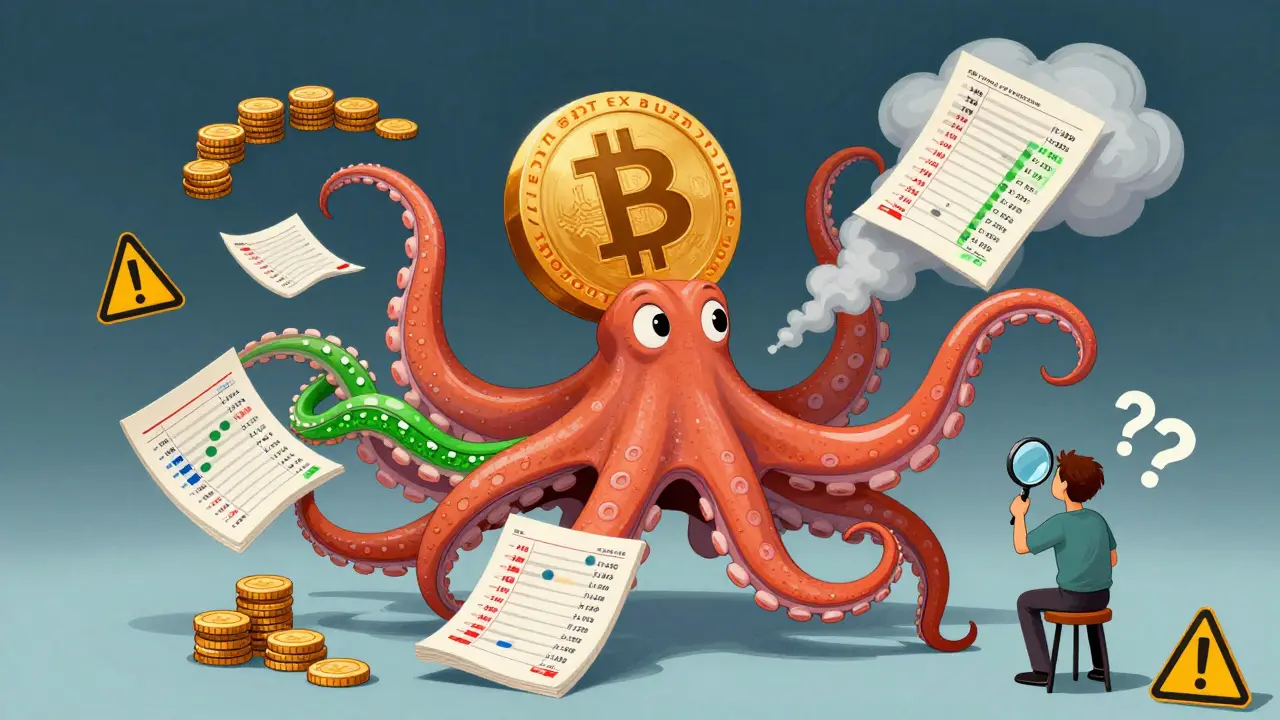
Here’s the dark side: order books can be lied to.Spoofing is when someone places a huge buy or sell order - say, 1,000 BTC at $64,900 - just to scare others. The goal? Make people think there’s massive demand or supply. Then, they cancel it before it fills. The price moves, they profit, and the fake order vanishes.
How do you spot it? Look at order timing. If a large order appears, the price moves sharply, and then the order disappears within seconds - that’s a red flag. Professional traders use tools that track order cancellations in real time. Retail traders? Watch for sudden spikes in volume without price follow-through. If the price jumps but the order book doesn’t change, it’s likely manipulation.
Exchanges like Binance and Kraken now flag suspicious activity, but spoofing still happens - especially on smaller altcoin pairs. Always cross-check with volume and price action. Don’t trust a single order.
How Professionals Use Order Book Data for Strategy
Top traders don’t just look at the book - they use it to build algorithms and execute trades with precision.- Volume-Weighted Average Price (VWAP): If you’re buying 100 BTC, you don’t want to dump it all at once. VWAP uses the order book to spread your buy over time, matching the average price of trades throughout the day. It minimizes slippage.
- Order Flow Imbalance: If bids are growing faster than asks - more volume on the buy side - it signals bullish momentum. If asks are piling up, it’s bearish. This isn’t about price direction - it’s about who’s controlling the market right now.
- Iceberg Orders: Some large players hide their true size. They show only 10 BTC on the book, but have 500 BTC hidden behind it. You won’t see it unless you’re using a deep-level data feed. That’s why institutions pay for premium order book data.
Stanford University’s research on algorithmic trading shows that order book dynamics are the foundation of most high-frequency strategies. Machines don’t look at charts - they look at the order book. They react to changes in depth, cancellations, and order placement speed - all in microseconds.
Tools You Need to Analyze Order Books
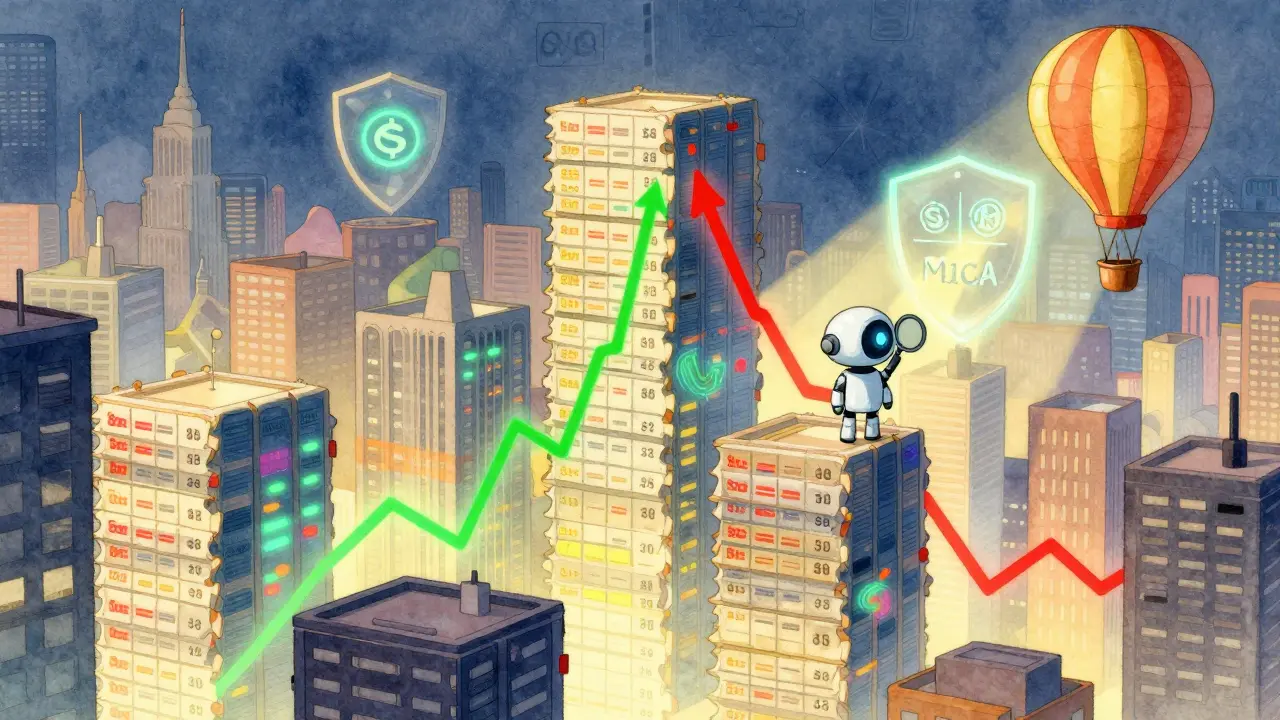
You can’t do this with a phone app. You need real-time data and visualization.- Trading platforms: Binance, Bybit, and Kraken all show order books by default. Look for the “Depth” tab - it’s usually color-coded: green for bids, red for asks.
- Third-party tools: TradingView’s depth chart, Coinigy, and Kaiko offer deeper analysis. Some show cumulative volume, heatmaps, and historical order flow.
- Alerts: Set alerts for when the bid-ask spread widens beyond 0.5%, or when a large order (say, 100+ BTC) appears on either side.
Most retail traders skip this step. They think “I just need to buy low, sell high.” But without seeing the order book, you’re flying blind. You might think you’re buying at $64,800 - but if 2,000 BTC are sitting at $64,750, you’re paying too much.
The Learning Curve: How Long Until You Get It?
Order book analysis isn’t something you learn in a day. It takes weeks - even months.At first, it’s overwhelming. Thousands of numbers scrolling. Bids and asks jumping. You’ll see fake signals everywhere. That’s normal. The key is consistency. Spend 15 minutes a day watching the order book during quiet hours - no trades, just observation.
Start with BTC/USDT. It’s the most liquid pair. Watch how the spread tightens during high-volume hours and widens at night. Notice how big orders get absorbed. See how price reacts when a large bid gets hit.
After a few weeks, you’ll start recognizing patterns. You’ll know when a price spike is real or fake. You’ll know when to wait and when to act. That’s the edge.
The Future: AI, Heatmaps, and Cross-Market Analysis
The next wave of order book analysis isn’t human-driven anymore.AI models now scan order books across 20+ exchanges simultaneously, spotting arbitrage opportunities and liquidity gaps in milliseconds. Heatmaps show where liquidity is clustered - like a weather map for trading. Some platforms even combine order book data with social sentiment - if Twitter is buzzing about a coin while the order book shows heavy buying, that’s a strong signal.
Regulators are also paying attention. The SEC and MiCA in Europe are pushing for better transparency, forcing exchanges to report order cancellations and spoofing attempts. That means the data will get cleaner - but also harder to manipulate.
For traders, this means one thing: order book data isn’t going away. It’s becoming more powerful. The traders who master it won’t just survive - they’ll lead.
What is the bid-ask spread in order book data?
The bid-ask spread is the difference between the highest price a buyer is willing to pay (best bid) and the lowest price a seller is willing to accept (best ask). A narrow spread indicates high liquidity and low trading costs, while a wide spread suggests low liquidity and higher risk of slippage. In crypto markets, spreads can widen dramatically during low-volume hours or news events.
Can order book data predict price movements?
It doesn’t predict price with certainty, but it reveals market sentiment and potential pressure points. Large clusters of buy orders at a specific price suggest strong support, while heavy sell orders indicate resistance. Sudden changes in order flow - like large bids appearing and disappearing - can signal upcoming moves. Traders use this to anticipate direction, not guarantee it.
Is order book data reliable for crypto trading?
Yes, but with caveats. Crypto markets are less regulated, making them more prone to spoofing and manipulation. Reliable order book data comes from top-tier exchanges like Binance, Coinbase, and Kraken. Avoid small exchanges with thin order books. Always cross-check with volume and price action to filter out noise.
How do I read a depth chart?
A depth chart shows the cumulative volume of buy (green) and sell (red) orders at each price level. The horizontal axis is price, the vertical axis is volume. The thicker the green bar at a certain price, the more buyers are willing to buy there. The thicker the red bar, the more sellers are waiting to sell. The point where the two lines meet is the current market price.
Do I need special software to use order book data?
You don’t need fancy tools to start - most major crypto exchanges show basic order books for free. But for serious analysis, tools like TradingView, Coinigy, or Kaiko offer heatmaps, historical order flow, and alerts. These help you spot patterns and avoid emotional trading. Start simple, then upgrade as you gain experience.
Why do some traders ignore order book data?
Many traders rely on technical indicators like RSI or MACD because they’re easier to understand. Order book data requires time, patience, and screen experience. Beginners often feel overwhelmed by the speed and volume of data. But once they learn to read it, they rarely go back. It’s a skill - not a tool - and it separates pros from amateurs.
Comments
Steven Dilla
This is FIRE 🔥 I’ve been watching the BTC order book for months and 90% of retail traders are clueless. Saw a 10k BTC bid at $64.8k yesterday - vanished in 3 seconds. Price dumped 3% after. Spoofing 101. Stop trusting charts, start tracking the book.
February 2, 2026 AT 02:47
Pamela Mainama
Order books don't predict. They reveal. And that's enough.
February 4, 2026 AT 01:17
Rachel Stone
So... you're telling me I need to pay for data so I can stare at a wall of numbers instead of a pretty candle chart? Cool. I'll just keep losing money then.
February 4, 2026 AT 08:07
Will Pimblett
You call that deep? I’ve seen order books with 500k BTC stacked at key levels. This post is like teaching someone to swim in a kiddie pool while the ocean’s right there. Stop being lazy. Get real data. Or don’t. I’m not your dad.
February 6, 2026 AT 02:34
Christopher Michael
Important note: Always cross-reference with on-chain metrics (e.g., NVT, MVRV) and exchange net flows! Order book alone is incomplete - it’s like analyzing a symphony by only listening to the violins. You need the full orchestra: on-chain, order flow, macro, and sentiment. Also, use Binance.US, not Binance.com - regulatory compliance matters.
February 8, 2026 AT 02:33
Parth Makwana
The paradigm shift in algorithmic trading is fundamentally anchored in microstructure dynamics. Order book imbalance, liquidity absorption, and volume profile clustering constitute the trifecta of predictive alpha generation. Retail traders remain trapped in the cognitive bias of technical indicator dependency, which is statistically inertial and backward-looking. Prioritize direct market access and institutional-grade feeds - your edge is not in your charting software, it’s in your data pipeline.
February 8, 2026 AT 23:30
Elle M
If you're not using Coinbase Pro's full depth feed, you're not trading. You're gambling. And if you're on some sketchy altcoin exchange? You're just donating to rug pull artists.
February 10, 2026 AT 05:54
Rico Romano
I used to think this was interesting. Then I realized most people who write about order books have never placed a market order over 10 BTC. The fact that you're still reading this means you're probably still using Binance's default view. Pathetic.
February 11, 2026 AT 07:02
Crystal Underwood
You think spoofing is bad? Wait till you see how they manipulate the order book on low-cap tokens with fake wash trading bots and fake volume from their own wallets. This isn’t trading - it’s a casino run by billionaires with algorithms. And you’re the sucker who thinks you can outsmart them. Wake up.
February 13, 2026 AT 06:29
Raymond Pute
I mean, sure, order books are cool, but have you considered that maybe the whole idea of predicting markets is just a human delusion? Like, the market is just a giant chaotic system - we’re trying to find patterns in noise. And yet, here we are, reading 5000 lines of text about bid-ask spreads like it’s the holy grail. I’m not saying it’s useless - I’m just saying maybe we’re all just dancing in the dark and pretending we can see the music.
February 14, 2026 AT 09:04
Calvin Tucker
The order book is not a mirror of the market - it is a projection of collective anxiety. Every bid is a whispered hope. Every ask, a suppressed scream. To read it is to listen to the unsaid. The market does not move because of data. It moves because of fear. And fear, my friend, is not quantifiable.
February 16, 2026 AT 08:23
Gustavo Gonzalez
You missed the most important part: exchanges can and do manipulate order books. They delay data. They hide orders. They front-run. You think you're seeing the book? You're seeing what they let you see. And if you're not using a direct feed with timestamped microsecond precision, you're being played. And you're not even good enough to know it.
February 18, 2026 AT 01:56
Mark Ganim
I remember the first time I saw a 100k BTC iceberg order vanish right before a pump - my heart stopped. That’s when I knew: this isn’t trading. This is warfare. And the battlefield? It’s not on the chart. It’s in the depth. The order book doesn’t lie - but the people behind it? Oh, they lie like they’re breathing. I’ve lost six figures because I trusted a ‘solid’ bid wall. Don’t make my mistake. Trust no one. Watch everything.
February 19, 2026 AT 18:51
mary irons
You know who controls the order book? The Fed. The big banks. The shadow crypto hedge funds. They’ve got servers in Chicago and London that see your order before you hit send. This whole thing is rigged. They let you think you’re trading - but you’re just feeding data to their AI. You think you’re smart? You’re a data point.
February 20, 2026 AT 07:33
Wayne mutunga
I just watch. Quietly. No trades. Just watch how the bids and asks move during quiet hours. It’s like watching clouds. Sometimes you see shapes. Sometimes you don’t. But you learn to be patient. And that’s the real edge.
February 20, 2026 AT 12:04
Gavin Francis
You got this! 🙌 Start with BTC/USDT on Binance - just 15 mins a day. Watch the spread shrink at 14:00 UTC. Notice how big buyers absorb small asks. You’ll start seeing patterns. It’s like learning a language. Slow at first, then BAM - you’re fluent. You got this!
February 20, 2026 AT 23:15
Rob Duber
I saw a 20k BTC sell wall at $65k yesterday. Price went up 8% in 20 minutes. Then the wall vanished. I cried. Then I bought. Then I cried harder. That’s crypto. It’s not trading - it’s emotional rollercoaster with math.
February 21, 2026 AT 02:21
Gary Gately
order book is wild fr. i thought i was good til i saw how fast big orders get eaten up. now i just wait for the big ones to pop up then dip in. no cap
February 22, 2026 AT 10:10
Joshua Clark
One thing I’ve learned: the order book doesn’t just show liquidity - it shows intent. A single 500 BTC bid at $64,800 isn’t just a buy order - it’s a statement. It’s a signal that someone believes the market is undervalued at that level. And when you start seeing that intent repeat across multiple sessions, you stop trading - you start anticipating. It’s not about price targets anymore. It’s about reading the psychology behind the numbers.
February 23, 2026 AT 10:59
Brandon Vaidyanathan
If you’re not using a heatmap of order flow across 5 exchanges, you’re not serious. And if you’re still using TradingView’s basic depth chart? Honey, you’re playing Candy Crush. Go back to your candlesticks. You’re not ready.
February 25, 2026 AT 03:32
Gareth Fitzjohn
Interesting. I’ve found that during Asian hours, the order book behaves differently. Less noise. More precision. Worth watching.
February 26, 2026 AT 10:42
Katie Teresi
Anyone who still trades without order book data is a financial idiot. No exceptions. You’re not a trader. You’re a gambler with a phone.
February 26, 2026 AT 20:01