

For years, the phrase "crypto restrictions" in Nigeria meant frozen bank accounts and a constant game of cat-and-mouse with financial institutions. If you were trading Bitcoin or Ethereum back in 2021, you likely had to rely on peer-to-peer (P2P) markets because banks refused to process transactions linked to crypto platforms. But here is the twist: those heavy-handed restrictions are largely gone. In fact, trying to "avoid" them now might actually put you at risk. The landscape has flipped completely.
As of mid-2026, the smartest move isn't hiding from regulators; it's working within the new legal framework established by the Investments and Securities Act (ISA) 2025, which officially recognizes digital assets as financial securities under Nigerian law. This guide explains how to navigate this new reality, ensuring your funds stay safe, your taxes are paid correctly, and you avoid the penalties that still apply to unlicensed operators.
The End of the Ban: Understanding the New Legal Framework
To understand where we stand today, we have to look at what changed. For over a decade, the Central Bank of Nigeria (CBN) maintained a strict stance against cryptocurrency. Their 2017 circular prohibited banks from servicing crypto businesses, and their 2021 directive led to widespread account closures for users who held balances in stablecoins like USDT. This created a black market environment where users relied on informal networks to move money.
That era ended when President Bola Ahmed Tinubu signed the ISA 2025 into law on March 25, 2025. This legislation replaced the outdated 2007 version and did something revolutionary: it gave digital assets a clear legal status. No longer are they "illegal tender"; they are recognized financial instruments subject to regulation. Alongside this, the CBN lifted its ban on crypto transactions in late 2023 and issued Virtual Asset Service Provider (VASP) Guidelines in December 2023. These guidelines permit banks to offer accounts and services to licensed crypto businesses.
So, if you are asking how to avoid restrictions, the answer is simple: stop using unregulated channels. The "restriction" is no longer on *you* holding crypto; it is on *unlicensed entities* operating without oversight. By sticking to the legal path, you bypass the old risks of frozen accounts entirely.
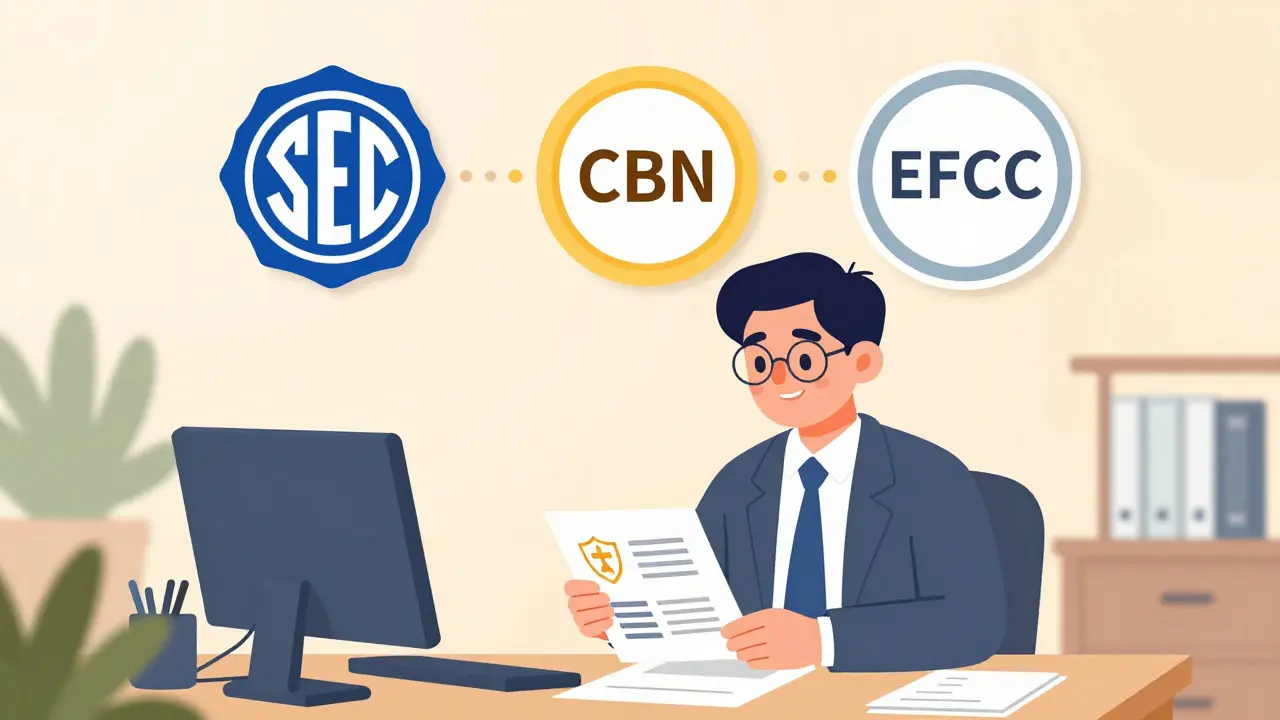
Who Regulates What? Navigating SEC, CBN, and EFCC
One of the biggest challenges for users in 2026 is understanding who is in charge. Unlike some countries with a single regulator, Nigeria uses a coordinated oversight system. Knowing which agency does what helps you know where to complain if things go wrong and ensures you are dealing with legitimate entities.
| Agency | Role in Crypto Regulation | What You Need to Know |
|---|---|---|
| Securities and Exchange Commission (SEC) | Primary regulator for crypto exchanges and VASPs. Issues licenses and oversees compliance. | Only trade on platforms licensed by the SEC. They enforce the ISA 2025 rules. |
| Central Bank of Nigeria (CBN) | Oversees banking relationships. Ensures banks can safely service licensed crypto firms. | The CBN allows banks to work with licensed VASPs. If your exchange isn't licensed, your bank may still block transactions. |
| Economic and Financial Crimes Commission (EFCC) | Enforcement arm. Investigates fraud, Ponzi schemes, and money laundering. | They use telecommunications records to track illicit flows. Avoid sketchy P2P deals to stay off their radar. |
| Nigerian Financial Intelligence Unit (NFIU) | Monitors suspicious transaction reports from banks and exchanges. | Ensures Anti-Money Laundering (AML) standards are met across the sector. |
This multi-agency approach means there are fewer loopholes. The SEC works closely with the EFCC and NFIU to create unified supervision. For you, the user, this means higher security but also stricter identity verification. The days of anonymous trading are over, and that is actually a good thing for long-term adoption.
Choosing Licensed Exchanges: Your First Line of Defense
If you want to avoid regulatory trouble, your choice of exchange is critical. Under the ISA 2025, all crypto exchanges and Virtual Asset Service Providers must obtain proper licensing from the SEC. Early approvals were granted to established platforms like Quidax and Busha. However, the SEC has implemented thorough vetting processes, meaning not every platform you see advertised is necessarily compliant yet.
Here is how to ensure you are using a safe platform:
- Check the SEC Register: Before depositing Naira, verify that the exchange holds a current license from the Nigerian SEC. Unlicensed platforms operate in a gray area and are prime targets for EFCC crackdowns.
- Look for Banking Integration: Licensed VASPs have formal agreements with banks. If an exchange requires you to send money to a personal account rather than a corporate merchant account, be cautious. This is often a sign of non-compliance with CBN guidelines.
- Understand KYC Requirements: Legitimate platforms will require robust Know Your Customer (KYC) checks. This includes providing your National Identity Number, BVN (Bank Verification Number), and sometimes proof of address. While this feels intrusive, it is your shield against fraud and account freezes.
User experiences on forums like Reddit show that while some Nigerians miss the privacy of the old P2P era, the stability of licensed platforms is worth the trade-off. With Quidax and Busha offering improved banking integration, you can buy and sell crypto directly through your bank app without fear of sudden closures.
Tax Implications: Preparing for the 2026 Regime
Avoiding restrictions isn't just about where you trade; it's about how you report. A major development for 2026 is the implementation of the Nigerian Tax Act and Nigerian Tax Administration Act 2025, signed into law in June 2025. Starting January 1, 2026, crypto assets are treated as property for tax purposes.
Many users assume they need to pay tax on every coin they hold. That is incorrect. Tax liability arises only during taxable events, such as selling crypto for profit or exchanging one crypto for another. Here is what you need to budget for:
- Individual Income Tax: Profits from crypto sales are subject to personal income tax on a sliding scale, capped at 25%. You must declare these gains alongside other income.
- Corporate Tax for Businesses: If you run a crypto business, rates depend on earnings. Companies earning between ₦25 million and ₦100 million face a 20% corporate income tax rate. Those earning over ₦100 million pay 30%.
- VAT on Fees: All companies subject to corporate tax must pay 7.5% Value Added Tax (VAT) on the transaction fees they charge users. This cost may be passed down to you in slightly higher trading fees.
To stay compliant, keep detailed records of every transaction. Use spreadsheets or specialized tax software to track your cost basis and capital gains. Ignoring this step could lead to audits later. The goal is to normalize crypto as a legitimate asset class, and paying taxes is part of that social contract.
NFTs and DeFi: Where Do They Fit?
The ISA 2025 also clarifies the status of newer technologies. Not all digital assets are treated equally. The SEC distinguishes between investment-focused NFTs and artistic ones. If an NFT is marketed as an investment vehicle with expected returns, it falls under securities regulations. Purely artistic or utility-based NFTs remain largely unaffected by securities laws, though they may still be subject to general consumer protection rules.
Decentralized Finance (DeFi) protocols present a trickier challenge. The current framework focuses heavily on centralized exchanges and VASPs. As the regulatory structure matures, the SEC's oversight scope is expected to broaden to encompass DeFi protocols and stablecoins. Until then, users interacting directly with smart contracts should exercise extreme caution. There is no customer support line for a hacked wallet, and no regulator to refund stolen funds. Stick to regulated environments until clearer guidelines emerge for decentralized applications.
Pitfalls to Avoid in 2026
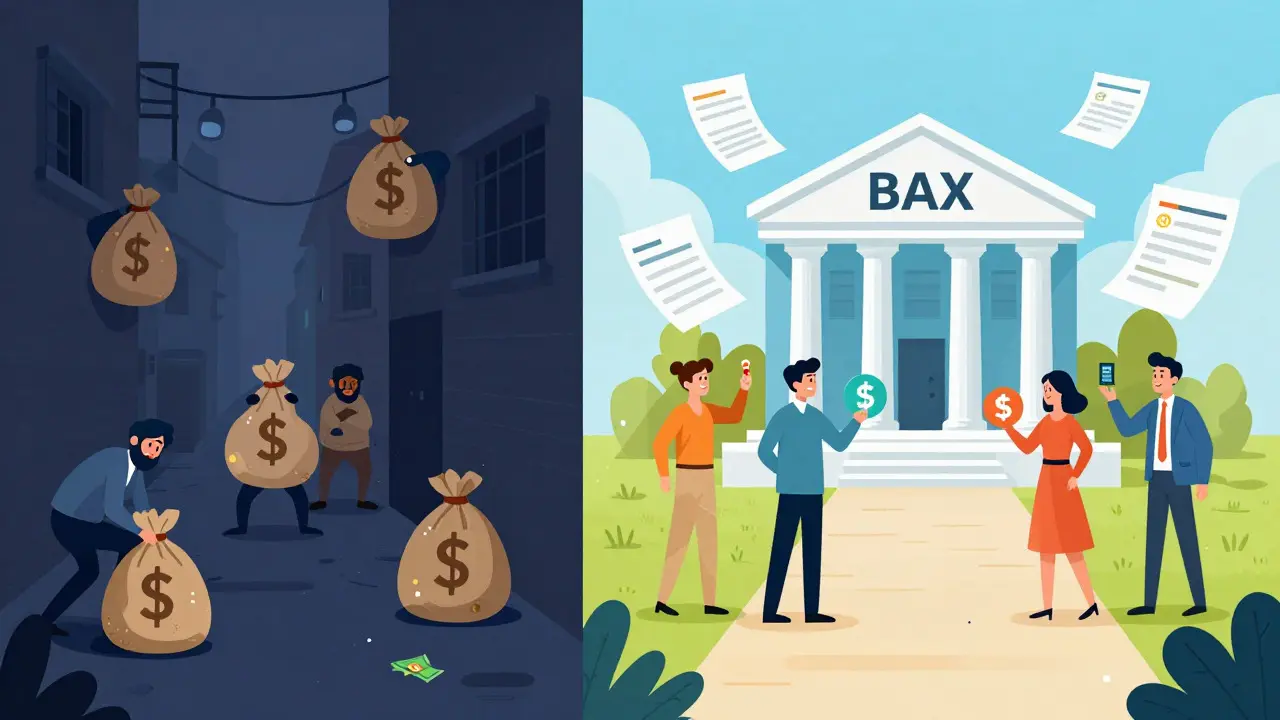
Even with a clear legal framework, mistakes happen. Here are common ways Nigerians accidentally violate regulations or fall victim to fraud:
- Using Unlicensed Foreign Exchanges: Just because an exchange operates globally doesn't mean it is compliant in Nigeria. If it lacks SEC approval, your local bank may flag transactions, and you have little recourse if the platform fails.
- Ignoring AML Red Flags: Large, rapid transfers between wallets can trigger Anti-Money Laundering alerts. Ensure your transaction history looks normal and corresponds to your declared income level.
- Falling for Ponzi Schemes: The ISA 2025 explicitly bans Ponzi schemes. Be wary of platforms promising guaranteed high returns. The EFCC has enhanced tools to investigate these, and participants often lose everything before authorities intervene.
- Mixing Personal and Business Accounts: If you trade frequently, consider separating your personal banking from your trading activities. Using a dedicated corporate account for significant volumes can simplify tax reporting and reduce scrutiny on personal accounts.
Conclusion: Embracing Clarity Over Concealment
The narrative around crypto in Nigeria has shifted from prohibition to participation. The "restrictions" you hear about are now safeguards designed to protect you from fraud and instability. By choosing SEC-licensed exchanges like Quidax or Busha, completing your KYC verification, and preparing for the 2026 tax regime, you position yourself as a compliant participant in a growing fintech hub.
Nigeria aims to become a regional leader in digital asset regulation. This transition creates opportunities for job creation, foreign investment, and financial inclusion. Your role is to adapt. Stop looking for ways to hide your activity and start building a transparent, secure portfolio. The future of crypto in Nigeria is open, but it is only open to those who play by the rules.
Is cryptocurrency legal in Nigeria in 2026?
Yes. Since the signing of the Investments and Securities Act (ISA) 2025, digital assets are legally recognized as financial securities. The Central Bank of Nigeria has also lifted its ban on crypto transactions, allowing banks to service licensed crypto businesses.
Which exchanges are licensed by the SEC in Nigeria?
Platforms like Quidax and Busha were among the first to receive early licensing approvals from the Securities and Exchange Commission (SEC). Always verify the current license status of any exchange on the official SEC website before trading.
Do I need to pay tax on my crypto holdings?
You do not pay tax merely for holding crypto. Under the Nigerian Tax Act 2025, tax liability arises only during taxable events, such as selling crypto for a profit. Individual profits are subject to personal income tax, capped at 25%.
Can my bank freeze my account for using crypto?
If you use licensed Virtual Asset Service Providers (VASPs) and comply with KYC/AML procedures, your bank should not freeze your account. The CBN guidelines permit banks to offer services to licensed crypto businesses. Account freezes are more likely if you use unlicensed platforms or engage in suspicious transaction patterns.
Are NFTs regulated in Nigeria?
It depends on the type of NFT. Investment-focused NFTs are regulated as securities by the SEC. Artistic or utility-based NFTs are generally not subject to securities regulations, though they must still adhere to consumer protection laws.