
Sanctions Evasion Calculator
Transaction Scale Calculator
Enter transaction details to understand the scale of Russia's crypto sanctions evasion based on real-world data from the article.
days
How it works: This calculator compares your input to actual transaction data from Russia's sanctions evasion operations. Note that real-world transactions are often much larger and more frequent than individual user inputs.
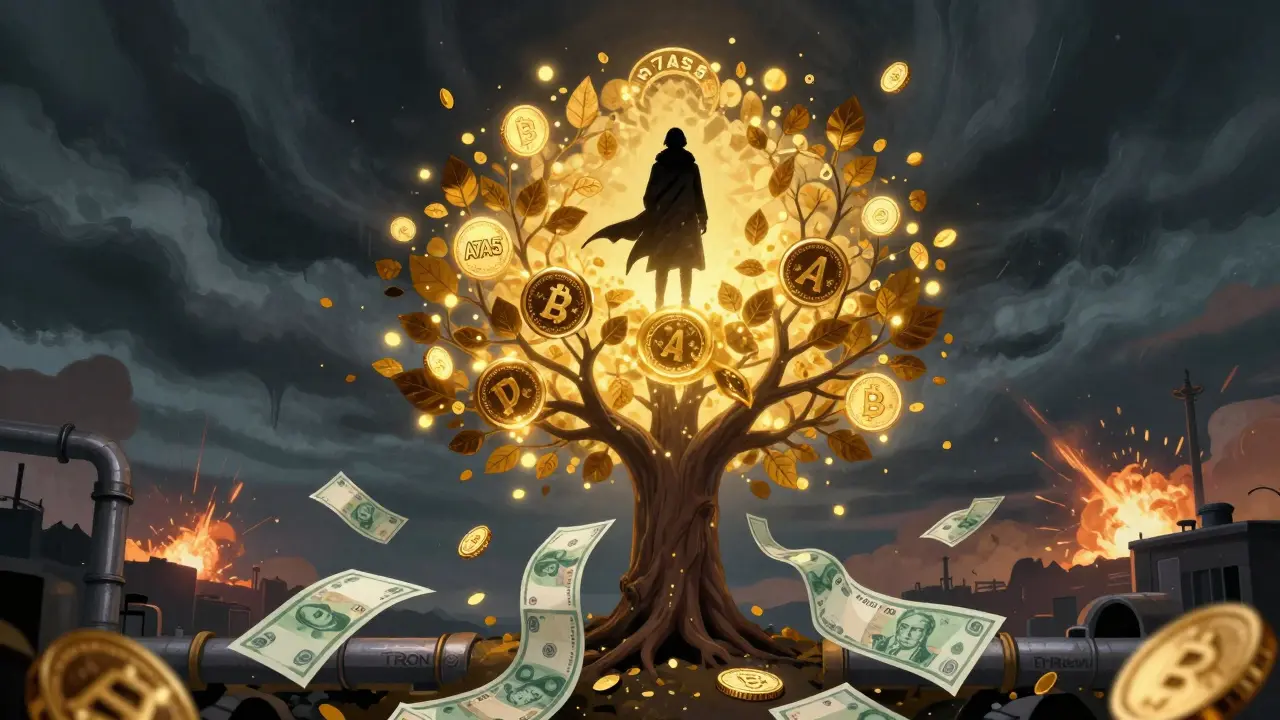
When Western nations slapped sanctions on Russia after its invasion of Ukraine, they expected to cripple its economy. They didn’t expect Russia to build a parallel financial system using cryptocurrency. Today, that system isn’t just surviving-it’s thriving. Billions in digital assets flow through hidden channels, turning blockchain technology into a tool for war funding and sanctions evasion.
The A7A5 Token: Russia’s Ruble-Backed Crypto Weapon
At the heart of Russia’s crypto sanctions evasion is the A7A5 token. It’s not a meme coin. It’s not a speculative experiment. It’s a purpose-built digital asset designed to replace traditional banking routes that have been cut off. Backed by the Russian ruble, A7A5 was created by a Kyrgyzstani company and launched in early 2025. In just four months, it processed over $9.3 billion in transactions on a single exchange. This token runs on both the TRON and Ethereum blockchains, giving it dual-layer redundancy. If one chain gets blocked, the other keeps running. That’s not accidental-it’s strategic. A7A5 lets Russian entities convert rubles into crypto, then trade that crypto for dollars, euros, or stablecoins on global markets. It bypasses SWIFT, it avoids correspondent banks, and it slips past traditional financial monitoring. Elliptic, a blockchain analytics firm, tracked $8 billion in stablecoin payments flowing into wallets linked to A7A5 and its associated businesses over 18 months. That money didn’t disappear into thin air. It bought infrastructure for political influence operations in Moldova, paid for military equipment, and funded covert networks abroad.Garantex Dies. Grinex Is Born.
Russia didn’t start with A7A5. It started with Garantex. Once one of the largest crypto exchanges in the Russian-speaking world, Garantex was sanctioned by the U.S. Treasury in 2024 for facilitating transactions tied to Russian military procurement. But instead of shutting down, its operators simply rebuilt. On March 6, 2025, the U.S. Secret Service raided Garantex’s offices and froze its assets. Within hours, its leadership launched Grinex. The new platform didn’t just copy Garantex’s code-it inherited its customer base, its transaction history, and its entire network of shell companies. Grinex’s own marketing materials openly admit it was created because Garantex was taken offline. By October 2025, the U.S. Treasury had officially sanctioned Grinex, calling it a direct successor to Garantex. But by then, it was already moving billions. The transition was seamless because the same people ran both. The same wallets. The same infrastructure. The same goal: keep the money flowing.
Capital Bank: The Bridge Between Crypto and Cash
Crypto alone can’t buy tanks or missiles. You need cash. That’s where Capital Bank in Kyrgyzstan comes in. Run by Kantemir Chalbayev, a figure with deep ties to Russian intelligence networks, this bank acts as the final link in the chain. Here’s how it works: A7A5 tokens are sold to foreign buyers. The proceeds go into digital wallets controlled by Russian-linked entities. Those wallets send crypto to Capital Bank’s exchange partners. The bank converts the crypto into fiat currency-dollars, euros, or rubles-and transfers it directly to suppliers of military goods. No Western bank touches the money. No audit trail leads back to the Kremlin. This isn’t theory. Leaked documents from Moldovan fugitive Ilan Shor, a Putin ally sanctioned by the U.S. in 2022, showed direct payment trails from A7A5 wallets to Capital Bank accounts used to pay for drones, electronics, and communication gear.The Crypto Laundromat: How Russia Cleans Dirty Money
Russia’s system doesn’t just move money-it hides it. Transparency International Russia exposed a network they called the “Crypto Laundromat.” It’s a multi-stage laundering operation that uses fake offshore companies, forged identities, and shell individuals to bypass KYC checks. In 2023, investigators found that hundreds of Russian citizens were selling their personal documents-passports, bank details, tax IDs-on dark web marketplaces. Buyers used these to open accounts on crypto exchanges outside Russia. Once accounts were set up, they became conduits for moving sanctioned funds. By 2025, this system had evolved. Fake companies in the UAE, Seychelles, and Moldova were used to create layers of ownership. A7A5 tokens were bought with crypto from one shell entity, sold to another, then converted to cash through Capital Bank-all while no single transaction triggered a red flag.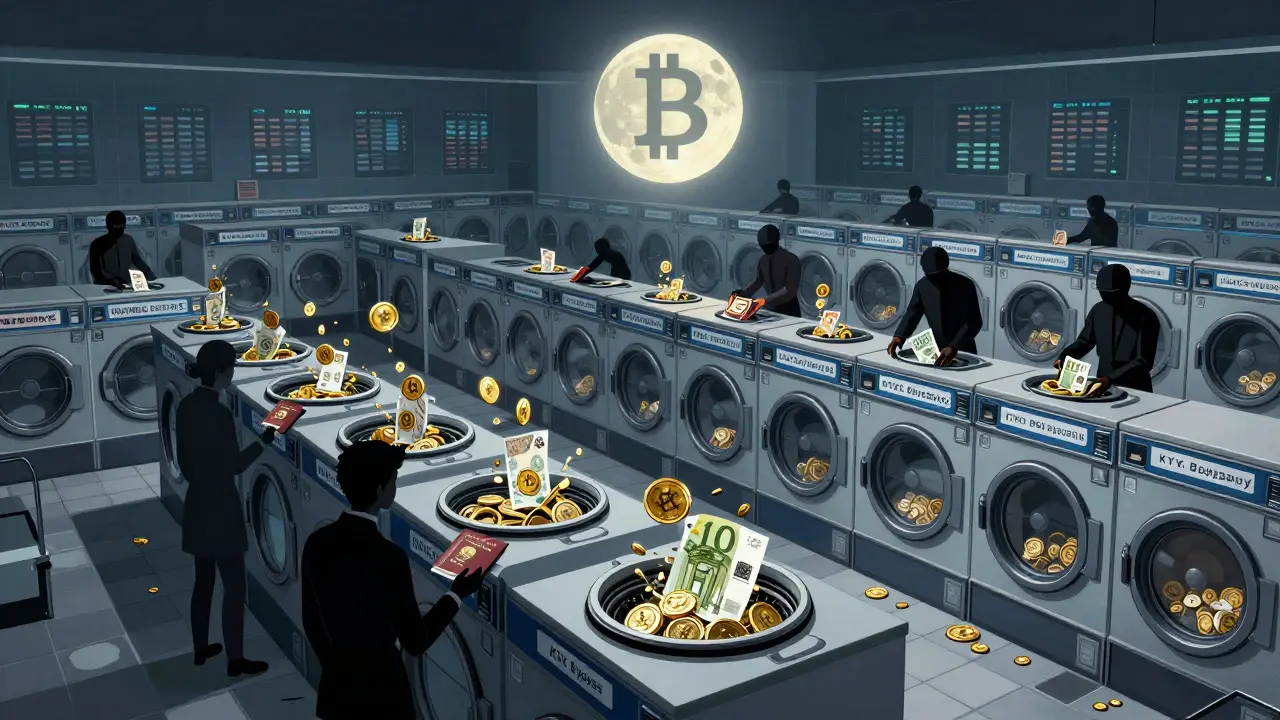
Comments
Jessica Eacker
So Russia just turned blockchain into a war machine and nobody saw it coming? Funny how the same tech that was supposed to free us from banks is now propping up a regime.
They didn’t break the system. They just rewired it.
December 15, 2025 AT 05:59
John Sebastian
This is exactly why crypto needs regulation. Not to stifle innovation, but to stop nation-states from turning it into a laundering pipeline. The lack of global coordination is a disaster waiting to happen.
December 16, 2025 AT 10:45
Andy Walton
bro like… if the blockchain is public… why are we still surprised? 🤔
it’s like building a secret door in a glass house and being mad when people see it
also capitalism is a vampire and crypto is its latest blood bag 💀
we all knew this was coming… we just didn’t wanna admit it
December 17, 2025 AT 16:57
Candace Murangi
I’ve been watching this play out for years. The real story isn’t the tech-it’s how fast institutions adapt when they’re cornered.
Western sanctions assumed Russia would collapse. Instead, it learned to swim in the dark.
It’s not just crypto. It’s human ingenuity under pressure.
December 18, 2025 AT 13:25
Albert Chau
Of course they did this. You think a country with nukes is gonna sit around while you freeze its banks? This is basic survival. The West just acted like sanctions were a magic spell.
December 19, 2025 AT 09:22
Eunice Chook
A7A5 isn’t a currency. It’s a weaponized ledger. And now every terrorist group on earth has a blueprint.
Good job, global policymakers.
December 20, 2025 AT 12:19
Jessica Petry
Oh look, another ‘crypto is evil’ take from someone who thinks decentralization means ‘no rules’ instead of ‘no middlemen.’
Maybe the problem isn’t blockchain-it’s that the West still thinks it owns the global financial system.
December 21, 2025 AT 03:34
Scot Sorenson
So you’re telling me the U.S. sanctioned a crypto exchange… and the Russians just renamed it and kept going?
That’s not a hack. That’s a corporate rebranding. And it’s hilarious.
Who’s the real amateur here?
December 22, 2025 AT 14:18
Ike McMahon
Exchanges are scrambling to catch up, but the real solution is better cross-border compliance tools-not more bans.
Track the flows. Freeze the bad wallets. Don’t punish honest users.
December 23, 2025 AT 21:55
JoAnne Geigner
It’s wild to think that the same technology that lets a teenager in Nairobi send money to their cousin in Lagos is now being used to fund drones…
But maybe that’s the point: tech doesn’t care who uses it.
We need to build guardrails, not walls.
December 25, 2025 AT 12:27
Anselmo Buffet
People keep acting like this is new. It’s not. Black markets have always found ways. This is just the 21st century version.
Sanctions are like a dam. You can’t stop the water-you just redirect it.
December 26, 2025 AT 04:50
Patricia Whitaker
Why are we even surprised? Russia’s been doing this since the 90s. Just swap out rubles for ETH and call it innovation.
December 27, 2025 AT 22:49
Joey Cacace
While I deeply respect the ingenuity of this system, I must emphasize the ethical implications of enabling state-sponsored illicit finance through decentralized networks. The moral burden lies not with the technology, but with the actors who exploit it.
December 29, 2025 AT 19:17
Taylor Fallon
crypto was meant to be a tool for the people… not a piggy bank for dictators 😔
but hey, at least we know now that blockchains dont lie
every transaction is recorded… so why dont we use that to catch them?
maybe the real problem is we’re not using the tech right… not that the tech is bad
December 29, 2025 AT 22:28
Sarah Luttrell
Oh no, the Russians figured out how to use tech?! 😱
How dare they not die quietly like good little sanctioned peasants!
Next they’ll invent the wheel and we’ll all have to cry into our NATO lattes.
December 31, 2025 AT 01:18
PRECIOUS EGWABOR
It’s not that Russia is clever-it’s that the West is lazy. We thought sanctions were a finish line, not a starting gun.
And now we’re mad the other team scored?
December 31, 2025 AT 05:41
Kathleen Sudborough
This is a wake-up call for the entire crypto industry.
We can’t hide behind ‘decentralization’ when real human suffering is tied to every transaction.
Let’s build better tools-not just for compliance, but for conscience.
January 1, 2026 AT 21:04