

Have you ever wondered why you can buy or sell Bitcoin instantly, even if no one else is actively clicking "buy" at that exact second? It’s not magic. It’s the work of Market Makers, who use order books to provide continuous liquidity and ensure smooth trading in financial markets. These sophisticated traders are the invisible engine behind every trade you execute on an exchange. They don’t just watch the market; they shape it by constantly posting bids and asks, creating a bridge between buyers and sellers.
Understanding how market makers interact with order books is crucial for anyone involved in crypto or traditional finance. It reveals how prices are discovered, why spreads exist, and how your trades get filled. Whether you’re a beginner trying to understand slippage or a trader looking to optimize execution, knowing the mechanics behind the scenes gives you a significant edge. This guide breaks down the complex world of order book dynamics, from basic price-time priority to advanced strategies used on both centralized and decentralized platforms.
The Anatomy of an Order Book
An Order Book is a real-time electronic list of all outstanding buy and sell orders for a specific asset, organized by price level. Think of it as a digital bulletin board where everyone writes down what they’re willing to pay or accept. On one side, you have the "bids"-people wanting to buy. On the other, the "asks" (or offers)-people wanting to sell. The highest bid and the lowest ask are called the Best Bid and Best Ask, respectively. The difference between these two prices is the bid-ask spread, which is essentially the fee market makers charge for providing liquidity.
Market makers don’t just place one order. They post multiple limit orders at various price levels above and below the current market price. This creates depth in the market. For example, if Bitcoin is trading at $60,000, a market maker might be willing to buy up to 1 BTC at $59,990, another 2 BTC at $59,980, and so on. Simultaneously, they’d be selling at $60,010, $60,020, etc. This layered approach ensures that large trades can be executed without causing massive price swings, thanks to the available liquidity at each level.
- Bids: Buy orders sorted from highest to lowest price.
- Asks: Sell orders sorted from lowest to highest price.
- Spread: The gap between the best bid and best ask.
- Depth: The total volume of orders available at different price levels.
The system operates on a strict Price-Time Priority mechanism, meaning the best price gets executed first, and among orders at the same price, the earliest arrival takes precedence. This rule is fundamental because it creates fairness and predictability. Market makers must master this timing aspect. If they see a large buy order coming in, they might adjust their ask prices slightly higher to protect their inventory, knowing that their earlier-placed orders will still have priority over later ones at the same price.
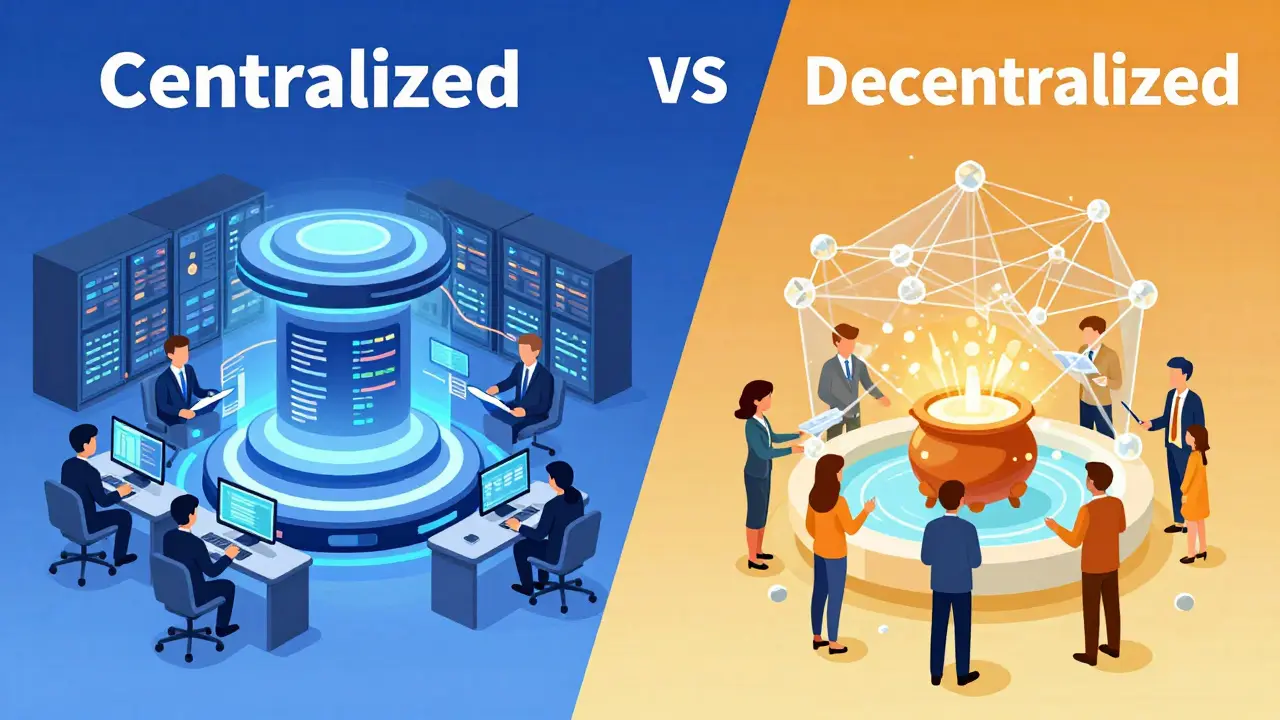
Centralized vs. Decentralized Order Books
Traditionally, order books have been the backbone of centralized exchanges (CEXs) like Binance or Coinbase. These platforms maintain a central ledger where all orders are matched in a single location. However, the rise of blockchain technology has introduced a new player: Decentralized Exchanges (DEXs), which often use Automated Market Maker (AMM) models instead of traditional order books. While AMMs use liquidity pools rather than direct order matching, some DEXs are now implementing hybrid models or true order book mechanisms on-chain.
| Feature | Centralized Exchange (CEX) | Decentralized Exchange (DEX) |
|---|---|---|
| Liquidity Source | Professional Market Makers | Community Liquidity Providers |
| Matching Engine | Centralized Server | Smart Contracts / Off-chain Solvers |
| Speed | Milliseconds | Seconds to Minutes (depending on network) |
| Transparency | Limited (Internal Data) | Fully Transparent (On-chain) |
| Counterparty Risk | High (Exchange Custody) | Low (Non-custodial) |
In CEX environments, market makers rely on high-frequency trading algorithms to manage their positions. They need speed to react to news or large orders. In contrast, DEX market makers face different challenges. As noted in industry research, informed traders tend to cluster on DEXs due to shared information about future asset values. This clustering can lead to sharper price impacts compared to the smoother curves seen in traditional order books. Market makers on DEXs must adapt by using cross-venue arbitrage strategies, balancing their exposure between centralized and decentralized platforms to mitigate risk.
Strategies for Managing Inventory and Risk
Being a market maker isn’t just about posting quotes; it’s about managing inventory. If a market maker buys too much Bitcoin because of a sudden surge in buy orders, they become "long" on the asset. If the price drops, they lose money. To avoid this, they use sophisticated Inventory Rebalancing Algorithms that automatically adjust bid and ask prices to encourage trades that bring their holdings back to a neutral state. For instance, if they hold too much Bitcoin, they might lower their bid prices to discourage buying and raise their ask prices to encourage selling.
Risk management is critical. Market makers monitor several key metrics in real-time:
- Bid-Ask Spreads: Updated in microseconds to reflect immediate market conditions.
- Position Sizes: Tracked across multiple venues to prevent overexposure.
- Exposure Levels: Monitored in milliseconds to assess potential losses.
- Profit and Loss: Calculated second-by-second to evaluate strategy performance.
They also use tools like Volume-Weighted Average Price (VWAP) calculations to predict the average price a large order will receive. By analyzing order flow imbalances-such as a sudden increase in buy orders relative to sell orders-they can anticipate short-term price movements and adjust their quotes accordingly. This predictive capability is what separates successful market makers from those who get wiped out by adverse selection.
The Role of Technology and AI
Modern market making is impossible without advanced technology. Firms like Optiver emphasize that understanding the mechanical nature of order book operations is essential. Their systems process Level 2 market data, showing multiple price levels and quantities, allowing them to analyze market depth instantly. Some systems provide updates in microsecond intervals for order book changes, ensuring that market makers are always reacting to the latest information.
Artificial Intelligence and Machine Learning are becoming integral components of these strategies. AI models can analyze historical order book replay data to backtest strategies, identifying patterns that humans might miss. For example, an AI might detect that certain types of order imbalances consistently precede a price drop, allowing the market maker to widen their spread preemptively. This level of automation enhances decision-making processes and reduces human error.
Furthermore, smart order routing capabilities allow market makers to optimize execution across different trading venues. If liquidity is deeper on one exchange than another, their algorithms will route orders there automatically. This cross-venue arbitrage detection helps them capture small profits while maintaining balanced inventories. The integration of these technologies means that market making is increasingly a battle of computational power and algorithmic sophistication.

Practical Implications for Traders
Why does any of this matter to you as a regular trader? Understanding market maker behavior helps you make better decisions. When you see a thin order book with few orders at each price level, you know that executing a large trade could cause significant slippage. Market makers are less active, meaning the spread might be wider, and your cost of trading increases.
Conversely, a deep order book with tight spreads indicates strong liquidity. You can enter and exit positions more easily without moving the price against yourself. Pay attention to the time and sales data alongside the order book. Large trades appearing in the tape can signal institutional activity, prompting market makers to adjust their quotes. By reading these signals, you can align your trades with the flow of the market rather than fighting against it.
Also, be aware of the differences between CEXs and DEXs. If you value speed and low slippage, CEXs with robust market maker presence are preferable. If you prioritize transparency and non-custodial control, DEXs offer benefits but may come with higher costs due to lower liquidity efficiency. Knowing where market makers are most active allows you to choose the right platform for your specific needs.
Future Trends in Market Making
The landscape of market making continues to evolve. Regulatory developments are shaping how market makers operate, especially in cryptocurrency markets where traditional rules may not directly apply. Increased automation and precise risk management systems are expected to become standard. As decentralized finance grows, we’ll likely see more hybrid models that combine the efficiency of traditional order books with the transparency of blockchain technology.
Long-term viability depends on adaptation. Market makers must balance technological implementation with regulatory compliance. They need to navigate evolving market structures while maintaining their core goal: providing liquidity and stability. For traders, this means expecting even tighter spreads and faster executions in the future, driven by competition among increasingly sophisticated market participants.
What is the primary role of a market maker?
The primary role of a market maker is to provide liquidity by continuously posting buy and sell orders. This ensures that other traders can execute transactions quickly and at predictable prices, reducing volatility and transaction costs.
How do market makers make money?
Market makers profit from the bid-ask spread. They buy at the lower bid price and sell at the higher ask price. Over thousands of trades, these small margins accumulate into significant revenue, provided they manage inventory risk effectively.
What is price-time priority?
Price-time priority is a rule used in order books where the best price receives execution first. If multiple orders exist at the same price, the one placed earliest in time gets priority. This ensures fairness and orderly execution.
Why are order books important for blockchain trading?
Order books facilitate efficient price discovery and liquidity in blockchain trading. While many DEXs use AMMs, emerging hybrid models and professional market makers on-chain help reduce slippage and improve trading conditions for users.
How does AI impact market making?
AI enhances market making by analyzing vast amounts of data to predict price movements, optimize quote placement, and manage risk in real-time. Machine learning algorithms can identify patterns and execute trades faster than humans, improving profitability and efficiency.