
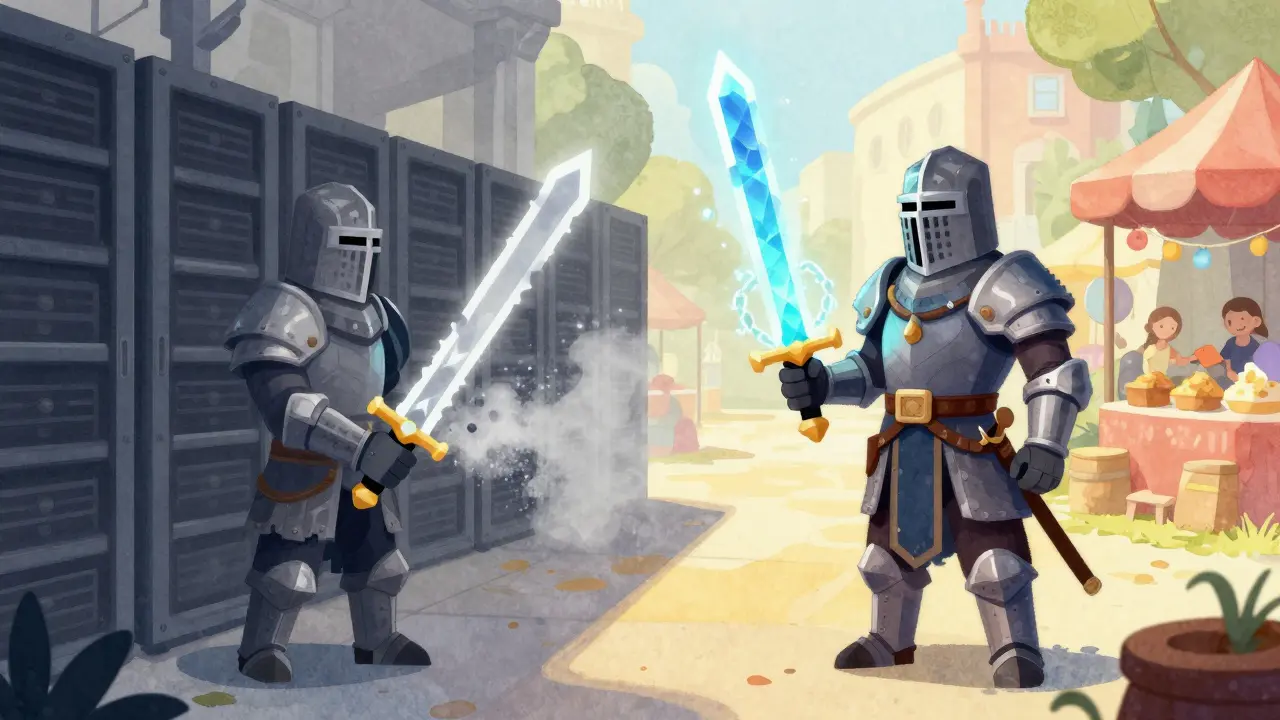
Imagine spending hundreds of hours grinding for a legendary sword in an online RPG. In traditional gaming, that sword is locked inside the developer’s servers. If the company shuts down or bans your account, you lose everything. Now imagine that same sword is an NFT (Non-Fungible Token)-a unique digital asset you truly own, tradeable on open marketplaces for real value. This shift from rented assets to owned assets defines the modern gaming NFT economy. But ownership alone doesn’t make a sustainable game. Behind every successful blockchain title lies a complex financial engine known as tokenomics.
Tokenomics is the study of how tokens function within a specific ecosystem. In the context of GameFi, it dictates how players earn rewards, how developers fund operations, and how the value of in-game assets is maintained over time. Poorly designed tokenomics lead to hyperinflation, where reward tokens become worthless, causing player exodus. Well-designed systems create balanced, self-sustaining economies that benefit both casual gamers and serious investors.
The Core Components of GameFi Economies
To understand how these economies work, we need to break them down into their primary building blocks. Most blockchain games rely on a dual-token model, separating utility from governance to maintain stability.
- Utility Tokens: These are the everyday currency of the game. Players use them to buy items, pay transaction fees, or craft new equipment. They are typically inflationary, meaning new tokens are constantly created through gameplay rewards. Because they can be farmed by playing, their supply grows, which naturally puts downward pressure on price unless demand keeps pace.
- Governance Tokens: Unlike utility tokens, governance tokens often have a capped supply. Holding them grants you voting rights on major decisions, such as changing game rules, allocating treasury funds, or adjusting reward rates. These tokens represent long-term stake in the project’s success.
- NFTs (Non-Fungible Tokens): These represent unique in-game assets like characters, land plots, or weapons. Their value is driven by scarcity and utility. A rare weapon that helps you win matches faster will command a higher price than a common one.
The interaction between these three elements creates the economic flow. Players earn utility tokens by using their NFTs. They spend utility tokens to upgrade their NFTs or buy new ones. Governance tokens allow the community to steer this entire process, ensuring the game evolves in a way that benefits its user base.
Fighting Inflation: The Biggest Threat to GameFi
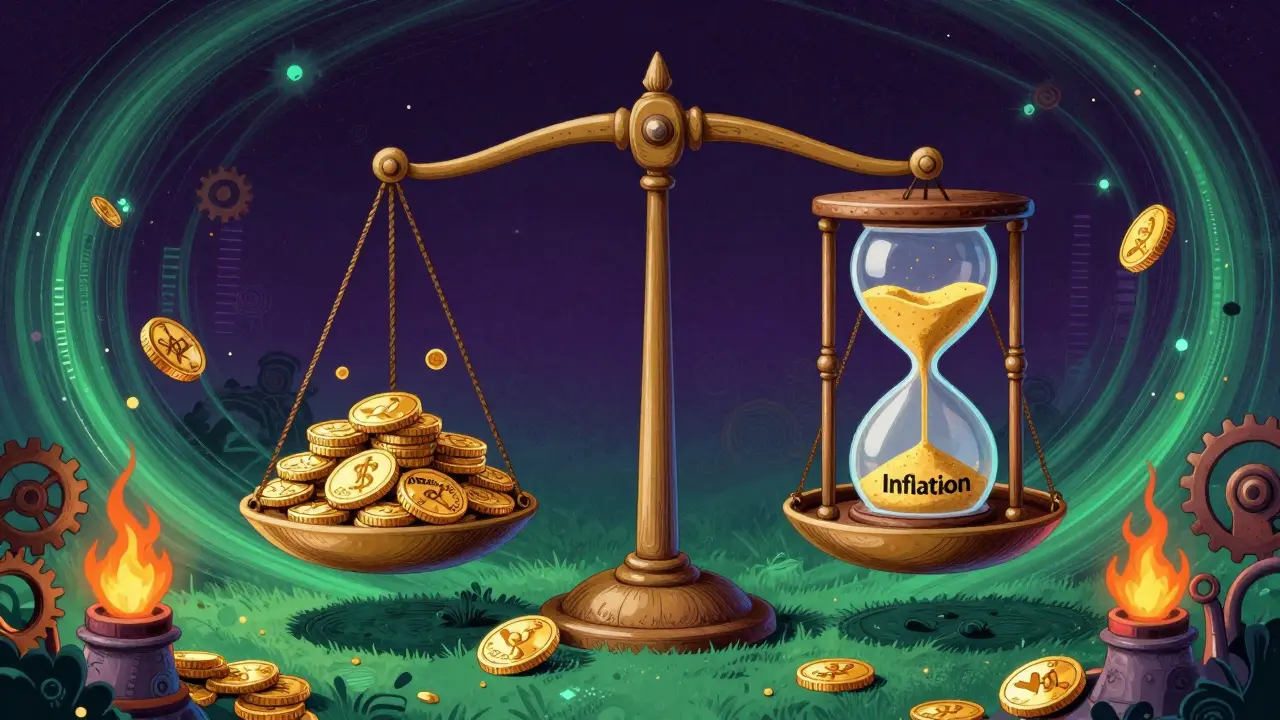
The single biggest failure point in blockchain gaming is unchecked inflation. When a game offers generous "play-to-earn" rewards without corresponding sinks (ways to remove tokens from circulation), the token supply explodes. As more tokens flood the market, their individual value crashes. Players stop earning meaningful income, engagement drops, and the economy collapses.
Developers combat this through several strategic mechanisms:
- Buyback and Burn: The game’s treasury uses profits to buy back utility tokens from the open market and permanently destroys them. This reduces the total supply, creating scarcity and supporting the token’s price. It acts as a counterbalance to the constant emission of new rewards.
- Sinking Mechanisms: Games must create reasons for players to spend tokens rather than just hoard or sell them. Examples include charging energy costs for battles, requiring tokens to repair damaged gear, or taxing marketplace transactions. Every token spent is a token removed from circulation.
- Staking Rewards: By allowing players to lock up their tokens for a period of time in exchange for interest or exclusive items, developers reduce the immediate circulating supply. This discourages panic selling during market dips and encourages long-term holding.
A healthy economy requires a delicate balance. If sinks are too strong, players feel punished and leave. If emissions are too high, the currency becomes worthless. Successful projects continuously monitor these metrics and adjust parameters dynamically.
| Feature | Utility Token | Governance Token | NFT Asset |
|---|---|---|---|
| Supply Type | Inflationary (Unlimited) | Deflationary (Capped) | Fixed Scarcity |
| Primary Use | In-game purchases & rewards | Voting & protocol control | Ownership of unique items |
| Value Driver | Demand vs. Emission Rate | Project Success & Utility | Rarity & Gameplay Utility |
| Volatility | High | Moderate | Variable |
Advanced Economic Strategies for Stability
Beyond basic supply management, innovative games employ sophisticated strategies to deepen their economies and protect against external shocks.
Fractional NFTs address the barrier of entry for expensive assets. A legendary virtual land plot might cost thousands of dollars, pricing out most players. By fractionalizing this NFT, developers allow dozens or hundreds of users to own small shares. This increases liquidity, as smaller stakeholders can easily trade their portions, and broadens the participant base. It transforms illiquid high-value assets into accessible investment opportunities.
DeFi Integration connects the game economy to the broader financial world. Liquidity pools allow players to provide pairs of tokens (e.g., Game Token + Stablecoin) to facilitate trading. In return, they earn a cut of the transaction fees. This ensures that there is always someone willing to buy or sell the game’s token, preventing massive price slippage during large trades. It also allows players to hedge their risk by converting volatile game tokens into stablecoins without leaving the ecosystem.
Friction Mechanics are subtle design choices that prevent bot farms from draining the economy. Instead of rewarding every action equally, games might implement energy systems that limit daily earnings, or require off-chain resources to upgrade NFTs. This makes mass extraction difficult while preserving fun for genuine human players. It shifts the focus from pure financial yield to actual gameplay enjoyment.
External Risks and Market Volatility
No game exists in a vacuum. The blockchain gaming sector is heavily influenced by broader crypto market trends. A sharp decline in the price of Ethereum or Bitcoin can cause a ripple effect. If the underlying network gas fees skyrocket, micro-transactions become unprofitable. If the general sentiment turns bearish, investors pull capital out of speculative assets, including game tokens.
This systemic vulnerability requires robust economic design. Games built on highly volatile networks must insulate their internal economies. Some achieve this by pegging in-game prices to stablecoins or using oracle feeds to adjust reward rates based on real-time market conditions. Others focus on building strong communities that value the entertainment aspect over short-term profit, providing a buffer during market downturns.
Regulatory uncertainty also poses a risk. As governments clarify their stance on digital assets, compliance requirements may change. Projects that treat their tokens as securities rather than utilities could face legal hurdles. Transparent development teams proactively engage with regulators and design their tokenomics to emphasize utility and consumption over speculative investment.
The Future of Player-Driven Economies
The evolution of gaming NFT economies points toward greater interoperability and decentralization. We are moving away from siloed ecosystems where assets are trapped in single games. Future standards aim to allow a character or weapon earned in one game to be used in another, creating a true metaverse economy. This cross-game utility would significantly increase the value and longevity of NFTs.
Furthermore, the role of the player is shifting from consumer to co-owner. Through decentralized autonomous organizations (DAOs), communities now vote on budget allocations, feature development, and partnership deals. This alignment of incentives ensures that developers prioritize long-term sustainability over quick cash grabs. When players have a direct stake in the outcome, they become advocates for the platform’s health.
As technology matures, we will see more nuanced models that blend traditional gaming fun with legitimate economic opportunity. The goal is no longer just to pay players, but to create engaging worlds where economic activity enhances the narrative and social experience. The most successful projects will be those that forget about "crypto" first and focus on being great games second, letting the tokenomics serve the experience rather than dominate it.
What is the difference between utility tokens and governance tokens in gaming?
Utility tokens are used for day-to-day transactions within the game, such as buying items or paying fees. They are usually inflationary and earned through gameplay. Governance tokens grant holders voting rights on project decisions and often have a fixed supply. They represent a stake in the future direction of the game and are typically harder to acquire.
How do blockchain games prevent token inflation?
Games prevent inflation by implementing "sinks" that remove tokens from circulation. Common methods include buyback-and-burn programs, where the team destroys purchased tokens; staking mechanisms that lock up tokens; and in-game costs like repair fees, energy limits, or marketplace taxes. These ensure that token supply does not outpace demand.
Are NFTs necessary for a blockchain game economy?
While not strictly mandatory, NFTs provide verifiable ownership and scarcity for in-game assets. They enable a player-driven marketplace where users can trade unique items for real value. Without NFTs, assets remain centralized and non-transferable, limiting the economic depth and potential for secondary markets.
What are fractional NFTs and why are they useful?
Fractional NFTs split a single high-value asset into multiple smaller shares. This lowers the entry barrier for players who cannot afford full-priced rare items. It increases liquidity and allows a broader audience to participate in the economy, making valuable assets more accessible and tradable.
How does DeFi integration stabilize game economies?
DeFi tools like liquidity pools and lending protocols help stabilize economies by providing deeper markets for token trading. They reduce volatility by ensuring buyers and sellers are always available. Additionally, staking options allow players to earn passive income, encouraging them to hold tokens rather than sell immediately, which supports price stability.