
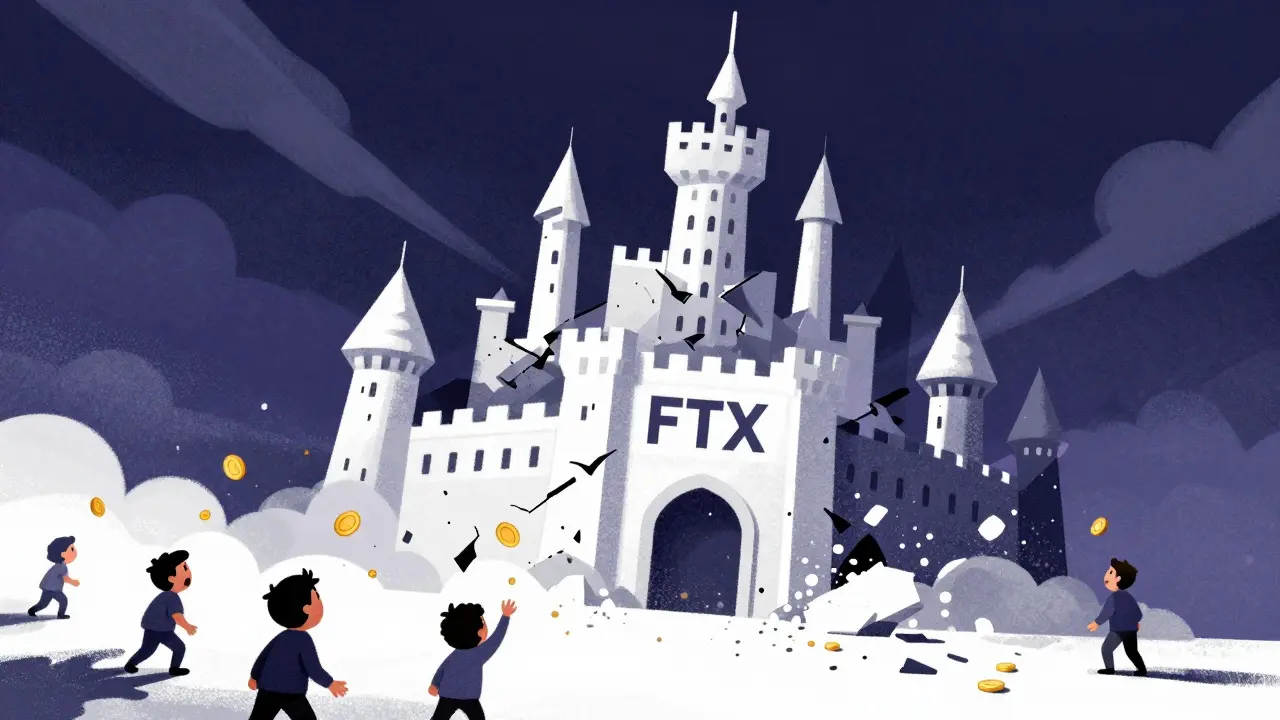
You probably remember the shock. In November 2022, FTX, once the world’s third-largest cryptocurrency exchange, collapsed overnight. For millions of users, it wasn’t just a bad market day; it was the disappearance of their life savings. If you are reading this in July 2026, you might be asking: Is FTX back? Can I still trade there? Or, if you were a victim, have you gotten your money back?
The short answer is stark: FTX is not currently open for new trading. The platform remains in complex bankruptcy proceedings. However, the story doesn't end with the crash. Over $7 billion in assets have been recovered, and the legal aftermath has permanently changed how we view crypto security. This review breaks down what happened to FTX, where the recovery stands today, and why understanding this disaster is critical for anyone holding digital assets right now.
What Happened to FTX? A Timeline of the Crash
To understand the current status, we have to look at how it broke. Sam Bankman-Fried founded FTX in 2019. Unlike traditional exchanges like Coinbase or Binance, which focused on simple spot trading (buying Bitcoin and holding it), FTX specialized in derivatives trading. This means futures contracts, leveraged tokens, and perpetual swaps.
At its peak, FTX offered 15 perpetual swap contracts and 45 leveraged tokens. It was popular among advanced traders because of its low fees-just 0.02% for makers and 0.07% for takers. But behind the scenes, things were messy. FTX shared deep financial ties with Alameda Research, a trading firm also owned by SBF. Instead of keeping customer funds separate and safe, FTX lent billions of user dollars to Alameda to invest in risky startups and real estate.
When rumors started circulating in late 2022 that FTX had a massive hole in its balance sheet, a bank run ensued. Users rushed to withdraw their funds. Because the cash wasn't there, the platform froze. By November 11, 2022, FTX filed for Chapter 11 bankruptcy protection. At that moment, approximately 1 million customers found themselves locked out of accounts totaling an estimated $18 billion.
Current Status: Is FTX Trading Again?
If you try to log into ftx.com today, you won’t find a live order book. You’ll find a portal for bankruptcy claims. As of mid-2026, here is the reality:
- No New Accounts: You cannot sign up for a new account.
- No Active Trading: There is no liquidity. No one is buying or selling against you.
- Bankruptcy Proceedings: The company is under the supervision of a court-appointed trustee, John J. Ray III. The focus is entirely on liquidating remaining assets and distributing them to creditors (the former users).
In April 2023, reports indicated that FTX had recovered over $7.3 billion in assets. While this sounds like a lot, it only covers about 40% of the liabilities. The recovery process has been slow due to the complex corporate structure spanning multiple jurisdictions, including the Bahamas, Singapore, and the United States. Any hope of a "relaunch" would require complete restructuring under new ownership and strict regulatory oversight, something that hasn't materialized yet.
FTX vs. Safe Exchanges: Why Structure Matters
The fall of FTX created a vacuum in the derivatives market. Competitors like OKX and Bybit expanded rapidly to fill the gap. But more importantly, it forced a conversation about safety. Let's compare how FTX operated versus how regulated exchanges operate today.
| Feature | FTX (Pre-Collapse) | Regulated Exchanges (e.g., Kraken, Coinbase) |
|---|---|---|
| Fund Segregation | Mixed with Alameda Research | Strictly separated from company ops |
| Proof of Reserves | Not publicly audited regularly | Regular third-party audits |
| Regulatory Compliance | Limited; excluded US users but lacked safeguards | SOC 2 Type 2, ISO 27001 certifications |
| Fee Structure | 0.02% / 0.07% | Varies (often higher for retail) |
| User Protection | None during collapse | Insurance on cold storage assets |
The key takeaway isn't just about fees. FTX was cheaper, yes. But it lacked the "boring" infrastructure that protects you when things go wrong. Exchanges like Kraken, which settled its SEC case in March 2024, prioritize compliance. They may charge slightly more, but they maintain segregated accounts so that if the exchange goes bankrupt, your coins aren't part of the mess.
The Human Cost: User Feedback and Recovery
Data points tell one story; human experience tells another. Before the crash, reviews of FTX were mixed but generally positive regarding its interface and unique features like the "Quant Zone," which allowed users to create and monetize automated trading strategies. Users praised the low latency and the ability to trade exotic altcoins easily.
Post-collapse, the sentiment shifted to anger and anxiety. With roughly 1 million claimants filing through the bankruptcy portal, the average claim amount exceeded $1,500 per user. For many, this wasn't disposable income. It was retirement savings or emergency funds. The recovery process has been frustratingly slow. Claimants have had to navigate international legal systems, providing proof of identity and transaction history to prove they were owed money.
As of 2026, distributions are ongoing but staggered. Most users have received partial refunds, but few have been made whole. The lesson here is visceral: in crypto, "not your keys, not your coins" isn't just a slogan. It's a survival rule. When you leave your assets on an exchange, you are trusting that entity's integrity. FTX proved that trust can vanish in a single weekend.
Lessons for Today's Trader: How to Stay Safe
So, how do you trade in 2026 without risking an FTX-style disaster? Here is a practical checklist based on the lessons learned from the collapse.
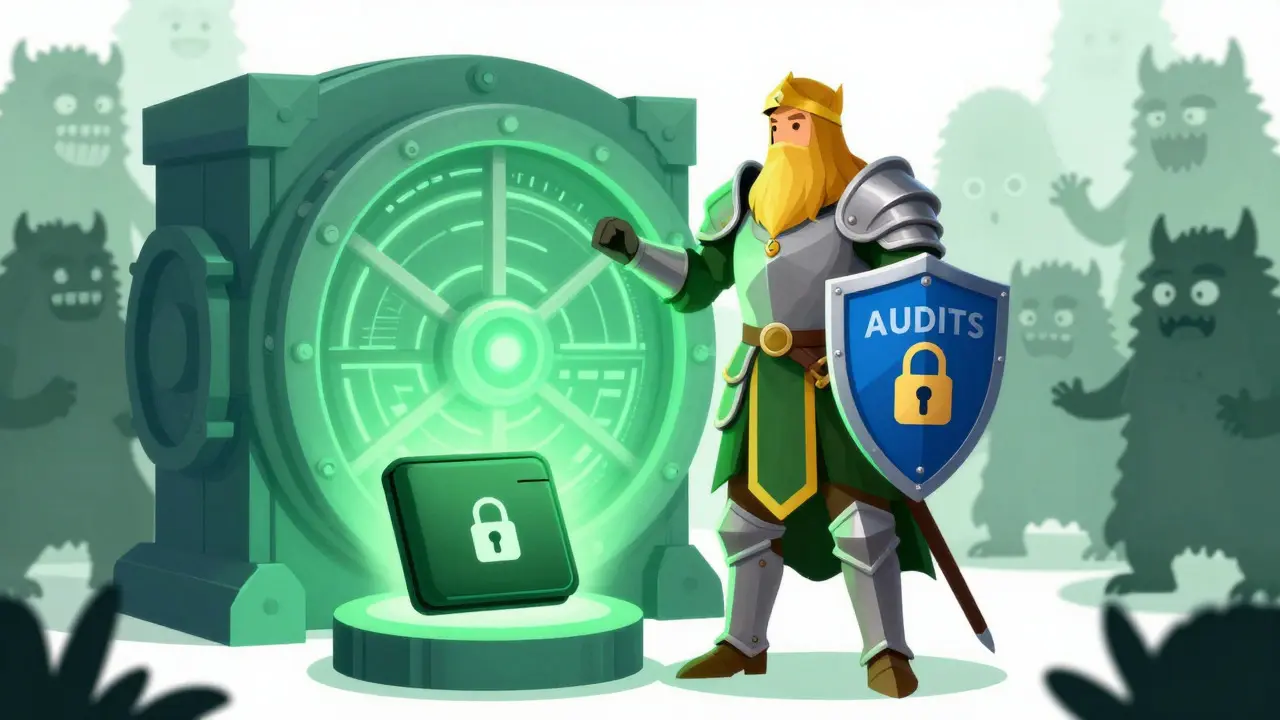
- Check for Proof of Reserves (PoR): Does the exchange publish monthly, verifiable Merkle tree proofs showing they actually hold the assets they claim? Don't just look for a press release; look for the cryptographic proof.
- Understand Insurance: Some exchanges offer insurance on cold storage assets. Read the fine print. Does it cover hacks? What about insolvency? If the exchange goes bust, does the insurance pay out?
- Diversify Platforms: Never keep all your eggs in one basket. If you need to trade actively, keep only the necessary amount on the exchange. Move the rest to a self-custody wallet like a Ledger or Trezor.
- Look for Regulatory Footprints: Prefer exchanges licensed in reputable jurisdictions (like the US, EU, or UK). These entities face stricter capital requirements and regular audits.
- Avoid "Too Good to Be True" Yields: FTX offered high yields on stablecoins. These yields often came from risky lending practices. If an exchange promises returns significantly higher than bank rates, ask yourself: where is that money coming from?
The Future of Crypto Regulation Post-FTX
The collapse of FTX didn't just hurt users; it hurt the entire industry's reputation. Regulators worldwide tightened their grip. In the US, the Securities and Exchange Commission (SEC) intensified enforcement actions. We saw major settlements with other players, reinforcing the idea that compliance is non-negotiable.
Industry experts note that FTX's failure influenced discussions around integrating riskier assets like Ethereum and Solana into traditional finance via ETFs. Regulators realized that bringing crypto into the "TradFi" system requires stronger safeguards than those present at FTX. The era of wild west innovation is ending; the era of institutional-grade accountability is beginning.
For the average trader, this means fewer shady platforms and more transparency. It might mean higher fees or stricter KYC (Know Your Customer) checks, but it also means your money is less likely to disappear into a black hole. The void left by FTX in the derivatives space has been filled by competitors who are eager to prove they are different. They are doing so by embracing the very regulations FTX ignored.
Conclusion: Moving Forward
FTX remains a cautionary tale etched in the blockchain's history. It showed us that even the biggest, most hyped projects can fail catastrophically if fundamentals are ignored. While the bankruptcy process continues to distribute recovered assets to victims, the platform itself is effectively dead as a trading venue.
For those looking to trade today, the advice is simple: prioritize safety over convenience. Use established, regulated exchanges. Keep large holdings in self-custody. And always remember that in crypto, due diligence is your best defense against the next big collapse.
Is FTX open for trading in 2026?
No, FTX is not open for trading. It remains in bankruptcy proceedings. Users cannot deposit, withdraw, or trade assets on the platform.
How much money did FTX recover for users?
As of recent reports, FTX has recovered over $7.3 billion in assets. This represents approximately 40% of the estimated $18 billion in customer liabilities. Distributions to creditors are ongoing but vary by jurisdiction and claim type.
Who owns FTX now?
FTX is currently under the control of a court-appointed bankruptcy trustee, John J. Ray III. The original founders, including Sam Bankman-Fried, have been removed from leadership and face criminal charges.
What happened to Alameda Research?
Alameda Research, the trading firm closely tied to FTX, also filed for bankruptcy simultaneously with FTX in November 2022. Its assets are being liquidated to help repay creditors of both entities.
Are there better alternatives to FTX for derivatives trading?
Yes. Exchanges like OKX, Bybit, and Deribit have filled the gap in the derivatives market. Additionally, regulated platforms like Kraken and Coinbase offer futures trading with stronger compliance frameworks and proof of reserves.
Comments
Nick Darring
Look, I know everyone loves to throw stones at SBF now that the dust has settled and the lawyers are eating well, but let's be real for a second. The whole 'trust me bro' era of crypto wasn't just FTX; it was the entire industry running on fumes and hype while regulators slept with one eye open. Sure, Alameda cooked the books, sure they lent out user funds like they were Monopoly money, but how many of us actually checked the proof of reserves back in 2021 when BTC was hitting all-time highs? We were too busy chasing yields and buying JPEGs to care about segregation of assets. It’s easy to say 'I told you so' now, but we were all complicit in ignoring the red flags because the gains were sweet. Now we have this boring, regulated, KYC-heavy landscape where fees are higher and innovation is slower, and suddenly everyone misses the wild west days. Give me a break. The collapse was inevitable given the business model, but pretending we didn't see it coming is just ego.
August 1, 2026 AT 02:02
Alex Di Mango
I think Nick makes some fair points about collective responsibility, though his tone is a bit harsh. It really does feel like a wake-up call for the whole sector. What’s interesting to me is how quickly the market adapted. OKX and Bybit stepped up almost immediately to fill the derivatives void, which shows there was always demand for those products. It’s good to see that competition can drive better standards rather than just lower fees. I’m personally glad we’re moving toward more transparency, even if it means slightly higher costs. Safety first, right?
August 2, 2026 AT 11:44
Carl Michaud
Alex is naive. The 'adaptation' you speak of is just a rebranding of the same centralized risks. OKX and Bybit might have better PR teams, but they still operate as black boxes. Until we have full-stack decentralized exchanges with verifiable non-custodial architecture, we are all just sitting on a powder keg waiting for the next spark. The SEC isn't protecting you; they're curating which centralized entities get to survive and extract rent from the users. It's a controlled demolition of true decentralization disguised as regulation. Wake up.
August 3, 2026 AT 19:02
Eden Tadesse
i just got my partial refund notification yesterday and its such a relief even if its not the full amount. i had about 3k stuck there since 2022 and getting even half back feels like winning the lottery after everything went wrong. thanks for sharing this info guys
August 4, 2026 AT 02:27
Rita Dutta
The philosophical implication of FTX's collapse is profound, isn't it? It represents the ultimate failure of the social contract in digital spaces. When trust is algorithmic yet managed by fallible humans, the illusion of security shatters. Eden, your experience mirrors the broader existential crisis of fiat-backed crypto holdings. We thought we were holding value, but we were merely holding IOUs from a rogue state actor. The recovery is not just financial; it is psychological. We must rebuild our faith not in institutions, but in code. Or perhaps, as some argue, we should abandon the notion of value altogether and embrace chaos. But then again, chaos pays the bills less reliably than order, however corrupt that order may be.
August 5, 2026 AT 06:39
Namrata Mapgaonkar
lol rita u always make things so deep :P but yeah eden congrats on getting ur money back! its crazy how long this took. in india we still see lots of people scared to use exchanges after this happened. hope things get better soon :)
August 5, 2026 AT 19:32
Matt Kay
boring article. nothing new here. ftx is dead move on.
August 6, 2026 AT 17:46
Paul Smith
Hey Matt! 👋 Don’t be so down on it. For newcomers or those who missed the news cycle, this is a great summary. Plus, the part about checking Proof of Reserves is super important. 📊 I’ve been using Kraken since they settled with the SEC, and the peace of mind is worth the extra fees. 🛡️🙌
August 7, 2026 AT 01:52
Rodmun Tarnowski
Precisely! The emphasis on compliance is not merely a bureaucratic hurdle; it is a fundamental necessity for the maturation of the asset class. One must appreciate the diligence required to verify Merkle trees. It is tedious, yes, but necessary. The era of anarchy is over, and frankly, it is for the best. Order prevails!
August 7, 2026 AT 07:14
Lance Jantz
Oh, please. Rodmun, you sound like a middle-manager from a bank trying to sell insurance. 'Order prevails'? More like stagnation prevails. The 'maturation' you speak of is just the death of innovation. We traded the vibrant, chaotic energy of early crypto for the gray, soulless corridors of institutional compliance. It’s tragic, really. Like watching a punk rock band get signed to a major label and become elevator music. Sad, but predictable.
August 7, 2026 AT 07:52
Matthew Smith
the moral decay here is evident. sbf sold a lie wrapped in charity. now we pay the price. no excuses. just greed.
August 9, 2026 AT 05:40
Candice Cornett
Matthew is right about the greed but wrong about the simplicity. It wasn't just greed; it was incompetence masked as genius. And don't give me that 'we were all victims' sympathy card. We bought into a cult. Now we have to live with the hangover. Stop whining and start securing your own keys. If you can't handle self-custody, you don't deserve crypto.
August 11, 2026 AT 04:54
Kat Bennett
Candice, you’re being a bit harsh there, but I suppose there’s truth in what you’re saying about self-custody. It’s definitely a steep learning curve for average folks. I remember reading about the 'Quant Zone' feature on FTX and thinking it was cool, never imagining it would be the last thing I’d interact with before the crash. It’s funny how we focus on the shiny features and ignore the backend plumbing until the pipes burst. I’ve been slowly moving everything to a Ledger lately, and it’s surprisingly liberating once you get used to it. No more logging in, no more worrying about exchange hacks. Just pure ownership.
August 12, 2026 AT 18:59
Don Fizy
Kat, you nailed it! :-D That feeling of control is huge. I helped my dad set up a Trezor last week, and he was skeptical at first, but now he won’t let anyone touch his hardware wallet. It’s all about education. Once you understand that 'not your keys, not your coins' isn’t just a slogan but a practical reality, the fear goes away. Keep going with that migration, it’s the best investment in security you can make!
August 13, 2026 AT 14:53
Phil Babb
EXACTLY!! Don Fizy is spot on! You HAVE to take control! Why leave your life savings in the hands of some guy named Sam who spends billions on beach houses?! 😡 It’s insane! Get off the exchanges! Get on-chain! It’s the only way to truly win in this game! Fight the power! 🚀🔥
August 14, 2026 AT 05:55
Dominic Greco
Phil, calm down with the caps lock. 🤡 It’s not just 'Sam'. It’s the whole system. The banks, the regulators, the exchanges-they’re all in on it. FTX was a sacrifice lamb to scare the little guys into handing over their data and freedom. Look at the timing of the SEC settlements. Coincidence? I think not. They want you compliant. They want you tracked. Self-custody is the only resistance left. Stay woke. 👁️
August 16, 2026 AT 04:15
Prudence Flemming
dominic is spiraling again lol. but seriously the regulatory footprint stuff is key. kraken settling with sec was huge. means they played ball. ftx ignored rules. simple cause effect. jargon aside its basic economics.
August 17, 2026 AT 09:40
Dave Kjendal
Prudence, you’re oversimplifying. It’s not just about playing ball. It’s about who holds the leash. Kraken plays ball because they want access to TradFi capital. FTX didn’t care because they thought they were above the law. Both models have flaws. One is slow and safe, the other is fast and fatal. There’s no perfect answer, just trade-offs. Most people don’t understand that. They want free lunch and safety. Doesn’t exist.
August 19, 2026 AT 04:32
Amor Jordan
Dave, you always cut to the chase, don’t you? It’s brutal but true. I think what frustrates people most is the lack of nuance in how these stories are told. Media paints FTX as pure evil and competitors as saints. In reality, it’s a spectrum of risk. I’ve been watching the bankruptcy proceedings closely, and it’s heartbreaking to see the human cost. The anger is justified, but it needs to be directed constructively. We need better consumer protections, not just more audits. Audits can be gamed too, as we saw. We need legal frameworks that actually penalize commingling of funds with teeth. Until then, we’re all just guessing.
August 19, 2026 AT 16:03