
Imagine finding a new cryptocurrency platform that promises top-grade security and best uptime. It sounds perfect, right? But what if the only information you can find about it is a set of copy-pasted marketing phrases on random comparison sites? That is exactly where Domitai stands today. You clicked here because you want to know if your money is safe. The short answer? Proceed with extreme caution. In fact, pause entirely until you verify a few critical details.
In the world of digital assets, trust is not given; it is earned through transparency. A legitimate exchange does not hide in the shadows of generic SEO articles. It publishes audit reports, lists its regulatory licenses, and shows real user activity. When we look at Domitai, we see none of these hallmarks of legitimacy. This review cuts through the noise to tell you what is actually happening behind the curtain.
The Silence Speaks Volumes: Lack of Verifiable Data
The first red flag for any potential investor is silence from authoritative sources. If you go to industry-standard tracking platforms like CoinGecko or CoinMarketCap, you will not find a listing for Domitai. These platforms track thousands of tokens and hundreds of exchanges. Their absence suggests that Domitai either has no significant trading volume or no verifiable operational history.
Legitimate exchanges are transparent about their founding dates and team members. For example, Coinbase and Binance have public leadership teams and clear histories. Domitai offers nothing. There are no LinkedIn profiles for founders, no press releases from reputable news outlets like Cointelegraph or CoinDesk, and no social media presence with genuine community engagement. Instead, we find templated descriptions on minor comparison websites. This pattern is often associated with projects trying to generate search engine visibility without an actual product to back it up.
- No listing on major crypto data aggregators.
- No identifiable team or leadership structure.
- No independent news coverage from established crypto media.
- No active social media communities or user forums.
Vague Security Claims vs. Industry Standards
Security is the backbone of any crypto exchange. Users need to know how their funds are protected. Domitai’s website and related pages claim "offline storage," "constant transaction monitoring," and "multi-factor encryption." These sound impressive, but they are empty buzzwords without specifics.
Let’s compare this to industry standards. A reputable exchange like Kraken or Bitfinex will publish detailed security whitepapers. They might disclose that 95% of customer funds are held in cold storage (offline wallets) and provide proof of reserves via third-party audits. They mention specific protocols like Multi-Signature (Multi-Sig) wallets, which require multiple keys to authorize a transaction, preventing single points of failure.
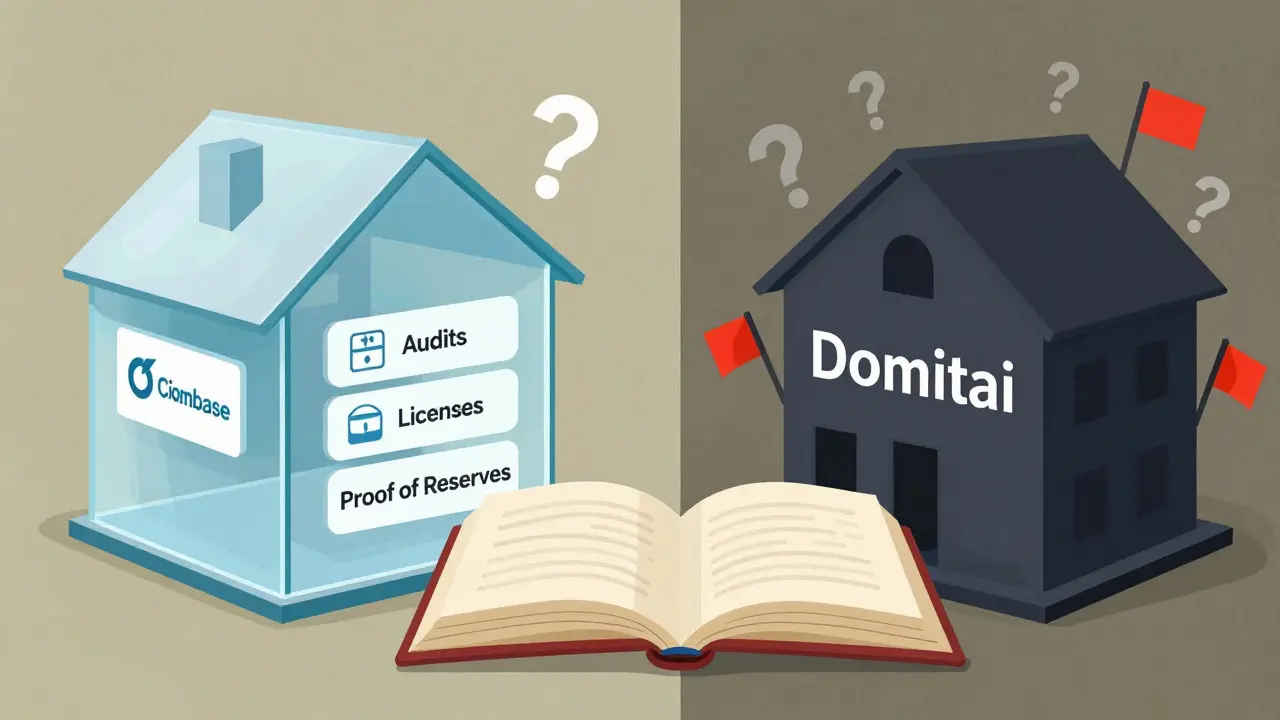
Domitai provides no such evidence. There are no SOC-2 compliance certificates, no penetration test reports from firms like CertiK or Hacken, and no details on insurance coverage. The phrase "multi-factor encryption" is technically nonsensical; encryption is an algorithm, while multi-factor authentication (MFA) is a login process. Mixing these terms suggests a lack of technical expertise or a deliberate attempt to confuse users.
| Feature | Established Exchanges (e.g., Coinbase) | Domitai |
|---|---|---|
| Cold Storage Percentage | Publicly disclosed (e.g., 98%) | Unspecified |
| Third-Party Audits | Regular reports from firms like Deloitte | None found |
| Proof of Reserves | Merkle Tree proofs available | None |
| Insurance Coverage | Fidelity bond or custodial insurance | Not mentioned |
| Technical Specifics | Multi-Sig, Hardware Security Modules (HSM) | Vague terms like "multi-factor encryption" |
Regulatory Status: The Missing License
Regulation is your safety net. If an exchange goes bankrupt or gets hacked, regulated entities are often required to compensate users or follow strict insolvency procedures. Major financial regulators include the U.S. Securities and Exchange Commission (SEC), the UK’s Financial Conduct Authority (FCA), and New Zealand’s Financial Markets Authority (FMA).
A quick check of these registries reveals no record for Domitai. Legitimate exchanges proudly display their license numbers. For instance, Binance.US operates under MSB (Money Services Business) registration with FinCEN. Without a license, there is no legal recourse if something goes wrong. Your funds could vanish overnight, and you would have nowhere to turn. This lack of regulatory footprint is a massive warning sign for any serious investor.
The Risk of Rug Pulls and Scams
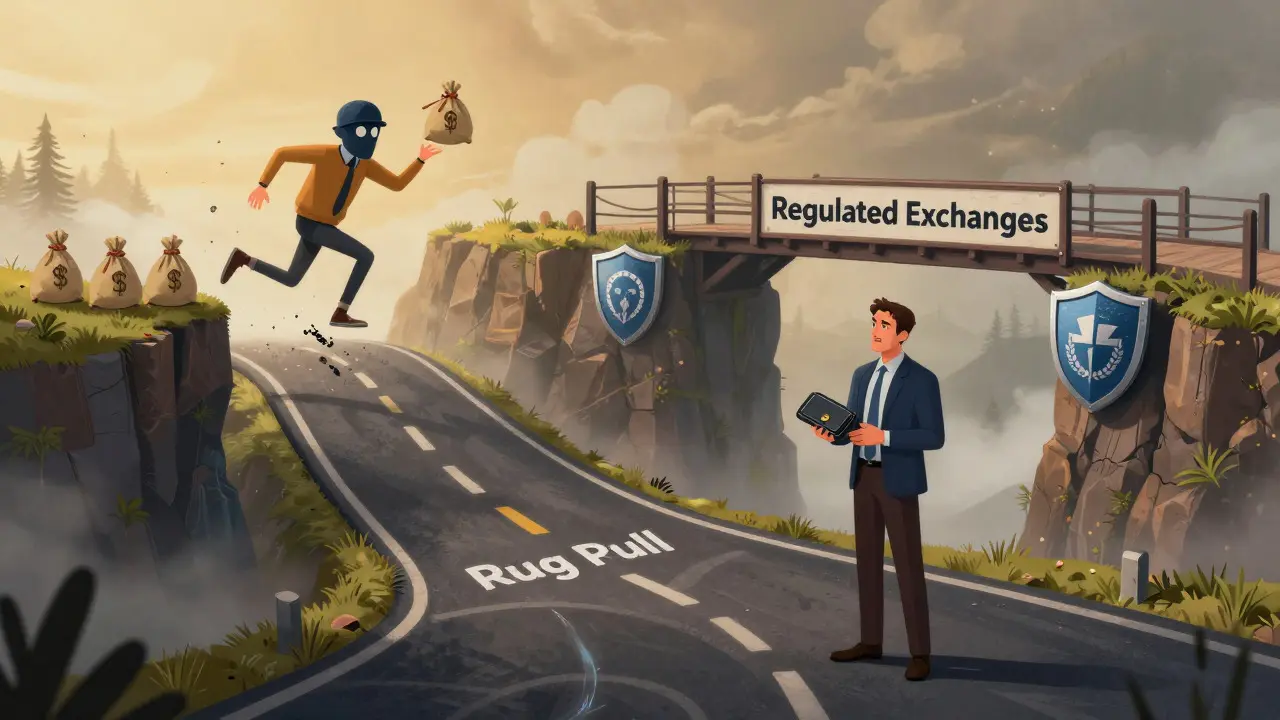
In the crypto space, a "rug pull" occurs when developers abandon a project and take investors' money with them. While usually associated with decentralized finance (DeFi) tokens, centralized exchanges can also operate as Ponzi schemes or exit scams. They attract deposits, promise high returns or low fees, and then disappear.
The characteristics of Domitai align closely with early-stage scam operations:
- Anonymity: No team, no office address, no contact person.
- Generic Content: Copy-pasted text across multiple domains, likely generated by AI or spun content farms.
- Future Dating: Some comparison sites reference future dates (2025/2026) in ways that suggest automated or placeholder content rather than real-time updates.
- No User Feedback: Zero reviews on Trustpilot, Reddit, or Twitter. Real exchanges, even small ones, have users complaining about fees or praising support. Silence means no one is using it.
Remember the case of FTX? It was once a giant. But before it fell, there were warnings about poor risk management and commingling of funds. Smaller, unregulated platforms pose an even higher risk because they have fewer checks and balances. If Domitai is not a scam yet, it lacks the infrastructure to survive a market crash or a cyberattack.
What Should You Do Instead?
If you are looking to trade cryptocurrencies, stick to platforms with a proven track record. Look for exchanges that offer:
- Verified Proof of Reserves: Regular cryptographic proof that they hold your assets.
- Clear Fee Structures: Transparent trading, deposit, and withdrawal fees.
- Customer Support: Responsive, human-led support channels.
- Regulatory Compliance: Licenses in major jurisdictions.
Exchanges like Kraken, Coinbase, and KuCoin meet these criteria. They may have higher fees than unknown platforms, but you are paying for security and peace of mind. In crypto, the cheapest option is rarely the best. The cost of losing your entire investment far outweighs saving a fraction of a percent on trading fees.
Final Verdict: Avoid Until Proven Otherwise
Based on the current evidence, Domitai fails to meet the basic standards of a legitimate cryptocurrency exchange. The lack of regulatory licensing, absence from major tracking platforms, vague security claims, and zero community presence create a profile of high risk. Whether it is a non-operational shell, a typo for another exchange, or a potential scam, the burden of proof lies with the platform-and currently, that proof is missing.
Do not deposit funds into Domitai. Keep your assets in self-custody wallets like Ledger or Trezor, or use well-established, regulated exchanges. Your capital deserves better than guesswork.
Is Domitai a legitimate crypto exchange?
Currently, there is no verifiable evidence that Domitai is a legitimate exchange. It lacks regulatory licenses, listings on major tracking sites like CoinGecko, and transparent security documentation. Most indicators suggest it is either non-operational or a high-risk platform.
Why is Domitai not listed on CoinMarketCap?
CoinMarketCap requires exchanges to meet strict criteria regarding trading volume, liquidity, and transparency. Domitai’s absence suggests it does not meet these standards, likely due to low or fake volume, lack of verified assets, or insufficient operational history.
What are the red flags of a crypto scam exchange?
Key red flags include anonymous teams, vague security claims without technical details, lack of regulatory licenses, no user reviews on independent platforms, and pressure to deposit quickly. Always verify proof of reserves and third-party audits.
How can I verify if a crypto exchange is safe?
Check for regulatory registrations in your country, look for third-party security audits (e.g., from CertiK or Hacken), verify proof of reserves, and read user experiences on trusted forums like Reddit. Established exchanges also have active social media communities and responsive customer support.
Is it safe to use new crypto exchanges?
New exchanges carry higher risks. If you must use one, start with very small amounts. Ensure they have clear ownership, published security measures, and some form of regulatory oversight. However, sticking to established platforms with years of operational history is generally safer for most investors.