
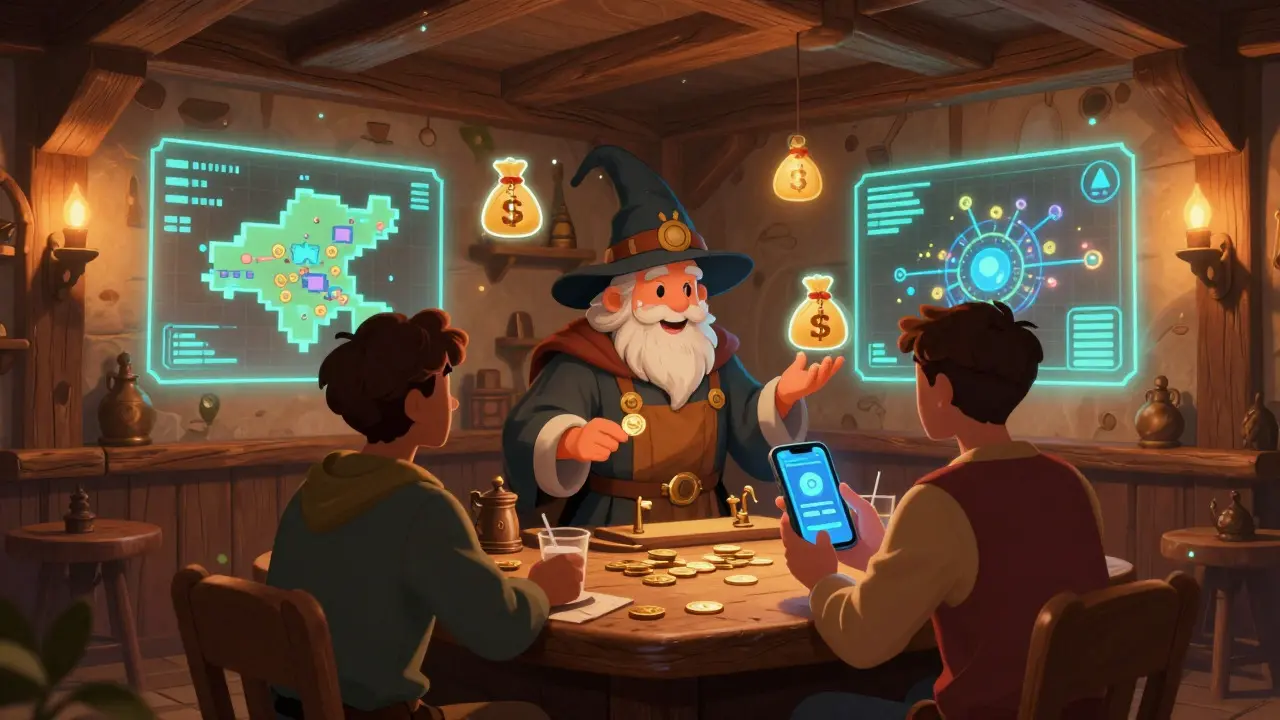
Imagine walking into a bank that looks like an 8-bit fantasy RPG. You don't just deposit money; you summon heroes, go on quests, and farm crops to earn interest. This is the reality of DeFi Kingdoms, a platform that blurs the line between a decentralized exchange (DEX) and a video game. If you are looking for a traditional trading interface with candlestick charts and limit orders, you might be confused. But if you want to understand how this hybrid model works, what risks it carries, and whether it can actually make you money in 2026, you are in the right place.
What Exactly Is DeFi Kingdoms?
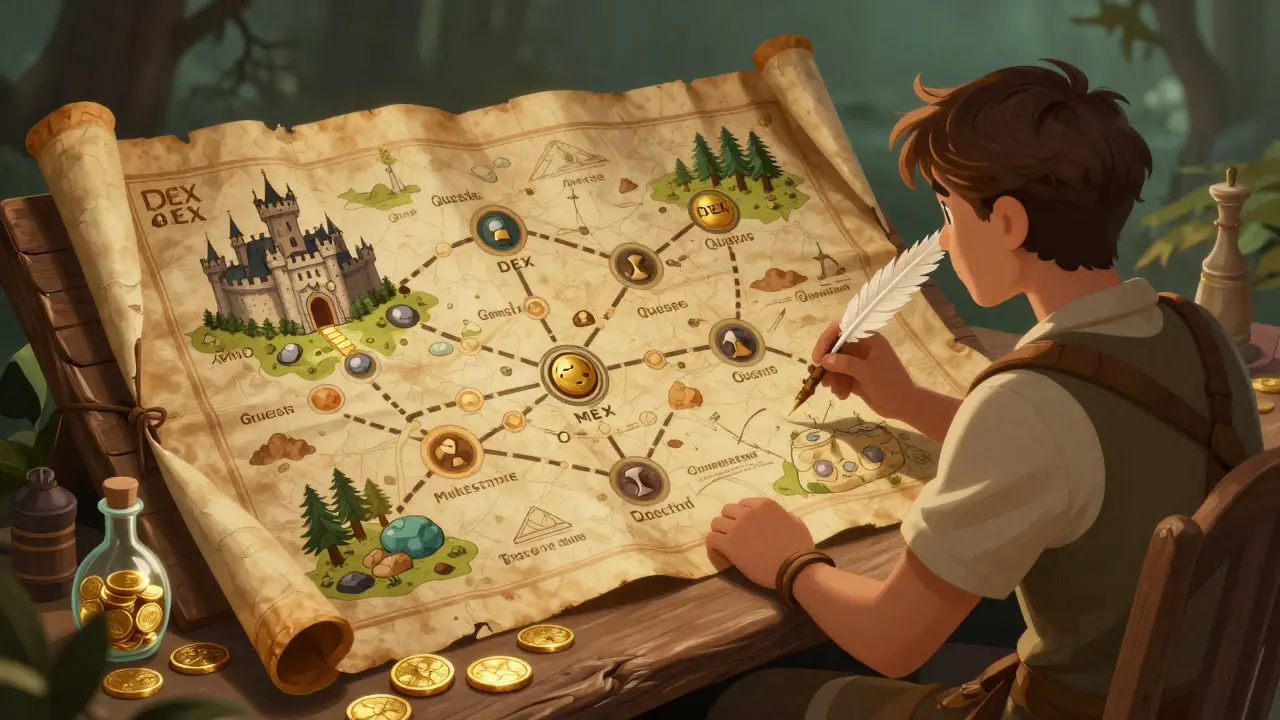
At its core, DeFi Kingdoms is not just a crypto exchange. It is a "GameFi" ecosystem built on top of decentralized finance protocols. Launched initially on the Harmony blockchain, it later expanded to its own Layer 1 network called the DFK Chain. The platform combines two distinct worlds: automated market makers (AMMs) where you swap tokens, and a pixel-art role-playing game where those tokens have utility.
The central currency here is the JEWEL token. Think of JEWEL as both your gold coins in the game and your governance stake in the exchange. When you trade on the DeFi Kingdoms DEX, you are interacting with liquidity pools powered by the Uniswap V2 protocol. However, instead of seeing a sterile dashboard, you see a medieval tavern interface. Your trades fund the economy that allows players to buy Hero NFTs, craft potions, and complete quests.
This dual nature creates a unique dynamic. Traditional exchanges like Binance or Coinbase exist solely to facilitate trade. DeFi Kingdoms exists to sustain an in-game economy while facilitating trade. This means the health of the exchange is directly tied to player engagement. If fewer people play the game, demand for JEWEL drops, which affects liquidity and trading fees.
How the Decentralized Exchange Works
If you decide to use DeFi Kingdoms primarily for swapping cryptocurrencies, here is what you need to know about the mechanics. The platform operates as an Automated Market Maker (AMM). There is no order book. Instead, traders swap against liquidity pools provided by other users.
- Liquidity Pools: Users deposit pairs of tokens (like JEWEL and ETH) into smart contracts. In return, they receive LP (Liquidity Provider) tokens representing their share of the pool.
- Trading Fees: Every time someone swaps tokens, a small fee is charged. This fee is distributed among liquidity providers. This is how passive income is generated.
- Impermanent Loss: Like all AMMs, providing liquidity carries the risk of impermanent loss. If the price of JEWEL diverges significantly from the paired asset, you may end up with less value than if you had just held the tokens in your wallet.
The user experience is streamlined but gamified. You connect a Web3 wallet-typically MetaMask configured for the DFK Chain or Harmony network-and initiate swaps. The interface is intuitive for beginners because it avoids complex trading jargon, but it lacks advanced features like limit orders, stop-losses, or deep charting tools found on professional DEXs like Uniswap or SushiSwap.
Yield Farming and High APRs: The Real Draw
Most users don't come to DeFi Kingdoms just to swap tokens. They come for the yields. The platform offers some of the highest Annual Percentage Rates (APRs) in the crypto space, particularly through its "Gardens" feature.
| Feature | Average APR | Risk Level | Primary Activity |
|---|---|---|---|
| Simple Staking | ~24.59% | Low-Medium | Holding JEWEL tokens |
| Gardens (Liquidity Farming) | Up to 250%+ | High | Providing liquidity + claiming rewards daily |
| Traditional Bank Savings | ~0.25% | Very Low | Cash deposits |
The "Gardens" are essentially high-yield farming pools. By providing liquidity and then staking your LP tokens in these gardens, you can earn massive returns. Historically, compounded daily, these rates have exceeded 1,100% annually. However, there is a catch. These high rates are often subsidized by inflationary emissions of new JEWEL tokens. If the price of JEWEL crashes, your nominal yield might look great, but your actual value in USD could drop significantly.
For example, if you earn 250% APR in JEWEL, but JEWEL loses 50% of its value against the dollar in the same period, your real return is much lower. This is a critical distinction that many new users miss. Always calculate returns in stablecoin terms, not just token quantity.
The Gaming Element: Heroes and Stats
You cannot fully review DeFi Kingdoms without addressing the game. The platform features Hero NFTs, each with unique stats that affect gameplay and earning potential. These aren't just decorative images; they are functional assets.
- Strength (STR): Affects physical damage in combat and mining efficiency for resources.
- Dexterity (DEX): Influences critical strike chances and success rates in fishing mini-games.
- Agility (AGI): Determines action timing in combat and evasion rates.
- Vitality (VIT): Impacts HP regeneration and recovery from debuffs.
- Intelligence (INT): Enhances magic abilities and mana points (MP).
These stats matter because certain quests require specific hero attributes to complete efficiently. Completing quests yields resources and tokens that can be sold on the marketplace or used to enhance other heroes. This creates a circular economy: players spend JEWEL to improve heroes, heroes generate more JEWEL through quests, and that JEWEL flows back into the DEX liquidity pools.
However, this adds complexity. To maximize earnings, you need to understand RPG mechanics alongside DeFi concepts. A trader who ignores the gaming aspect may miss out on significant revenue streams available to active players.
Risks and Considerations for 2026
Is DeFi Kingdoms safe? No crypto platform is 100% safe, but DeFi Kingdoms carries specific risks due to its hybrid model.
- Token Volatility: JEWEL is a speculative asset. Its price is driven by hype, player adoption, and broader crypto market trends. Price predictions vary wildly, with models suggesting ranges from $0.03 to $0.05 in recent years. Always expect high volatility.
- Smart Contract Risk: While audits are conducted, bugs can exist. A vulnerability in the DEX or garden contracts could lead to fund loss. Diversify your exposure.
- Economic Sustainability: High APRs are unsustainable long-term unless backed by real revenue. As the GameFi sector matures, platforms must transition from inflationary rewards to sustainable economic models. Watch for changes in emission rates.
- Regulatory Uncertainty: As governments clarify rules for NFTs and DeFi, platforms like DeFi Kingdoms may face compliance challenges. Keep an eye on regulatory news affecting Layer 1 chains and gaming tokens.
Additionally, the learning curve is steep. You need to manage multiple wallets, bridge assets between chains (Harmony, Ethereum, DFK Chain), and understand gas fees. For a beginner, this can be overwhelming compared to a centralized exchange.
Who Should Use DeFi Kingdoms?
DeFi Kingdoms is not for everyone. Here is a quick breakdown of who benefits most:
- Play-to-Earn Enthusiasts: If you enjoy gaming and want to monetize your time, this platform offers a structured way to do so.
- DeFi Degens: Experienced yield farmers who understand impermanent loss and can actively manage positions will find attractive opportunities.
- NFT Collectors: Those interested in utility-driven NFTs rather than pure art pieces may appreciate the Hero system.
Conversely, if you are a day trader looking for deep liquidity, low slippage, and advanced charting tools, stick to established DEXs like Uniswap or centralized exchanges like Binance. DeFi Kingdoms is too niche and volatile for pure trading purposes.
Getting Started: A Practical Guide
If you are ready to try DeFi Kingdoms, follow these steps to set up correctly:
- Set Up a Wallet: Install MetaMask. Configure it to support the Harmony network and the DFK Chain. You will need native tokens (ONE for Harmony, DFK for DFK Chain) to pay for gas fees.
- Acquire Tokens: Buy JEWEL and ONE on major exchanges like Binance or KuCoin. Withdraw them to your MetaMask wallet.
- Connect to the Platform: Visit the official DeFi Kingdoms website. Connect your wallet. Double-check the URL to avoid phishing sites.
- Start Small: Begin with a small amount of capital. Try swapping tokens or providing liquidity to a single pool. Understand the interface before committing significant funds.
- Explore the Game: Mint a starter Hero if interested. Complete basic quests to understand how resources flow into the economy.
Remember, never invest more than you can afford to lose. The intersection of gaming and finance is exciting, but it is also unpredictable.
Is DeFi Kingdoms a legitimate crypto exchange?
Yes, DeFi Kingdoms includes a fully functional decentralized exchange (DEX) based on the Uniswap V2 protocol. However, it is primarily known as a GameFi platform. The exchange serves the internal economy of the game, meaning liquidity and trading volume are tied to player activity rather than institutional trading.
What is the JEWEL token used for?
JEWEL is the native utility and governance token of DeFi Kingdoms. It is used for trading on the DEX, staking to earn yield, purchasing Hero NFTs, crafting items in the game, and voting on platform upgrades. Its value is driven by both speculative trading and in-game demand.
Can I make money without playing the game?
Yes, you can provide liquidity to the DEX pools and stake LP tokens in the Gardens to earn yield. However, you will still be exposed to the volatility of the JEWEL token and the risk of impermanent loss. Playing the game can help offset costs by generating additional resources, but it is not strictly required for basic DeFi participation.
What are the biggest risks of using DeFi Kingdoms?
The main risks include high token volatility, smart contract vulnerabilities, and the sustainability of high APRs. Since yields are often paid in newly minted JEWEL tokens, inflation can dilute value. Additionally, the platform's success depends on continued player engagement, making it vulnerable to shifts in the GameFi trend.
Do I need a lot of money to start?
No, you can start with a small amount. However, you will need enough capital to cover gas fees on the Harmony or DFK networks and to provide meaningful liquidity if you want to earn substantial fees. Starting small allows you to learn the interface and mechanics without significant financial risk.