
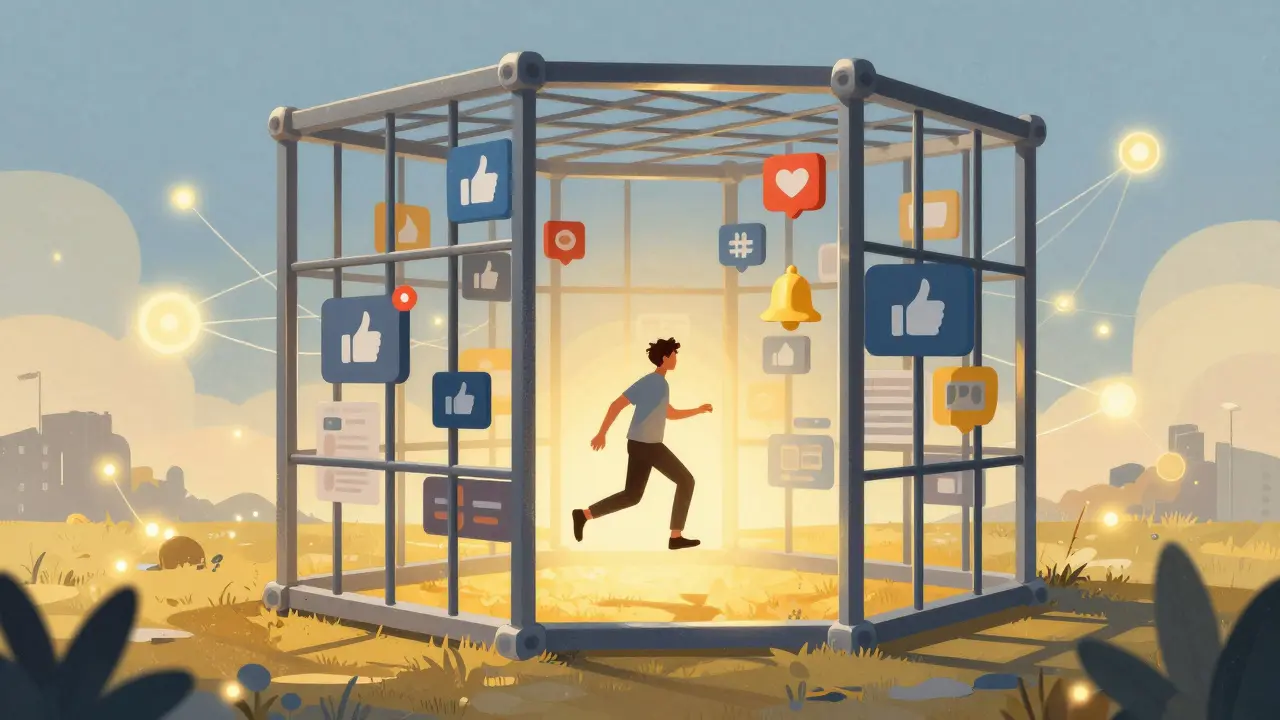
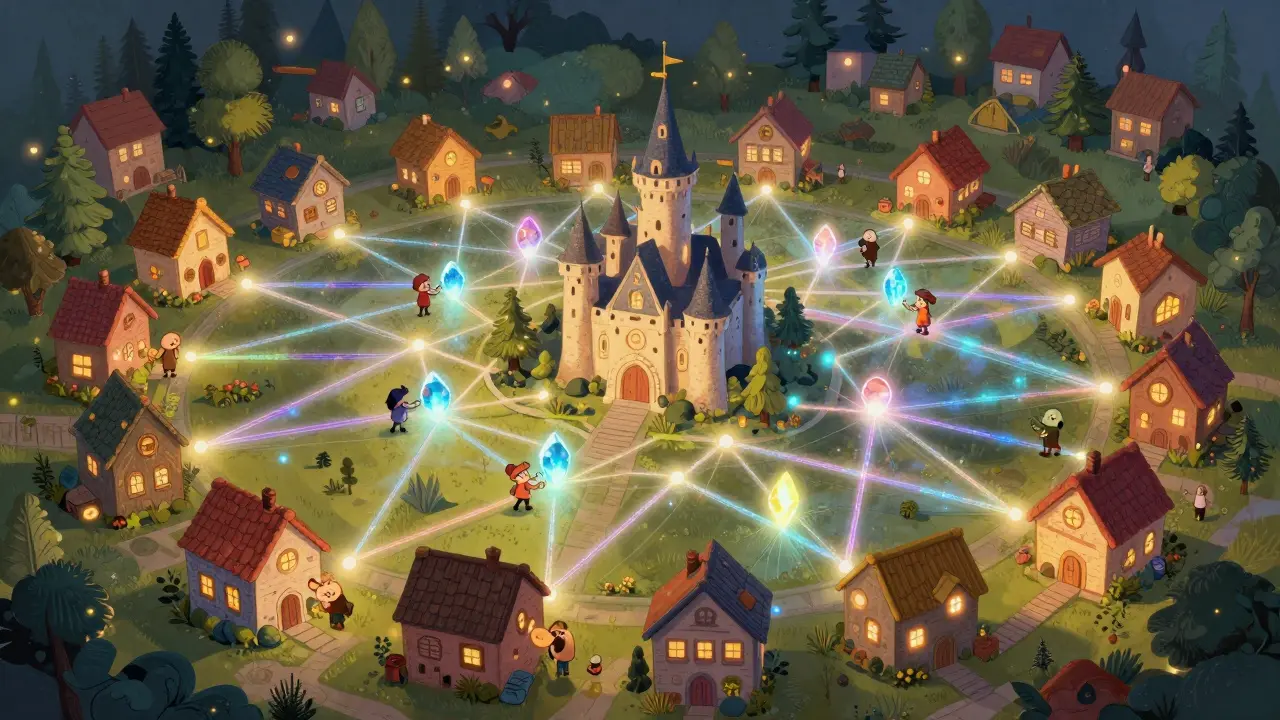
Ever feel like you're just a product for big tech companies? Most of us spend hours scrolling through feeds, but the platforms we use effectively own our digital identities. They decide who sees our posts, what we can say, and they make billions by selling our data to the highest bidder. This is where decentralized social networks is a new breed of social media that uses blockchain technology to give control back to the users, removing the central corporate middleman. Instead of one company owning the servers and the data, these networks distribute power across thousands of independent nodes.
The Big Shift: From Corporate Control to User Sovereignty
For years, we've accepted a trade-off: free services in exchange for our privacy. In 2022 alone, centralized platforms raked in about $171 billion in ad revenue by monetizing our habits. Decentralized networks flip this script. The core idea here is user sovereignty. This means you actually own your profile, your followers, and your content. If you don't like the rules of one app, you can literally take your entire social graph and move it to another app on the same protocol.
This movement isn't just a trend; it's a response to years of censorship and data breaches. While a traditional platform can delete your account in a heartbeat, a blockchain-based system makes that nearly impossible. However, it's not all sunshine and rainbows. Because there's no "boss," moderating harmful content becomes a massive challenge. Some unmoderated instances in the fediverse have seen a 37% increase in extremist content, proving that total freedom comes with a heavy price in terms of safety.
How the Tech Actually Works Under the Hood
To understand these platforms, you have to look at the infrastructure. Most use Blockchain is a distributed ledger technology that records transactions across multiple computers, ensuring that once data is written, it cannot be changed without network consensus. This immutability is what gives you "proof of ownership." When you post a photo on a blockchain-native network, it's not stored in a private corporate database; it's anchored to the chain.
But not all decentralized networks are the same. Some, like Mastodon is a decentralized microblogging platform that uses the ActivityPub protocol to allow different servers to communicate with each other. It's part of what we call the "Fediverse," a collection of independent servers that talk to each other. Other platforms are more "crypto-native." For example, Lens Protocol is a composable and decentralized social graph built on the Polygon blockchain. Unlike Mastodon, Lens requires a crypto wallet to even get started.
| Feature | Fediverse (e.g., Mastodon) | Blockchain-Native (e.g., Lens) | Centralized (e.g., X/Facebook) |
|---|---|---|---|
| Data Ownership | High (Server-based) | Absolute (On-chain) | None (Company-owned) |
| Entry Barrier | Low (Email/Password) | Medium (Wallet/Gas) | Very Low |
| Censorship Resistance | High | Extreme | Low |
| Monetization | Donations/Community | Token Economies/NFTs | Ad-driven |
The Reality Check: Performance and Adoption
Let's be real: using these platforms can be a bit clunky. If you're used to the lightning-fast speed of a centralized app, blockchain can feel slow. While X (formerly Twitter) can handle thousands of transactions per second, the Ethereum mainnet is notoriously sluggish. To fix this, many networks move to Polygon is a Layer 2 scaling solution for Ethereum that allows for much faster transactions and significantly lower fees. With Layer 2 solutions, we're seeing speeds hit 7,000+ transactions per second, which actually makes a social network viable for the masses.
Then there's the "chicken-and-egg" problem. You won't join a new social network if your friends aren't there, but your friends won't join until you do. This is why adoption is still low. While the big players have billions of users, the entire fediverse ecosystem only has a few million active users. Many early adopters actually quit within six months because the communities felt too fragmented. It's a tough climb to reach the critical mass needed to compete with the giants.
Making Money: The New Creator Economy
One of the most exciting parts of this shift is how creators get paid. On Instagram or YouTube, the platform takes a massive cut and controls the algorithm. In a decentralized world, we use token economies. Creators can mint their content as NFTs or earn cryptocurrency directly from their followers for engagement. For some, it's a goldmine. High-tier creators on Lens Protocol have reported earning between $500 and $2,000 monthly through revenue-sharing models.
However, don't expect to get rich overnight. A study showed that 61% of creators on these platforms earn less than $5 a month. It's a winner-take-most system, just like the old world, but with one key difference: the creator owns the asset. If a new app launches that offers a better way to monetize, the creator can move their audience instantly without starting from zero. This is a huge win for anyone who has ever had their reach killed by a sudden algorithm change.

Getting Started: Your First Steps Into the Decentralized Web
If you're ready to jump in, be prepared for a learning curve. It takes way longer to set up a decentralized account than a standard one-about 8 to 12 hours of tinkering compared to 5 minutes on Facebook. Here is the basic path for blockchain-native apps:
- Set up a Wallet: You'll need a MetaMask is a software cryptocurrency wallet used to interact with the Ethereum blockchain and other EVM-compatible networks. This is your digital ID and your vault.
- Fund Your Wallet: You can't do anything for free. You'll need a small amount of crypto (usually $10-$50) to pay for "gas fees," which are the costs of processing transactions on the network.
- Connect to a Protocol: Link your wallet to a platform like Lens or Farcaster.
- Manage Your Keys: This is the most important part. If you lose your private keys, you lose your account. There is no "Forgot Password" button in a decentralized world.
Expect a few hiccups. About 12-15% of interactions on these platforms result in transaction failures, especially during high network congestion. When that happens, your best bet is to check community forums like Ethereum Stack Exchange, where most technical bugs get solved within a couple of days.
The Road Ahead: 2026 and Beyond
We are currently in what analysts call the "slope of enlightenment." The hype has died down, and the actual building has begun. The W3C is already working on standardizing how these different networks talk to each other, and tech giants like Google and Microsoft are surprisingly involved in these conversations. The goal is a truly interoperable web where your identity isn't tied to a company, but to you.
The biggest hurdle left isn't actually the tech-it's the law. The EU's Digital Services Act requires platforms to have a way to moderate content, but how do you mandate moderation on a network that has no central owner? This legal gray area is the main reason only 3% of Fortune 500 companies have a presence on these networks. They can't risk the regulatory headache. But as we move toward 2028, if we can solve the scalability and legal puzzles, the era of corporate social media might finally start to fade.
Do I need to be a crypto expert to use decentralized social media?
Not necessarily, but it depends on the platform. If you use "Fediverse" apps like Mastodon, you can sign up just like any other website. However, for blockchain-native apps like Lens, you will need a basic understanding of cryptocurrency wallets and gas fees. It usually takes a few hours of learning to get comfortable with the process.
Is my data really safer on a blockchain?
In terms of ownership and censorship, yes. No single company can delete your account or sell your data without your permission. However, keep in mind that blockchain is a public ledger. Depending on the platform, some of your interaction data might be publicly visible to anyone who knows how to read the chain, which is a different kind of privacy challenge.
How do I make money on these platforms?
Monetization typically happens through token economies. You can earn platform-specific tokens for creating high-quality content, sell your posts as NFTs, or set up subscription models where followers pay you directly in crypto. Unlike YouTube, there is no corporate middleman taking a 30-50% cut.
Why is it so slow compared to Facebook or X?
Centralized apps use one giant database that's incredibly fast. Decentralized apps require a network of nodes to agree on a transaction (consensus), which takes time. This is being fixed by "Layer 2" solutions like Polygon, which process transactions off the main chain to speed things up and lower costs.
What happens if I lose my wallet password?
In a fully decentralized system, you are your own bank and your own admin. If you lose your private keys or recovery phrase, you lose access to your account forever. There is no one to email for a password reset, which is why keeping your seed phrase secure is the most critical part of using these networks.