

Decentralized Autonomous Organizations (DAOs) promised a new era of trustless, community-driven finance. Instead, they have become the biggest targets for sophisticated hackers in the crypto world. Since 2022, attackers have stolen hundreds of millions of dollars not by breaking complex cryptography, but by exploiting the very democratic processes that define DAOs. If you are building, investing in, or voting within a DAO, understanding these vulnerabilities is no longer optional-it is survival.
The core problem isn't just code bugs; it's governance design. Attackers use flash loans to buy temporary voting power, bribe voters, and manipulate proposals faster than communities can react. This guide breaks down how these hacks work, why standard security measures fail, and what concrete steps you can take to secure your protocol against the evolving threat landscape of 2026.
Key Takeaways
- Governance is the weak link: Most major DAO hacks exploit voting mechanisms rather than smart contract code.
- Flash loans enable instant attacks: Attackers can borrow millions, vote maliciously, and repay loans in a single transaction block.
- Adopt DAOIP-8 standards: Implementing minimum viable security controls significantly reduces the risk of successful exploitation.
- Community vigilance matters: Technical fixes alone aren't enough; active monitoring and clear emergency plans are essential.
How DAO Hacks Actually Work
To protect a DAO, you first need to understand how it gets broken. Unlike traditional companies where an insider might steal funds, DAO attacks are often public, transparent, and executed through legitimate-looking transactions. The three most common attack vectors are flash loan exploitation, off-chain voting manipulation, and token-based coercion.
Flash Loan Exploitation is a technique where attackers borrow massive amounts of capital without collateral, execute a series of transactions, and repay the loan all within a single blockchain block. This was the method used in the devastating Beanstalk hack in April 2022. The attacker borrowed enough tokens to gain 79% of the voting power in Beanstalk’s governance system. With this majority, they proposed and passed a malicious change that drained $181 million from the protocol. Because everything happened in one transaction, there was zero time for the community to intervene.
Off-Chain Voting Manipulation occurs when attackers monitor pending proposals before they are publicly revealed, allowing them to front-run decisions by acquiring tokens or positioning votes to influence outcomes. In many DAOs, proposals are discussed on forums like Discourse or Snapshot before being submitted on-chain. Hackers watch these discussions, identify profitable opportunities, and then rush to acquire voting power or sway opinions to ensure their preferred outcome passes. This undermines the democratic process by rewarding those who act on privileged information.
Token-Based Coercion involves using large token holdings or external pressure to force other voters to support specific proposals. This can look like direct bribery, paid influencer campaigns, or even threats. If a few "whales" hold a disproportionate amount of voting power, they can effectively dictate the DAO’s direction, rendering the rest of the community irrelevant. This centralization of power contradicts the decentralized ethos and creates a single point of failure.
The Cost of Weak Governance
The financial impact of these vulnerabilities is staggering. Combined losses from major incidents involving Cream Finance, Tornado Cash, Build Finance, and Beanstalk exceed $300 million. These aren't small-scale experiments; they are established protocols with significant Total Value Locked (TVL). The money lost doesn't just disappear-it erodes trust in the entire DeFi ecosystem.
Consider the Beanstalk case again. The attacker kept $76 million after repaying the flash loan. For the users who lost their deposits, this wasn't just a number; it was real value wiped out by a flaw in governance logic. More importantly, it highlighted a systemic issue: most DAOs were designed for idealistic scenarios where everyone acts in good faith. They weren't built for adversarial environments where rational actors will exploit any loophole for profit.
| Protocol | Attack Vector | Losses | Key Vulnerability |
|---|---|---|---|
| Beanstalk | Flash Loan + Governance | $181M | No timelock on critical changes |
| Cream Finance | Governance Proposal | $135M | Compromised admin keys |
| Build Finance | Flash Loan | $14M | Weak oracle price feeds |

Building a Defense: The DAOIP-8 Framework
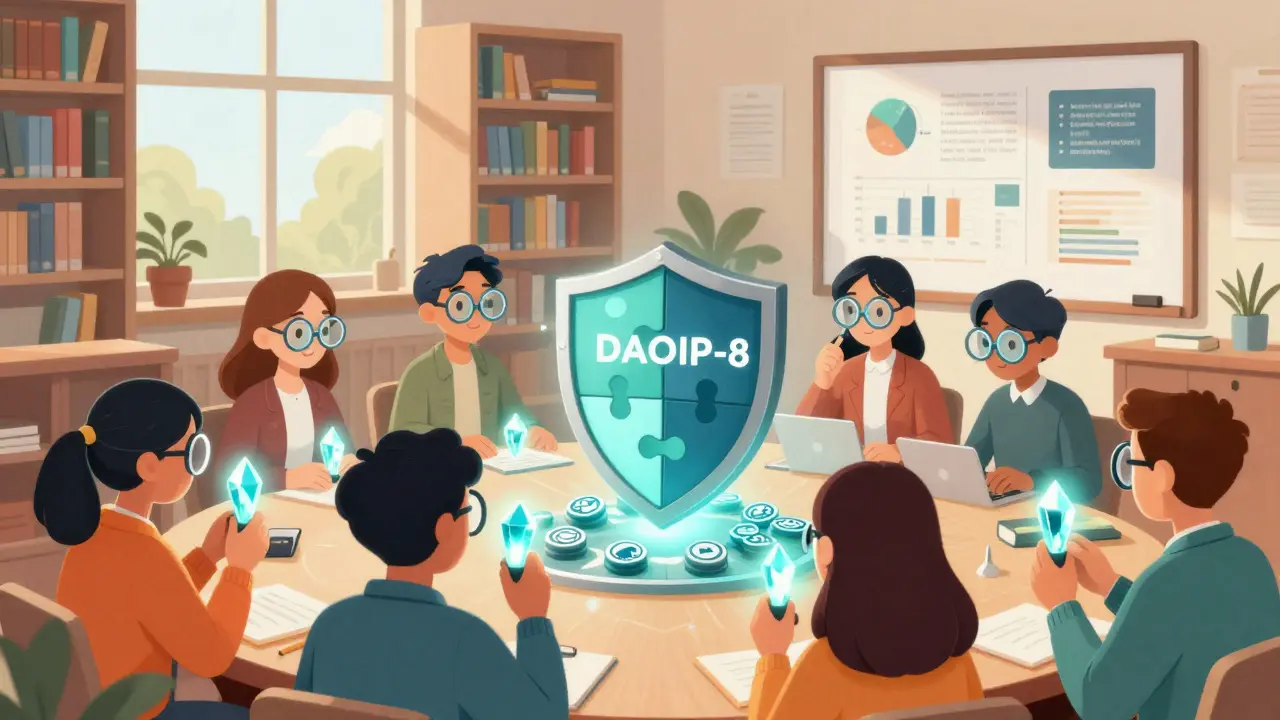
In response to these failures, organizations like DAOstar developed DAOIP-8, which is a comprehensive set of security recommendations establishing minimum viable security controls specifically designed for DAO environments. This framework distinguishes Web3-specific concerns from traditional Web2 security practices, offering a blueprint for resilience.
One of the most critical mandates in DAOIP-8 is the requirement for self-defense and emergency management plans. Every DAO should have incident response playbooks ready before an attack happens. This includes defining roles for crisis management, setting up communication channels for rapid alerts, and outlining steps to freeze assets or pause governance if necessary. Reducing the Mean Time to Respond (MTTR) is crucial because every second counts during an active exploit.
Another key recommendation is implementing timelocks before executing protocol upgrades or moving assets. A timelock introduces a delay between when a proposal is approved and when it takes effect. This gives the community time to review the changes, spot potential issues, and organize a counter-proposal if needed. While it slows down decision-making, it prevents the "one-transaction wonder" attacks seen in Beanstalk.
DAOIP-8 also emphasizes vendor management policies. Many DAOs rely on third-party services for infrastructure, audits, or development. These vendors must meet strict security posture expectations, including multi-factor authentication (MFA), regular permission audits, and secure identity management. A breach in a vendor’s system can easily cascade into a compromise of the DAO itself.
Advanced Security Measures for 2026
As attackers evolve, so must defenses. Beyond basic timelocks and audits, leading DAOs are adopting more sophisticated technical solutions. Here are some advanced strategies to consider:
- Quorum Thresholds: Define minimum participation levels for core governance changes. This ensures that decisions reflect a broad consensus rather than a coordinated minority.
- Proposal Simulation: Before execution, simulate proposals in a test environment to check for unintended consequences or malicious code.
- Automated Checks: Use bots and scripts to automatically scan proposals for common attack patterns, such as unusual token transfers or privilege escalations.
- Zero-Knowledge Proofs (ZKPs): Implement cryptographic techniques to ensure vote privacy and resistance to coercion. ZKPs allow voters to prove they voted without revealing how, making it harder for attackers to verify compliance with bribes.
- Decentralized Identity: Integrate tools like Proof of Humanity or Soulbound Tokens to prevent Sybil attacks, where one person creates multiple fake identities to inflate their voting power.
Lido DAO offers a good example of robust governance. They use a three-step process: discussion, off-chain voting, and on-chain voting. This socializes all changes publicly before implementation, allowing broader community identification of potential issues. However, even Lido acknowledges that no system is perfect. Well-funded attackers can still acquire significant token positions or exploit technical vulnerabilities in smart contracts.
Community Vigilance and Education
Technology alone won’t save your DAO. The human element remains critical. Active, engaged communities are the best defense against suspicious activity. Encourage members to monitor voting patterns, question unusual proposals, and report anomalies immediately.
Educate your community about the risks. Many participants join DAOs without understanding how governance works or how vulnerable it can be. Provide clear guides on how to identify phishing attempts, recognize coercive tactics, and participate safely. When everyone is informed, the collective intelligence of the group becomes a powerful deterrent.
Furthermore, foster a culture of transparency. Regularly publish security audits, post-mortems of near-misses, and updates on defensive measures. This builds trust and shows that security is a priority, not an afterthought.
Frequently Asked Questions
What is the biggest risk to DAOs today?
The biggest risk is governance manipulation, particularly through flash loans. Attackers can temporarily acquire majority voting power to pass malicious proposals, draining funds before the community can react. This exploits the speed of blockchain transactions against the slower pace of human deliberation.
How do flash loan attacks work in DAOs?
A flash loan allows an attacker to borrow a large sum of tokens without collateral, provided they repay it within the same transaction block. In a DAO context, the attacker uses these borrowed tokens to gain voting power, proposes a malicious change (like transferring treasury funds), executes the transfer, and repays the loan-all in seconds.
What is DAOIP-8 and why should I care?
DAOIP-8 is a security framework developed by DAOstar that sets minimum viable security controls for DAOs. It provides actionable recommendations for governance, access control, and incident response. Adopting it helps standardize security practices and reduces the likelihood of catastrophic failures.
Can timelocks prevent all DAO hacks?
No, timelocks cannot prevent all hacks, but they significantly reduce the risk of fast-execution attacks. By introducing a delay between proposal approval and execution, timelocks give the community time to review changes and organize a response. However, they don't protect against long-term coercion or sophisticated social engineering.
How can I protect my DAO from voter coercion?
Implementing zero-knowledge proofs (ZKPs) for voting can help. ZKPs allow voters to cast ballots privately, making it impossible for attackers to verify if a voter complied with a bribe. Additionally, using decentralized identity solutions can prevent Sybil attacks, ensuring each vote represents a unique individual.
What role does the community play in DAO security?
The community is the last line of defense. An active, educated community can spot suspicious proposals, monitor voting patterns, and respond quickly to threats. Regular education and transparent communication are essential to maintaining this vigilance.