
Crypto Remittance Savings Calculator
Send money to Colombia? Compare costs between traditional remittance services (8-10% fees) and crypto (under 1% fees). Remember: Crypto transfers require careful security practices and tax reporting.
Colombia doesn’t ban cryptocurrency. But it also doesn’t protect you if something goes wrong. That’s the reality for over 1.2 million Colombian crypto users in 2025. You can buy Bitcoin on Binance, send Ethereum via Nequi, or trade stablecoins to dodge inflation - but if a local exchange vanishes with your money, there’s no government agency to call. No law says they did anything illegal. No regulator will step in. And no court will force them to pay you back.
Colombia Doesn’t Recognize Crypto as Money
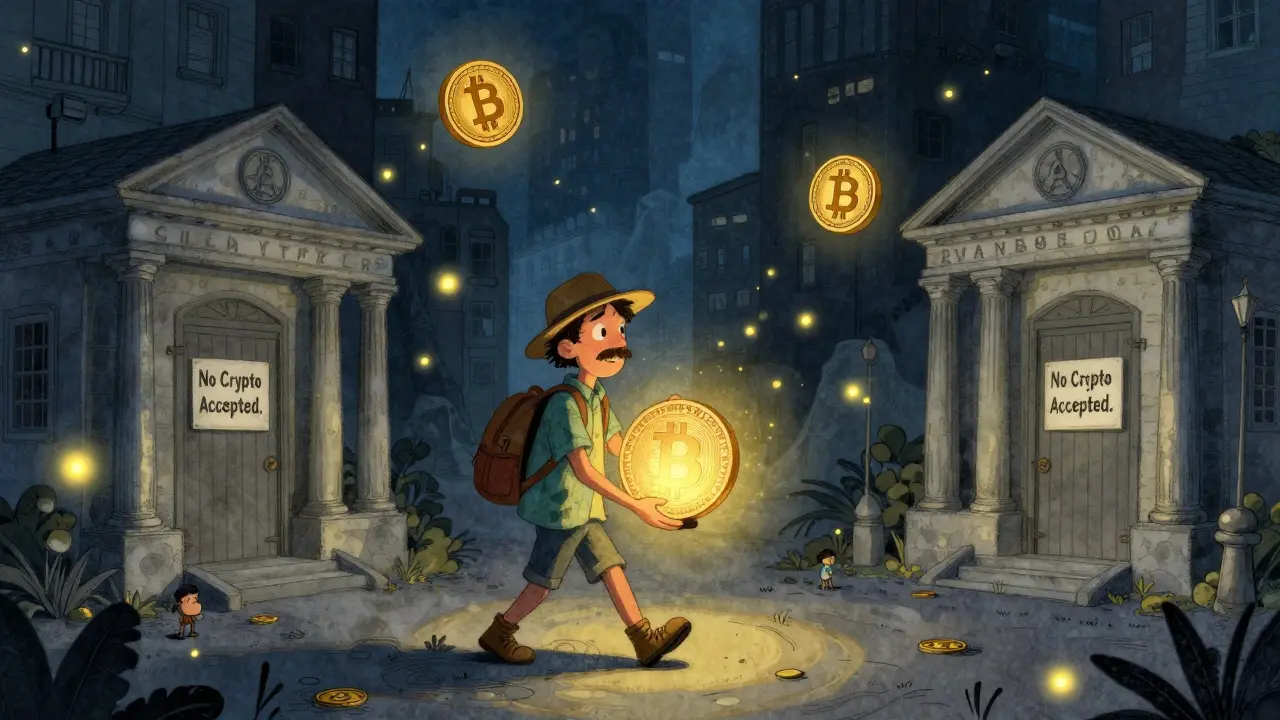
The Central Bank of Colombia has been clear since 2018: cryptocurrency is not legal tender. That means no business, no bank, and no government office is required to accept Bitcoin, Ethereum, or any other digital asset as payment. You can’t use it to pay your rent, your electricity bill, or your taxes. If you try, the recipient can legally say no - and they won’t be breaking any rules.
That doesn’t mean crypto is illegal. It’s treated as digital property - like owning a rare collectible or a piece of art. You can buy it, sell it, trade it, or gift it. But it’s not money under Colombian law. The Central Bank calls it a “digital unit capable of being used as a means of payment,” but adds that it “does not constitute a foreign currency.” This distinction matters. Foreign currencies like the US dollar have rules, exchange controls, and reporting requirements. Crypto has none.
No Regulator, No Rules
There is no specific law governing cryptocurrency in Colombia. No ministry oversees it. No agency licenses exchanges. The Financial Superintendency of Colombia (SFC), which watches banks and investment firms, says crypto assets “do not constitute a security” and “cannot be managed by supervised entities.” That means banks can’t offer crypto trading, savings accounts in Bitcoin, or investment funds tied to digital assets. If a Colombian bank offers you a crypto product, it’s breaking the rules - not because crypto is illegal, but because they’re not allowed to touch it.
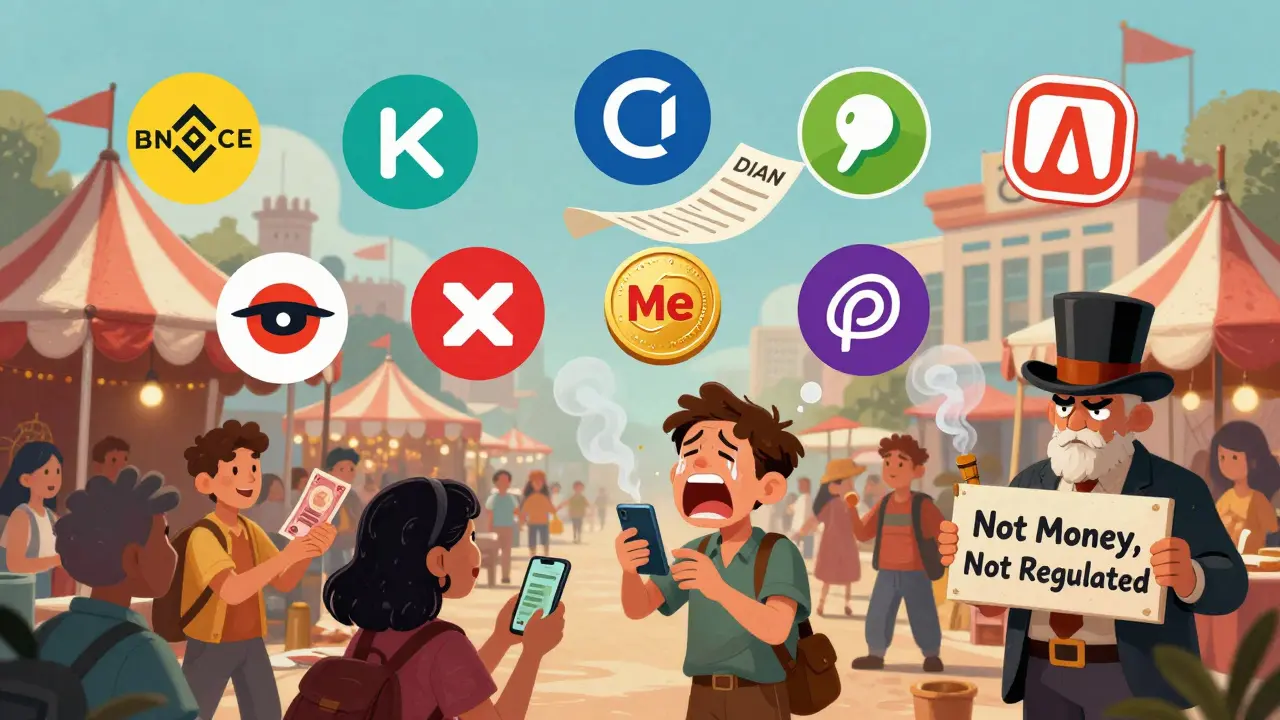
This regulatory vacuum has created a wild west. Nine major exchanges operate in Colombia - Binance, Kraken, LocalBitcoins, Paxful, Bitso, CryptoMarket, SurBTC, Volabit, and Lobstr. Binance alone handles 68% of all trading volume, according to Kaiko Research. These platforms aren’t licensed by Colombia. They’re foreign companies offering services to Colombian users. They follow their own internal rules, not Colombian law.
The Me Coin Disaster: Why This Matters
In August 2018, a Colombian crypto startup called Me Coin promised investors 50% monthly returns. Thousands of people handed over their savings - some invested their life’s work. The founders disappeared with $60 million. The police couldn’t arrest them. The courts couldn’t force them to return the money. Why? Because there was no law against it. Me Coin wasn’t a bank. It wasn’t a securities firm. It wasn’t even registered as a company. It was just a website with a promise. And in Colombia’s legal gray zone, that was enough.
That case still haunts the market. Trustpilot reviews from Colombian users regularly mention “no recourse” and “no protection.” One user lost 2.5 BTC ($140,000 in 2025 value) after a LocalBitcoins seller vanished after receiving a bank transfer. Another lost $8,000 in a fake staking platform. No one was prosecuted. No one was held accountable. And nothing changed.
Who’s Using Crypto in Colombia - and Why
Despite the risks, adoption keeps growing. Over 2.3% of Colombia’s adult population now uses crypto. The average user is male, 25-34 years old, and has a university degree. Why? Two main reasons: remittances and inflation.
Colombians send $1.2 billion home to family members abroad every year. Traditional wire services like Western Union charge 8-10% in fees. With crypto, you can send USDT from Bogotá to Medellín, then have your cousin cash it out in pesos via a local OTC trader - for under 1%. That’s why 63% of crypto use in Colombia is for remittances, according to Chainalysis.
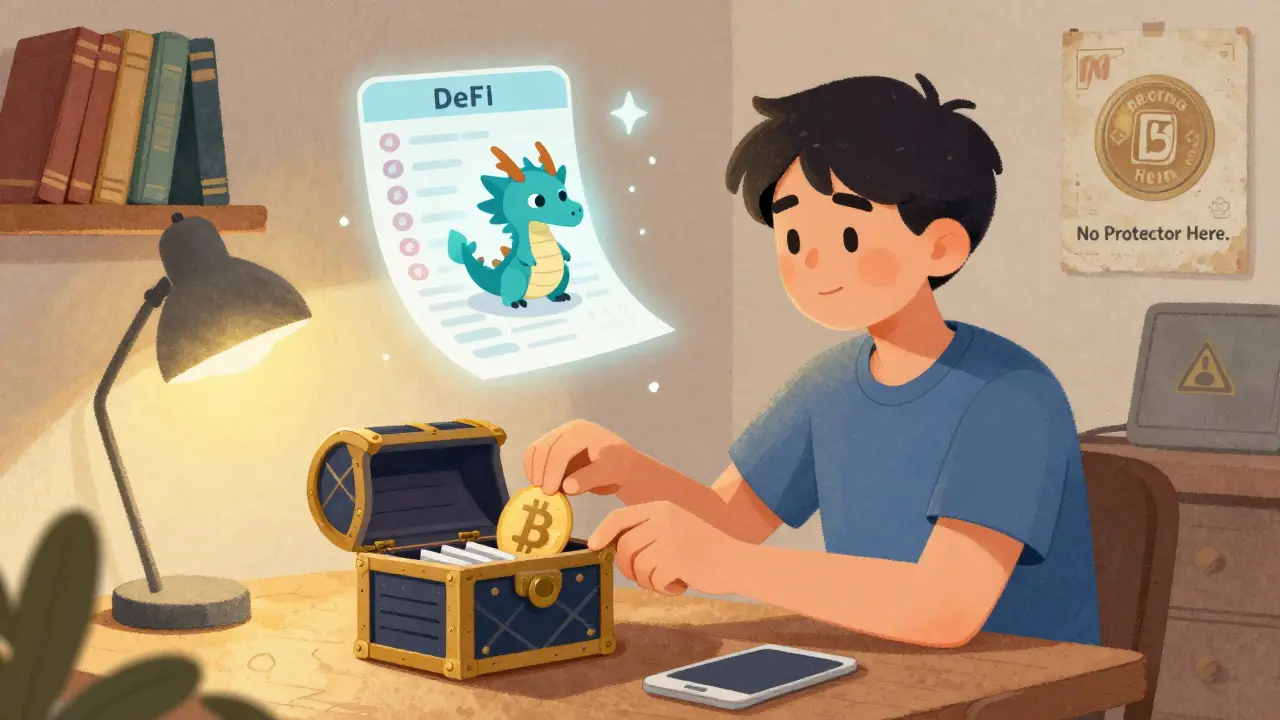
Then there’s inflation. Colombia’s peso lost 15% of its value in 2024. Many people see crypto - especially stablecoins like USDT - as a safer place to hold savings than a bank account. You can’t earn interest in COP, but you can earn yield on USDT through DeFi protocols. It’s not perfect. But it’s better than watching your money shrink.
Taxes: The Unspoken Rule
The tax authority, DIAN, hasn’t issued official guidelines for crypto. But they’re watching. In 2024, they estimated $120 million in unreported crypto gains. That’s not a typo. That’s the estimated amount of profit Colombians made from trading crypto and didn’t declare.
Here’s what you need to know: if you sell Bitcoin for a profit, you owe income tax. The rate ranges from 10% to 39%, depending on your total income. If you trade one crypto for another - say, ETH for SOL - that’s also a taxable event. The tax authority treats every trade like a sale. You must track every purchase price, every sale, every fee. No one is auditing you right now. But if you get audited, and you can’t prove your numbers, you could owe back taxes, penalties, and interest.
Most users don’t track this. They assume “if it’s not regulated, it’s not taxed.” That’s dangerous. The DIAN has access to bank records. If you deposit $50,000 from a crypto exchange into your Bancolombia account, they’ll notice. And they’ll ask questions.
How to Use Crypto Safely in Colombia
Here’s what works for real users in 2025:
- Use global exchanges - Binance, Kraken, Bybit. They have better security, customer support, and liquidity than local-only platforms.
- Only use local payment methods - Nequi, Daviplata, Bancolombia. These are fast, reliable, and widely accepted. Avoid P2P sellers with no history.
- Store your crypto in your own wallet - Not on an exchange. Use a hardware wallet like Ledger or Trezor. If the exchange gets hacked or shuts down, your coins are safe.
- Track every transaction - Use a tool like Koinly or CoinTracker. Export your trade history. Save your receipts. You’ll thank yourself when tax season comes.
- Never invest more than you can afford to lose - The market is volatile. The legal system won’t protect you. Assume any platform you use could vanish tomorrow.
What’s Next? Regulation Is Coming - Maybe
Colombia’s lawmakers know the system can’t last. Congressional Bill 325, introduced in 2024, proposes creating a licensing system for crypto exchanges, requiring AML/KYC checks, and defining digital assets under civil law. But the bill is stuck. Fintech groups argue regulation will kill innovation. Crypto users fear they’ll lose access to global platforms.
Experts are split. 82% of analysts surveyed by Kaiko in April 2025 predict Colombia will adopt partial regulation by 2027 - similar to Thailand or the Philippines. That means exchanges will need to register, report suspicious activity, and verify users. But crypto will still not be legal tender. Banks still won’t be allowed to offer crypto products. And individual users? They’ll still be on their own.
That’s the future: more structure for businesses, no safety net for you.
Bottom Line: Freedom With Risk
Colombia is one of the most crypto-friendly countries in Latin America - not because it’s regulated, but because it’s unregulated. You have freedom to trade, send money, and hedge against inflation. But you also have zero legal protection. There’s no FDIC for crypto. No consumer rights. No dispute resolution.
If you’re using crypto in Colombia, you’re not a customer. You’re a participant in an experiment. The rules are written by market forces, not lawmakers. The only thing keeping you safe is your own caution.
Know the risks. Track your taxes. Use trusted platforms. Store your keys. And never forget: in Colombia, crypto isn’t illegal - but it’s not protected either.
Comments
Mark Cook
lol so colombia just lets people get rickrolled by crypto scammers?? 😂 i love it. freedom means nothing when your life savings vanish into a discord server.
December 16, 2025 AT 14:33
Jack Daniels
I just... I don't know what to say. This is the most terrifying thing I've read all week. I feel sick.
December 17, 2025 AT 03:12
Sammy Tam
Colombia’s crypto scene is like that one friend who lets you borrow their car but never says anything about the gas tank. You’re free to drive... until you run out of fuel in the middle of nowhere. And no one’s gonna help you push it. But hey, at least you got the keys, right? 😅
December 18, 2025 AT 21:52
Kelsey Stephens
This is so heartbreaking. People are using crypto just to feed their families and avoid inflation, and the system offers them zero safety net. I hope someone in government reads this and actually does something.
December 20, 2025 AT 09:40
Abby Daguindal
If you’re dumb enough to trust a random P2P seller on LocalBitcoins, you deserve to lose your money. No one forced you to be that reckless.
December 21, 2025 AT 00:51
Jesse Messiah
man i just wanna say thank you for writing this so clearly. i’ve been trying to explain to my cousin why he shouldn’t dump his savings into some ‘guaranteed 50% monthly’ scheme and this is exactly what i needed. you’re a lifesaver 🙏
December 22, 2025 AT 14:28
Sally Valdez
US dollar is the real crypto. At least the Fed doesn’t vanish with your money. Colombia’s just a banana republic with a wifi connection. Get a VPN and move to the US if you want real financial freedom.
December 24, 2025 AT 03:22
Emma Sherwood
I’m from Colombia and I want to say thank you for highlighting this. We’re not just ‘crypto users’-we’re people trying to survive. My aunt sent her daughter’s college tuition via USDT because Western Union took 12% and 5 days. That’s not speculation. That’s survival. We don’t need more regulation-we need recognition.
December 24, 2025 AT 15:16
Samantha West
The fundamental flaw in this entire paradigm is the ontological misalignment between decentralized digital assets and state-centric legal frameworks. The absence of legal tender status does not equate to absence of value, but rather a failure of epistemic governance. One must ask: if property rights are not codified, can ownership even exist?
December 25, 2025 AT 09:11
Donna Goines
You think this is bad? Wait till you find out the CIA’s been using Colombian crypto exchanges to launder drug money since 2015. The ‘Me Coin’ collapse? That was a cover. The real money went to a shell company in the Caymans owned by a guy who used to work for the NSA. I’ve got screenshots. I’m not crazy. I’ve been researching this for 3 years.
December 26, 2025 AT 16:03
Cheyenne Cotter
Honestly, the tax situation is way worse than people realize. DIAN doesn’t need to audit you-they just need to match your bank deposits with exchange withdrawals. And if you traded ETH for SOL and didn’t track the cost basis? Congrats, you just committed tax fraud. The IRS has been sharing data with DIAN since 2023. They’ve got your IP address, your device ID, your coffee shop Wi-Fi logs. You think you’re anonymous? You’re not. You’re just late to the party.
December 28, 2025 AT 05:03
Sean Kerr
Dude just use a ledger bro 😎. And track everything. I lost 3k once cause i thought 'eh it's fine'... now i use cointracker like my life depends on it. 🛡️💰
December 29, 2025 AT 10:42
Patricia Amarante
This is why I only use Binance and keep 95% in cold storage. Simple.
December 31, 2025 AT 00:04
Timothy Slazyk
The real story here isn’t regulation-it’s trust. In a country where institutions are broken, people turn to code. Blockchain isn’t just technology-it’s a social contract written in math. The government’s silence isn’t negligence. It’s an acknowledgment that they can’t control what they don’t understand. And maybe… that’s okay.
January 1, 2026 AT 11:18
Madhavi Shyam
The AML/KYC gap is the primary vulnerability. Without granular transaction monitoring via blockchain analytics, jurisdictional arbitrage becomes systemic. You're not safe-you're just statistically invisible.
January 1, 2026 AT 18:44
Bradley Cassidy
man i had no idea colombia was this wild west for crypto. i thought it was just mexico and argentina. this is insane. i’m gonna send this to my bro who’s thinking of investing in some local coin. he’s gonna be so mad i didn’t warn him 😅
January 3, 2026 AT 06:00
Craig Nikonov
They say crypto is the future. But if the future is a country where you can lose your life savings to a guy named 'Carlos' who runs a Telegram bot, then I'd rather live in a cave with a goat.
January 3, 2026 AT 13:36