
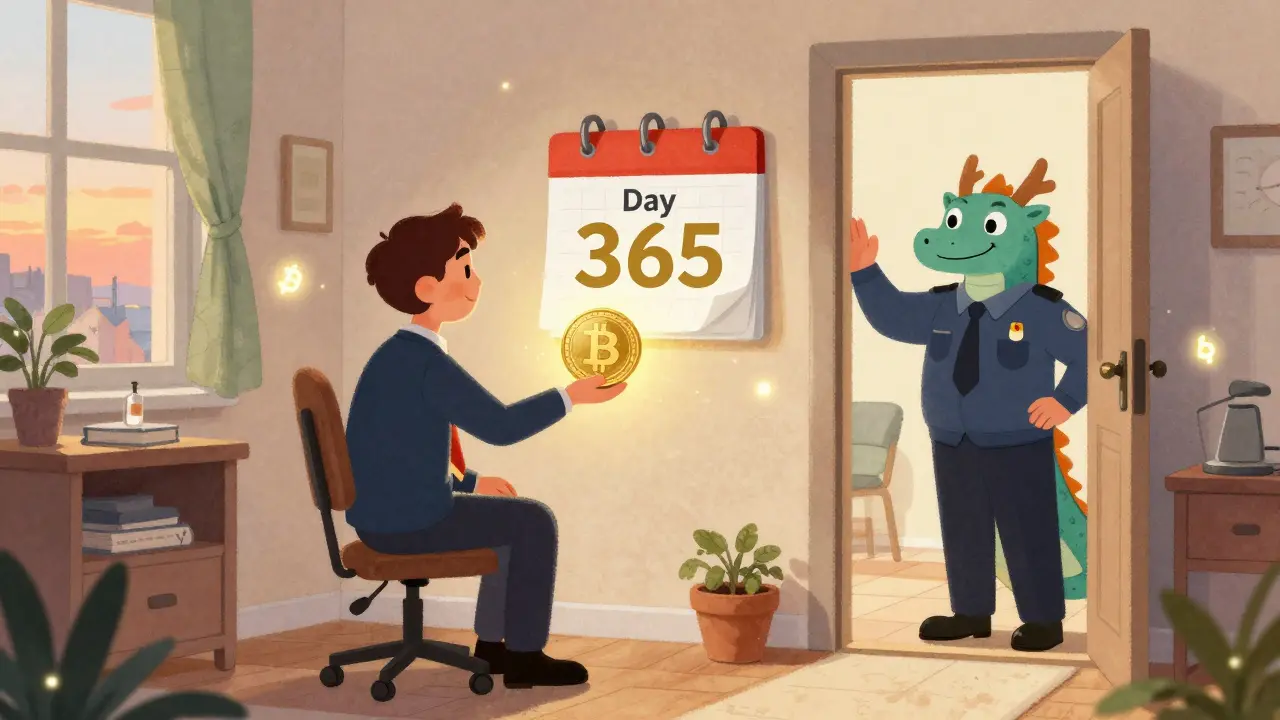
Portugal used to be the go-to place for crypto investors who wanted to avoid taxes. Buy Bitcoin in 2020, hold it for a few years, sell it in 2023 - no tax. That changed. The Portugal crypto tax rules were rewritten in 2023, and now there’s a clear, structured system in place. It’s not as strict as France or Germany, but it’s no longer a free pass. If you’re holding crypto in Portugal, you need to understand exactly what’s taxed, when, and how much.
How Portugal Taxes Crypto Now
The current system splits crypto activity into three buckets, each with its own rules:- Category G (Capital Gains): This covers selling or trading crypto for fiat currency. If you hold your crypto for less than 365 days, you pay 28% tax when you sell. If you hold it over a year, you pay zero. This is the biggest reason Portugal still attracts long-term investors.
- Category E (Passive Income): This applies to staking rewards, lending interest, and airdrops. These are taxed at a flat 28% - but only when you convert them to euros. If you keep them in crypto, you don’t owe anything until you sell. That’s a smart delay tactic.
- Category B (Professional Activity): If you’re trading full-time, mining, or running a crypto business, you’re in this category. The tax is based on your income, not just profits. For most people, only 15% of your gross income counts as taxable (e.g., if you made €100,000 from trading, only €15,000 is taxed). Miners? They get hit harder: 95% of mining income is taxable due to energy use concerns.
These rules aren’t random. They’re designed to encourage long-term holding, discourage day trading, and still collect revenue from professionals. The 365-day rule is the centerpiece - it’s what makes Portugal different.
What Happens If You Sell After 365 Days?
Nothing. That’s it. No tax. No paperwork. No reporting. As long as you held the asset for a full year and you’re not a professional trader, you walk away with 100% of your profit.This rule applies only if you’re a resident in Portugal or if your wallet provider is based in the EU, EEA, or a country with a tax treaty with Portugal. If you’re using a U.S.-based exchange and you’re a non-resident, you might still owe tax elsewhere. But if you’re living in Lisbon and holding on your local wallet, the Portuguese government doesn’t touch your long-term gains.
They use the First In, First Out (FIFO) method to track your holding period. So if you bought Bitcoin in January 2023 and again in June 2023, and you sell one coin in February 2025, they’ll assume you sold the January one - meaning it’s been held over a year. That’s tax-free.
Staking and Lending: The Delayed Tax Trap
Staking rewards are tricky. You get them every week, every day, even every hour. But you don’t pay tax until you convert them to euros. That means you can compound your rewards without triggering a tax event.Example: You stake 10 ETH and earn 0.5 ETH in rewards every month. You don’t sell any of it. After 12 months, you have 16 ETH. You sell 1 ETH for €3,000. That €3,000 is taxed at 28% - but only on the portion that came from rewards. The original 10 ETH? If held over a year, tax-free. The 0.5 ETH/month? Each batch is tracked separately. The first batch you earned is now over a year old - tax-free. The last batch? Still under a year - 28% tax on the sale.
That’s why tools like CoinTracking or Koinly are essential. Manual tracking is impossible. The Portuguese tax authority doesn’t ask for your wallet addresses - but if you’re audited, they’ll expect proof of dates and values.
How Portugal Compares to the Rest of Europe
| Country | Short-Term Gains (Under 1 Year) | Long-Term Gains (Over 1 Year) | Staking/Lending Tax |
|---|---|---|---|
| Portugal | 28% | 0% | 28% (on fiat conversion) |
| Germany | Up to 45% | 0% | Income tax (up to 45%) |
| France | 30% flat | 30% flat | 30% flat |
| United Kingdom | 10-20% | 10-20% | 20-45% income tax |
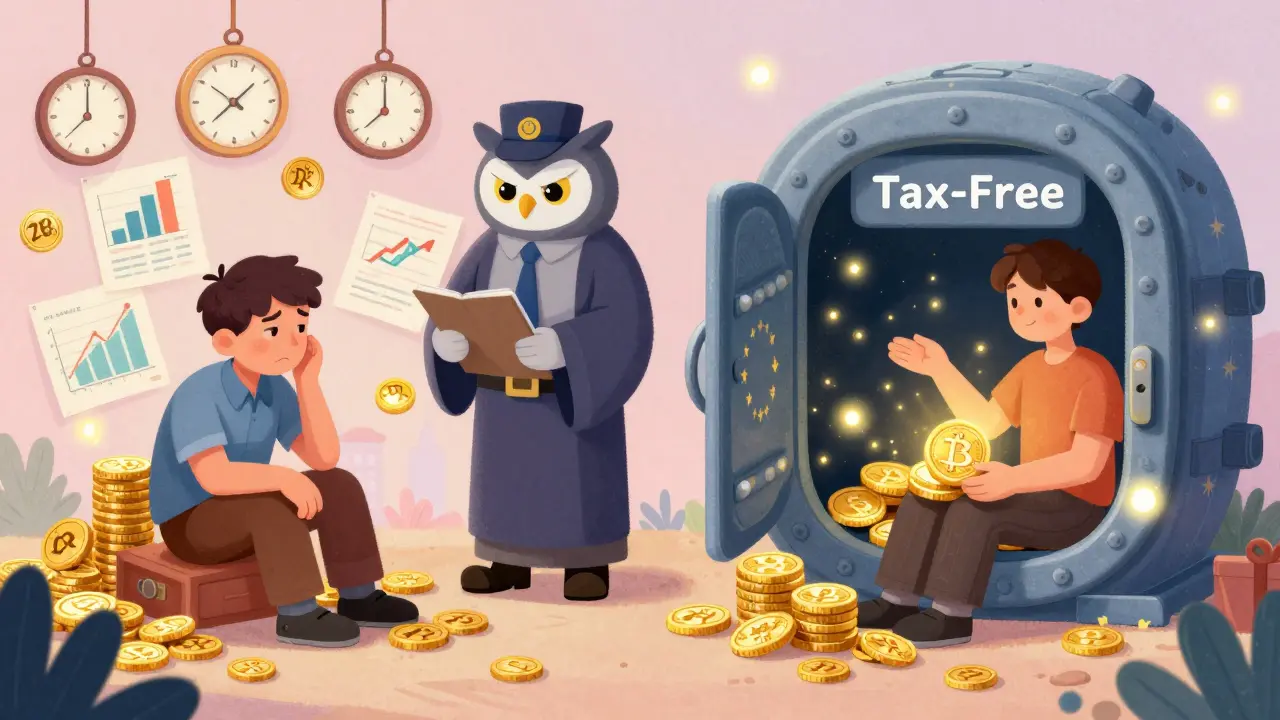
Portugal stands out because it’s the only country in Europe that fully exempts long-term gains. Germany does too - but only if you’re not a professional. France taxes everything at 30%, no exceptions. The UK taxes gains regardless of holding period, and you get a £3,000 allowance - which is barely enough for one Bitcoin trade.
For digital nomads and investors who don’t trade daily, Portugal still wins. The 28% short-term rate is lower than France’s 30%, and the long-term exemption is unmatched.
What’s Coming Next?
Portugal isn’t done. The 2023 rules are just the beginning. The EU’s MiCAR regulation (Markets in Cryptoassets) kicks in fully in 2026, forcing all member states to align on basic rules - like licensing exchanges and reporting transactions.But Portugal won’t give up its tax advantages. Experts believe the 365-day rule is here to stay. What might change:
- Tighter reporting: The Bank of Portugal and tax authority are building systems to track crypto wallets. Don’t expect audits tomorrow - but expect them in 2027 or 2028.
- Clarifying professional status: Right now, it’s blurry. If you trade 5 times a week, are you a professional? The rules don’t say. Expect clearer thresholds soon - maybe 10 trades/month or €50,000 in annual volume.
- Staking reporting: Some EU countries are pushing to tax staking at receipt, not conversion. Portugal might follow - but for now, it’s still delayed.
The government knows what’s at stake. If they make the rules too harsh, crypto investors will leave. That’s why they’re moving slowly. They want revenue - but not at the cost of losing their edge.
What You Need to Do Today
If you’re living in Portugal or planning to move there:- Hold for a year: If you want to avoid tax, don’t sell before 365 days. Use a calendar. Set reminders.
- Track every transaction: Use a crypto tax tool. Manual spreadsheets fail. You need to know your FIFO cost basis, staking dates, and conversion dates.
- Don’t assume you’re not a professional: If you’re trading regularly, even part-time, you might be under Category B. Get advice before filing.
- Keep records for 5 years: The tax authority can audit you for up to 5 years after filing. Save wallet screenshots, exchange statements, and transaction IDs.
You don’t need to hire an accountant unless you’re doing professional mining or trading over €200,000/year. For most people, a good tool and a clear understanding of the rules are enough.
Why This Matters for Investors
Portugal’s system isn’t perfect - but it’s smart. It doesn’t punish long-term investors. It doesn’t let traders off the hook. It doesn’t overcomplicate things. It’s balanced.For investors, that means you can still use Portugal as a base for crypto wealth. For traders, it means you’ll pay - but not more than in Germany or the UK. For miners, it means you’ll pay more than before, but you still get a simplified regime.
The future of crypto tax in Europe isn’t about bans or crackdowns. It’s about smart rules that separate speculation from investment. Portugal got it right in 2023. And it’s not going to undo that.
Is crypto still tax-free in Portugal?
Only if you hold it for over 365 days and sell it for euros. Short-term trades (under a year) are taxed at 28%. Staking rewards are taxed at 28% when converted to fiat. Mining and professional trading are taxed under different rules. It’s not tax-free anymore - but long-term holding still is.
Do I need to report crypto if I didn’t sell?
No, not unless you’re a professional trader or miner. If you just hold, stake, or trade crypto for other crypto (no fiat), you don’t owe tax or need to report. But keep records in case you sell later - the tax is triggered on conversion, not on holding.
What if I trade crypto for crypto in Portugal?
No tax is due at the time of the trade. You only owe tax when you convert the final asset into euros. But you must track the original cost basis of each coin you trade - because when you eventually sell the euro, you’ll need to calculate your gain based on the first purchase.
Are non-residents taxed on crypto in Portugal?
Only if you’re a tax resident. Non-residents aren’t taxed on crypto capital gains in Portugal - but they may owe tax in their home country. Portugal doesn’t tax non-residents on worldwide income. So if you live in Spain and hold crypto in a Portuguese wallet, Spain likely taxes you, not Portugal.
Will Portugal change its crypto tax rules in 2026?
The core rules - especially the 365-day exemption - are expected to stay. But enforcement will get tighter. Expect more automated reporting from exchanges and clearer definitions of "professional" activity. Don’t expect higher rates - Portugal’s model is designed to attract, not chase away, investors.
Comments
monique mannino
This is such a relief! I’ve been staking ETH for a year now and just cashing out a little at a time. The fact that I don’t pay tax until I convert is a game-changer. 🙌
February 9, 2026 AT 09:27
Christopher Wardle
Portugal’s approach is actually one of the few sane systems in Europe. Long-term holding exemption makes sense - it encourages real investment, not gambling. The 365-day rule is elegantly simple.
February 10, 2026 AT 23:38
blake blackner
bro why is everyone acting like this is some big deal?? i bought btc in 2021, held it, sold it last year, and didn't pay a cent. it's literally that easy. stop overcomplicating it lol
February 11, 2026 AT 20:24
Michelle Cochran
I find it deeply concerning that a country would incentivize tax avoidance under the guise of "investment." This isn't economic policy - it's a loophole for the wealthy to exploit while ordinary people pay their fair share. Where's the moral responsibility here? 🤔
February 12, 2026 AT 00:03
Andrea Atzori
As someone who relocated from Sydney to Lisbon last year, I can confirm: this system is transformative. I’ve never felt more financially liberated. The clarity of the rules? Pure gold. 🇵🇹✨
February 13, 2026 AT 08:51
Joe Osowski
Let me get this straight - the U.S. taxes you on every crypto trade while Portugal lets you walk away with millions tax-free? This is why America is falling behind. We need to stop being so paranoid about revenue and start being smart. 🇺🇸 vs 🇵🇹 - the answer is obvious.
February 14, 2026 AT 03:41
Gaurav Mathur
They will track you. They always do. The government will have your wallet. The blockchain is public. They will know. You think you are free. You are not. They are watching. Always watching.
February 14, 2026 AT 15:53
Jeremy Lim
I just... I don’t know. I mean, I get it, right? But it still feels... sketchy? Like, what if the rules change tomorrow? And what about the people who can’t afford tools like Koinly? It’s not fair. 😔
February 15, 2026 AT 11:07
John Doyle
If you’re holding for a year, you’re not a day trader - you’re an investor. That’s the whole point. Portugal gets it. Most countries are still stuck in 2015 thinking mode. This is the future. Embrace it.
February 17, 2026 AT 02:40
kelvin joseph-kanyin
STAKING IS FREE MONEY UNTIL YOU CASH OUT?? BRO THAT’S THE BEST THING I’VE HEARD ALL YEAR 😍🔥 I’M REINVESTING EVERY REWARD NOW. THANK YOU PORTUGAL 🇵🇹
February 17, 2026 AT 08:39
Elizabeth Choe
You know what’s wild? The fact that you can trade crypto for crypto and not trigger a tax event? That’s genius. It lets you pivot your portfolio without penalty. I’ve moved from ETH to SOL to AVAX without breaking a sweat. The system actually works for real people.
February 18, 2026 AT 13:13
Grace Mugambi
It’s interesting how this policy quietly promotes patience. The 365-day rule doesn’t just reduce taxes - it changes behavior. People aren’t just holding assets anymore. They’re holding *vision*. That’s deeper than finance. It’s cultural.
February 19, 2026 AT 18:04
Crystal McCoun
I’ve been using CoinTracking for 2 years now, and honestly? It’s saved me from disaster. One wrong date, and you’re in trouble. I’ve got screenshots of every transaction from 2021 - even the tiny 0.001 BTC swaps. You think it doesn’t matter? It does. Always document. Always. 💯
February 21, 2026 AT 15:00
Elijah Young
I’m curious - what if someone moves to Portugal, buys crypto on day one, and sells it on day 366? Is that still clean? Or is there a residency duration requirement? The post doesn’t clarify.
February 23, 2026 AT 02:32
Beth Trittschuh
I just moved here from New York. I thought I’d have to give up crypto entirely. Instead, I’m building a portfolio I never thought possible. Portugal didn’t just change my taxes - it changed my life. 🌿✨
February 24, 2026 AT 19:37