
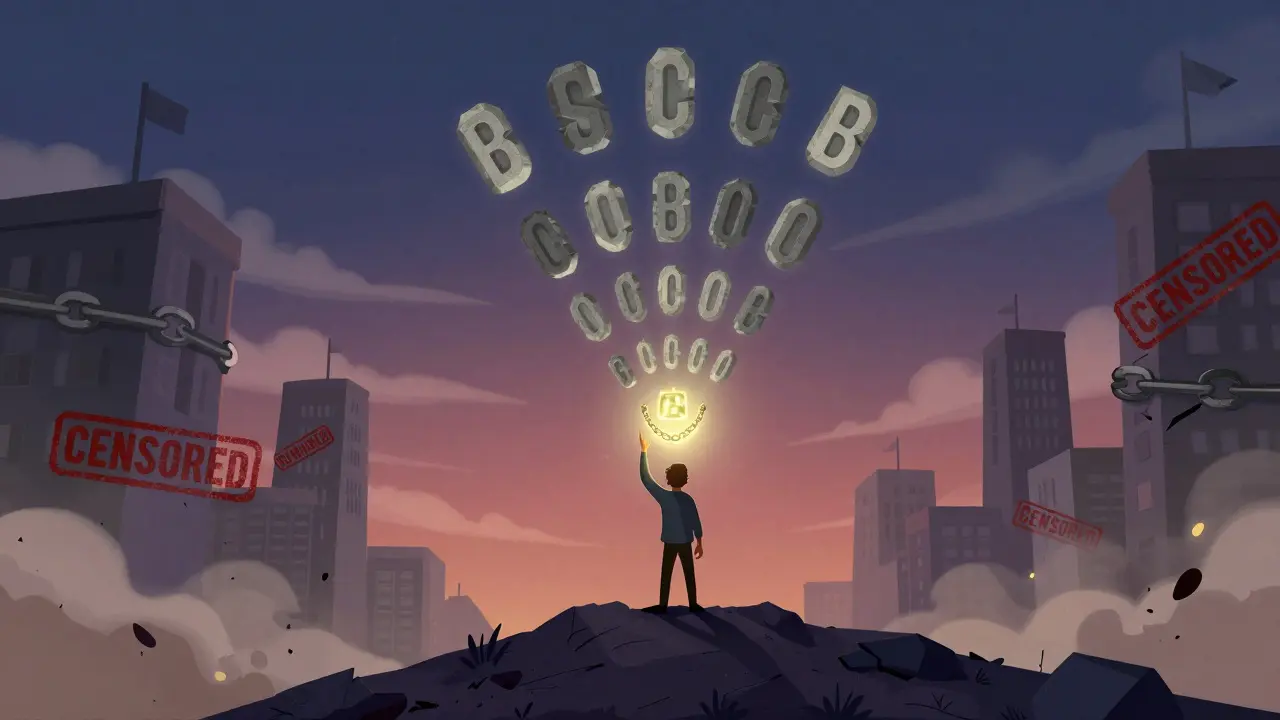
Think about the last time your post got taken down, your account frozen, or your comment vanished because someone in power didn’t like what you said. That’s not a glitch-it’s the norm on Facebook, X, and TikTok. These platforms don’t just moderate content; they control it. And when governments demand it, they comply. But what if you could post something so permanently that no one could erase it-not even a government? That’s not science fiction. It’s already happening on blockchain-based social networks.
Why Censorship Happens (And Why It’s a Problem)
Centralized social media runs on a simple model: one company owns the servers, one team decides what’s allowed, and one set of rules applies to everyone. That sounds efficient until you realize how often those rules change based on pressure. In 2024, Brazil blocked X for refusing to remove accounts linked to far-right groups. Iran shut down access entirely during protests. Venezuela and Cuba followed suit. Even in places with strong free speech laws, companies like Meta and Alphabet quietly shadow-ban political voices, influencers, or journalists without warning. The real issue? You don’t own your voice. You’re renting space on someone else’s platform. And if they decide you’re too risky, too controversial, or too inconvenient, they can delete your history, freeze your funds, or ban your IP. There’s no appeal. No transparency. No recourse.How Blockchain Changes Everything
Blockchain social networks flip that model upside down. Instead of relying on a single company to store your posts, they use a global network of computers-called nodes-to keep a copy of everything. No central server. No single admin. No one person can pull the plug. This isn’t just theory. It’s built into the code. Here’s how it works:- Decentralization: Your post isn’t stored on a server owned by a tech giant. It’s spread across thousands of machines around the world. To censor it, you’d need to shut down every single one at once-which is impossible.
- Immutability: Once a post is recorded on the blockchain, it can’t be edited or deleted. It’s like carving words into stone, not typing them into a document you can backspace.
- Transparency: Anyone can look at the blockchain and see every post, like, or comment ever made. If someone tries to hide or alter content, everyone else can spot it.
- Cryptography: Your identity and messages are protected by math, not passwords. You sign posts with a private key. No one else can fake your voice.
- Consensus: No single entity controls the network. Changes to the system require agreement from the majority of users. That means no one can sneak in a censorship rule without everyone noticing.
Real-World Proof: Bitcoin Cash and On-Chain Posts
The most practical example of censorship-resistant social media isn’t some fancy new app. It’s built into Bitcoin Cash, a cryptocurrency designed for everyday transactions. Users have been posting messages directly into blockchain transactions since 2018 using something called OP_RETURN. OP_RETURN lets you embed up to 220 bytes of data into a transaction. That’s enough for a short text post, a link, or even a small image hash. These posts are permanent, public, and unchangeable. You can find them on blockchain explorers like Blockchair or BCH Block Explorer. For example, the transaction 01159eb6020b1cbb10f2b57eb4996c79020e8333a7b0bef24a1174cc43b683b0 contains a post from 2023 criticizing media censorship. Another one, 1feda7c1c330eb240503949c8668ac554c2de23fb99f4a11cceb899d244a28fb, shares a protest slogan during Brazil’s internet shutdown. Why does this matter? Because to censor these posts, you’d have to ban Bitcoin Cash itself. You’d have to stop people from sending money. That’s not just hard-it’s economically catastrophic. Governments don’t want that. So instead, they block access to apps like Memo.cash, which make it easy to read these posts. But the data? Still there. Still public. Still uncensorable. The Bitcoin Cash community is pushing to increase the OP_RETURN limit from 220 to 300 bytes. Why? To allow longer messages, better formatting, and more complex interactions-like replies and likes-all on-chain. This isn’t about tech for tech’s sake. It’s about making censorship physically impossible.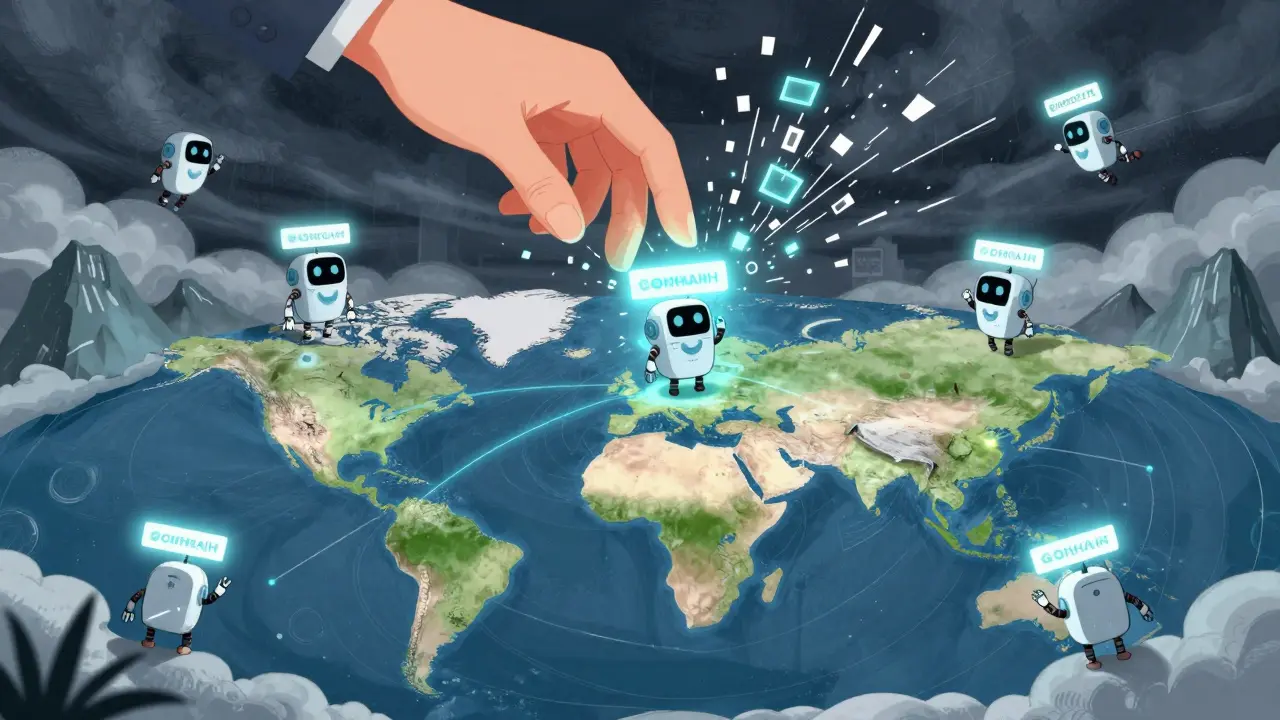
What Blockchain Social Networks Can’t Do
Let’s be clear: blockchain social networks aren’t magic. They have limits. First, you still need internet access. If a government blocks all access to the blockchain network, users can’t post or read. That’s why tools like mesh networks, satellite internet, and Tor are becoming essential companions to blockchain social apps. Second, you pay to post. Every message, like, or comment costs a small fee in cryptocurrency. That’s not a bug-it’s a feature. It prevents spam. But for average users, it’s a barrier. You can’t just sign up with your email. You need a wallet. You need to understand private keys. You need to buy crypto. That’s a steep learning curve compared to scrolling TikTok. Third, speed is slow. Bitcoin Cash handles about 30 transactions per second. Instagram handles over 100,000. If millions of people start posting every second, most blockchains would crash. Scaling is still unsolved. And yes, governments are already trying to fight back. Some are creating their own permissioned blockchains-controlled versions where only approved users can post. That’s not censorship resistance. That’s digital authoritarianism with a blockchain label.Who’s Using This Right Now?
You won’t find millions of users yet. But you’ll find people who need this most. - Journalists in authoritarian regimes who can’t risk posting on X. - Activists in countries where protests are banned. - LGBTQ+ communities in places where online speech is criminalized. - Developers building tools that let you post from your phone without needing to understand crypto. In Venezuela, where internet blackouts are common, users are already using blockchain social apps to share food distribution maps and medical aid info. In Iran, activists use on-chain posts to document human rights abuses when mainstream platforms are blocked. These aren’t tech enthusiasts. They’re ordinary people who refuse to be silenced.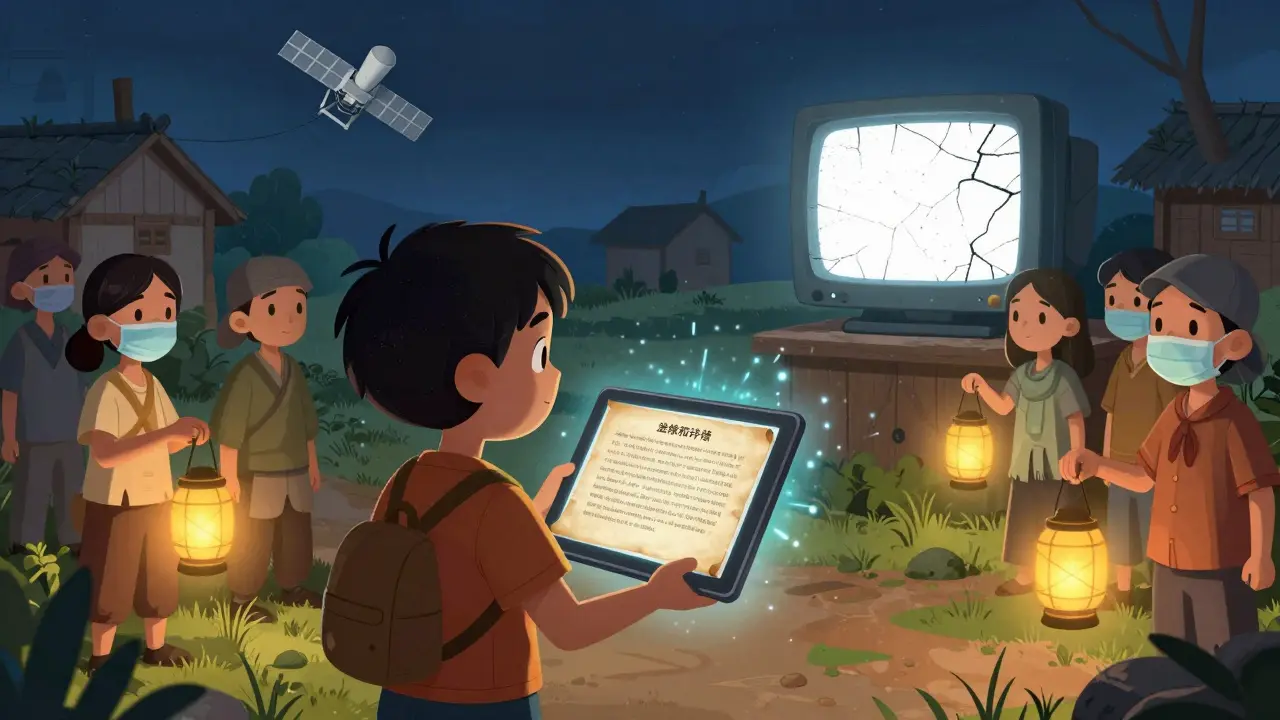
The Future: Simpler, Cheaper, Faster
The next big leap isn’t about bigger blockchains. It’s about hiding complexity. New wallets are being built that auto-generate keys. Apps are emerging that let you post with a username and password-while still storing everything on-chain. Some are experimenting with layer-2 networks that handle thousands of transactions per second, then settle them on the main chain once a day. The goal? Make it as easy as posting on Instagram-but with the permanence of a monument. If censorship keeps rising-as it is-then blockchain social networks won’t be a niche. They’ll be a necessity.What You Can Do Today
You don’t need to wait for the future. Here’s how to start:- Get a Bitcoin Cash wallet (like HandCash or MoneyButton).
- Send a tiny amount of BCH (less than $1) to cover fees.
- Use a service like Memo.cash to write a post.
- Find your post on a blockchain explorer using the transaction ID.
- Share the link with someone in a censored region.
Can blockchain social networks really stop governments from censoring content?
Yes-but only if the government can’t shut down access to the blockchain network itself. While the data on-chain can’t be deleted, governments can still block internet access, ban cryptocurrency exchanges, or restrict hardware that connects to the network. That’s why tools like Tor, mesh networks, and satellite internet are becoming essential. The blockchain protects the content, but the internet protects the access.
Do I need to know crypto to use a blockchain social network?
Not anymore. Apps like HandCash and MoneyButton let you sign up with an email and password, just like regular social media. Behind the scenes, it’s still using blockchain and crypto-but you don’t need to handle private keys or understand gas fees. The app handles it for you. The learning curve is dropping fast.
Why not just use encrypted apps like Signal or Telegram?
Signal and Telegram are great for privacy, but they’re still centralized. Signal’s servers are owned by a nonprofit. Telegram’s by a Russian founder. Both can be pressured to hand over data or shut down in certain countries. Blockchain networks have no owner. No headquarters. No CEO to subpoena. Your data lives on thousands of machines worldwide-making it far harder to control.
Is blockchain social media just for activists?
No. It’s for anyone who wants their voice to last. Artists, historians, scientists, and everyday people are using it to archive personal stories, research, and cultural content that might otherwise vanish. It’s not just about resistance-it’s about permanence.
Can I get banned from a blockchain social network?
Not by the network itself. There’s no admin to ban you. But if you break the rules of a specific app (like posting hate speech), that app might choose to hide your posts from its interface. The data is still on the blockchain-just not visible in that app. You can always view it elsewhere.
Comments
Melissa Ritz
Look, I get it. Blockchain is the new shiny object. But let’s be real-most people don’t care about immutability. They care about memes, cat videos, and whether their ex is posting about their new partner. This whole ‘censorship resistance’ thing feels like a solution in search of a problem. I’m not gonna download a wallet just to post about my coffee. And don’t get me started on the gas fees. I’d rather just be shadowbanned than pay $0.12 to say ‘lol’.
March 4, 2026 AT 21:23
Emily Pegg
OMG I LOVE THIS SO MUCH 💖 Like, finally someone gets it! I’ve been posting my trauma stories on Memo.cash since last year and NO ONE can delete them. I cried when I saw my 2022 post about my abusive boss still up after the platform shut down. It’s like my voice is now a tattoo on the internet. I’m telling all my friends. This is the future. 🌈✊
March 5, 2026 AT 17:30
Ethan Grace
The real philosophical dilemma here isn’t about censorship-it’s about the ontological weight of permanence. If every utterance is etched into the cosmic ledger, does speech lose its fluidity? Does humanity become a museum of its own noise? We’ve traded the ephemeral beauty of conversation for the cold marble of archival certainty. Is that progress… or just another form of digital idolatry?
March 7, 2026 AT 15:58
Jamie Hoyle
Oh please. You think governments can’t just ban Bitcoin Cash? They don’t need to delete the blockchain-they just need to make it illegal to use. And guess what? That’s already happening in 12 countries. This isn’t resistance. It’s a suicide mission wrapped in crypto bro hype. Also, 220 bytes? That’s not a post. That’s a tweet with a typo. You’re glorifying a feature that can’t even hold a full sentence.
March 9, 2026 AT 14:18
Brian T
I’ve read this whole thing and I’m still not convinced. You say decentralization makes censorship impossible. But what about social pressure? What about reputation? What if everyone just ignores you? Isn’t that a form of censorship too? And why do we assume that ‘permanent’ equals ‘good’? I’ve got old tweets I wish I could delete. We don’t need eternal records. We need room to grow.
March 10, 2026 AT 13:44
Nash Tree Service
The assertion that blockchain social networks provide unfettered expression is predicated upon an oversimplified understanding of infrastructure. While the ledger itself may be immutable, access to the network remains contingent upon bandwidth, hardware, and regulatory compliance. Moreover, the economic barrier to entry-transaction fees, cryptocurrency volatility, and wallet complexity-constitutes a de facto oligarchy of the technologically literate. Thus, while the architecture resists state coercion, it simultaneously enforces epistemic exclusion.
March 11, 2026 AT 23:01
Jonathan Chretien
This is beautiful. 🙌 I’ve been using Memo.cash for 6 months now. I post my poetry, my political rants, my grandma’s recipes-all on-chain. Last week, a guy in Nigeria messaged me saying he saved my post about mental health and shared it in his village. That’s power. Not likes. Not shares. REAL impact. The future isn’t about virality. It’s about legacy. And blockchain? It’s the only thing that gets that.
March 13, 2026 AT 03:31
Shawn Warren
Blockchain social networks are the logical evolution of digital autonomy. The centralized model is obsolete. Governments must adapt or be rendered irrelevant. The cost of participation is minimal compared to the cost of silence. The technology is ready. The question is whether humanity has the courage to adopt it
March 14, 2026 AT 18:15
Datta Yadav
You people are delusional. India banned crypto transactions in 2023. The government controls every node that touches its territory. You think your little OP_RETURN post is safe? The state doesn’t need to delete it. They just need to throttle every connection to the network. They’ve already done it with VPNs. They’ll do it here. And when they do, your ‘permanent’ post will be as useful as a typewriter in a nuclear winter. This isn’t freedom. It’s a fantasy for people who’ve never lived under real repression.
March 15, 2026 AT 23:49
Lydia Meier
The article makes a compelling case for decentralization, but it ignores the scalability and usability trade-offs inherent in blockchain architecture. The throughput of Bitcoin Cash is insufficient for mass adoption. Furthermore, the economic model disincentivizes casual participation. Without seamless onboarding and near-zero fees, this remains a niche tool for activists rather than a societal replacement for existing platforms.
March 16, 2026 AT 03:40
Austin King
I’ve never used a blockchain social app, but after reading this, I’m gonna try it. Just one post. Just to see. Maybe I’ll say something dumb. Maybe I’ll say something real. Either way, I want it to stick. Thanks for the push.
March 16, 2026 AT 05:07
Bryanna Barnett
ok so like i just tried memo.cash and it was so easy?? like i signed up with my email and boom i posted ‘i hate Mondays’ and it’s on the blockchain now. i feel like a hacker. also my post is still there even after i refreshed. that’s wild. i didn’t even know what a private key was. this is the future and i’m here for it
March 16, 2026 AT 07:12
Rachel Rowland
If you’re not trying this yet, you’re leaving your voice vulnerable. This isn’t about crypto. It’s about your right to exist online without fear. I’ve helped three friends set up wallets. One’s a teacher in Texas. One’s a trans teen in Alabama. One’s a journalist in Ukraine. They’re all posting. Not because they’re activists. Because they’re just tired of being erased. You can too. Just start small. One sentence. One day.
March 16, 2026 AT 14:48
Bonnie Jenkins-Hodges
This is why America is falling apart. We’re so obsessed with ‘free speech’ that we’re ignoring the fact that freedom also means responsibility. You can’t just broadcast hate and lies and say ‘it’s on the blockchain so it’s fine’. This isn’t liberty. It’s chaos. And chaos doesn’t protect people. It destroys them.
March 17, 2026 AT 13:44
Cerissa Kimball
The OP_RETURN limit of 220 bytes is a technical constraint that severely limits utility. While the concept is sound, practical implementation requires greater data capacity for meaningful discourse. Additionally, user experience must improve to onboard non-technical populations. Without these improvements, adoption will remain marginal among those most in need of censorship resistance.
March 19, 2026 AT 02:00
Basil Bacor
blockchain socials are cool and all but what about the fact that if u lose ur private key u lose ur whole life? like imagine posting ur will, ur last words, ur kids’ birthdates and then forgetting ur password. its like putting ur diary in a vault and then throwing away the key. not a good look.
March 20, 2026 AT 06:31
Jeffrey Dean
You call this resistance? It’s a luxury. People in Gaza don’t need blockchain. They need Wi-Fi. They need food. They need their children to stop dying. This whole post feels like a TED Talk from a Silicon Valley balcony while the world burns. You’re not saving voices. You’re just recording them in a tomb.
March 21, 2026 AT 16:51
Denise Folituu
I posted a video of my cat wearing a tiny hat on Memo.cash. It’s still there. After 14 months. After 3 platform shutdowns. After 2 global blackouts. I didn’t think it mattered. But now? Now I know. My cat’s hat is a monument. And I’m not deleting it. Ever. This is my legacy. And I’m proud.
March 22, 2026 AT 00:54
jack carr
chill. this isn’t a revolution. it’s just another way to post. if you want to be heard, be interesting. if you want to be safe, be quiet. the blockchain doesn’t change human nature. it just makes it harder to hide. and honestly? that’s kind of nice.
March 22, 2026 AT 23:11
Ken Kemp
i tried this last week and it was kinda confusing but then i found this app called handcash and it just worked. like i clicked post and it was done. no keys no fees no panic. i posted my mom’s recipe for lasagna and now its on the blockchain forever. she would’ve loved that. i think this is the quietest revolution ever and i’m here for it
March 23, 2026 AT 14:54
Bill Pommier
The notion that blockchain-based platforms inherently promote free speech is a fallacy. The absence of centralized moderation does not equate to ethical discourse. Without accountability, hate, disinformation, and harassment flourish unchecked. The very structure that prevents state censorship enables the unchecked proliferation of harmful content. This is not liberation. It is anarchy dressed in cryptographic robes.
March 24, 2026 AT 12:02
Olivia Parsons
I’m curious-how do you verify someone’s identity on-chain? If I post as ‘Dr. Jane Smith’ but I’m not actually a doctor, is that fraud? And if so, who’s responsible? I just want to know how this stops misinformation without a central authority.
March 25, 2026 AT 05:10
Nick Greening
Yeah but what if the blockchain gets forked? What if some group decides to rewrite history? Then your ‘permanent’ post gets overwritten. Blockchain isn’t magic. It’s code. And code can be changed. You just need enough miners to agree. So much for ‘immutability’.
March 26, 2026 AT 09:23
Jackson Dambz
This is the most naive thing I’ve read all year. You think governments can’t just shut down access to the entire network? They’ll block the IPs. They’ll ban the apps. They’ll arrest the developers. They’ll make owning a wallet a crime. This isn’t resistance. It’s a suicide note written in Bitcoin Cash.
March 27, 2026 AT 02:38
Megan Lutz
I’ve been archiving my life on-chain since 2021. My graduation. My breakup. My first job. My father’s last words. None of it is gone. Not even when the servers crashed. Not even when the apps died. I used to think permanence was scary. Now I think it’s healing. Because some things shouldn’t be forgotten. And some voices shouldn’t be silenced. Even if no one else reads them. They’re still there.
March 28, 2026 AT 08:22