

Imagine casting your vote from a smartphone in Wellington, New Zealand, and watching it get recorded on an unchangeable ledger that anyone can audit but no one can alter. That is the promise of blockchain voting, a system that uses distributed ledger technology to record votes securely and transparently. It sounds like science fiction, but companies have already tested these systems for military personnel overseas and in local municipal elections. But does it actually work? And is it ready to replace the paper ballot?
The idea isn't just about convenience; it’s about trust. Traditional voting systems face constant scrutiny regarding security, accessibility, and transparency. Blockchain offers a potential solution by combining cryptography with decentralized networks. Before we look at the tech specs, let's break down what this actually means for you as a voter.
How Blockchain Voting Actually Works
To understand blockchain voting, you first need to strip away the hype and look at the mechanics. At its core, the system treats every vote as a transaction on a distributed ledger, a shared database spread across multiple computers that records transactions in a secure, chronological order. Unlike a central server that can be hacked or shut down, this ledger exists on many nodes simultaneously.
Here is the step-by-step process of how a vote travels through this system:
- Authentication: You log in using multi-factor authentication. This often involves verifying your identity through government IDs or biometric data via webcam. Your public key encrypts your credentials.
- Token Distribution: Once verified, the system issues a unique "ballot token" to your digital wallet. Think of this token as your single vote. It has value only within the context of this specific election.
- Casting the Vote: When you select a candidate, the token is transferred from your wallet to that candidate’s ledger address. The transaction is encrypted so no one knows who sent it, but everyone can see that a valid vote was cast.
- Immutable Recording: The vote is added to a block on the blockchain. Each block is cryptographically linked to the previous one. If someone tries to change a past vote, they would need to recalculate the entire chain across thousands of computers instantly-which is practically impossible.
- Smart Contract Tallying: Smart contracts, self-executing contracts with the terms of the agreement directly written into code automatically count the tokens. There are no humans manually counting papers, reducing human error and bias.
This structure ensures that once a vote is registered, it cannot be deleted or changed. The result is a permanent, auditable record of the election outcome.
Key Technologies Behind the Security
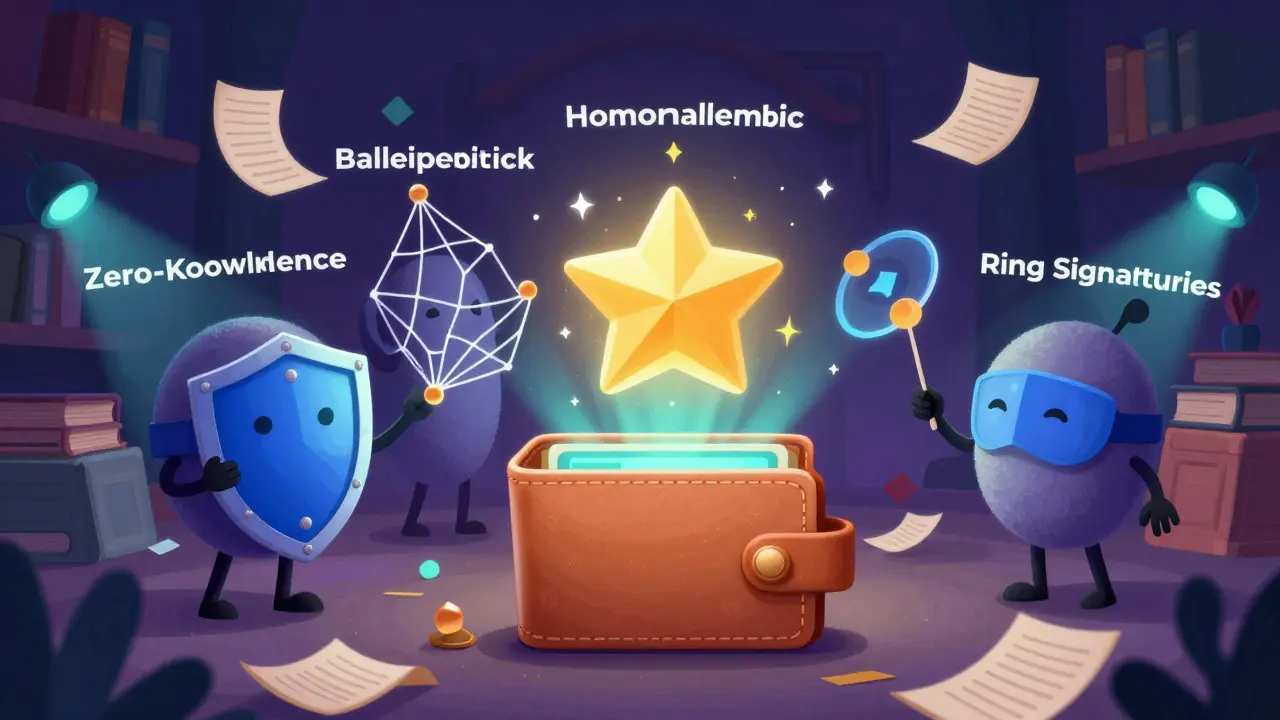
You might wonder, "If everything is on a public ledger, how is my vote secret?" This is where advanced cryptography comes in. Blockchain voting systems rely on several sophisticated methods to balance transparency with privacy.
- Zero-Knowledge Proofs: This allows the system to verify that a vote is valid (e.g., cast by an eligible voter) without revealing any information about the voter’s identity or choice.
- Homomorphic Encryption: This enables mathematical operations on encrypted data. In voting, it means the system can tally votes while they remain encrypted, decrypting only the final total.
- Ring Signatures: These allow a user to sign a transaction on behalf of a group, making it impossible to trace which specific member signed it. This adds another layer of anonymity.
Additionally, many systems use Layer 2 solutions, secondary protocols built on top of existing blockchains to improve scalability and speed. Main blockchains like Bitcoin or Ethereum can be slow and expensive. Layer 2 handles the high volume of voting transactions quickly, then settles them on the main chain for security. This hybrid approach helps solve the scalability issue that plagues large-scale elections.
Real-World Implementations and Case Studies
Theory is one thing; practice is another. Several companies have piloted blockchain voting systems in recent years. Let’s look at three prominent examples to see how they performed.
| Company | Location | Key Feature | Notable Use Case |
|---|---|---|---|
| Voatz | Boston, USA | Biometric verification & mobile app | West Virginia (2018), Colorado (2019) for overseas military |
| Follow My Vote | Golden, CO, USA | Webcam ID verification & real-time results | Municipal elections and party primaries |
| Votem | Cleveland, OH, USA | CastIron Platform for full election management | Voter registration in Montana and D.C. (2016) |
Voatz gained significant attention for allowing U.S. military personnel stationed abroad to vote in state elections. Voters used facial recognition and driver’s license verification. While the convenience was praised, the system faced technical glitches during peak times, highlighting the challenges of scaling.
Follow My Vote focuses on remote voting capabilities. Their platform generates unique voter IDs that cannot be replicated. A standout feature is the ability for voters to modify their choices up until the deadline, mimicking the flexibility of changing a mail-in ballot before it arrives. They also provide real-time election results, which appeals to those wanting immediate transparency.
Votem takes a broader approach with their CastIron Platform. Instead of just the voting act, they manage the entire election lifecycle, including registration and pre-marking ballots. Their involvement in the 2016 presidential election processes showed that blockchain could integrate with traditional administrative workflows.

Pros and Cons: Is It Better Than Paper?
No system is perfect. To make an informed decision, we need to weigh the advantages against the limitations.
The Advantages:
- Transparency: Anyone can audit the blockchain to verify that the total number of votes matches the number of eligible voters. This builds public confidence.
- Immutability: Once a vote is cast, it cannot be altered. This eliminates concerns about ballot stuffing or lost boxes.
- Accessibility: Voters with disabilities or those living overseas can participate easily from their phones.
- Speed: Results are available almost instantly after polls close, eliminating long waits for recounts.
The Limitations:
- Digital Divide: Not everyone has a smartphone or reliable internet. This could disenfranchise elderly or low-income voters.
- Technical Complexity: Understanding how to verify your vote requires some technical literacy. If the user interface is confusing, errors increase.
- Device Security: The blockchain itself may be secure, but if a voter’s phone is infected with malware, their vote could be manipulated before it even hits the network. This is known as the "client-side vulnerability."
- Regulatory Uncertainty: Many countries lack legal frameworks to recognize blockchain votes as legally binding.
The Future of Digital Democracy
So, where do we go from here? Experts suggest that a complete replacement of paper ballots is unlikely in the near future. Instead, we will likely see hybrid systems. For example, blockchain could be used for absentee ballots, corporate shareholder voting, or organizational referendums where security needs are high but the scale is manageable.
Future developments are focusing on improving user interfaces to make them intuitive for non-tech users. We are also seeing more research into post-quantum cryptography to ensure these systems remain secure against future computing threats. As regulatory bodies catch up, we may see standardized security protocols that allow different blockchain platforms to interoperate.
For now, blockchain voting remains a powerful tool for specific use cases. It offers a glimpse into a future where democracy is more accessible and transparent. However, until device security and digital access are universal, paper backups will remain essential.
Is blockchain voting truly anonymous?
Yes, it can be. While the blockchain is public, advanced cryptographic techniques like zero-knowledge proofs and ring signatures ensure that your vote is recorded without linking it to your identity. Your public key verifies eligibility, but the content of your vote remains encrypted and anonymous to observers.
Can blockchain voting be hacked?
The blockchain ledger itself is extremely difficult to hack due to its decentralized nature. However, the endpoints-such as your smartphone or the voting app-can be vulnerable to malware or phishing attacks. Therefore, securing the voter's device is just as important as securing the blockchain.
What is a smart contract in voting?
A smart contract is a piece of code that automatically executes when certain conditions are met. In voting, it automates the counting process. When a valid vote token is received, the smart contract updates the candidate's total. This removes human intervention and potential bias from the tallying process.
Why do we need Layer 2 solutions for voting?
Main blockchains like Ethereum can handle limited transactions per second, leading to slow speeds and high fees during peak times. Layer 2 solutions process transactions off the main chain and then settle them later, allowing for faster, cheaper, and scalable voting experiences for millions of users.
Are blockchain voting systems legal in most countries?
Currently, adoption is limited. Most jurisdictions use blockchain voting for pilot programs, internal organizational elections, or specific groups like overseas military personnel. Widespread legal recognition for national elections is still developing as governments establish regulatory frameworks.