

On February 18, 2021, something big happened in the world of finance - not in New York, not in London, but in Toronto. The Bitcoin ETF became real for everyday investors. Not as a futures contract. Not as a trust. Not as a risky, unregulated product. But as a proper, regulated, exchange-traded fund you could buy through your brokerage account, just like Apple or Tesla shares. And it was all thanks to Canada.
The World’s First Bitcoin ETF
Before 2021, if you wanted to invest in Bitcoin without holding the actual coins yourself, your options were limited. You could buy Bitcoin on an exchange, but that meant managing private keys, dealing with hacks, and worrying about custody. Or you could buy a Bitcoin trust like the Grayscale Bitcoin Trust, but those traded at huge premiums and weren’t even true ETFs. Then came Purpose Investments, a Toronto-based asset manager led by Som Seif. They didn’t just ask for approval - they built the structure from scratch. The Purpose Bitcoin ETF (BTCC) was approved by the Ontario Securities Commission (OSC) and began trading on the Toronto Stock Exchange on February 18, 2021. It was the first true Bitcoin ETF in the world. Not the first crypto product. Not the first futures-based fund. The first ETF that actually owned Bitcoin - physical, on-chain, securely held by a regulated custodian. What made it different? The fund didn’t use derivatives. It didn’t speculate on price movements. It bought real Bitcoin. Every time someone bought a share of BTCC, Purpose bought an equivalent amount of Bitcoin and locked it in cold storage. It was like buying gold through an ETF - except this time, the metal was digital.Why Canada Got There First
The U.S. Securities and Exchange Commission had been rejecting Bitcoin ETF applications for nearly a decade. Their main concern? Unregulated exchanges, lack of market surveillance, and potential manipulation. Canada didn’t ignore those risks - it solved them. The OSC required Purpose to use only licensed, insured custodians. The Bitcoin had to be stored offline. The fund had to report daily holdings. Market makers could create and redeem shares to keep the ETF’s price tightly aligned with the actual value of Bitcoin. This structure gave regulators confidence. It also gave investors peace of mind. Meanwhile, the U.S. kept waiting. It wasn’t until October 2021 that the first Bitcoin ETF launched in America - the ProShares Bitcoin Strategy ETF (BITO). But here’s the catch: it didn’t hold Bitcoin at all. It held Bitcoin futures contracts. That meant it was exposed to the volatility of futures markets, not the actual price of Bitcoin. Canada’s ETF was direct. America’s was indirect. And that difference mattered.
Investor Reaction: A Run on Bitcoin
The market didn’t just respond - it exploded. Within 48 hours of trading, BTCC had over $400 million in trades. Within 30 days, it crossed $1 billion in assets under management. By the end of its first week, Canadian Bitcoin ETFs - including the Evolve Bitcoin ETF, which launched the very next day - had traded nearly $1 billion worth of shares and gathered $600 million in assets. That’s faster than any ETF in history. Retail investors rushed in. So did institutions. Because BTCC was eligible for RRSPs and TFSAs, Canadians could now hold Bitcoin in their tax-free retirement accounts. That opened the door for millions of people who had never touched cryptocurrency before. By February 2024, three years after launch, the Purpose Bitcoin ETF still held over $2 billion in assets. It wasn’t just popular - it was durable. It survived Bitcoin’s crashes, regulatory debates, and market cycles. And it kept tracking Bitcoin’s price with less than 0.2% deviation on its third day of trading - a sign the ETF structure worked exactly as designed.How It Changed the Game
The impact wasn’t just financial - it was structural. Canada didn’t just launch a product. It proved a model. Before BTCC, most global regulators treated Bitcoin as a risky novelty. After BTCC, they saw it as an investable asset class - one that could be wrapped in the same protections as stocks and bonds. The ETF structure became the gold standard. When the U.S. finally approved spot Bitcoin ETFs in January 2024, they copied Canada’s playbook: direct custody, daily transparency, authorized participants, and NAV arbitrage. Even Europe, which had Bitcoin ETPs for years, didn’t call them ETFs. Canada did. And that label carried weight. ETFs are regulated, transparent, and liquid. ETPs? Often not. The distinction mattered to investors. Purpose Investments didn’t just create a fund. They created a new pathway for mainstream finance to enter crypto. Som Seif said it best: "We’re now seeing others take what we innovated and bring that to their markets. That’s really exciting to see."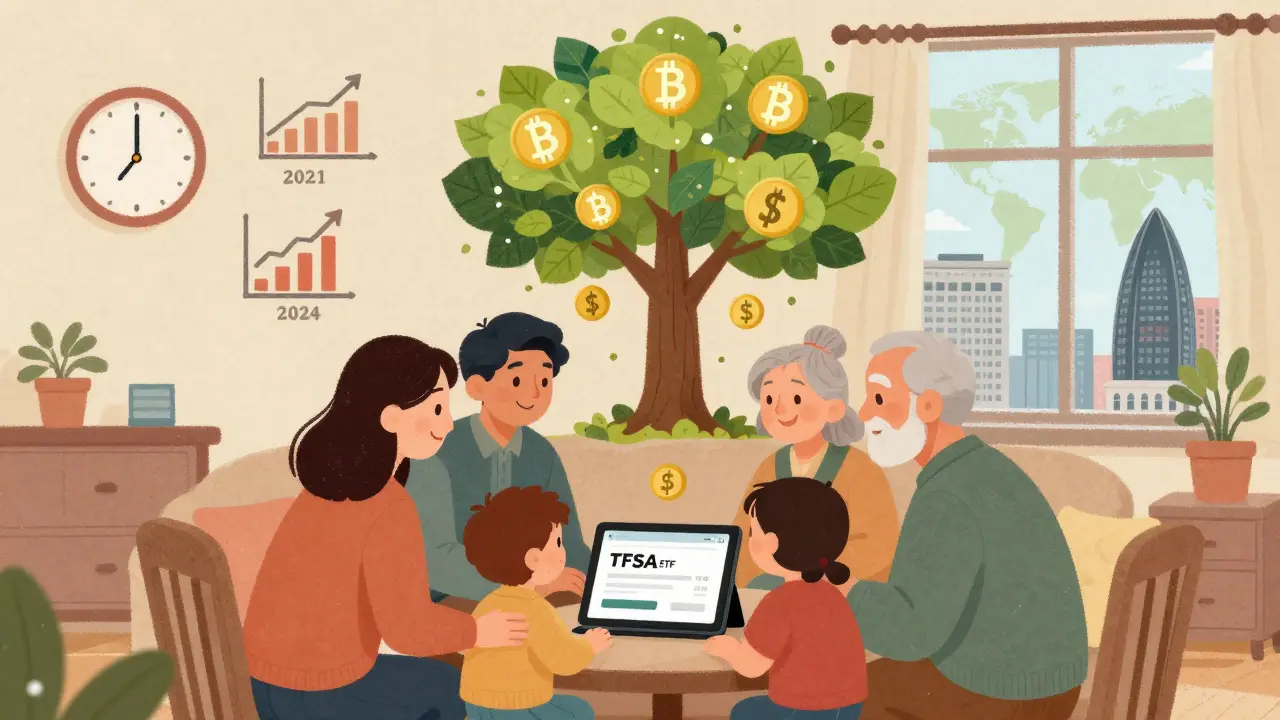
What Happened After
Purpose wasn’t alone for long. Evolve Investments launched its own Bitcoin ETF the next day. CI Financial followed with its BTC ETF. By 2023, Canada had over half a dozen Bitcoin ETFs. But Purpose’s was still the biggest. The most trusted. The one most people remembered. Other countries watched. Australia tested similar models. Switzerland began considering direct Bitcoin ETFs. Even the SEC, after years of resistance, started asking Canadian regulators how they did it. The lesson? Regulation doesn’t have to kill innovation. It can enable it - if it’s smart, clear, and investor-focused.Why This Still Matters in 2026
Today, Bitcoin ETFs are everywhere. But Canada’s first one is still the benchmark. It proved that Bitcoin could be held in a regulated, transparent, institutional-grade structure. It showed that retail investors didn’t need to be tech-savvy to participate. It gave pension funds, advisors, and banks the green light to get involved. It also proved that crypto regulation doesn’t have to be a race to the bottom. Canada didn’t rush. It built. It tested. It secured. And in doing so, it led the world. If you’re wondering why Bitcoin ETFs exist today - why you can buy them in your 401(k), your IRA, or your brokerage app - the answer starts in Toronto. Not Silicon Valley. Not Wall Street. Canada. And it all began with a single ETF: BTCC.Was the Purpose Bitcoin ETF the first Bitcoin ETF in the world?
Yes. The Purpose Bitcoin ETF (BTCC), launched on February 18, 2021, on the Toronto Stock Exchange, was the world’s first spot Bitcoin ETF approved for retail investors. While other countries had Bitcoin-related products before this - like ETPs in Europe - none were true ETFs with direct Bitcoin custody and regulatory oversight like Canada’s.
How is the Purpose Bitcoin ETF different from U.S. Bitcoin ETFs?
The Purpose ETF holds actual Bitcoin in cold storage. The first U.S. Bitcoin ETFs, like ProShares BITO, held Bitcoin futures contracts - not the real asset. Even after the U.S. approved spot Bitcoin ETFs in 2024, Canada’s structure remained the original blueprint: direct ownership, daily transparency, and low tracking error. U.S. ETFs now follow Canada’s model, but Canada did it first and proved it worked.
Can I hold a Bitcoin ETF in my RRSP or TFSA in Canada?
Yes. One of the biggest advantages of the Purpose Bitcoin ETF and other Canadian Bitcoin ETFs is that they’re eligible for registered accounts like RRSPs and TFSAs. This means you can invest in Bitcoin without paying taxes on gains inside these accounts - something not possible with direct Bitcoin purchases on exchanges.
Why did the Ontario Securities Commission approve Bitcoin ETFs when the SEC didn’t?
The OSC focused on the structure, not the asset. They required strict custody rules, daily reporting, market maker oversight, and use of licensed custodians. This reduced fraud and manipulation risks. The SEC, at the time, was more concerned about the underlying Bitcoin markets being unregulated. Canada’s solution was to control the investment vehicle - not the exchange. That approach worked, and it later influenced the SEC’s decision.
What happened to the Purpose Bitcoin ETF after its launch?
It grew rapidly, hitting $1 billion in assets under management within its first month. By 2024, it held over $2 billion and remained one of the largest spot Bitcoin ETFs globally. It consistently tracked Bitcoin’s price with minimal deviation, proving the ETF structure was reliable. It’s still actively traded today and continues to be a top choice for Canadian investors seeking regulated Bitcoin exposure.
Did other Canadian companies launch Bitcoin ETFs after Purpose?
Yes. Evolve Investments launched its Bitcoin ETF the very next day, on February 19, 2021. CI Financial, 21Shares, and others followed. Canada became a hub for Bitcoin ETF innovation, with over half a dozen options available by 2023. But Purpose’s BTCC remains the original and largest by assets.
Comments
Tony Loneman
Let me tell you something, folks - Canada didn’t ‘lead’ anything. They just got lucky with a bunch of regulators who were napping while the U.S. was busy overthinking. BTCC? Cute. But it’s just a glorified brokerage wrapper with a fancy name. The real innovation? People still thinking Bitcoin needs a middleman to be ‘legit.’ Meanwhile, I’m holding my own keys and laughing at the ETF crowd paying 0.4% for the privilege of trusting someone else with their digital gold.
January 15, 2026 AT 09:41
Lauren Bontje
Oh please. Canada? Really? You think a country that still uses ‘loonies’ and ‘toonies’ as currency somehow outsmarted Wall Street? This isn’t innovation - it’s regulatory arbitrage. The OSC didn’t have the bandwidth to say no, so they said yes. Meanwhile, the SEC knew what they were doing: protecting Americans from the same circus Canada just rolled out. BTCC’s success? A fluke. A bubble wrapped in compliance paperwork.
January 16, 2026 AT 09:33
Stephanie BASILIEN
While I find the narrative surrounding the Purpose Bitcoin ETF to be somewhat romantically oversimplified, I must respectfully note that the ontological distinction between an ETP and an ETF - particularly in terms of regulatory architecture and custodial fidelity - is not merely semantic, but epistemologically significant. The Canadian model, while commendable in its procedural rigor, does not inherently validate the intrinsic value of Bitcoin as an asset class; it merely institutionalizes its volatility under a familiar financial taxonomy. One might argue, then, that we have not witnessed innovation - but rather, rebranding.
January 17, 2026 AT 06:51
Deb Svanefelt
I think what’s beautiful here is how Canada didn’t try to control Bitcoin - they just gave people a safe way to hold it. No hype, no fear-mongering. Just clear rules: custody matters, transparency matters, and if you’re going to call it an ETF, you better actually own the thing. It’s not about being first - it’s about being responsible. And honestly? That’s rare in finance. I’ve watched people panic about crypto for years, scared of missing out or getting hacked. This gave them a quiet, dignified path in. That’s worth celebrating.
January 18, 2026 AT 20:54
Dustin Secrest
There’s a philosophical layer here, isn’t there? We’re not just talking about a financial instrument - we’re talking about the legitimization of a decentralized ideal through centralized structures. The ETF is a paradox: a tool of the establishment to contain the revolutionary. Canada didn’t ‘win’ - they co-opted. And now the world is learning to love Bitcoin… but only if it wears a suit and carries a prospectus. Som Seif didn’t change finance. He made it comfortable for people who were afraid to change themselves.
January 19, 2026 AT 20:46
Shaun Beckford
Let’s be real - Canada’s ETF was a publicity stunt wrapped in compliance. The fact that it hit $1B in 30 days? Proof people are desperate to invest without understanding what they’re buying. And now the U.S. copied it? Of course they did. They always wait until someone else does the hard work, then swoop in with a press release and a bigger marketing budget. The real story? The ETFs are just gatekeepers. The real power still lives in the nodes, the wallets, the private keys. Not in a brokerage app.
January 20, 2026 AT 14:02
Alexandra Heller
It’s not about who launched first. It’s about who still has the moral courage to say: ‘We won’t let greed destroy this.’ Canada didn’t rush. They didn’t let Wall Street dictate the terms. They said, ‘If you want to trade this, you’ll do it on our terms - secure, transparent, accountable.’ And guess what? People showed up. Not because they were told to, but because they trusted it. That’s not luck. That’s integrity. And we should be ashamed that it took a country with maple syrup and hockey to remind us what ethics look like in finance.
January 22, 2026 AT 05:15
myrna stovel
For anyone who’s ever been scared to touch crypto - this is your doorway. No need to learn cold storage. No need to worry about seed phrases. You can just click ‘buy’ in your RRSP like you’re buying Coca-Cola stock. And that’s powerful. I’ve had clients in their 60s ask me, ‘Can I do this without being a tech wizard?’ And now, yes. You can. That’s not just innovation - it’s inclusion. Let’s not forget how rare that is.
January 23, 2026 AT 23:29
Kelly Post
Canada didn’t just launch an ETF - they launched a revolution in slow motion. Think about it: for the first time, regular people - teachers, nurses, retirees - could hold Bitcoin without becoming crypto nerds. No wallets. No exchanges. No FOMO. Just a simple fund, tracked like any other stock. And the market responded not with chaos, but with calm. That’s the quiet power of good regulation. The world didn’t need more hype. It needed more trust. And Canada gave it to them.
January 23, 2026 AT 23:46
Sarah Baker
Can we just take a moment to appreciate how beautiful this is? A small Canadian firm, no Wall Street backing, no VC millions - just a team that believed in doing it right. And they did. They built something that survived crashes, skepticism, and global scrutiny. And now? It’s the blueprint. Not because they were loud. But because they were steady. That’s the kind of leadership we need more of - quiet, patient, and deeply responsible.
January 24, 2026 AT 15:03
Patricia Chakeres
Let’s not pretend this wasn’t a controlled experiment. The OSC approved BTCC because they knew it would fail - and if it did, they could say, ‘See? We told you so.’ But when it succeeded, suddenly everyone wanted to copy it. Classic regulatory theater. And now the U.S. is pretending they ‘led’ the space by launching their own spot ETFs? Please. They just stole the playbook from Canada after the fact. This isn’t innovation - it’s plagiarism with a PR team.
January 24, 2026 AT 18:55
Alexis Dummar
Man, I remember when people were like ‘bitcoin is just digital gold’ and now we got ETFs so grandma can buy it in her rrsp. crazy how far we’ve come. the real win? no one’s got to download a wallet anymore. just buy it like apple stock. and honestly? that’s how it should be. if crypto’s gonna be big, it’s gotta be easy. canada got that. the rest of the world is just catching up.
January 26, 2026 AT 14:41
kristina tina
This is the moment crypto stopped being a fringe thing and became real finance. I’ve watched so many people get burned trying to hold Bitcoin themselves - lost keys, hacked exchanges, scams. Then BTCC drops, and suddenly your uncle who thinks blockchain is a type of pasta can invest in it tax-free. That’s not just smart regulation - that’s human-centered design. Canada didn’t just make a fund. They made a bridge. And millions walked across it.
January 28, 2026 AT 02:31
Anna Gringhuis
Oh, so now Canada gets credit for being the ‘responsible’ one? Funny how that works - they approved it, then the U.S. waited, watched, and copied. Classic. Meanwhile, the real winners are the custodians and the ETF providers collecting management fees while everyone else thinks they’re ‘safe.’ The truth? You’re still gambling. You’re just doing it with a prospectus. And that’s not progress - it’s branding.
January 28, 2026 AT 17:32
Michael Jones
Canada didn’t just launch a Bitcoin ETF - they launched a new standard. The structure was flawless: daily reporting, direct custody, arbitrage mechanisms. No guesswork. No manipulation. Just clean, transparent access. And that’s why it worked. It wasn’t about being first. It was about being right. The U.S. didn’t need to reinvent the wheel. They just needed to look north.
January 30, 2026 AT 09:11
Jill McCollum
This is the one sentence that says it all: Canada didn’t wait for permission - they just built it.
January 30, 2026 AT 21:12