
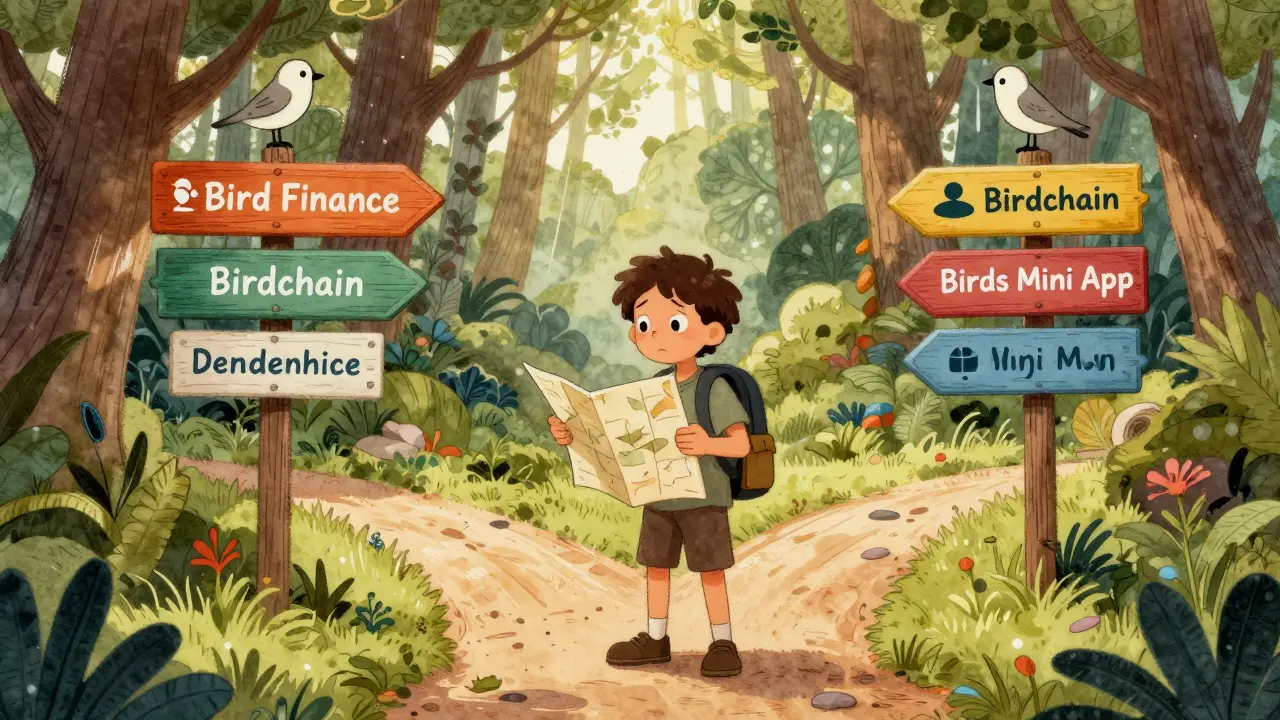
Are you chasing the Bird Finance airdrop? You are not alone. Thousands of crypto hunters are scanning their wallets for free tokens, but the landscape surrounding this specific project is messy. Conflicting dates, similar names, and vague promises make it easy to waste time-or worse, lose funds.
The reality is that Bird Finance is a decentralized finance (DeFi) platform focused on automated yield farming, not just a quick giveaway scheme. If you want to understand whether you qualify for the BIRD token distribution, how the mechanics actually work, and why you need to be incredibly careful about which "Bird" project you are interacting with, keep reading. This guide cuts through the noise and gives you the facts based on available data up to mid-2026.
What Is Bird Finance?
Bird Finance is a DeFi protocol that uses smart algorithms to automatically find the best yield farming pools across multiple blockchains. Instead of manually moving your assets between different platforms to chase high interest rates, Bird Finance’s system does it for you. It stakes your principal assets, compounds returns, and distributes rewards in its native governance token, known as $BIRD.
The platform operates on a cross-chain strategy, integrating networks like Solana, Ethereum, HECO (Huobi Eco Chain), and OKExChain. This multi-chain approach allows users to diversify their exposure while the algorithm seeks out optimal reward mining opportunities. The goal is simple: maximize profit with minimal manual effort from the user.
The BIRD Tokenomics: How It Works
To understand the value of an airdrop, you must understand the token itself. The $BIRD token is designed with a hyper-deflationary model. Here is the breakdown:
- Blackhole Supply: Upon launch, 50% of the total BIRD supply was sent to a blackhole address. These tokens are permanently removed from circulation, creating immediate scarcity.
- Transaction Fees: Every transaction involving BIRD incurs a 6% fee. This is split into three parts:
- 2% goes to the liquidity pool on decentralized exchanges to stabilize trading.
- 2% is allocated to the DAO governance pool for community decisions.
- 2% is distributed proportionally to all existing BIRD holders.
This structure means that every time someone buys or sells BIRD, more tokens are burned or redistributed to holders. In theory, this creates upward price pressure over time. However, deflationary models can also lead to low liquidity if trading volume drops, so it is not a guaranteed win.
Airdrop Eligibility and Timeline Confusion
Here is where things get tricky. There is no single, clear-cut "claim button" for a massive Bird Finance airdrop that has been widely publicized with a fixed date. Initial reports suggested listings and distributions around November 2024, followed by postponements to Q1 2025. As of mid-2026, the status remains ambiguous.
If there is an active distribution, eligibility typically hinges on these factors:
- Wallet Connection: You must connect a supported cryptocurrency wallet to the official Bird Finance platform.
- Token Holdings: Participants often need to hold a minimum amount of specific assets, potentially including $BIRD itself or other designated tokens within the ecosystem.
- Community Engagement: Tasks may include following social media accounts, joining Telegram groups, or completing registration forms.
- On-Chain Activity: Some phases require actual interaction with the smart pool, such as staking assets to generate Btoken rewards.
Because timelines have shifted repeatedly, relying on third-party announcements is risky. Always check the official Bird Finance channels for current instructions. If a site claims you can claim millions of BIRD tokens instantly without any prior activity, it is likely a scam.
Critical Warning: Don't Mix Up the Projects
This is the most important part of this guide. The name "Bird" and the symbol "BIRD" are used by several unrelated projects. Participating in the wrong one can cost you time or money.
| Project Name | Type | Blockchain | Key Feature |
|---|---|---|---|
| Bird Finance | DeFi / Yield Farming | Solana, Ethereum, HECO, OKExChain | Smart pool auto-compounding, deflationary tokenomics |
| Birdchain | Messaging App | Various | Decentralized instant messaging, separate airdrop of 1M BIRD |
| Birds (Mini App) | Gaming | Sui Blockchain | Telegram-based game, level-based rewards |
Birdchain is a completely different entity focused on secure messaging. It conducted its own airdrop requiring Telegram bot interactions. Meanwhile, the Birds Mini App on the Sui blockchain is a game where players earn rewards by reaching certain levels. Do not assume that participating in the Birdchain airdrop makes you eligible for Bird Finance rewards. They are separate ecosystems with separate teams and separate risks.
Risks and Safety Checks
Before you connect your wallet to any platform claiming to offer Bird Finance benefits, run through this safety checklist:
- Verify the URL: Phishing sites often mimic legitimate DeFi platforms. Double-check the domain name against official links found on verified social media profiles or reputable directories like CoinMarketCap or CoinGecko.
- Check Smart Contract Audits: Bird Finance’s technical architecture involves complex cross-chain bridges. Look for published audit reports from reputable security firms. If none exist, proceed with extreme caution.
- Beware of High Pressure: Legitimate projects do not rush you to click suspicious links. If a message demands immediate action to "claim before it expires," it is likely a scam.
- Understand Volatility: Even if you receive tokens, their value can drop rapidly. Deflationary models can create artificial scarcity, but they do not guarantee demand.
The confusion caused by similar naming conventions is a major risk vector. Scammers exploit this by creating fake airdrop pages for "Bird Finance" when users are actually looking for "Birdchain" or vice versa. Always confirm the exact project name and contract address before interacting.

How to Stay Updated
Since official timelines have been delayed and information is scattered, staying informed requires proactive monitoring. Here is what you should do:
- Follow Official Channels: Subscribe to the official Bird Finance Twitter/X account and Telegram group. Look for blue verification ticks where possible.
- Monitor On-Chain Data: Use tools like Etherscan or Solscan to track large movements of BIRD tokens. Sudden spikes in holder counts can indicate a new distribution phase.
- Join Community Discussions: Engage in forums like Reddit or Bitcointalk, but verify any claims with primary sources. Community sentiment can shift quickly, and misinformation spreads fast.
- Watch for Regulatory Changes: DeFi regulations are evolving globally. New laws could impact how Bird Finance operates or distributes tokens, especially in regions with strict crypto guidelines.
Remember, patience is key. If the airdrop was postponed to Q1 2025 and hasn’t materialized clearly since, it may have been canceled, merged into another program, or significantly altered. Do not pay fees to "unlock" airdrop eligibility-legitimate airdrops are free to claim, though they may require gas fees for transactions.
Final Thoughts on Bird Finance
Bird Finance offers an interesting model for passive income through automated yield farming. Its deflationary tokenomics and cross-chain capabilities make it a notable player in the DeFi space. However, the airdrop narrative is fraught with ambiguity and confusion due to similarly named projects.
Your best strategy is to focus on the fundamentals: understand the technology, verify the official sources, and protect your wallet. If you decide to participate in any distribution, treat it as a small experiment rather than a guaranteed windfall. The crypto market rewards those who do their homework and punish those who chase hype blindly.
Is the Bird Finance airdrop still active?
As of mid-2026, there is no clear confirmation of a widespread, open Bird Finance airdrop. Previous timelines were postponed, and information remains fragmented. Always check official channels for the latest status.
What is the difference between Bird Finance and Birdchain?
Bird Finance is a DeFi yield farming platform, while Birdchain is a decentralized messaging application. They are unrelated projects with different tokens, teams, and purposes. Do not confuse them.
How much is the BIRD token worth?
The value of the BIRD token fluctuates based on market conditions, liquidity, and adoption. Due to its deflationary nature, prices can be volatile. Check real-time pricing on major exchanges like Binance or Uniswap for current values.
Do I need to pay to participate in the Bird Finance airdrop?
Legitimate airdrops do not require upfront payments. You may need to pay standard network gas fees for transactions, but never send funds to "unlock" or "verify" your airdrop eligibility. This is a common scam tactic.
Which blockchains does Bird Finance support?
Bird Finance operates across multiple chains, including Solana, Ethereum, HECO (Huobi Eco Chain), and OKExChain. This cross-chain functionality allows for diversified yield farming opportunities.
Is Bird Finance safe to use?
Like any DeFi platform, Bird Finance carries risks, including smart contract vulnerabilities and market volatility. Always conduct your own research, verify audits, and never invest more than you can afford to lose.